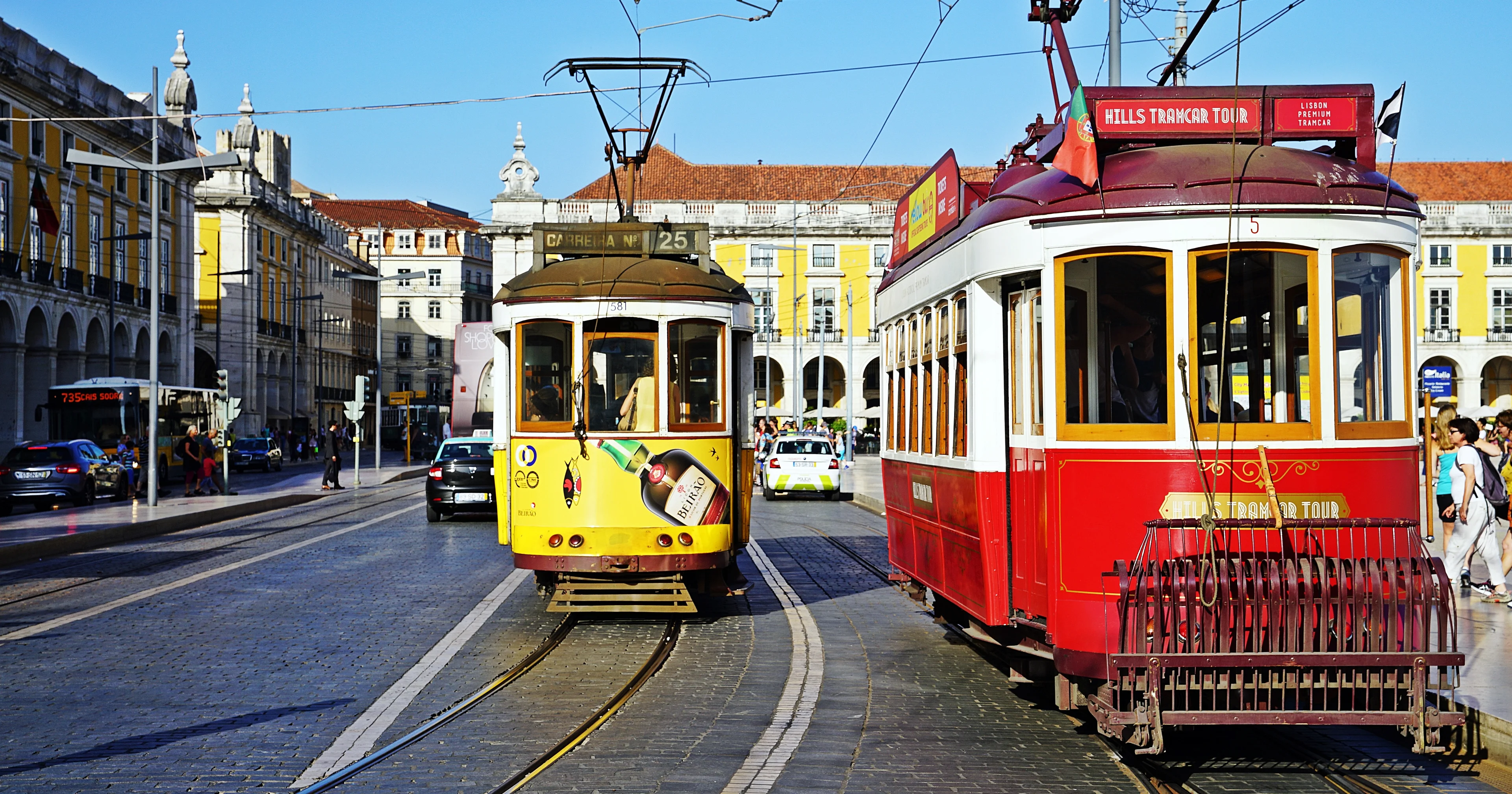
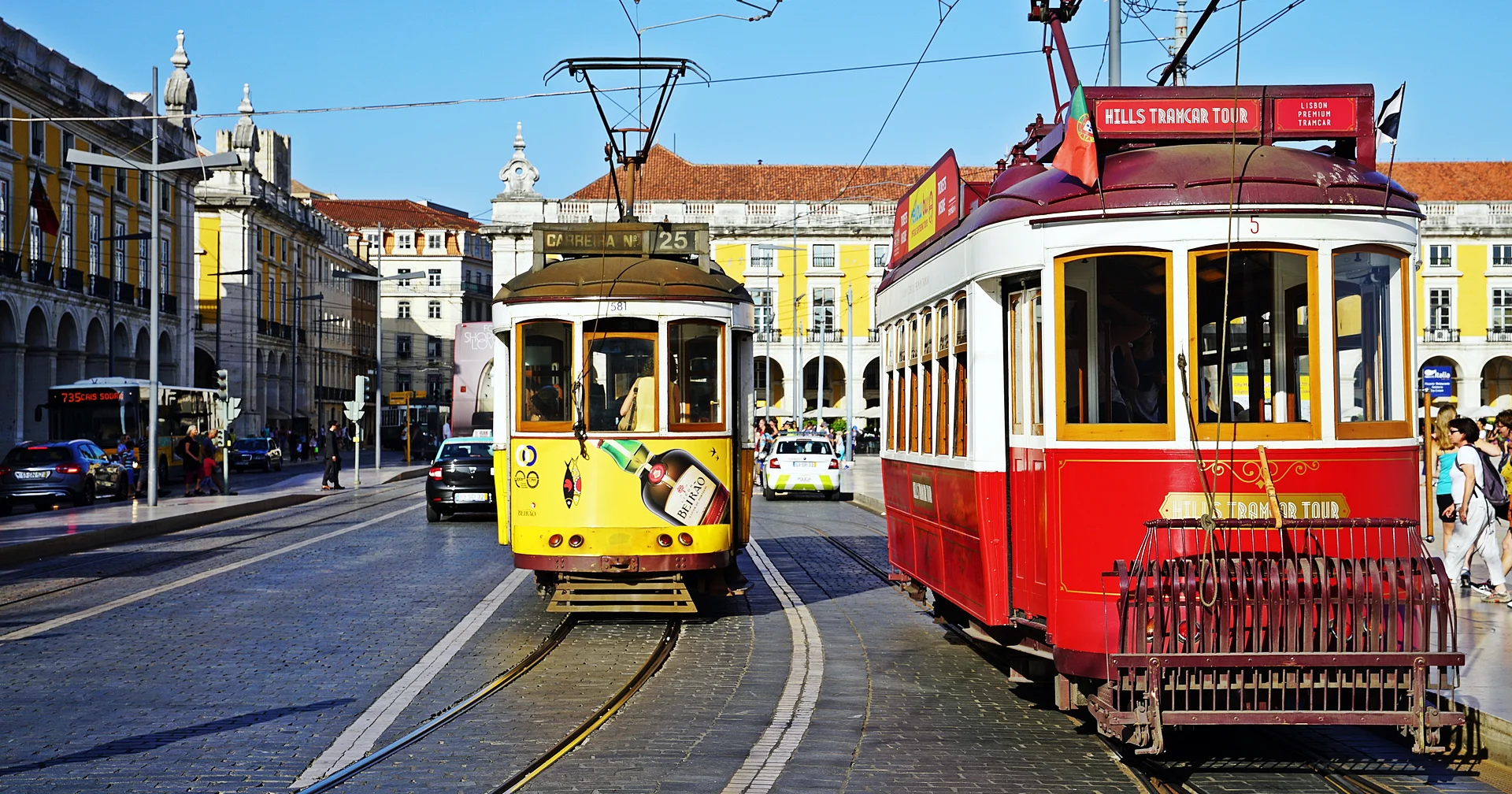
Célèbre Tramway lisboète

Things to do in Portugal: 20 must-see attractions in 2026

Discover our members' favorite destinations in Portugal, plus reviews, practical info, and traveler photos...

The 5 most beautiful cities to visit in Portugal

#1 Lisbon +195 recs

Lisbon spreads across seven hills overlooking the Tagus River, defined by its signature azulejo tiles, creaky yellow streetcars, and narrow alleys where fado music drifts from local taverns. In Alfama, laundry still hangs from windows just as it did a century ago. Over in Belém, you can grab a warm pastel de nata near monuments celebrating a maritime history that dates back five hundred years.

#2 Fátima +60 recs

Fátima leaves an impression on everyone, whether you are a believer or just a curious traveler. Beyond the massive scale of the fourth-largest Catholic pilgrimage site in the world, you can experience the quiet intensity of candlelight processions and visit the preserved childhood homes of the shepherds in the hills of Aljustrel. This corner of central Portugal balances a monumental sanctuary with quiet, rural villages, offering a perspective that feels far removed from a typical sightseeing trip.

#3 Porto +49 recs

Porto sits where the river meets the Atlantic, defined by tile-covered facades and a deep maritime history. The Douro River flows beneath the iron bridges while the cellars of Vila Nova de Gaia age port wine, and the steep alleys of the Ribeira district reveal a raw, authentic side of Portugal. It is less polished than Lisbon, offering a grittier character where every block delivers a new architectural detail or a local bite.

#4 Sintra +18 recs

Clinging to a misty mountain 30 km from Lisbon, Sintra packs some of Europe's most extravagant palaces into a UNESCO-listed forest setting. From the Pena Palace to the tunnels of the Quinta da Regaleira, every stop feels like stepping into a parallel universe. The wild coast of Cabo da Roca, the westernmost point of the continent, finishes off the view.

#5 Lagos +9 recs

Inhabited since prehistoric times, its port was already active under the Phoenicians. It took an earthquake and a tsunami to slow down its influence and strip Lagos of its status as the capital of the Algarve. Until 1755, it held a leading role, particularly in international trade, and its shores were the departure point for caravels heading toward the New Worlds. The canning industry and fishing drove its economy before tourism took over. Now a popular beach destination, the turquoise waters are best enjoyed across its many beaches, while the remnants of its history continue to captivate.

A storied past and raw charm

Colorful and lively, brightened by azulejos (the ceramic wall tiles found on many facades), walking through Lagos feels like moving through an open-air museum. The sights are everywhere, especially in its historic center protected by city walls. The beach is just a short walk away, and the two towers of the São Gonçalo Gate serve as reminders of its defensive past. The fortification dates back to 1520 and offers exceptional views over the bay and the Serra de Monchique.

The neighborhood is almost entirely pedestrian. At Praça Infante Dom Henrique, the building of the 15th-century former slave market has been converted into a cultural center, and further along, the church of Santa Maria stands proudly with architecture from the same era. Inside Santo António from 1707, you will find a rich collection of baroque woodwork highlighted with gold, alongside the Dr. José Formosinho Museum dedicated to archaeology and ethnography. Religious heritage matches the flavorful architecture in scale, while stone doorframes and wrought iron give the alleys endless charm along the way. On Avenida dos Descobrimentos facing the estuary, the 17th-century square fort of Ponta da Bandeira is one of the finest in the region, and you should not miss the Centro Ciência Viva, a science and arts museum recounting the great Portuguese discoveries.

Traditional craftsmanship remains thriving in Lagos, with shops showcasing windows filled with ceramics, hammered copper, printed fabrics, and leather goods. At the municipal market, three floors of fresh and flavorful produce await you. Naturally, seafood takes center stage, with shellfish and fish featured in every restaurant. Monkfish stew, grilled tuna, chorizo-stuffed squid, the daily catch dictates the menu. As throughout the Algarve, dom-rodrigos are the local pastry to try, crafted from almonds, egg yolk, and cinnamon.

Cliffs carved by turquoise water

Its striking natural environment made Lagos popular in the first place, with ochre cliffs resembling massive sculptures carved by the waves, and rocks and caves shaping the coastal scenery at every turn. Beyond miles of fine sand, the coastline is truly magnificent. Ponta da Piedade is a prime example with its lighthouse and sea caves; this incredibly scenic headland can be explored on foot or by boat with equal payoff. Dona Ana Beach is a must-visit, bordering the historic district. Smaller and a bit tougher to access, Camilo Beach offers a fantastic setting, while the larger stretches belong to Porto de Mós, a favorite among surfers, and Meia Praia. All water sports are readily accessible here. The waterfront lined with massive palm trees makes for an ideal stroll, and you can keep an eye out for dolphins down at the marina.

When to go

The Mediterranean climate ensures nearly constant sunshine. From April to November, the weather is mild with summers occasionally turning very hot. Winters are never harsh, though the water is too cold for swimming and winds pick up along the beach. Visiting in the shoulder season brings fewer crowds, making it a great time to experience Lagos.

How to get there

The nearest airport is in Faro, 90 km (55 miles) away. Buses make the trip in 2h10 and trains take 1h50, with the station right in downtown Lagos. Plan your route ahead of time, especially in the summer. The highway network is well-maintained, allowing arrival via toll roads or national highways. If you are driving, motorways link Lagos to both Lisbon and Seville.

Ranking of the 15 activities selected by our editors in Portugal

#1 São Jorge Castle (Lisbon) +31 recs 4.5/5

São Jorge Castle is a defining landmark of Lisbon. Perched on a hill overlooking the city, it provides sweeping views of the Tagus River and local rooftops. Built in the 11th century, it served as a military fortress for centuries. Today, visitors walk its cobblestone paths to explore towers, ramparts, and gardens.

See the guide See deals

#2 Belém Tower (Lisbon) +28 recs 4.6/5

Built in 1514 to guard the entrance to the port of Lisbon, the Belém Tower stands as a UNESCO World Heritage site and a defining symbol of Portugal. Its Manueline style, white limestone, and caravel bow silhouette make it a striking architectural landmark. Inside, you will find a hexagonal bastion pierced for seventeen cannons, carved bartizans featuring the earliest European depiction of a rhinoceros, and a terrace at 35 mètres overlooking the Tagus River and the Mosteiro dos Jerónimos (Jerónimos Monastery). Access is via a narrow spiral staircase.

See the guide See deals-7%AVYGEO7

#3 Jerónimos Monastery (Lisbon) +25 recs 4.8/5

A masterpiece of Manueline architecture, the Jerónimos Monastery has honored Portugal's maritime history since 1501. Its two-story cloister and church, home to the tombs of Vasco de Gama and the poet Camões, make it the most visited site in Lisbon. A UNESCO World Heritage Site since 1983, it pairs perfectly with the nearby Torre de Belém (Belém Tower).

See the guide See deals-7%AVYGEO7

#4 Dom Luís I Bridge (Porto) +19 recs 4.8/5

The Dom Luís I Bridge is a striking steel structure spanning the Douro River in Porto. Built in 1886 by Théophile Seyrig, a student of Gustave Eiffel, this 385-meter bridge features two pedestrian levels. The upper deck carries the metro, while cars use the lower level. It offers panoramic views of the city.

See the guide See deals-7%AVYGEO7

#5 Monument to the Discoveries (Lisbon) +16 recs 4.7/5

Located in the Belém neighborhood of Lisbon on the banks of the Tagus River, right across from the famous Mosteiro dos Jerónimos (Jeronimos Monastery), the Padrão dos Descobrimentos, or Monument to the Discoveries, is a striking, elegant modern sculpture made of ochre stone in the shape of a caravel. You can climb the stairs to reach the platform 50 meters above the ground or take the elevator. At sunset, the panoramic view over the Tagus and the 25 de Abril Bridge is excellent.

Built in 1940 by José Ângelo Cottinelli Telmo built from perishable materials, it was dismantled in 1958 and rebuilt in stone and concrete, inaugurated in 1960 to commemorate the 500th anniversary of the death of Henry the Navigator, an iconic figure of the colonial era. By extension, it pays tribute to all the great Portuguese navigators, whose statues you will see reproduced in detail. Among them are Vasco da Gama, Magellan, Bartolomeu Dias, Fernão Mendes Pinto, Pedro Álvares Cabral, Pero da Covilhã, and Luís de Camões, all in a procession behind Henry the Navigator, who stands at the prow holding a small sailing vessel in his hands.

The term padrão refers to a stone pillar topped with a Portuguese coat of arms or a cross. These were used in unknown territories to mark new discoveries. The first padrão used was that of Diogo Cão in 1482 at the mouth of the Zaire River.

As you head back down, take a close look at the mosaic spread out at the base of the building. On this world map, you can learn about the key dates of Portuguese exploration. To the north, a large compass rose completes the scene, detailing the routes taken during the 15th and 16th centuries.

#6 25 de Abril Bridge (Lisbon) +14 recs 4.8/5

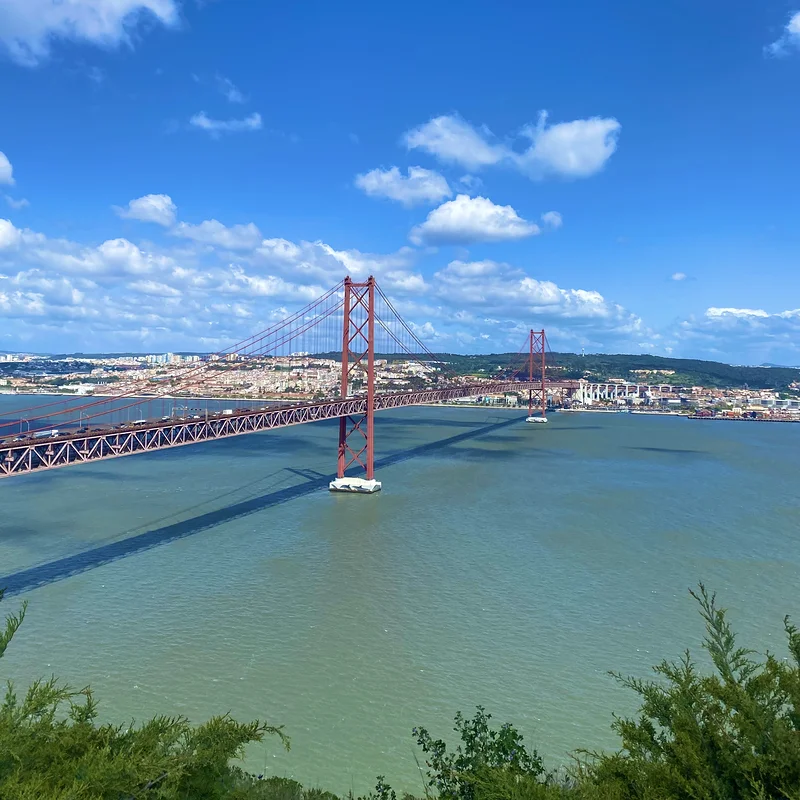
Suspended over the Tagus River in Lisbon, the striking red steel 25 de Abril Bridge is the fifth longest suspension bridge in the world and the longest outside the United States. Commissioned by dictator António de Oliveira Salazar in 1960, the bridge opened six years later, ahead of the original construction schedule. Following the Carnation Revolution, it was renamed to honor the events of April 25, 1974.

The visual similarity to the Golden Gate Bridge in San Francisco is no coincidence. It was built in collaboration with American engineering firms using designs similar to the Bay Bridge and the Oakland bridge in California. As a primary city landmark, it is a fixture on postcards and local souvenirs.

The structure is double-decked, featuring a road level on top and a railway line below. While pedestrians cannot walk across, you can drive or take a bus, or see it from below by taking a cruise on the Tagus River. If you drive, prepare for heavy traffic, as the bridge is a major commuter artery. This architectural feat was designed to withstand seismic activity and features massive dimensions, spanning over 2 km with towers reaching nearly 200 meters in height. It connects Lisbon to the town of Almada, known for the Cristo Rei, a statue of Christ with open arms that serves as a replica of the Corcovado in Rio de Janeiro, Brazil.

For the best views of the 25 de Abril Bridge, head to the Belém Tower or the Monument to the Discoveries. Other solid vantage points include the Castelo São Jorge and the Miradouro Da Graça. The most dramatic view remains the one from the base of Cristo Rei.

#7 Lello Bookstore (Porto) +12 recs 3.8/5

In the heart of Porto, the Lello Bookstore is famous for its neo-Gothic architecture, featuring a signature red staircase and intricate woodwork. Regarded as one of the world's most beautiful bookstores, it holds a vast collection of literature. Fans often link it to Harry Potter, citing the time J.K. Rowling lived in Porto.

See the guide See deals-7%AVYGEO7

#8 Santa Justa Lift (Lisbon) +12 recs 4.3/5

Standing 148 feet tall and connecting the Baixa and Bairro Alto districts, the Santa Justa Lift is a Lisbon landmark you cannot miss. The structure and its rooftop observation deck provide views that will impress travelers of all ages and leave you with lasting memories.

Visiting Lisbon without riding the Santa Justa Lift is like going to San Francisco and skipping the Golden Gate Bridge. Don't miss out.

#9 Commerce Square (Lisbon) +11 recs 5/5

This location, often called Commerce Square by English speakers, serves as the heart of Lisbon. Situated in the historic Baixa district, this site is a fundamental stop in the Portuguese capital.

Originally, the site housed the royal palace and the residence of the country's monarchs. The palace was built in 1511 and was then known as Terreiro do Paço (Palace Yard).

In 1755, the palace was destroyed by an earthquake that devastated much of the city. Architects Eugenio dos Santos and Carlos Mardel then designed a rectangular space of 36,000 square meters framed by grand arches. Commerce Square thus took the form we recognize today. During the Age of Discovery, the square served as a hub where spices, gold, and goods arriving from the Americas were unloaded, traded, and sold. This history is the origin of its name.

In 1910, the square was painted pink to mark the fall of the monarchy and the birth of the republic. Today, yellow has replaced the pink, but the republic remains.

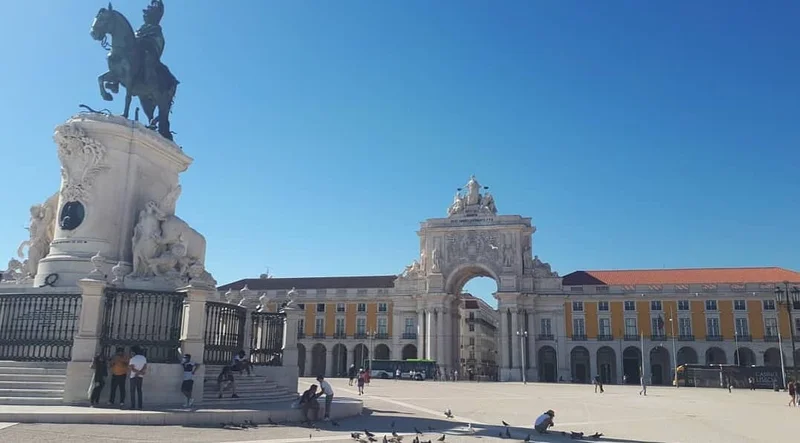
Currently, Commerce Square houses offices for various government ministries, and many restaurants have opened under the arcades. It is a culturally and historically significant area for a stroll. The location benefits from an excellent position, opening directly onto the mouth of the Tagus river. From here, you can see the 25 de Abril Bridge, a red structure that resembles a miniature version of the Golden Gate Bridge. Opposite the Tagus sits a triumphal arch featuring iconic figures from Portuguese history such as Vasco da Gama and the Marquis of Pombal. In the center of the square stands an equestrian statue of Joseph I, created by sculptor Joaquim Machado de Castro, whose works are found throughout the city.

In short, Commerce Square is a location where I highly recommend cooling off in the shade of the arcades after a long walk through the old city.

#10 Pena Palace (Sintra) +10 recs 5/5

Rising from the mist of the Serra de Sintra, Pena Palace is the first Romantic castle in Europe. Its yellow and red facades, mix of neo-Gothic and Manueline styles, and 200-hectare park make it one of the most photographed sites in Portugal. Note: reservations are mandatory with a specific time slot to enter.

See the guide See deals-7%AVYGEO7

#11 National Azulejo Museum (Lisbon) +9 recs 4.7/5

The National Azulejo Museum in Lisbon celebrates the craft behind azulejos, the iconic ceramic tiles of Portugal. Housed in a former convent, the collection features 7,000 pieces tracing tile artistry since the 16th century. Explore works within the church cloisters, which are filled with gilded wall ornaments and intricate tile friezes.

#12 Restauradores Square (Lisbon) +8 recs 4.5/5

Located just north of the Rossio neighborhood at the end of Avenida da Liberdade, the promenade Lisbon writer Fernando Pessoa considered the city's finest, Restauradores Square commemorates the 1640 popular uprising against Spain. This revolt allowed Portugal to regain its independence after 60 years of Hispanic rule. In the heart of the historic center, you will also find the Calçada da Glória (Glória funicular), which whisks you directly up to the Bairro Alto, a legendary nightlife district in the Portuguese capital.

This immense rectangular esplanade is surrounded by striking 19th and early 20th century buildings. At its center stands an obelisk erected by António Tomás da Fonseca in 1866, funded by public contributions from Portugal and Brazil. Flanked by bronze statues representing Victory and Liberty, the work of Alberto Nunes and Simões de Almeida, the obelisk rises prominently above the square. Take a moment to look closely at the monument. The key events of the Restoration War are engraved into its base. You can see dates like the signing of the peace treaty on February 13, 1668, the Battle of Montes Claros on June 17, 1665, the Battle of Castelo Rodrigo on July 7, 1664, and the start of the uprising on December 1, 1640.

The square is home to the imposing Palacio Foz, which houses a tourist office, the Eden Theatre, now converted into a luxury hotel, and a Hard Rock Cafe located in the former Condes cinema from the 1950s. If you have time, check the schedule for the Palacio Foz. Managed by the Ministério da Cultura (Portuguese Ministry of Culture), it is not open year round, but it frequently hosts free exhibitions and small concerts. Often called a miniature Versailles due to its ornate hall of mirrors, attending an event here is a unique experience.

#13 Calouste Gulbenkian Museum (Lisbon) +8 recs 4.5/5

The Calouste Gulbenkian Museum, born from a private collection, is one of the most significant museums in Lisbon, Portugal. Slightly off the beaten path, it is worth the trek. Its holdings span 5,000 years of history, from ancient Egypt and the Orient to 20th-century European masterpieces, including Art Deco furniture, jewelry, and René Lalique glassware. Set in a lush park, this is a rewarding visit.

#14 Mira de Aire Caves (Fátima) +8 recs 5/5

Mira de Aire Caves form the largest cave system in Portugal with 11.5 km of tunnels formed in the Jurassic period. Out of the 600 metres open to visitors, the route descends 683 steps through large limestone chambers before returning by elevator. For visitors wanting more, a beginner caving option (Visita 5 Sentidos) dives into the undeveloped passages for 2 hours.

See the guide See deals

#15 Sanctuary of Our Lady of Fatima (Fátima) +8 recs 5/5

The vast stone esplanade of the Cova da Iria holds the modest Chapel of the Apparitions, the beating heart of a global pilgrimage born in 1917. Across the square, two basilicas with contrasting architectural styles face one another, blending quiet devotion with a major historical footprint.

See the guide See deals-7%AVYGEO7
See the best activities in Portugal

Portugal: Where the Atlantic Still Echoes Through the Alleys

In Lisbon, the yellow tram screeches through an alley so narrow passengers could practically touch the hand-painted tiles on the building facades. The smell of grilled sardines drifts up from a neighborhood diner while a burst of live fado music spills from an open window. This seafaring country packs a massive punch into a compact stretch of land wedged between mountain and ocean, holding centuries of history and an easygoing pace that explains why so many travelers keep coming back.

The Destination That Pleases Everyone

This country appeals to almost every travel style. Culture lovers will find intricate Manueline monasteries and UNESCO-listed historic quarters. Families will appreciate the lifeguarded beaches of the Algarve and well-developed infrastructure. Hikers will discover coastal trails that rank among the finest in Europe. Food enthusiasts will feast on hearty local dishes that won't break the bank.

Portugal might disappoint those looking for radical exoticism or tropical beaches. The Atlantic stays brisk, even in midsummer. Major hubs like Lisbon and Porto now grapple with high tourist volumes that have driven up prices and changed the character of certain neighborhoods. English is widely spoken, the country is very safe, and public transit runs efficiently.

A Gentle Budget for Western Europe

Portugal remains one of the most accessible destinations in Western Europe. Plan on spending between $82 and $140* per day for a standard traveler: decent hotel stays run from $70 to $117* a night, meals cost between $12 and $24*, and city transit fares run around $1.80 to $2.40* per subway ride.

Lisbon and Porto: Two Souls, Two Vibes

St. George's Castle on the hills of Lisbon

Lisbon makes you work for it. The capital sprawls across seven hills and rewards anyone willing to climb. The Alfama district, with its labyrinth of winding streets and traditional music taverns, holds onto the working-class soul of the city. São Jorge Castle delivers panoramic views over the Tagus River and ochre rooftops. The Bairro Alto comes alive after dark with a dense cluster of bars and restaurants.

Dom Luis I Bridge in Porto

Porto operates on a different frequency. More compact and distinctly gritty, it captivates visitors with blue-tiled facades, the Dom Luís I Bridge arching over the Douro River, and port wine cellars clustered on the opposite bank. The UNESCO-listed Ribeira district showcases rows of colorful houses right along the water. Porto keeps a rawer edge than Lisbon, feeling less polished by mass tourism.

Friendly tip: The number 28 tram in Lisbon has turned into a packed tourist trap. Take the 12 or 25 lines instead for a similar experience without the crowds, or catch the very first run early in the morning.

The Algarve: Ochre Cliffs and Turquoise Waters

Algarve cliffs

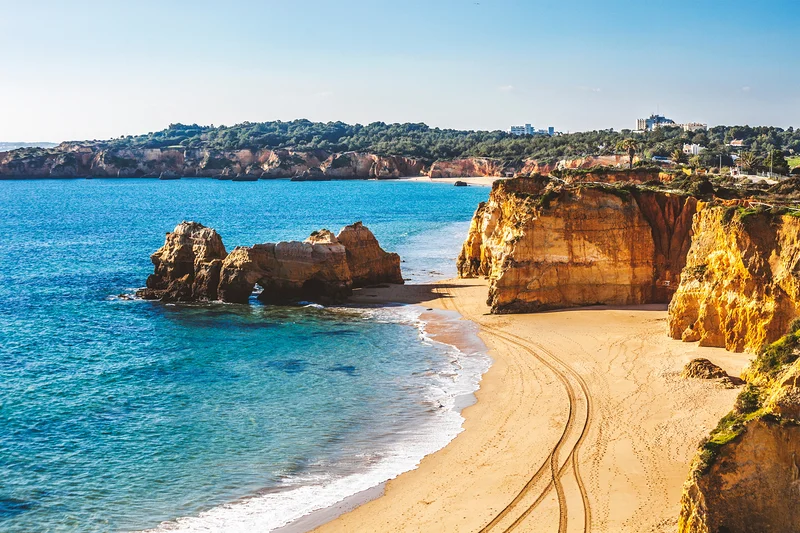
The southern coast draws fans of dramatic shorelines. The golden sandstone cliffs of Lagos plunge straight into impossibly blue water. Praia da Marinha regularly lands on lists of the best beaches on the continent. Albufeira concentrates the nightlife and mega-resorts for travelers looking for high-energy entertainment.

To lose the crowds, head west. Sagres and Cape St. Vincent, the southwesternmost point of continental Europe, offer a rugged, windswept landscape. The Costa Vicentina, protected by a natural park, rolls out miles of near-empty beaches like Praia da Bordeira. Tavira, further east, keeps a quiet pace with its 37 churches and a barrier island accessible by ferry.

Toward the Alentejo Coast

Between Lisbon and the Algarve, the Sado River Estuary Nature Reserve is home to a resident pod of bottlenose dolphins that you can watch from boats leaving Setúbal. The beaches of Comporta and Tróia attract a wealthier crowd while maintaining their natural feel. The Arrábida Natural Park hides secluded coves that you can only reach on foot.

The Interior: Hilltop Villages and Terraced Vineyards

Obidos and its ramparts

Óbidos and its medieval stone walls welcome visitors just an hour outside Lisbon. The whitewashed alleyways draped in bougainvillea draw heavy foot traffic, but the village retains its historic character. Monsaraz, perched on a ridge facing the Alqueva reservoir, delivers unforgettable sunsets over Europe's largest artificial lake.

Further north, Monsanto defies convention with stone houses wedged underneath massive granite boulders. Voted the most Portuguese village in the country, it warrants a detour for its timeless atmosphere. The Aldeias do Xisto, slate-stone hamlets tucked into the central mountains, offer hiking trails and preserved architecture far removed from standard tour routes.

Serra da Estrela Natural Park

The Serra da Estrela, the highest peak in mainland Portugal at 1,993 meters, even offers winter skiing. Peneda-Gerês National Park, the country's only national park, hides waterfalls, wild ponies, and villages where life moves at a standstill. The Douro Valley, a UNESCO World Heritage site, spills terraced vineyards across 250,000 hectares. A river cruise or a drive along the winding valley roads reveals some of the most photogenic scenery in Europe.

Friendly tip: Tomar, an hour from Lisbon, holds the Convent of Christ, the former stronghold of the Knights Templar and later the Order of Christ. This extraordinary architectural site draws fewer crowds than Sintra and easily fills a full day.

The Atlantic Islands

The Azores, sitting 1,500 km off the mainland coast, offer a volcanic, hyper-green escape. São Miguel, the largest island, centers around dramatic crater lakes like Sete Cidades and the natural hot springs of Furnas. The remote island of Flores rewards adventurous travelers with endless waterfalls and untouched wilderness.

Madeira, located closer to Africa than to Lisbon, features cliffside hiking along levadas, centuries-old irrigation channels crisscrossing the island for over 2,500 km. The subtropical climate makes it a year-round hiking destination.

Portuguese Cuisine: Salt Cod, Grills, and Sweets

The famous pasteis de nata

Salt cod, or bacalhau, reportedly has more than 365 recipes according to local lore. Bacalhau à brás combines shredded cod, ultra-thin shoestring fries, and scrambled eggs. Grilled sardines perfume the neighborhood streets in the summer, especially during the St. Anthony festivals in Lisbon every June. Caldo verde, a warming kale and chorizo soup, takes the chill off northern evenings.

Pastéis de nata live up to their reputation. These blistered, caramelized custard tarts pair with a morning or afternoon coffee. The original bakery in Belém has been baking the classic recipe since 1837, but every local bakery puts forward its own version. Port wine is meant for tasting in the cellars of Vila Nova de Gaia right across the river from Porto. Vinho verde, a young, slightly fizzy white wine from the north, cuts right through rich seafood.

When to Visit Portugal

The temperate climate allows for travel almost year-round. The south and the Algarve stay pleasant even in winter, with afternoon temperatures hovering around 15 degrees Celsius (59 degrees Fahrenheit). The north and the interior experience cooler, wetter winters. The ideal window runs from May to October for the mainland.

Summer brings massive crowds to the coast and pushes up accommodation rates. Spring and autumn provide a sweet spot: mild weather, manageable crowds, and better pricing. Madeira works at any time of year thanks to its subtropical setup. The Azores shine brightest during the summer months between June and September when temperatures settle around 22 to 25 degrees Celsius (72 to 77 degrees Fahrenheit).

How to Get to Portugal

Flying remains the fastest option. Direct flights from major hubs connect efficiently, with low-cost carriers like Transavia, easyJet, or Ryanair offering competitive fares when booked ahead. Flights to Porto, Lisbon, or Faro run smoothly from international transit points.

Train travel from neighboring European countries is long and rarely practical. For Madeira, expect a flight from the mainland, while the Azores require a connection through Lisbon. TAP Air Portugal handles the bulk of island routes. US citizens need a valid passport with at least three months of validity beyond their planned departure, and entry falls under the Schengen visa waiver framework (soon requiring ETIAS authorization).

Getting Around Portugal

The national rail network operated by CP connects the main mainland cities. The Lisbon to Porto run takes roughly 3 hours on high-speed trains costing $30 to $41*. Book tickets ahead because trains book out completely, especially on weekends.

Renting a car is essential for exploring the Algarve, Douro, or Alentejo regions properly. Expect to pay around $30 to $47* per day for a compact rental. Roads are generally well-paved, and major highways use electronic toll systems. In the Azores, inter-island ferries connect the landmasses and provide a scenic alternative to flying if you have extra time.
Find the best travel deals in Portugal

Hotels and stays Flights Car rentals Custom trips

Top photos posted by members

Célèbre Tramway lisboète
Doca
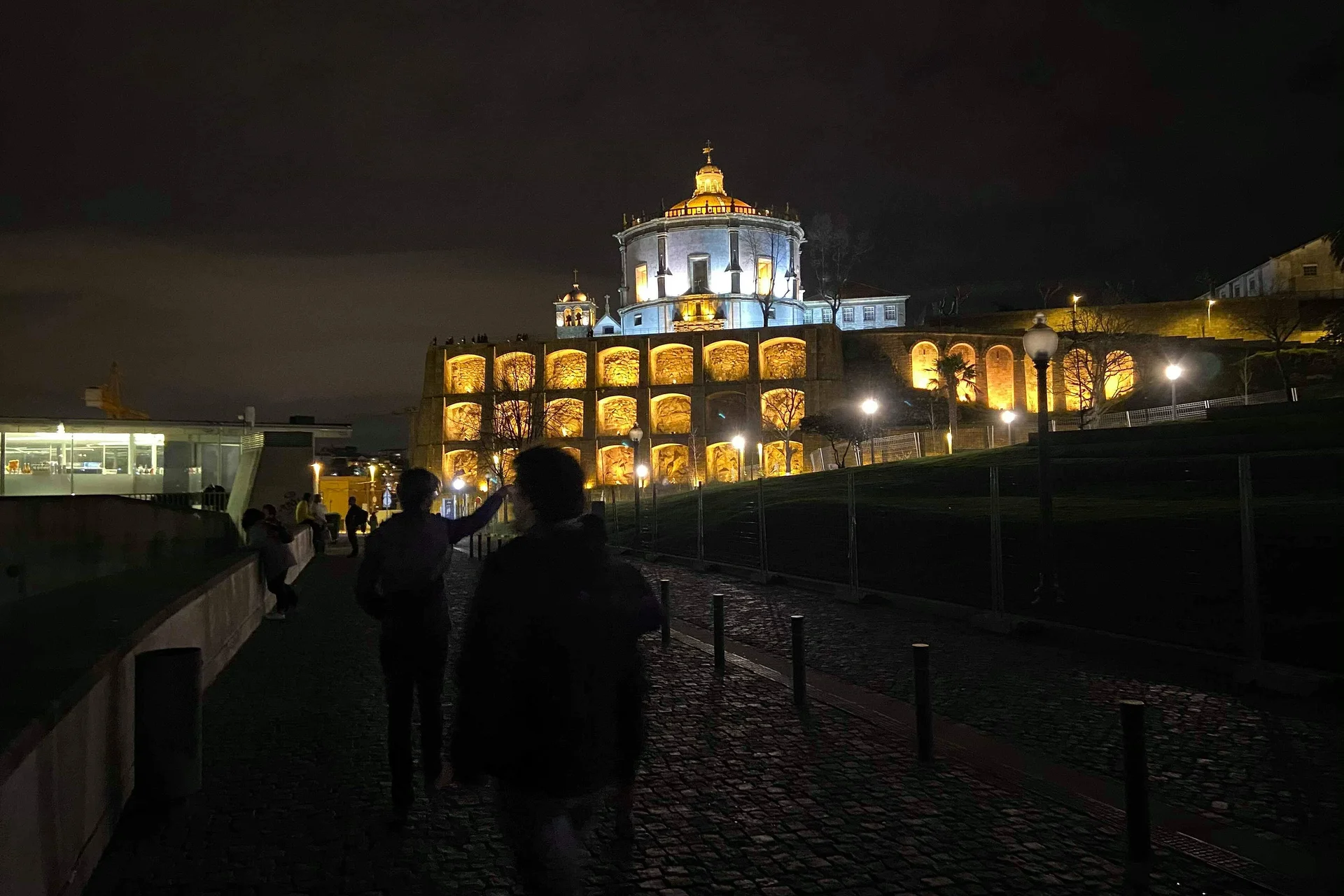
Claustros do Mosteiro à noite

Articles about Portugal

Latest reviews

Impressive

The 25 de Abril Bridge is truly impressive, even without crossing it. I couldn't take my bike across since it is actually off limits to cyclists (and even pedestrians), which makes sense given the tr…

266

Must try

Pastéis de Belém are a must when visiting Lisbon. You can find them all over the city, and you definitely have to try them at least once. They are good and pleasant to eat, even if I didn't find them…

114

A must-see

Belém Tower is a must when visiting Lisbon. I didn't have the chance to go inside, but the exterior is already well worth the trip. The monument is magnificent, especially right by the water. I par…

109

Extraordinary setting

I love old bookstores and I had heard a lot about this one. It is a magical place! The woodwork, the incredible structure of the staircase, and the stained glass windows blew me away. I do not know if…

96

A must-do crossing

The impressive structure of this double-decker bridge reminded me a bit of the Bir-Hakeim bridge. Crossing it remains one of my best memories of Porto. It offers superb views of the river and the city…

134