
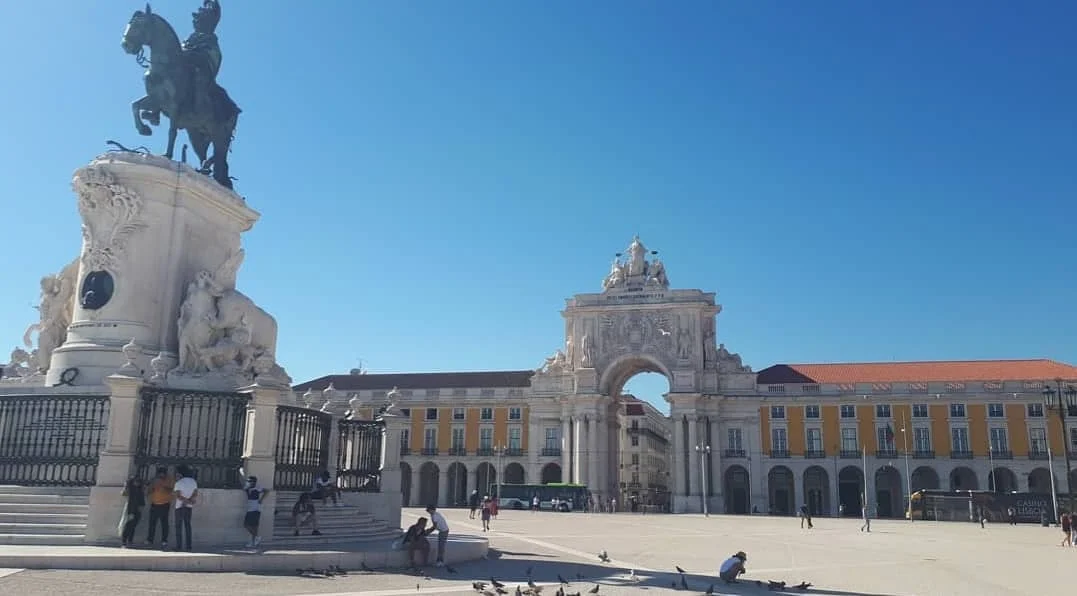
Tired of the gloomy weather in northern France, I had always envied the sunshine and milder climate of other regions. I was also craving adventure and novelty, exhausted like so many French people by a dull routine of work, commute, and sleep, so I decided to try my luck elsewhere.
As a seasoned globetrotter who loves discovery and cultural immersion, I considered moving to countries located outside the European Union, but unfortunately, the task proved to be extremely tedious. Why? Aside from the language barrier you might face in certain countries, the real issue was administrative. Indeed, even though the French passport is one of the most "tourism friendly" in the world and it is very easy for a French citizen to travel to many countries without even needing a visa, traveling and relocating are two entirely different things.
In the vast majority of countries outside the European Union, expats must prove they can support themselves and, in most cases, find a job. To get a work visa, you first need to find employment, and generally speaking, it is the employer's duty to regularize the employee's administrative status. However, employers often want to avoid dealing with this and ask during interviews if the candidate already holds a work permit. It is a vicious circle!

Just as my relocation project had hit a dead end and I was seriously starting to give up, I stumbled upon a dream job offer on a famous job search website... in Portugal!
A job in my field, tourism, which did not require fluency in Portuguese, only French and English, with a salary higher than the local minimum wage, plus housing and health insurance 100% covered by the company. I applied and got hired!
I have absolutely no regrets about moving abroad, and if you think all of this sounds too good to be true, then read on!
The benefits of moving to Portugal
Life the Portuguese way

Portugal is a very pleasant country because it is coastal and, being located in southern Europe, it enjoys an extremely mild climate quite similar to that of northern North Africa. In most regions, the heat remains bearable in summer since there is always a cool breeze coming from the Atlantic Ocean.
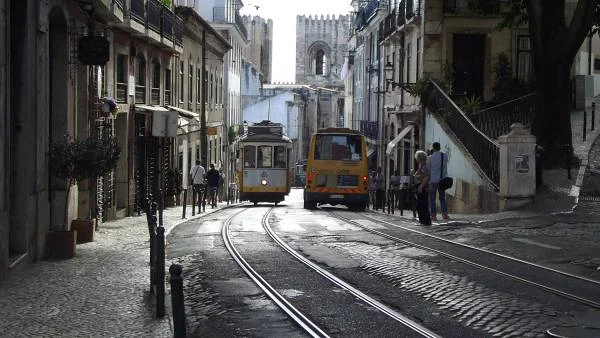
Portuguese people are very welcoming and smiling, and they will quickly make you feel right at home. Furthermore, Portugal is a truly safe country. I live in Lisbon, the capital, where there is generally no theft or street harassment, and assaults are very rare. As a woman, I can calmly walk alone wherever I want, day or night, without ever feeling afraid.
Outside the capital, the country also boasts magnificent cities, each completely different from the next: Sintra, Porto, Santarém, Faro on the Mediterranean coast... There is something for everyone, and Portuguese architecture with its colorful houses and tiled walls is truly beautiful.
The Lusitanian lifestyle is genuinely relaxed. The country is not overpopulated, and you do not feel like you are living on top of one another. Even life in the capital of Lisbon is less stressful than in most major French cities. On top of that, the cost of living is low and the food is amazing!
Clearly, Portugal has everything to win you over!
Portugal, a truly welcoming melting pot for expats

Lisbon is a very cosmopolitan city where you cross paths with expats from all over the place, and it features a very large French-speaking and French community. For example, there are four of us in my shared apartment, I live with a French woman, a Ukrainian guy, and a Palestinian guy, and yes, it is almost like the movie "The Spanish Apartment"! A lovely blend of cultures that surprises us and teaches us something new every day!
Why are there so many foreigners in Portugal?
I am going to explain why Portugal is so cosmopolitan and how you can settle down there.
First of all, Portugal is a member of the European Union, so all EU citizens can move there without major difficulties, which represents 27 nations after all, and that is no small feat.
Plus, Portugal is a country that is not restrictive regarding immigration. In fact, most expats are wealthier than the average Portuguese person and bring financial added value to the country. You can also notice a large population of Black people, particularly in Lisbon. This population generally originates from Angola, a Portuguese-speaking country that is a former Portuguese colony. Black people experience far less discrimination here than in France and are much better integrated.
Anyway, Portugal is a nation where foreigners are warmly welcomed and where there are no integration issues. Could this be a future haven for newcomers?
A financially advantageous country
You should know that the cost of living in Portugal is quite low compared to most other European countries. To give you an idea, the cost of living is 31% lower than in France, not bad right? This means this Portuguese-speaking country is financially attractive and accessible for most French and European people. For comparison, it is entirely possible to find a studio apartment in Lisbon for 400 or 500 euros per month, whereas in Paris or London, rents can reach 1000 euros per month for a space of 20 square metres.
It is very important to note that most French expats are retirees. Among the reasons for their relocation, budget often comes near the top. Since retirement pensions are quite low in France, many French retirees are unsatisfied with their standard of living. However, retirement guarantees a secure and fixed income that allows you to find a better quality of life in Portugal. Cherry on top, French people in Portugal are entitled to the RNH (Non-Habitual Resident status). In everyday language, this is called tax exemption, meaning no income tax. French people and foreigners contribute a lot to the Portuguese state. Indeed, having higher incomes, they consume heavily and thus help drive the economy in a way. The local government therefore figured it was more worthwhile to forgo income tax to attract "new consumers." This is also why there are many French self-employed entrepreneurs as well. That being said, the RNH is evolving. For retirees moving there in 2020 and later, there is now a 10% income tax.
Linguistic accessibility
Another very important point, which I hope will help monolingual folks take the plunge: language accessibility. Indeed, many Portuguese people speak French and you can always find a French speaker in any situation (administrative, medical, dining...). And this situation is expected to last! Since this destination welcomes a large number of French tourists and retirees who do not speak any other language, mastering the language of Molière has become a professional asset for working-age Portuguese people. In short, everyone has something to gain.
You should also know that France has received several waves of Portuguese migration. Portuguese people are perfectly integrated in France and master the tricolor language well, meaning immigration flows in both directions.
Finally, if you took Spanish as your second foreign language in school like I did, even if your level was weak, you will easily understand written Portuguese. The vocabulary, verbs, and endings are very similar between the two languages. Portuguese pronunciation is a bit trickier, but taking a few lessons and hanging out with locals will help you overcome this minor hurdle very easily.
Administrative procedures.
Finding a job in Lusophone territory
If you speak both French and English and have a bit of experience in tourism, retail, customer consulting, or real estate, you stand a great chance of finding a job in Portugal. Indeed, French people and foreigners in general are quite appreciated in the job market.
Indeed, Glassdoor, and a bunch of other sites are packed with job listings for this country, which is not heavily affected by the employment crisis. On those famous French expat Facebook groups, offers are regularly posted, and you can submit your resume or apply to existing listings.
Teleperformance, a specialist in telephone and remote customer service, is a company that hires massively. I can recommend this choice if you are coming alone. On the other hand, with a family or a partner, this choice is not necessarily the best since you won't be able to benefit from all the perks, such as flexible hours.
On job search websites, if you do not speak Portuguese, simply enter the language you speak along with your field of activity in the search fields, and you are very likely to find something. However, make sure your administrative paperwork is in order.
The NIF and the CRUE, essential items!
Watch out! Even though moving to Portugal is pretty straightforward, you need to take your time and think things through before diving into this adventure. I really recommend getting some help, especially if you plan to buy or even rent a property. The best move is to work with a real estate agency. Find someone or an agency that can help you handle the paperwork for your housing and your residence card (yes, it is very beneficial and not all that complicated if you are guided and know how it works).
Portuguese bureaucracy has a bad reputation, which is not necessarily unjustified. Getting a NIF (Numero de Identificaçao Fiscal) is vital when you live in Portugal. Without this NIF, it is sometimes difficult to rent or buy, open a bank account, or access certain public services. In short, you will miss out on a lot of things. You can get a NIF by going to the nearest Finanças office, which is the equivalent of our public finance centers in France. To do this, you generally just need to prove your French nationality with a passport and show your address in France. Presenting a bank statement works well too. Then comes the trickiest part, which is the Finanças office and especially the wait! Take great care to check the hours before you go, as they vary depending on where you are and the time of year. The best advice I can offer is to show up at the Finanças office nearly 20 minutes before opening to keep your wait time down to 15 minutes, because yes, the NIF is in very high demand!
And that is not all! Having a NIF is not enough to settle down in Portugal, as that is just the first step. The second golden ticket is the CRUE (Certificado do Registo de Cidadao da Uniao Europeia). Indeed, if you do not have it, you will be required to leave the country after 3 months. Failing to complete this administrative step runs you the risk of being deported and having to pay a hefty fine. To get your CRUE, head to the town hall of your new city of residence. First, you will need to request a form to indicate the reason for your request, and then you will need to provide the requested documents: a sworn statement saying that you can support yourself and your family and that you can take out health insurance, plus a recent proof of address (utility bill, lease agreement). For retirees, the process stops there, but for students and workers, you will need to provide a sworn statement stating that you attend an educational institution or that you are employed or self-employed on Portuguese soil. This process costs the modest sum of 16 euros.
Once you have successfully obtained your NIF and your CRUE, it is still possible to apply for a residence card, but you can definitely stop there.
For workers and students, it is easier to get a NIF and a CRUE since in most cases, companies and universities take care of it for you.
Healthcare and the Portuguese medical system
Portugal enjoys a good healthcare system. Like in France, it is split into two sectors: private and public.
The private sector is excellent but very expensive, while the public sector is also very good, but the issue is the endless wait times. If you have surgeries to schedule, I strongly recommend booking an appointment in France. The Portuguese healthcare system remains very efficient nonetheless. To get local care under the best possible conditions, it is strongly recommended to obtain a permanent residence card. Otherwise, you absolutely must get personal health insurance with maximum medical expense coverage along with a European Health Insurance Card. The European health card is obtained very easily and quickly. You just need to go to the French government website. As for health insurance, the price ranges from 45 euros to several hundred euros per month, depending on your age, any potential medical conditions, and the level of coverage requested. You will have no trouble finding health insurance, as many groups that we already have in France offer it, such as Groupama.
Portugal, yes, but where and with whom?
Which city should you choose in the lands of Vasco da Gama?

This depends on many things that are specific to you. First, your budget. Even though Portugal is an affordable country, to be completely transparent, Lisbon remains much more expensive than small provincial villages or the outskirts.
You also need to take into account your lifestyle and your desires. Do you prefer the city or the countryside? Are you more of a beach person or a mountain person? Do you own a car? Do you need to return to France regularly?
Answering all these questions will help you pinpoint the place where you will feel best. It can also be interesting to visit Portugal multiple times to check out different cities before making up your mind.
I am afraid of feeling lonely during my move abroad
Some expats worry a lot about social isolation and a failed integration. The best approach is to take a few Portuguese classes before coming so you can say a few words, express simple things, and understand the basics of the language, and afterwards learning Portuguese will come naturally.
The Portuguese are very welcoming people who really enjoy communicating with foreigners. If you reach out to them, they will talk to you very warmly and without hesitation. What better way to learn the language and discover the culture?
If you get homesick and want to connect with other French speakers, or if you want to get information on expat life, I strongly recommend checking out French Facebook groups. They are very easy to find, you just need to type keywords like "French" and "Porto" for example into the app's search bar. This makes it very easy to meet people, post all your questions directly to the group, and you can also find rentals or jobs through these groups since listings are posted pretty regularly. I use this kind of Facebook group a lot, it helps me out tremendously!
Conclusion
To wrap it up, Portugal is a fantastic destination for French expats. It is financially accessible, French people are very well received, and the language barrier is almost non-existent. Plus, the country enjoys great sunshine all year round and a very mild climate. The large French community, which is very supportive, will be there to guide and accompany you on your expat journey.
However, you need to take your time and be thorough with administrative procedures to have the best possible experience.
Portugal is truly an excellent country to live, work, and retire! Tchau!


Comments (1)