
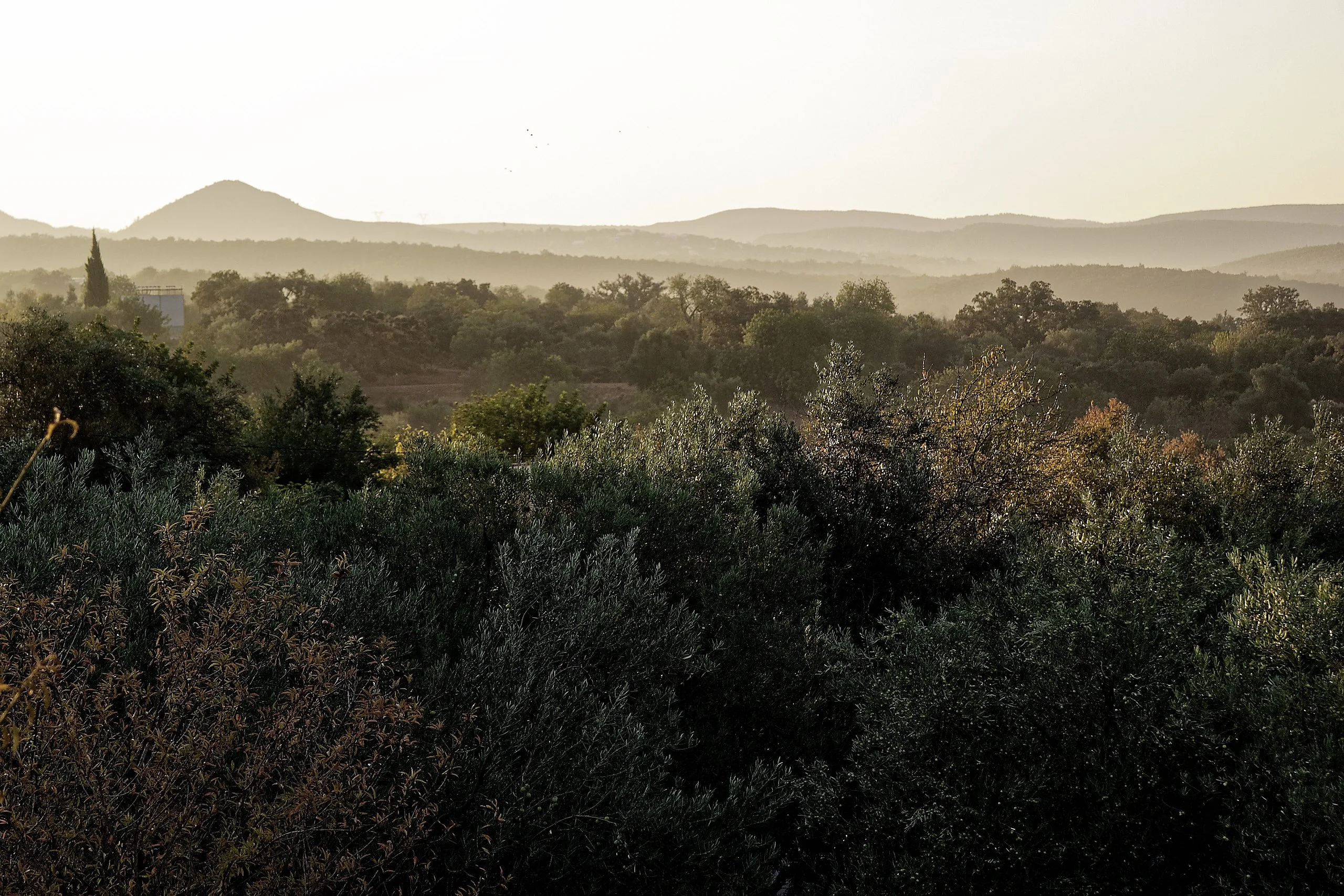
In the south of Portugal, straddling the Alentejo and Algarve regions, lies the Serra do Caldeirão, literally the "Cauldron Mountains."
It gets its name from its appearance: from the highest points, the view resembles a bubbling cauldron.
How to get there
A truly magical place that remains far from the typical tourist trails, yet is just a stone's throw from the hustle and bustle of the Algarve, it takes a fair dose of patience and humility to find your way through this labyrinth of paths.
There are only a few paved, reasonably well-marked roads that cross the area: from North to South, the road from Almodôvar (in the Beja district) toward Salir; from East to West, the road from Sao Barnabé toward Sao Marco da Serra; and the A2 motorway, though there are no exits between Almodôvar and the Algarve coast. The best part is leaving the main road to venture onto the smaller trails. After that, there are few, if any, signs at intersections. Conventional maps don't cover the area, and I doubt a GPS would be of much use.
Stunning, untouched nature
 But what a wonder it is at every turn, every valley is different. The flora and fauna remain pristine, and there are breathtaking views over the entire Algarve coast. Some mornings, mist blankets the valleys, giving you the feeling of standing on an island.
Although it gets very hot and dry in the summer, the winter and spring are rainy enough to allow nature to survive through the dry months. The main rivers continue to flow, fed by thousands of springs, some natural, some man-made, each more beautiful than the last. Every rainy spell is followed by a ray of sunshine, allowing nature to flourish.
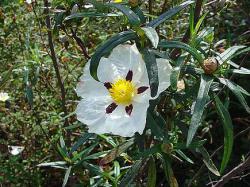
Spring is the perfect time to discover carpets of wildflowers as far as the eye can see. Summer takes on the look and scent of the Corsican maquis. The landscape is primarily made up of cork oaks, but you'll also find plenty of strawberry trees, rockroses, heather, rosemary, and centuries-old olive trees... everything you’d expect from a Mediterranean climate.
The "cauldron" overlooks everything: the Alentejo plains to the North, the Algarve coast to the South, the Spanish plains to the East, and the Atlantic coast to the West. The horizon is within reach in a full 360-degree view. You can witness absolutely stunning sunrises and sunsets, and, though less well-known, the moonrises are equally beautiful. While the days are lovely, the nights are truly magical.
Because the area is sparsely populated and has very little light pollution, you can actually SEE the sky. You feel as though you’re in the middle of the starry expanse, submerged in the Milky Way; with a bit of patience, you can count the stars, all of them.
A region steeped in history
While nature in the area has changed little over the centuries, different peoples have passed through and left their mark, which is still visible today. The oldest known writing in the Iberian Peninsula was discovered in the region, carved into stone. It is displayed alongside other finds at the Writing Museum in Almodôvar and dates back to between the 7th and 5th centuries BCE. You can also find many dolmens and menhirs, a legacy of the Celtic past. There are also a few tumuli; while they aren't in great condition, some in the Algarve have been restored to their original state, with the top of the mound covered in white quartz.
You can also find round, thatched-roof houses where you’d almost expect a Druid to step out. They are no longer used as homes, but rather as shelters for animals or for storing hay. Many are in ruins, but some are still well-maintained. A few locals still know the secrets of how to build the roofs. Beyond the Celts, the Romans and Moors also passed through, leaving their own marks. Over time, this heritage is fading; for instance, at Castro da Cola, a mosque was dismantled to build a church in its place. The site also houses the ruins of a very old fortification of uncertain origins, it could date back to the Celtic era. There is a restaurant nearby where the food is good and the welcome is warm; the owners love to talk about "their" castle and its history. Another ancient fortification near Santa Clara-a-Nova, known as Mesas de Castelinho, is also extremely old, and archaeological excavations take place there every year.
You can also find a few perfectly preserved Roman bridges and sections of Roman roads in the area, along with plenty of ancient legends that have stood the test of time.
Dining in the area
 The entire area is well-equipped with both restaurants and places to stay. Some cafes in the small villages also serve food. It isn't always written on the door, so you have to ask. Generally, it’s local home-style cooking: hearty and calorie-rich. Some days, wild boar is on the menu, as there are many in the region. Dishes are often based on meat and charcuterie, sometimes accompanied by excellent tomato salads. To find good fish, you need to head closer to the coast. It’s also possible to find residences with equipped kitchens if the local diet doesn't suit you.
For nature lovers, treasure seekers, star gazers, or anyone simply looking to discover a beautiful mountain range far from everything, head to the Serra do Caldeirão in Portugal. It’s a place to be seen, and above all, to be experienced.

Comments (0)
No comments yet. Be the first!