
Jerónimos Monastery: a stone cathedral built on the spice trade
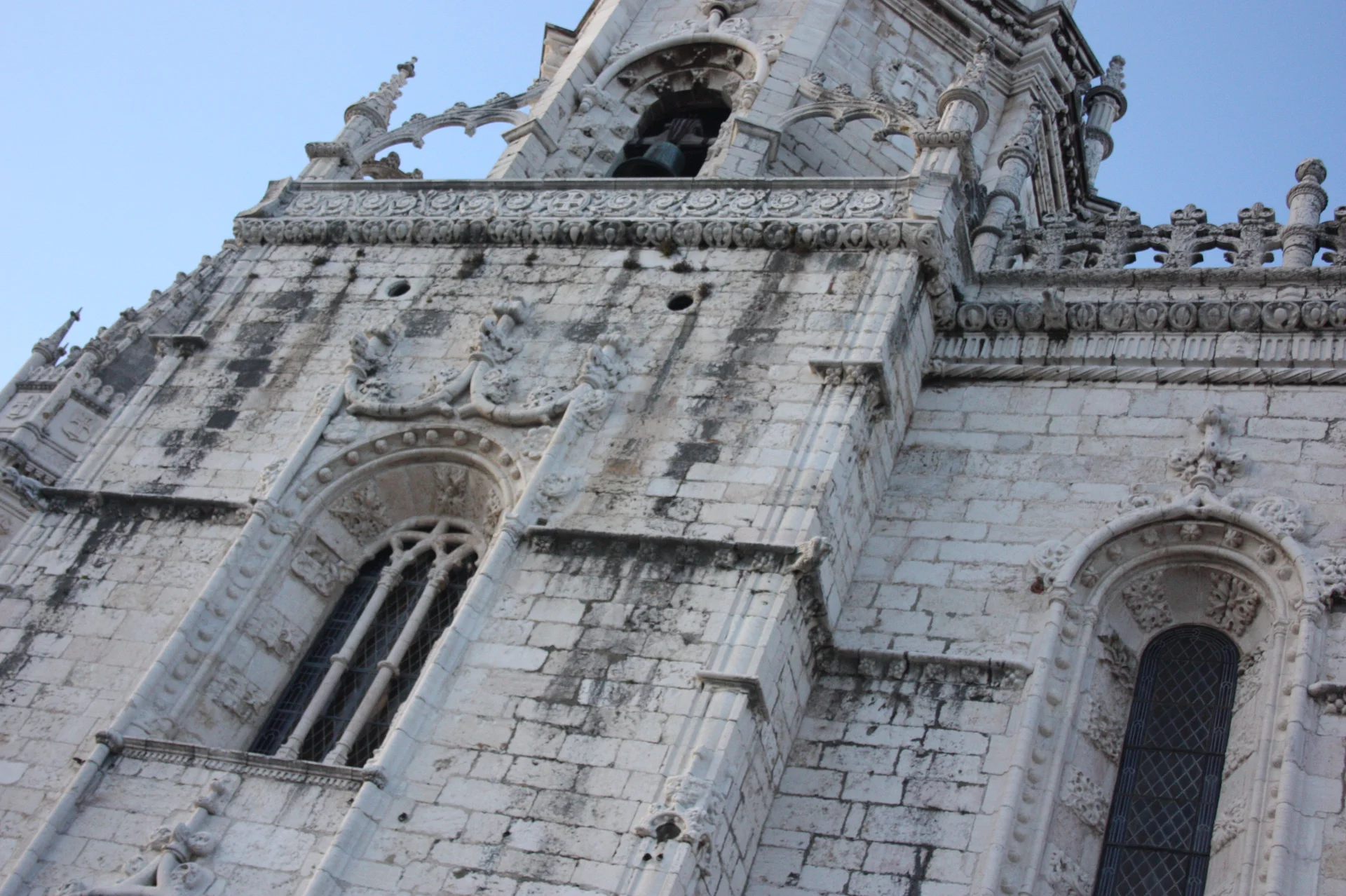
Morning light hits the limestone facade, revealing hundreds of intricate carvings you might otherwise miss. Stone ropes, armillary spheres, and sea creatures hide in every nook. The Mosteiro dos Jerónimos (Jerónimos Monastery) does not reveal itself all at once. It rewards a closer look, detail by detail.
Why visit the Jerónimos Monastery?
The story begins in July 1497. Vasco da Gama spent his final night in a chapel on the beach of Restelo before setting sail for India. Two years later, he returned with a cargo of spices worth a fortune. King Manuel I decided to build a monastery to celebrate the feat. Construction began on January 6, 1501, funded by a 5 percent tax on imported pepper.
The project spanned nearly a century. Architect Diogo de Boitaca laid the first stones, then João de Castilho took over in 1517, adding the most spectacular elements. UNESCO designated the site a World Heritage landmark in 1983, along with the nearby Belém Tower.
Decoding the Manueline style
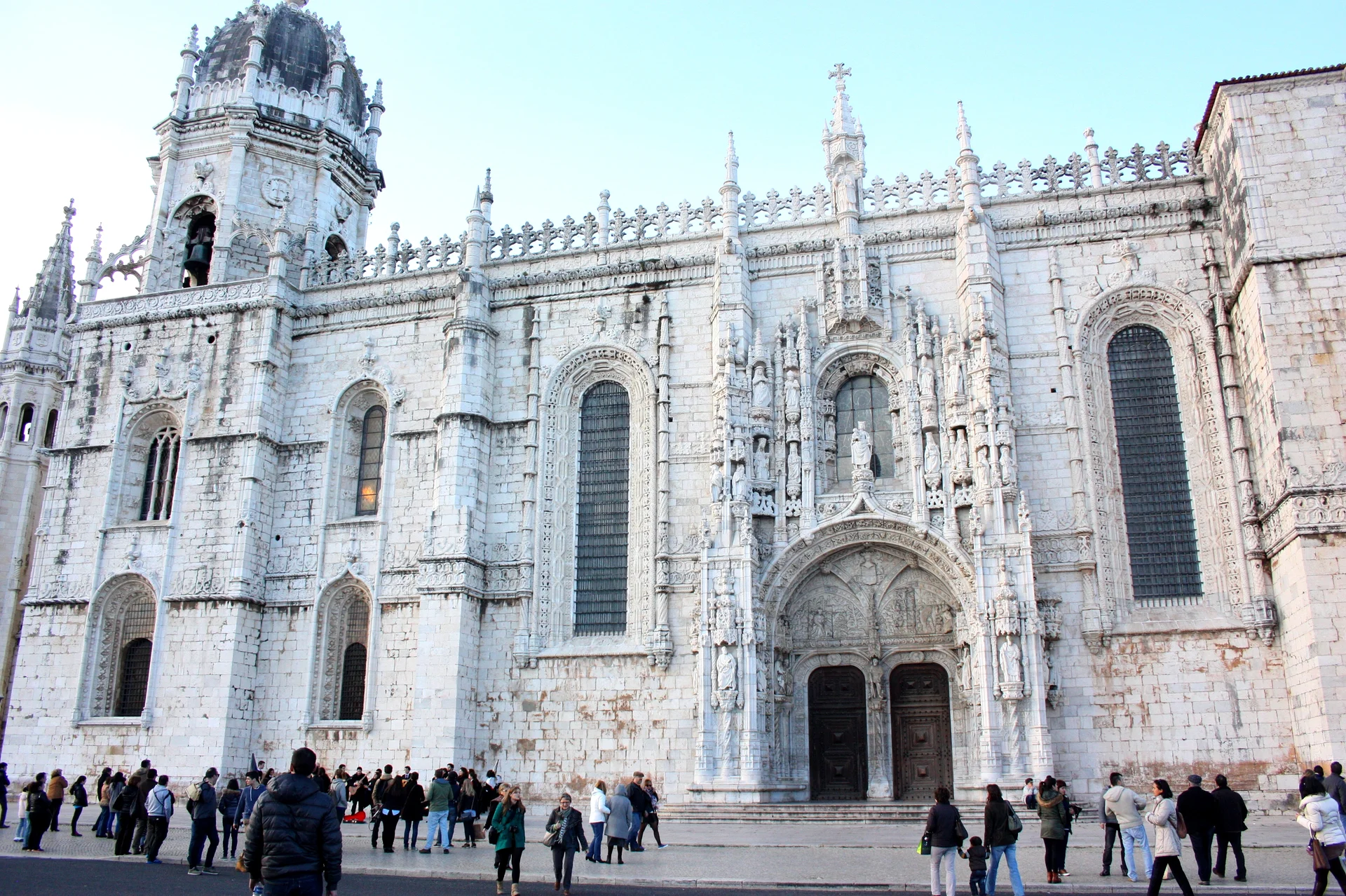
Manueline is an architectural style unique to Portugal. It blends late Gothic with Renaissance and Moorish influences, but its primary purpose is to celebrate maritime discovery. Look for recurring motifs like ropes, anchors, shells, and armillary globes. Every column and doorway tells the epic story of Portuguese navigators.
The south portal, facing the Tagus River, stands over 30 meters tall. At the center sits the Virgin of Belém, surrounded by Prince Henry the Navigator and the Archangel Gabriel. The west portal, the work of French sculptor Nicolas Chanterene, serves as the church entrance and features statues of Manuel I and his wife, Maria of Aragon.
Spaces you cannot miss
The two-story cloister
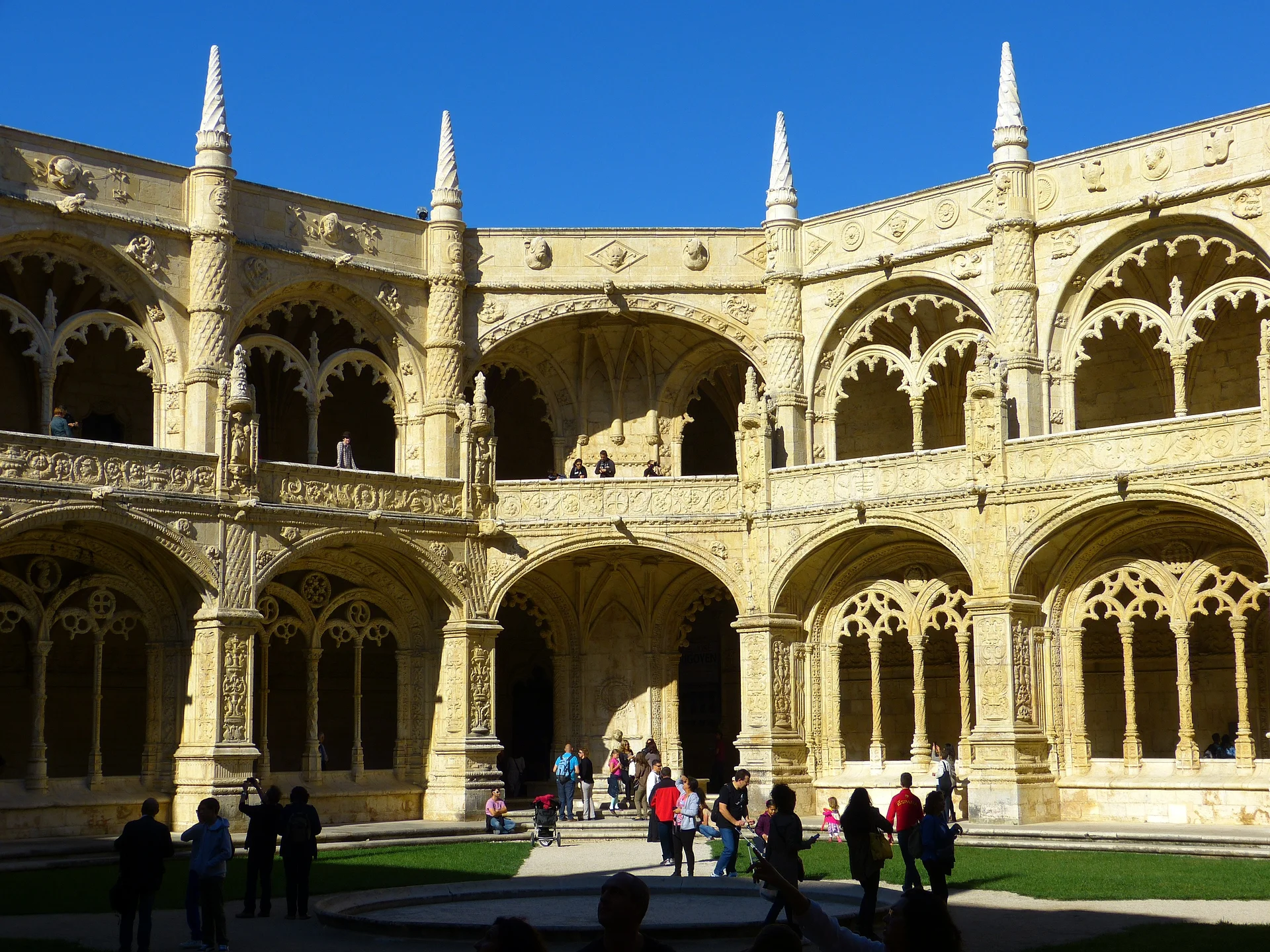
Considered one of the most beautiful in Europe, this cloister measuring 55 meters on each side impresses with the delicacy of its arcades. A rare feature is the open corner design utilizing a double row of arches. The lower level, designed by Boitaca, maintains a pure Manueline style. The upper level, completed by Castilho, introduces more sober Renaissance elements.
Santa Maria de Belém Church
Entry is free through the west portal. The 25-meter-high single nave rests on six sculpted columns whose ribs reach toward the vault like palm fronds. The tombs of Vasco da Gama and poet Luís de Camões flank the entrance. Further on, in the cloister, lies the poet Fernando Pessoa.
Friendly tip: arrive after 3:00 PM on weekdays. Tour groups head back into central Lisbon, and you can photograph the cloister in near solitude. In the summer, lines of 45 minutes to 1 hour and 30 minutes are common during the morning.
The refectory and its azulejos
This vaulted hall with walls covered in 18th-century glazed tiles is worth a stop. The panel depicting the miracle of the loaves and fishes spans the entire entrance wall.
Around the monastery
Also worth seeing in the Belém neighborhood:
- The Belém Tower, another UNESCO site, a 15-minute walk along the Tagus River
- The Padrão dos Descobrimentos (Monument to the Discoveries), a monument dedicated to explorers
- The MAAT, a contemporary art museum on the waterfront
- The Pastéis de Belém bakery, where they claim the monks created the original recipe for pastéis de nata
The monastery also houses the National Archaeology Museum in a wing built in the 19th century, along with a portion of the Maritime Museum. Tickets for these museums are sold separately.
Opening hours
- October to April: 10:00 AM to 5:30 PM (last entry 5:00 PM).
- May to September: 10:00 AM to 6:30 PM (last entry 6:00 PM).
Igreja de Santa Maria de Belém (Church of Santa Maria of Belém, free admission): Tue-Sat 10:30 AM to 5:00 PM, Sundays and religious holidays 2:00 PM to 5:00 PM.
Closed: every Monday, January 1, Easter Sunday, May 1, June 13, December 25.
*Information subject to change

My favorite place in Lisbon! This magnificent monastery includes a church, which has free entry, as well as a cloister that is absolutely stunning and requires a paid ticket. The site showcases Portuguese history and exploration through highly detailed Gothic architecture filled with maritime motifs. In connection with this past, the church houses the tombs of Vasco da Gama and Luis de Camoes. You can easily combine this visit with the archaeology museum, located in the annex, and the Belem Tower.