France: The Country You Think You Know
At 6 a.m., the smell of a fresh croissant drifts out of a bakery onto a cobblestone alley that Google Maps has never indexed. That's the France most visitors never find.
It's not just the Eiffel Tower and the Louvre. It's the thousands of villages where the 21st century seems to be still negotiating its arrival. France draws close to 90 million visitors a year, making it the world's most visited country, and yet it remains full of corners where you won't run into another tourist.
Is France the right trip for you?
This is a country that rewards travelers who slow down. If you're hunting for cheap beach escapes or backpacker hostels at $20 a night, France probably isn't your best bet. But if you're willing to linger over a two-hour lunch, chat with a winemaker, or get happily lost in a village market, it will pay you back generously.
On budget: let's be straight. The major cities are expensive. Paris can easily run €150 to €200 per day ($165 to $220) once you factor in accommodation, meals, and admissions. Rural France is a different story: bed-and-breakfast rooms in the countryside go for €60 to €80 a night ($65 to $88), usually with a substantial breakfast included. The language barrier is real in rural areas, but even a basic attempt at French opens doors in ways that English alone won't.
thumb_up Great fit for:
- Food and wine lovers who want to explore regional terroir
- Couples looking for romance and historic atmosphere
- Families who want to mix beaches, culture, and nature
- Travelers passionate about history and architecture
- Hikers and cyclists looking for varied trails
warning Not a great fit for:
- Travelers on a very tight budget: daily costs add up fast
- Anyone chasing exotic or tropical experiences
- People trying to see everything in three days
- Those who have zero patience for bureaucracy and a certain formality in service culture
What things actually cost
| Trip type | Where | Duration | Estimated budget |
|---|---|---|---|
| City culture trip | Paris | 4-5 days | €600 to €1,200 ($660 to $1,320) |
| Wine country road trip | Bordeaux or Burgundy | 1 week | €700 to €1,500 ($770 to $1,650) |
| Beach vacation with family | Brittany or Basque Coast | 1 week | €800 to €1,800 ($880 to $1,980) |
| Ski resort stay | Alps or Pyrenees | 1 week | €1,000 to €3,000 ($1,100 to $3,300) |
| Long-distance hiking | GR20 in Corsica or Stevenson Trail | 10-15 days | €500 to €1,200 ($550 to $1,320) |
| Châteaux and heritage | Loire Valley | 4-5 days | €400 to €900 ($440 to $990) |
Getting around and where to stay
France has some of the best infrastructure in Europe. The rail network is dense, the highways are excellent, and accommodation options range from budget gîtes to Relais & Châteaux properties. The main trap is seasonality: in July and August, prices along the coast jump 30 to 50% and availability evaporates weeks in advance. The climate varies more than most Americans expect. Provence can hit 40°C (104°F) in summer while Brittany is getting rained on.
Safety is not a significant concern. In major cities, watch out for pickpockets on public transit and in tourist-heavy areas, the same precautions you'd take in any large European city. The countryside is very safe. Standard common-sense travel habits are all you need.
Fairy-tale châteaux and forgotten villages
French heritage goes well beyond the UNESCO list. The Loire Valley châteaux are a spectacular starting point: Chambord with its 426 rooms, Chenonceau spanning the Cher River, Blois with its famous double-spiral staircase. Budget three to four days to explore this region without rushing.
The less-visited history
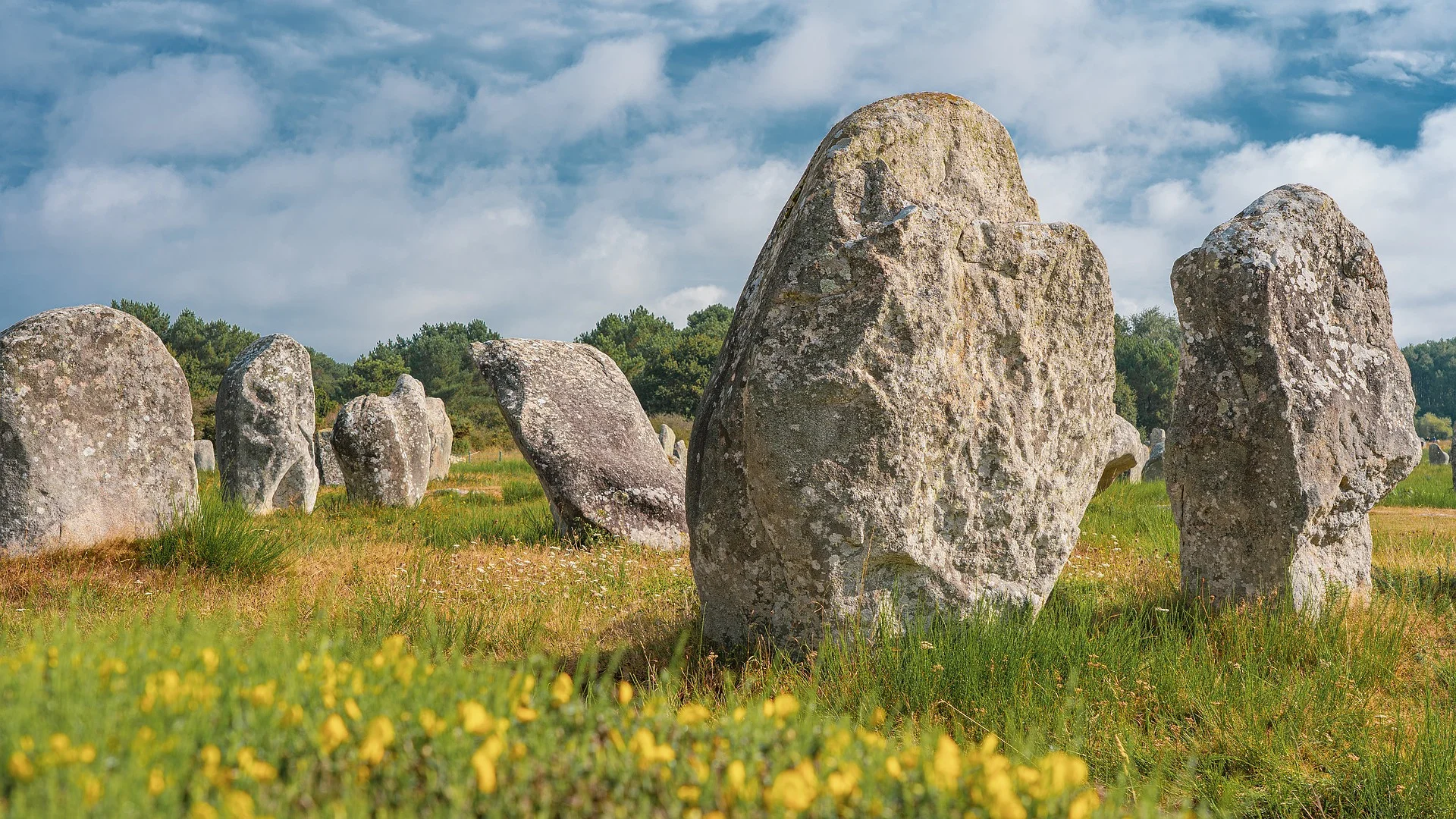
Beyond the famous sites, France hides places that rarely make it into guidebooks. Rocamadour, clinging to a cliff face in the Lot region, has a vertiginous quality that pilgrims have been climbing since the Middle Ages. Conques, in the Aveyron, bans cars from its center entirely: the silence there is almost unsettling.
The fortified city of Aigues-Mortes, in the Camargue, surprises with how intact its medieval walls remain, surrounded by pink salt flats. Further north, near Lyon, the Palais Idéal du Facteur Cheval defies any easy description: a single rural mail carrier spent 33 years building this extraordinary monument, stone by stone.
Insider tip: visit the Palace of Versailles on a weekday and buy tickets online in advance. On weekends, lines can stretch past two hours.
Three coastlines, three completely different moods
France has three distinct coastlines, and they feel nothing alike. Along the south, the Mediterranean runs turquoise from Nice to the calanques (narrow rocky inlets) near Cassis. The Côte d'Azur still draws the international crowd, but the Provençal hinterland, just ten minutes inland, offers a much quieter alternative.
The wild Atlantic side
The west coast tells a different story. The Dune du Pilat, the tallest sand dune in Europe, towers over the Arcachon Basin south of Bordeaux. Surfers head to the breaks along the Basque Country and the Landes coast. Further north, La Baule stretches out nearly six miles of fine sand beach.
The Normandy coast along the English Channel is worth the detour. The cliffs at Étretat inspired the Impressionists, and it's obvious why when you stand on them. The boardwalk at Deauville holds onto its Belle Époque charm. And crossing the bay to reach Mont Saint-Michel is one of those experiences that's hard to describe until you've done it.
Mountain trails and dormant volcanoes
The French Alps top out at Mont Blanc, the highest peak in Western Europe. In summer, Chamonix becomes a base camp for hikers and mountaineers. The Pyrenees offer wilder, less crowded terrain, with mountain villages where the pace of life shifts completely.
Central France holds a geological surprise: the volcanoes of Auvergne. The Chaîne des Puys, a UNESCO-listed string of perfectly shaped volcanic cones stretching 28 miles, is unlike anything else in Western Europe. The crater lakes are swimmable in summer. And the GR20, the long-distance trail crossing Corsica from north to south, ranks among the finest treks on the continent.
Insider tip: the sentier des douaniers (customs officers' trail) in Finistère follows the Breton coastline for hundreds of miles. Pick a section of a few days to get the views without wearing yourself out.
The France that doesn't make the brochures
The regions that tourist circuits overlook often deliver the best surprises. The Camargue, a vast wetland south of Provence, is home to wild white horses, black bulls, and flamingos by the thousands. The Jura, wedged between Burgundy and Switzerland, has turquoise lakes and impressive waterfalls set among pine forests, with almost no crowds.
Villages outside of time
Saint-Guilhem-le-Désert, in the Hérault, looks much the same as it did when its abbey was founded in 806 AD. The island of Molène, off the coast of Finistère, is barely half a mile long: you're more likely to spot gray seals than other tourists.
Albi, nicknamed the red city for its brick architecture, holds the world's largest museum dedicated to Toulouse-Lautrec. Further south, Cordes-sur-Ciel appears to float above the Tarn Valley on misty mornings. It's one of the finest medieval villages in the country.
Eating in France: way beyond croissants and baguettes
French cuisine is as regional as American barbecue, and the differences are just as fierce. In Alsace, tarte flambée (a thin-crust flatbread with crème fraîche, onions, and smoked bacon) goes head to head with choucroute, a hearty sauerkraut dish piled with smoked sausages. Brittany is the place for buckwheat galettes and fresh seafood. Lyon, which calls itself the gastronomic capital of France, has its own institution: the bouchon, a no-frills bistro serving local classics like quenelles (fish dumplings) and tablier de sapeur (breaded tripe).
The Southwest runs on duck: foie gras, duck confit, magret (duck breast). Cassoulet, a slow-cooked casserole of white beans and preserved meats, is exactly what you want on a cold evening. Bouillabaisse, the Marseille fish stew simmered in saffron broth, is a meal in itself. And every region has its cheese: Comté from the Jura, Roquefort from the Aveyron, Camembert from Normandy.
Wine routes wind through Bordeaux, Burgundy, and Alsace. Visit the cellars, taste the vintages, talk to the producers. Wine here is treated as living heritage, not a commodity.
When to go to France
The climate allows visits year-round, but each season has its own character.
- Spring (April through June) is the sweet spot: mild temperatures, spectacular blooms, and manageable crowds. Rapeseed fields turn Burgundy yellow in April; lavender starts perfuming Provence by late June.
- Summer is peak season. July and August pack the coasts and mountains with French vacationers. Paris empties of locals and fills with tourists. Temperatures in the South regularly exceed 35°C (95°F), making midday sightseeing genuinely unpleasant.
- Fall (September through November) is prime time for wine lovers and hikers. Harvest season animates the vineyards, and the forests turn spectacular colors.
- Winter works well for skiers in the Alps and Pyrenees, for Christmas market fans in Alsace, and for anyone who wants the Paris museums without the crowds.
Getting to France
Paris Charles de Gaulle Airport (CDG), 25 miles northeast of the city, handles the bulk of international flights. Air France, Delta, and United Airlines all operate direct routes from major US cities. Paris Orly, closer to the city center, mainly serves European and North African destinations.
Budget carriers including easyJet, Transavia, Vueling, and Ryanair offer fares from €30 to €50 ($33 to $55) from cities across Europe. One catch: Ryanair often uses Beauvais Airport, 53 miles north of Paris. The shuttle bus costs around €17 ($19) and takes about 90 minutes.
If you're already in Europe, the train is a comfortable option. The Eurostar connects London to Paris in 2 hours 15 minutes, and also links Paris to Brussels, Amsterdam, and Cologne. Spanish and Italian high-speed trains also serve Paris and other major French cities.
Getting around France
The TGV high-speed rail network is the most efficient way to cover long distances. Paris to Marseille takes 3 hours; Paris to Bordeaux, 2 hours; Paris to Strasbourg, 1 hour 45 minutes. Ouigo, the budget TGV service, starts at €16 ($18) when booked early. The Carte Avantage rail pass gives 30% off most fares for €49/year ($54).
Regional TER trains and Intercités services fill in the gaps to smaller cities and rural areas. The SNCF Connect and Trainline apps make it easy to compare prices and book.
Renting a car is the right call for exploring Brittany, the Basque Country, Corsica, or the Provençal backcountry. The highway network is excellent but tolled: Paris to Nice runs about €70 ($77) in tolls. The smaller departmental roads are free and often more scenic. For Corsica, ferries from Marseille, Nice, or Toulon are the main way in, with crossings ranging from 4 to 12 hours depending on the route.
Insider tip: in major cities, stick to public transit. In Paris, the Paris Aéroports ticket costs €13 ($14) from CDG or Orly to any metro or RER station in the city.