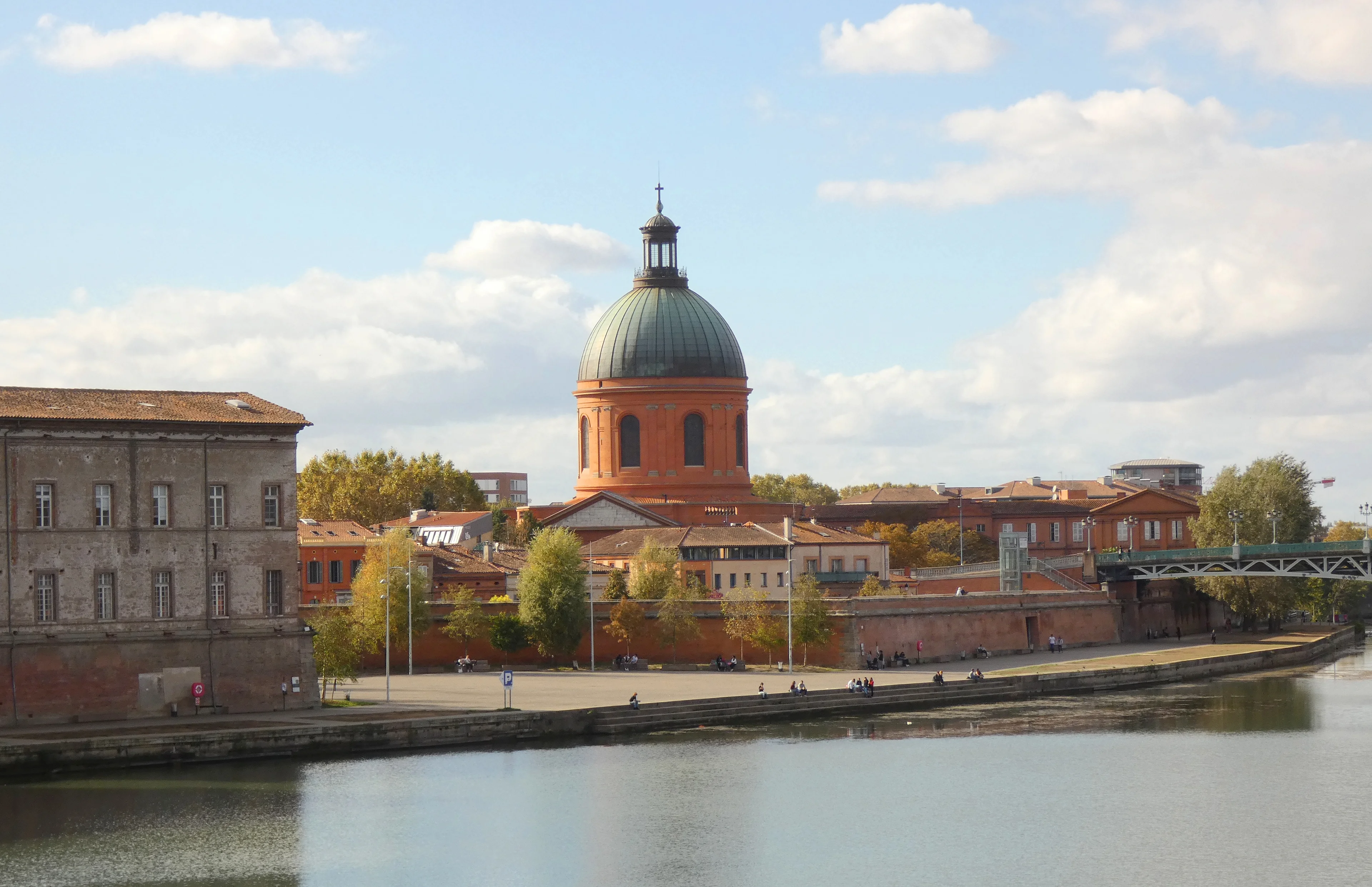
Toulouse et le Dôme de la chapelle Saint-Joseph

Top 6 most beautiful cities in Midi-Pyrénées to visit2026 ranking

Discover the most appreciated cities in Midi-Pyrénées by our members. Feel free to publish your own reviews to take part in this collaborative ranking.

The most beautiful cities in Midi-Pyrénées

#1 Toulouse +106 recs

Every evening, the Garonne river turns the brick facades of Toulouse a deep, glowing red. As the fourth largest city in France, it maintains a relaxed pace that feels miles away from the intensity of Paris. You will hear the distinct accent of the Southwest in local bistros, find cassoulet simmering in traditional clay pots, and see cyclists enjoying the shade of the plane trees along the Canal du Midi. From its thousand-year-old Romanesque basilica to the massive Airbus assembly lines, Toulouse balances deep history and cutting-edge industry without ever losing its laid-back southern spirit.

Must-sees

#2 Albi +52 recs

The nickname Albi la rouge (the Red City) refers to the searing, fire-toned brick that defines this town on the banks of the Tarn. You will find a skyline dominated by the fortress-like Sainte-Cécile Cathedral and a deep connection to the painter Toulouse-Lautrec. Wandering these medieval lanes feels like walking through a preserved historical record, blending massive architectural scale with the relaxed, unhurried pace of life in Occitanie.

Must-sees

#3 Millau +13 recs

Deep in the Grands Causses, the town of Millau is defined by its massive bridge. This Aveyron town sits in the Occitanie region, about a 90-minute drive from Montpellier and two and a half hours from Toulouse. It is a natural home base for hikers and outdoor sports enthusiasts.

A feat of engineering

The primary reason people stop here is the viaduct that shares its name. When it opened in 2004, it drew crowds eager to see a record-breaking structure. It spans 2,460 meters to connect the two sides of the Tarn valley. At its highest point, the structure reaches 343 meters above the ground. You do not need to be an industrial architecture buff to appreciate the scale of it, especially when it rises out of the morning fog.

Historic Millau

Millau is more than just a bridge. It is a town with 2,000 years of history. The old town center is built for walking, with narrow lanes and historic facades that feel like a step back into the Middle Ages. The place du Mandarous, also called the Grand Place, acts as the town hub where the main avenues converge. The place Foch is a local favorite, offering a village vibe where you can grab lunch or an afternoon drink under the plane trees. Nearby, you will find the church of Notre-Dame de l'Espinasse, known for its large decorative fresco. The Musée de Millau is worth a stop for archaeology fans to see the fossils and pottery unearthed during local excavations. Do not miss the Beffroi de Millau, the remains of a 12th-century palace tower that overlooks the town. It served as a prison in its past life, but today it offers one of the best vantage points for a panoramic view of the area.

Along the Tarn

Life in Millau moves at the pace of the outdoors. Green spaces like the parc de la Victoire, the presqu'île de la Maladrerie, and the parc Malraux are scattered throughout town. The Tarn river is the center of local activity, perfect for riverbank walks, boat trips, kayaking, or rafting. There is even a public beach called le Gourd de Bade, which is maintained and monitored throughout the summer. If you have extra time, plan a via ferrata climb at the Montpellier-le-Vieux park or try the unique bike-rail experience on the plateau du Larzac.

When to go

Millau is accessible year-round, but the window from June through September offers the most comfortable weather. Winters in the Aveyron region can be quite cold, and snowfall can make driving through the area difficult.

How to get there

You can reach Millau by road on the A75, the motorway that crosses the viaduct itself, or on the D911 from Rodez. From North America, connect through Paris to Montpellier and finish the trip by rental car in about 90 minutes; the train reaches Millau only via Béziers on the Causses line, which takes far longer.

Must-see

#4 Cordes-sur-Ciel +7 recs

Cordes-sur-Ciel sits perched high above the Tarn valleys, a medieval town where you can walk through steep cobblestone alleys lined with original Gothic homes. The quiet, elevated setting offers wide views of the rolling landscape, a scene that feels as removed from city life as a remote hilltop town in Tuscany. Today, the village focus remains on local artisans and well-preserved history, making it a slow-paced stop for anyone looking to trade crowds for stone architecture and silence.

#5 Luz-Saint-Sauveur

At an elevation of 710 meters, Luz-Saint-Sauveur functions less as a standalone destination and more as a base camp. From this village of 1,000 residents, the Cirque de Gavarnie sits just 20 kilometers away, while the Col du Tourmalet is a short drive through the switchbacks. Hikers, cyclists, and families looking for fresh mountain air all find a practical home base here, free from the pretension or high costs of larger resorts.

Must-see

#6 Lourdes -2 recs

Set against the Pyrenees in the Hautes-Pyrénées department of Occitanie, Lourdes is home to 13,000 residents. Yet nearly 6 million visitors pass through every year. That is because Lourdes has been a Catholic pilgrimage site since 1858, when Bernadette Soubirous reportedly saw the Virgin Mary.

Religion and history

You cannot talk about Lourdes without mentioning its main landmarks, centered around the Sanctuary of Our Lady of Lourdes. A large esplanade welcomes pilgrims who come to pray in the Basilica of St. Pius X, the Basilica of the Immaculate Conception, and the Rosary Basilica. You can visit the famous Massabielle grotto where the Virgin Mary is said to have appeared 18 times to Bernadette Soubirous. Believers from all over the world travel to this unique spot to pray or hope for a miraculous healing. Even non-believers should spend an hour exploring the sanctuary out of sheer cultural curiosity.

Lourdes also features other impressive historic architecture. The château fort, on a site occupied since antiquity, rises above the city on a hill. Walking through the ruins of this medieval fortress feels like stepping back in time, and the views of the surrounding mountains from the ramparts are exceptional.

Mountains and wide-open spaces

The natural setting surrounding Lourdes draws outdoor enthusiasts and hikers from all over France. The Lake of Lourdes is one of the region's favorite spots, with clear waters that attract walkers, fishermen, and mountain bikers. A scenic golf course offers a place to relax with panoramic views. Speaking of panoramas, do not miss the ride up the Pic du Jer on its 1100-metre funicular railway. Visitors of all ages enjoy passing through the tunnels and across the viaducts on this unusual trip.

Just a bit west of Lourdes, the Bétharram caves form an exceptional natural site for spelunking. Even beginners can head underground across three levels of galleries filled with stalactites and stalagmites. Finally, nature lovers can explore the Pibeste-Aoulhet massif regional nature reserve at their own pace, covering more than 5000 hectares with 13 hiking trails designed to showcase Pyrenean flora and fauna.

When to go to Lourdes

Lourdes is the fourth largest religious destination in the world and the second in Europe behind the Vatican, meaning a steady stream of pilgrims arrives all year long. If you want to experience the spiritual atmosphere firsthand, Easter and Christmas are ideal. If you prefer to avoid the crowds, plan your trip during the off-season and away from major religious holidays.

How to get to Lourdes

You can fly into Lourdes via the Tarbes-Lourdes-Pyrénées airport, located about ten minutes from town with connections to major French cities. Lourdes is also accessible by train via the SNCF rail station and by bus. Bringing a car? Toulouse is 1h55 away via the A64 highway.

Latest reviews

Pearl of the Tarn

A truly charming city! You feel right at home immediately. I enjoyed exploring between the water, the magnificent Bishop's Garden, the bridge, and the beautiful houses. I also recommend taking a boat…

25

Wonderful surprise

Albi was a real surprise. For me, it is without a doubt one of the most beautiful Occitan cities. I recommend it to those looking for a rich history and a strong identity. There are many superb buildi…

47

Very pretty city

I spent two days in the city of Albi and I really loved my stay. The city is pretty and very lively. The center is really pleasant and the cathedral is magnificent. Don't hesitate to go visit the insi…

45

The Pink City

Toulouse really lives up to its name! It is a very pleasant city to live in, whether you are looking at the parks, monuments, or anything else. The city center is beautiful, and there are lots of uniq…

38

The best vibe in France

I have traveled to quite a few cities in France. It is in Toulouse that I found the best vibe. Good natured, warm, but respectful, open-minded, cosmopolitan. Nothing like Paris, Marseille, Lyon, or Ni…

39

Rankings by travellers, for travellers

Our rankings are powered by thousands of reviews from travelers like you, not the arbitrary pick of a single editor. Every positive review you publish raises the destination’s score.

1 positive review = +1 reco

Your voice matters!

Have you travelled and discovered amazing places? Share your experience and help the community rank the most beautiful destinations! Sign up for free to post reviews and make your voice heard.