
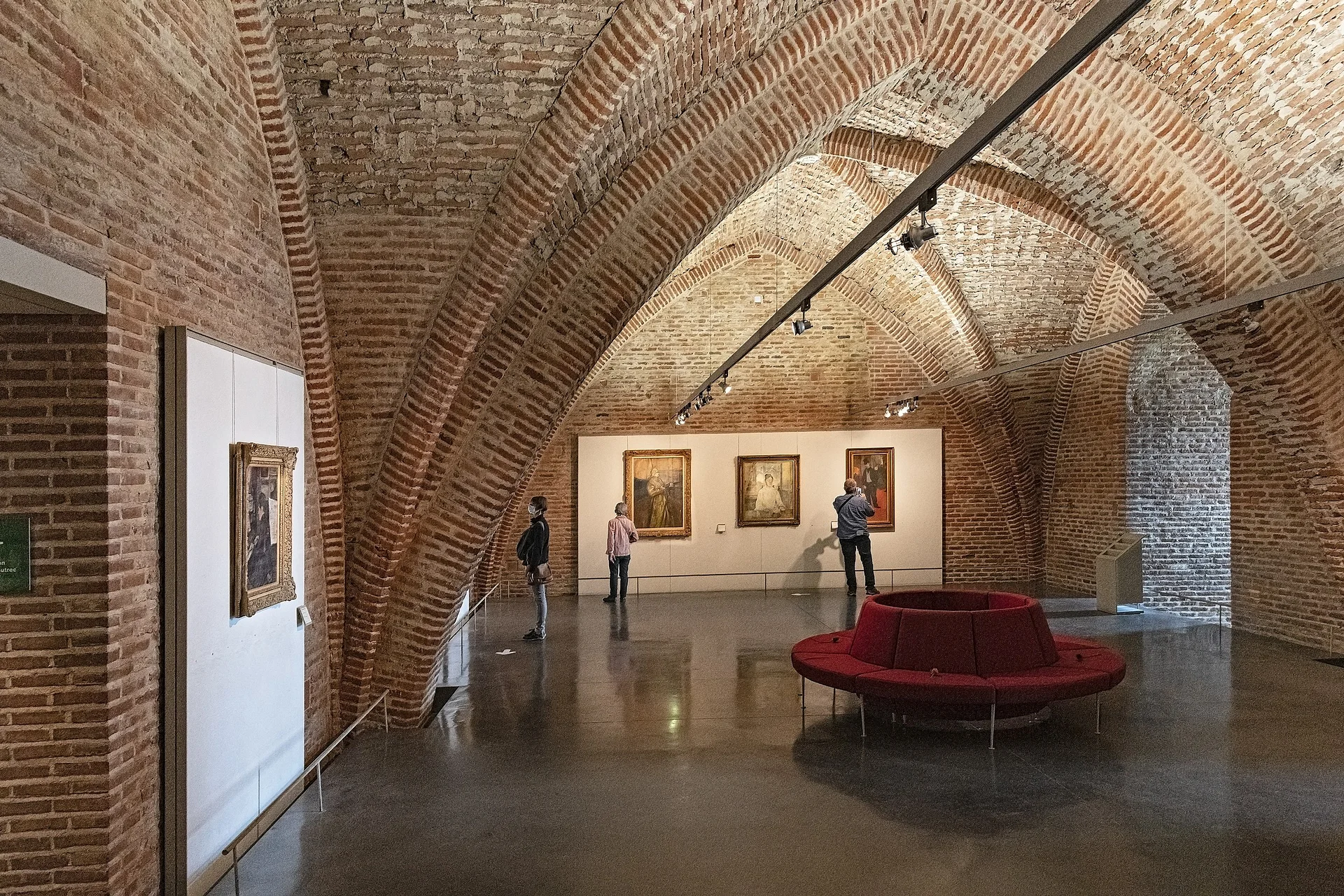
The Toulouse-Lautrec Museum in Albi: 1,000 works in a medieval fortress
Brick walls seven meters thick. Soft light grazing the posters of the Moulin Rouge. Inside the former stronghold of the bishops of Albi, Henri de Toulouse-Lautrec found his posthumous sanctuary. The Toulouse-Lautrec Museum holds the most significant public collection of the painter in the world, with over 1,000 works donated by his family in 1922.
Why visit the Toulouse-Lautrec Museum?
Henri de Toulouse-Lautrec was born in Albi in 1864 into an aristocratic family descending from the counts of Toulouse. His parents, who were first cousins, passed on a hereditary bone condition that stopped his growth at 1.52 meters (about 5 feet). This physical reality shifted his path toward art, away from the equestrian life of his father. He died at 36, leaving behind a massive body of work including over 700 paintings, 275 watercolors, and 369 lithographs.
His mother Adèle and his gallery-owner friend Maurice Joyant fought to establish this museum in his hometown. Their persistence paid off, as Albi now holds 219 paintings, 563 drawings, 183 lithographs, and the 31 posters that revolutionized advertising art.
Palais de la Berbie: when the setting rivals the art
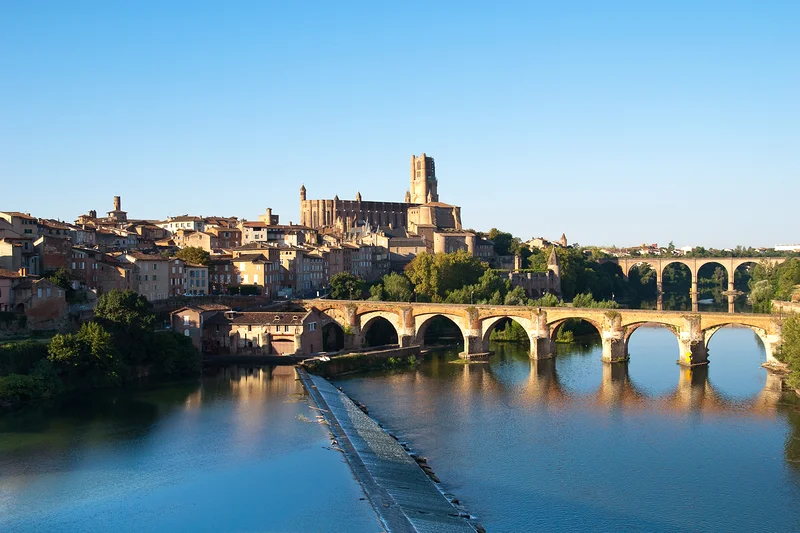
The Palais de la Berbie (Berbie Palace) is worth the trip on its own. This episcopal fortress, built between 1228 and 1308, looms over the Tarn River with its massive silhouette. The name comes from the Occitan word bisbia, meaning bishopric. The bishops of Albi built it to assert their power against the city consuls and the final remnants of the Cathar heresy.
Renovations conducted between 2001 and 2012 revealed 13th-century glazed terracotta floors miraculously preserved beneath modern floorboards. In some rooms, you are literally walking over a site once used by the Inquisition.
Key works to spot
The early rooms: family portraits
The tour begins with youthful canvases. La Comtesse Adèle de Toulouse-Lautrec, his mother, appears in several paintings with reserved tenderness. His animal studies, especially of horses, already show a sharp sense of observation and movement.
The Parisian world: cabarets and brothels
The following rooms shift into the nocturnal Paris of Montmartre. Dancers from the Moulin Rouge, café-concert singers, and women from brothels parade by with a frankness that shocked his contemporaries. The 1891 poster Moulin-Rouge, La Goulue pushed lithography into the history of art.
Friendly tip: The museum closes between 12:30 PM and 2:00 PM outside of the summer season. Your ticket remains valid all day, so use the time to have lunch and stroll through the palace gardens, which are free to enter and offer views of the Tarn and the Pont-Vieux (Old Bridge).
The third level: contemporaries
The upper floor displays works by friends and contemporaries of Toulouse-Lautrec. Pierre Bonnard, Maurice Denis, Émile Bernard, and a few canvases by Matisse complete the immersion into this vibrant era. State rooms from the 17th century, featuring painted ceilings and original parquet floors, also house older works of art, including a Georges de La Tour.
Points of interest along the way:
- The portrait of Gabriel Tapié de Céleyran, the artist's cousin, recognizable by his lanky silhouette
- Preparatory drawings displayed next to the final posters, revealing the creative process
- Original lithographic stones used for printing
Opening hours
October to May: 10:00 AM to 12:30 PM and 2:00 PM to 6:00 PM, closed on Mondays.
Closed November 1 and December 25.
Gardens are open for free from 8:30 AM to 8:00 PM in summer, and 8:30 AM to 6:00 PM in winter.

In the homeland of the painter, a beautiful museum in a magnificent castle. The layout inside is very nice. The place itself offers a stunning setting for the artist's paintings (painted ceilings, wooden galleries...). The container is just as impressive as the content!
I also loved the gardens, very green and full of flowers with nicely trimmed hedges.