
A royal waterway running through the pink city
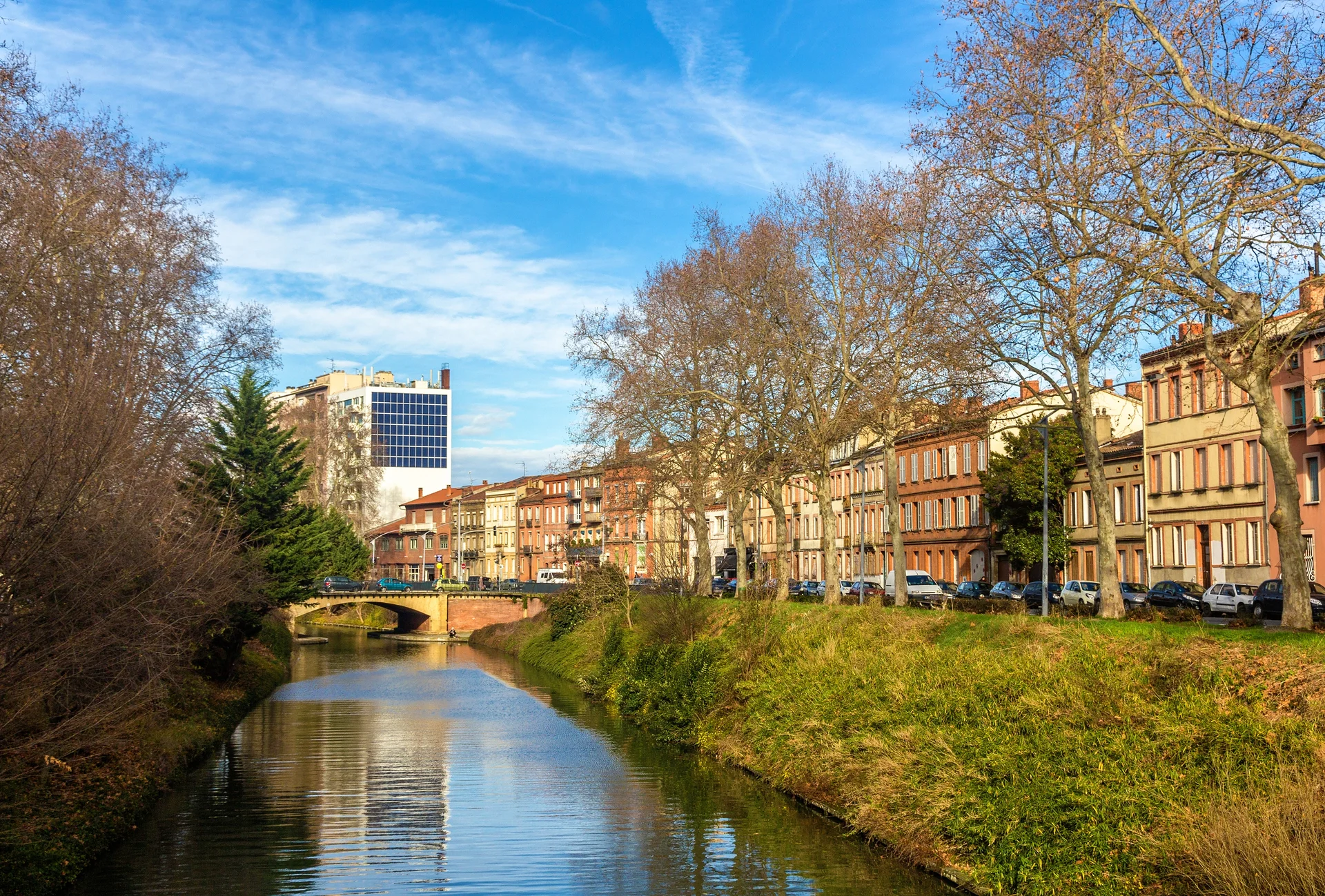
Century-old plane trees form a leafy canopy over the peaceful water. Moored barges rock gently, converted into cafes or floating homes. The Canal du Midi cuts through Toulouse like a green artery, giving locals and visitors a peaceful escape just steps from the urban bustle. A seventeenth-century engineering masterpiece recognized as a UNESCO World Heritage site, this 240-kilometer ribbon of water starts right here in the heart of the pink city.
A technical feat born from a visionary ambition
In 1666, Pierre-Paul Riquet secured the approval of Louis XIV to realize an ancient dream: connecting the Atlantic Ocean to the Mediterranean Sea via a navigable waterway. The project was massive for the era. Water had to be channeled from the Montagne Noire, cut through the Lauragais region, and elevation changes had to be managed with a revolutionary lock system.
The first stone of the descending lock into the Garonne was laid in 1667 during a formal ceremony. Riquet died in 1680, two years before the canal opened to navigation. His legacy endures as the oldest operating canal in Europe, a living monument that keeps the pulse of Toulouse alive.
Les Ponts-Jumeaux and the port of l'Embouchure, the gateway to the canal
At the port de l'Embouchure, three canals meet in an eighteenth-century aquatic ballet. The Canal du Midi, the canal de Brienne, and the canal latéral à la Garonne together form the canal des Deux-Mers. Three identical bridges span each of these waterways, known as the Ponts-Jumeaux, built between 1771 and 1844.
Between the first two bridges, a monumental 16-metre bas-relief by François Lucas carved from Carrara marble depicts the union of the canal and the Garonne. The Province of Languedoc, holding the helm of a boat adorned with the Occitan cross, orders the spirits to dig the canal while the Garonne brandishes her cornucopia. This officially listed historic artwork traveled from Italian quarries to Toulouse by boat along the canal.
Exploring the banks on foot, by bike, or by boat
The greenway, a bucolic route
The old towpath, once used by horses pulling barges, is now a popular greenway. Twelve kilometers of paved bike paths run through Toulouse beneath the shade of plane trees. This secure route works well for families and cyclists of all skill levels. More adventurous riders can push on to Montgiscard at 20 kilometers, or even tackle the full 240 kilometers all the way to the étang de Thau near Sète.
Water cruises
The Bateaux Toulousains offer guided boat tours from March to June on the Canal du Midi. Sailing on silent electric boats or authentic restored mail boats, visitors learn the history of the canal's construction and admire the engineering works along the water. One-hour cruises, meal packages, and evening outings give everyone a way to navigate this liquid heritage.
Friendly tip: to fully enjoy the cool shade and play of light filtering through the plane trees, aim for spring outings or early mornings in the summer. Lock keepers are often invaluable guides who gladly share local anecdotes and history. The prairie des Filtres, near the basin built in 1842, makes an ideal starting point for a waterside stroll.
A living heritage in daily life
The canal is not frozen in its glorious past. Lived-in barges, floating cafes, boating festivals, and electric boat races regularly animate the banks. The Grand Parc Canal project, led by Toulouse Métropole, highlights the 30 kilometers of canals running through the metropolitan area.
The locks of Toulouse stand out from other canal locks through their straight walls rather than oval ones. This particularity recalls Riquet's initial trial and error, as he quickly modified his designs after noticing the first structures deforming under earth pressure.
Opening hours
*Information subject to change

This completely man-made waterway toward the Mediterranean offers a particularly pleasant setting for a stroll. Biking, walking, boating, there are many options for exploring the canal. By renting a boat for a day, I really enjoyed the atmosphere at Port Saint-Sauveur and the impressive filtration basin. As soon as you get away from Toulouse, it is very peaceful, but unfortunately, the canal lacks facilities, especially secure stopping points.