
Visiting Albi Cathedral: The Clay Colossus with Hidden Treasures
At first glance, Albi Cathedral commands attention. A true red-brick fortress overlooking the Tarn River, it seems to defy both the heavens and humanity. Yet behind this austere shell lies one of the most lavish displays of sacred art in France, a burst of color and delicate craftsmanship that creates a striking and unforgettable contrast.
Why is this cathedral unique in the world?
Listed as a UNESCO World Heritage Site alongside the Episcopal City, Albi Cathedral is the largest brick cathedral in the world. Construction began in 1282 as a major political and religious statement, part of the Catholic Church's effort to assert its authority and triumph over the Cathar heresy. This dual nature, functioning as both a fortress of faith and an artistic masterpiece, makes it a truly fascinating monument.
A brick citadel against heresy
The exterior architecture, typical of Southern Gothic style, is designed to impress and deter. The walls reach thicknesses of up to 2.5 meters and feature semicircular buttresses that give the structure a military appearance. Its 78-meter-high donjon bell tower once served as a watchtower. Built entirely from local brick, the complex gives the city its signature color and nickname of Red Albi.
The visual shock: a showcase of color and light
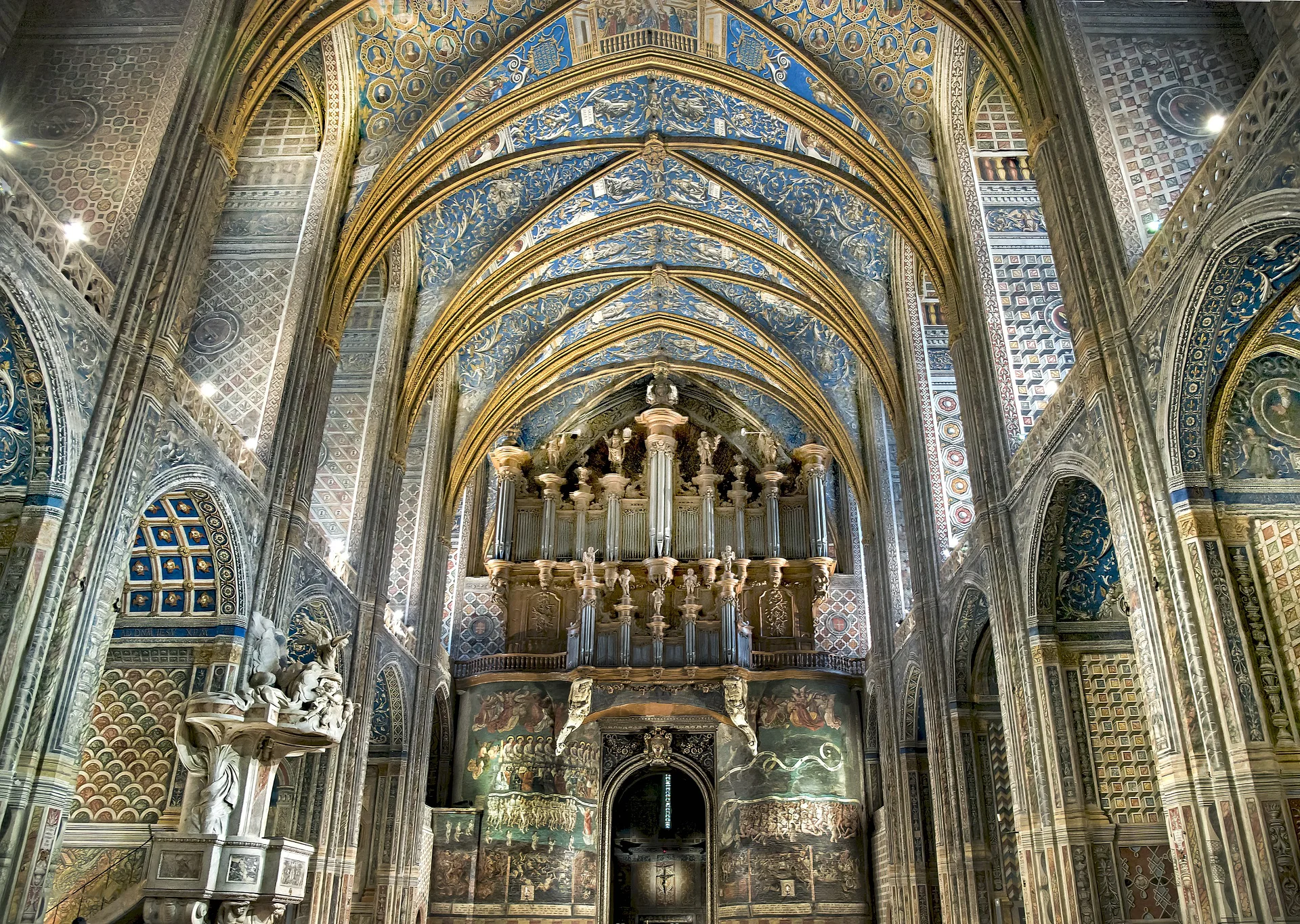
Stepping through the doors of the cathedral is genuinely astonishing. The stern exterior gives way to decorative richness on a rare scale. It houses the largest collection of Renaissance paintings in France.
The largest painted cathedral in Europe
Nearly 18,500 m² of frescoes entirely cover the walls and vaulted ceilings. Painted in the early 16th century by Italian artists, the ceilings display a carpet of geometric patterns and biblical scenes set against a remarkably deep blue background that has never been restored.
The Last Judgment, a monumental fresco
Beneath the grand organ, a depiction of the Last Judgment originally covered nearly 270 m². Although its central section was destroyed in the 17th century, it remains one of the largest of its kind globally. The precision of the details, from the depiction of the seven deadly sins to the torments of the damned, is remarkable.
The rood screen, a church within a church
The canons' choir is separated from the nave by a white limestone enclosure, known as a rood screen, which stands as a masterpiece of Flamboyant Gothic architecture. This intricate stone lacework features over 270 exquisitely detailed statues that were originally painted.
Friendly tip: access to the choir and treasury requires a ticket, but it is essential for appreciating the intricate rood screen and statuary. Take time to admire the Grand Orgue Moucherel, one of the largest baroque organs in France. Free concerts are frequently held on Wednesday and Sunday afternoons in July and August, offering a rare chance to hear this exceptional instrument in action.
Opening hours
| Monday | 10:00-18:30 |
|---|---|
| Tuesday | 10:00-18:30 |
| Wednesday | 10:00-18:30 |
| Thursday | 10:00-18:30 |
| Friday | 10:00-18:30 |
| Saturday | 10:00-18:30 |
| Sunday | 10:00-18:30 |
Visits may be interrupted during religious services.
*Information subject to change

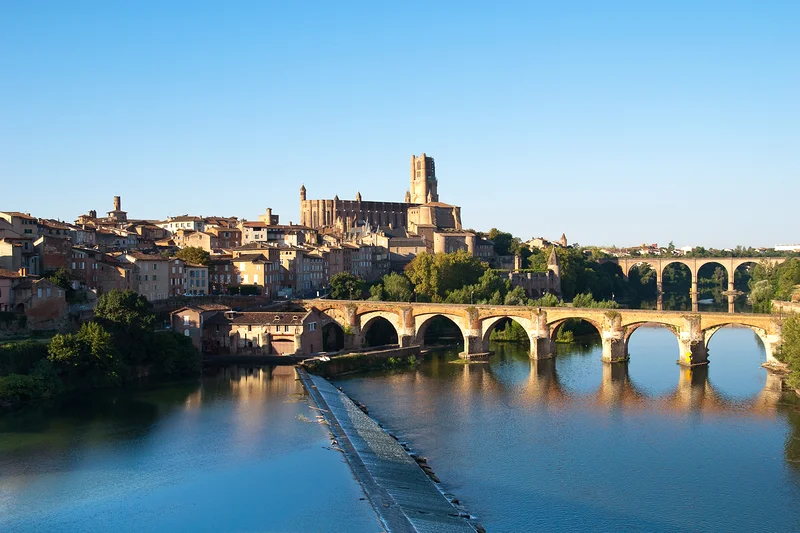
Honestly, a breathtaking discovery. Upon entering, I was struck by the beauty of the place. I think it is one of the most beautiful churches I have had the chance to see. All that blue just makes it impressive. And then there is that architecture that makes it look like a ship from the outside.
The extra tip: get the Albi pass to have access to several sites including the cathedral treasure room!