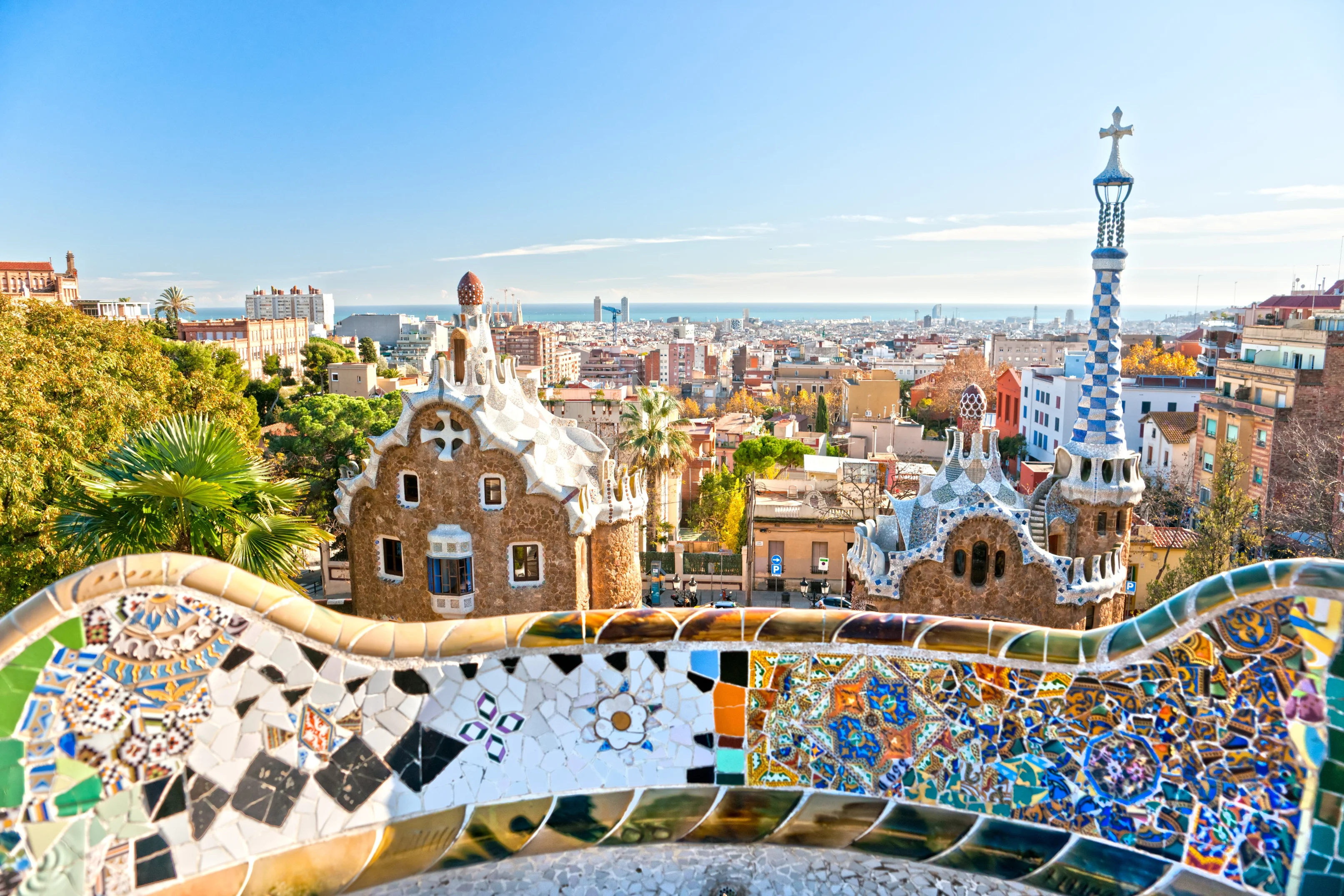
Parc Güell de Barcelone

Top 20 sunny destinations to visit in May 2027

May finally signals the return of sunshine to Europe, though temperatures can still be hit-or-miss depending on where you land. If you are chasing reliable heat and turquoise water, head for the Cyclades, southern Morocco, the Seychelles, or Southeast Asia as it wraps up its dry season. Use these tips from Avygeo to decide where to go in May for a trip that balances relaxation, comfortable weather, and a complete change of scenery.

Members' favourite sunny destinations in May

#1 Barcelona (Spain) +335 recs

15-23°C 18°C 8h45 5 d.

Barcelona combines modernist architecture, Mediterranean beaches, and Catalan cuisine all in one day. From the Sagrada Família to the narrow lanes of the Barri Gòtic, and from the tapas scene in Poble Sec to the views at Búnkers del Carmel, the Catalan capital sets its own pace. It is an intense city that can feel crowded, but it rewards those who wander away from the main tourist paths into neighborhoods like Gràcia or Poblenou, where daily local life remains the focus.

#2 Seville (Spain) +252 recs

13-28°C 9h30 3 d.

Seville runs on the rhythm of the tapeo. You walk into a bar, order two small plates and a glass of fino, then do it all over again three blocks away. From the world's largest Gothic cathedral and an active royal palace to the birthplace of flamenco and over 3,000 tapas bars, this Andalusian capital offers a rare intensity at prices that remain remarkably low, with a full round of drinks and snacks often costing 10-15 EUR.

#3 Madrid (Spain) +204 recs

13-25°C 9h 5 d.

Sitting on the high plains of Castile, Madrid packs three major art museums onto a single boulevard, serves up hearty counter-style dining, and keeps a nightlife pace that rarely slows before dawn. It is more grounded and less crowded than Barcelona, offering a sharp contrast between neighborhoods like bohemian La Latina and upscale Salamanca, all defined by an unapologetically late-night lifestyle.

#4 Nice (France) +148 recs

14-22°C 17°C 9h45 5 d.

Nice draws you in with its sharp Mediterranean light and high-energy atmosphere. From the iconic Promenade des Anglais to the fragrant, winding alleys of Vieux-Nice and the sweeping views atop the Colline du Château, the city delivers a constant stream of memorable scenes. Between sun-drenched local dishes, high-end museums, and quick trips to the water, it strikes a balance between laid-back relaxation and city activity that feels a lot like a more historic, elevated Santa Monica.

#5 Montpellier (France) +146 recs

14-24°C 20°C 9h 5 d.

Montpellier defies easy categorization. This Languedoc city blends a labyrinthine medieval core with the architectural ambition of Antigone, a neoclassical neighborhood designed by Ricardo Bofill. With a quarter of the population under 25, the city maintains an intensity rarely found in such ancient streets. Between markets featuring pélardon goat cheese from the Cévennes and café terraces in the Saint-Roch district serving local Pic Saint-Loup wine, Montpellier offers a Mediterranean lifestyle that feels grounded, skipping the high-gloss pretense you might expect from the French Riviera.

#6 Athens (Greece) +142 recs

13-25°C 9h 3 d.

Athens is a dense urban sprawl anchored by the Acropolis, where ancient ruins stand right up against modern city life. You can spend your mornings exploring the historic streets of Plaka and Monastiraki before heading up Lycabettus Hill for a panoramic view that rivals the scale of Los Angeles, but with thousands of years of history. It is a place where you can easily toggle between world-class museums and chaotic, authentic local markets.

#7 Los Angeles (United States) +89 recs

12-22°C 16°C 9h30 2 d.

Los Angeles is a sprawling megalopolis where Hollywood meets the Pacific, defined by its intense contrasts. You will find everything from the glamour of Beverly Hills to the creative energy of Venice Beach and an inescapable cinematic history that is best explored with a rental car. The local food scene is as diverse as the city neighborhoods, featuring authentic Mexican tacos, oversized burgers, and California-style sushi. Expect sunshine almost year-round.

#8 Bonifacio (France) +57 recs

13-23°C 18°C 9h 5 d.

Bonifacio sits atop 230-foot white limestone cliffs overlooking the Mediterranean, defying gravity like a coastal fortress in Big Sur. The Genoese citadel and narrow cobblestone streets overlook a harbor tucked deep into a narrow inlet. Between the steep King of Aragon staircase, sea caves, and the turquoise waters of the Lavezzi Islands, you are constantly navigating a vertical landscape.

#9 Palermo (Italy) +50 recs

16-24°C 18°C 9h 4 d.

Palermo is an open-air baroque stage, a crossroads of civilizations where Arab-Norman mosaics contrast with the weathered charm of crumbling facades. The city hits your senses hard, from the intensity of its crowded markets and deep-rooted street food culture to the raw energy of its narrow side streets. It is a place that demands to be experienced rather than just observed, rewarding those who navigate its organized chaos with an unforgettable trip.

#10 Cairo (Egypt) +47 recs

18-32°C 10h30 1 d.

Cairo is the largest city in Africa and a place where ancient history hits you from every angle. You can spend your days exploring the Giza Pyramids, wandering the historic architecture of the Islamic Quarter, or visiting the spiritual sites of the Coptic Quarter. Top off your trip with a stroll through the local souks or a cruise down the Nile for a perspective you just cannot get anywhere else.

#11 Santorini (Greece) +40 recs

16-23°C 18°C 9h30 4 d.

Santorini was born from a volcanic catastrophe, resulting in white-washed villages clinging to ochre cliffs above a deep blue caldera. The sunsets here are legendary, the vines grow in unique baskets across volcanic rock, and the local cherry tomatoes have a flavor profile you will not find anywhere else. It is a rugged, dramatic landscape that feels like the edge of the world, only with a much better view.

#12 San Diego (United States) +21 recs

14-22°C 17°C 9h30 3 d.

San Diego gives you California without the frantic energy of Los Angeles. With 266 days of sunshine a year and 112 kilometres of coastline, the city takes a famously relaxed approach to daily life. Between the surfers at Pacific Beach, the seals in La Jolla, and the craft breweries in North Park, it is easy to see why people call it America's Finest City.

#13 Las Vegas (United States) +18 recs

17-33°C 11h 1 d.

Whether you are into late nights or early mornings, high roller spending or keeping it low key, Las Vegas is a city you need to witness in person at least once. It is hard to overstate the sheer, unapologetic scale of this neon oasis in the Mojave Desert. Ready for a road trip or a weekend getaway to Las Vegas?

An Unforgettable Run Down the Strip

Nevada's largest city pulls in more than 43 million visitors every year. That staggering visitor count speaks volumes about the appeal of a destination that draws everyone from night owls hunting for all-night clubs to couples tying the knot on a whim at the Graceland Chapel. Sin City saw its major boom back in the 1930s thanks to relaxed laws on gambling and quick marriages. Since then, Las Vegas has earned its reputation as the entertainment capital of the world. Your first time cruising down Las Vegas Boulevard, universally known as "The Strip", hits you with a wall of sound and light. Neon signs and massive LED displays compete for your attention at every turn. Casinos line the boulevard, starting with the historic Flamingo, the very first resort built here by Benjamin Siegel back in 1946. Fortunes are made and lost daily over slot machines and poker tables.

An Open-Air Amusement Park

Las Vegas is pure spectacle from the ground up. The choreographed fountain show outside the Bellagio creates the illusion of a massive lake in the middle of the desert. Over at the Venetian, gondoliers pole tourists along indoor and outdoor canals in a surreal recreation of Venice. The Luxor pyramid and its giant sphinx project a beam of light straight into the night sky visible from space, the Stratosphere Tower stands as the tallest freestanding observation tower in the nation for panoramic views, and the old volcano at the Mirage used to put on regular fire shows. Entertainment options run the gamut from the iconic Cirque du Soleil productions to impersonator revues, massive arena concerts at Caesars Palace, and action-packed stunt shows. You will never run out of things to do. Even if you are staying off the Strip, walking through these mega-resorts with their indoor canals, shopping malls, and massive casinos is an experience in itself.

For a more classic, retro vibe, head over to Downtown Las Vegas around Fremont Street, where vintage neon signs glow over a pedestrian canopy and street art covers the alleys. Finally, if the neon and crowds get to be too much, the deep canyons of the American Southwest are just a short drive away.

When to go

Las Vegas is a year-round destination, but spring and fall offer the most comfortable temperatures for walking the Strip. Summer brings punishing desert heat with triple-digit temperatures, while winter nights can drop down to chilly desert lows.

How to get there

Flying into Harry Reid International Airport puts you minutes from the center of the action. Flight costs from European hubs range from $820 to $1,050* depending on the season.

#14 Tunis (Tunisia) +13 recs

15-27°C 19°C 10h 4 d.

Tunis is a city of sharp contrasts, where ancient North African roots meet a Mediterranean sensibility. You can wander the UNESCO-listed medina, a dense maze of Ottoman-era palaces and bustling souks, before stepping onto grand avenues that feel like a slice of Paris. Nearby, the ruins of Carthage offer a deep dive into history, while the blue-and-white clifftop village of Sidi Bou Saïd provides panoramic coastal views. Do not miss the Bardo Museum for its world-renowned mosaics, all set against the constant, subtle scent of jasmine.

#15 Fez (Morocco) +12 recs

12-24°C 9h 5 d.

Fez holds its own against Marrakech, its larger Moroccan counterpart. This imperial city boasts a history stretching back over 1,200 years, and travelers increasingly view it as a top-tier destination in North Africa.

The Medina, a World Apart

The defining neighborhood here is the ancient medina, a UNESCO World Heritage site since 1981. It stands as the largest medieval city in North Africa, sprawling across more than 9,000 narrow alleyways. Getting lost in Fez-el-Bali, the historic walled quarter, is practically part of the itinerary. You enter through one of fourteen 12th-century gates framing the old town. Bab Boujloud is the most striking, featuring brilliant blue and green ceramic tiles. The commercial corridors of Talâa Kbira to the north and Tala Seghira to the south overflow with traditional merchants and food stalls amid a lively sensory mix of sounds, spices, and bright textiles. Local cooperatives offer hands-on introductions to argan oil production, Moroccan pastry baking, and traditional weaving. The Bou Inania madrasa ranks as the architectural crown jewel of the medina, showcasing intricate bronze metalwork, carved cedar wood, onyx, marble, and colorful tilework. The Merenid Tombs sit on a nearby hill, offering panoramic sunset views over the entire medina.

Mosques, Festivals, and Tanneries

The newer district of Fez, known as Fès-el-Jdid, adds several significant landmarks to your itinerary. Karaouine functions simultaneously as the oldest continuously operating university in the world and a major mosque capable of holding 20,000 worshippers. Because interior access is restricted to Muslims, non-practicing visitors view it from the threshold. Housed in a 19th-century summer palace, the Batha Museum displays an extensive collection of Moroccan craftsmanship, including wood carvings, Berber textiles, and regional musical instruments. Its Andalusian-style garden hosts the annual World Sacred Music Festival, a major international gathering featuring musical acts from around the globe alongside literary debates, film screenings, and art exhibitions. The Nejjarine Museum of Wooden Arts and Crafts also warrants a stop.

Another essential stop is the tanners' quarter, an area known for intense aromas and striking visual contrasts. Near Place Seffarine, the Chouara Tanneries process leather goods famed for their durability. Visiting in the morning lets you watch artisans working alongside stone vats filled with natural dyes.

When to go

Temperatures stay mild year-round in Fez, but spring and autumn offer the most comfortable weather. Summer temperatures spike significantly, often reaching oppressive levels during the afternoon. June is an ideal time to visit if you want to experience the World Sacred Music Festival firsthand.

How to get there

Flights from European hubs take about two hours and forty-five minutes nonstop. Airfare drops considerably during the off-season, with tickets starting as low as $47*.

#16 Zakynthos (Greece) +11 recs

16-24°C 19°C 10h 5 d.

The bright capital of the island that shares its name, Zakynthos Town is the central hub of this Ionian paradise. Spanning 406 square kilometers, the island is defined by its turquoise waters, fine sand, and dense greenery. Homer referenced it in the Odyssey, and the island history is a long timeline of Roman, Byzantine, Arab, Norman, Sicilian, Venetian, and French influence. It did not officially join the Kingdom of Greece until 1864. Today, the local economy relies heavily on fishing and tourism.

A town of character and charm

The island beauty is on full display here, especially within its many churches. The most prestigious is Agios Dionysios. This three-aisle Orthodox basilica, built in 1925, is remarkable for both its architecture and its interior decoration. It sits near the port, where its towering bell tower acts as a landmark for the entire harbor. It is a prime area for a stroll, with luxury yachts and fishing boats bobbing in water so blue it feels surreal. With benches shaded by towering palms, Dionysios Solomos Square is the heart of the town. Named after the poet who penned the Greek national anthem, the square features his statue as its centerpiece. It is paved and surrounded by historic buildings, making it the central meeting point of the town. Agios Nikolaou Church stands on the square, one of the few structures that survived the 1953 earthquake. You will also find the Byzantine Museum here, which spans three levels and exhibits sculptures, frescoes from the 15th to 17th centuries, and paintings depicting the town before the earthquake.

City beaches and local flavors

Heading toward the coast at Agiou Markou Square, you will first see a beautiful arched building: the Solomos and Kalvos Museum. Beyond the art and personal artifacts of these two local icons, the museum introduces you to the most famous figures in Zakynthos history. The square is lively, filled with boutiques, cafes and restaurants. This is the place to try local specialties like tzatziki, a refreshing cucumber dip best paired with chickpea bread, psarosoupa, a traditional fish soup, or stifado, a veal and onion stew. For something sweet, try mandolato, the island signature nougat, or fried semolina with cinnamon. Do not miss the chance to admire one of the oldest homes in the city, Romas Mansion. This 1660 manor was once the home of the aristocratic Romas family and remains a striking example of local architecture.

Zakynthos is home to some of the most famous beaches in the world. Just 500 meters from the city center, Eot is less famous than the prestigious Gerakas or Navagio beaches, but it remains a gem surrounded by incredible views. Like everywhere on the island, the crystal-clear water is ideal for swimming. The beach is overlooked by the Bokali hill, where you will find the ruins of a Venetian kastro, or fortress. The view from the top is spectacular, comparable to the sweeping coastal vistas you might find in Malibu.

How to get there

The airport handles international flights throughout the year. If you are driving, you will need to take the ferry from Kyllini on the Greek mainland. If you are traveling from Athens, there is a bus service that includes the ferry crossing as part of the trip.

#17 Faro (Portugal) +7 recs

14-23°C 18°C 9h 4 d.

Most travelers only see the airport, but Faro is the genuine soul of the Algarve. It is a city of contrasts where the quiet medieval Old Town meets the wild beauty of the Ria Formosa lagoon. Far from the noise of typical beach resorts, it offers an authentic Portuguese experience focused on local culture and fresh seafood. This is the spot for travelers who want to see a different, more grounded side of southern Portugal.

#18 Portimão (Portugal) +6 recs

14-24°C 18°C 9h30 3 d.

Long defined by its fishing fleet, boat building, and seafood canning plants, Portimão has pivoted to become a destination known for its expansive beaches and motorsport circuit. Located in the south of Portugal, the city has managed to retain its local character even as tourism has surged. The mild climate and dramatic limestone cliffs make the capital of the Algarve region a compelling stop.

A legacy of elegance

While the modern high-rises reflect the city's recent growth, the historic center offers a different perspective. The architecture here carries real character, starting with city hall, which is housed in the former palace of the Viscounts of Bivar. Walking through the cobblestone alleys, you will see two-story houses adorned with azulejos (traditional ceramic tiles), along with ornate ceramic balustrades and wrought-iron balconies. The city was a major international trading hub before the 1755 earthquake caused widespread destruction. While little remains of the medieval structures, a few wall sections endure. The majestic Jesuit College also took damage during the disaster, but today it stands prominently on Praça da República, gleaming in white with orange trim. Its church, the largest in the Algarve, cuts a sharp silhouette against the sky. Nearby, the 15th-century Igreja Matriz remains immaculate, featuring a Gothic portal with gilded capitals that is worth a close look.

Beaches and local life

Make a stop at Praça Manuel Teixeira Gomes, a fully paved plaza with a water feature that serves as a perfect spot to grab a coffee at a kiosk and watch the world go by. At Jardim 1° Dezembro, you will find more azulejos depicting Portuguese history amidst fountains and greenery. To understand the local heritage, the Portimão Museum is essential; it is housed in a former sardine cannery and covers everything from Roman and Arab archaeological finds to the history of the local canning industry. Sardines are still the star of the local menu, usually served grilled right on the docks. The local cuisine is robust, featuring bread and tomato soup, fresh seafood, fish stews, rice with razor clams, and corn porridge with sausage. For dessert, look for morgados and bolas de ovo, traditional sweets that combine almonds and figs.

Before hitting the sand, head to the 17th-century Fortress of Santa Catarina de Ribamar for one of the best viewpoints in the area. The villa and chapel sit perched on the rock, and a spiral staircase leads down to the marina and Praia da Rocha. Sheltered by cliffs, this famous stretch of fine sand is the largest and most popular beach in the city. It functions as a full-service resort area that stays active day and night. The caves of Praia do Três Castelos are more challenging to reach, while the intimate Praia dos Careanos, located 2 km away, offers a quieter alternative. The waterfront promenade is one of the best walks in town, stretching from the Ribeirinha with its palm trees past the docks to the Praca de Bivar, where the quay becomes a hub for evening nightlife.

How to get there

The nearest airport is in Faro, about a 45-minute drive away. Lisbon Airport is roughly a 2.5-hour drive. If you fly into Lisbon, you can take a train directly to the station in the city center. If you are driving from elsewhere in Europe, the highway network is modern and well-maintained.

#19 Essaouira (Morocco) +1 rec

14-22°C 18°C 10h 2 d.

Tempered by trade winds and the low hum of guembri strings, Essaouira offers an artistic escape on the Moroccan Atlantic coast. Its white and blue medina, where salty air mixes with the scent of cedarwood, is built for aimless wandering, far removed from the intensity of the imperial cities. It is a destination for those seeking a slower pace, where the rhythm of the ocean and a local creative scene provide a grounded, quiet experience.

#20 Saranda (Albania)

13-23°C 18°C 9h30 5 d.

Saranda serves as the primary gateway to the Albanian Riviera, offering sun-drenched days and turquoise waters just across the channel from Corfu. It acts as a high-energy home base, perfect for travelers looking to pair beach time with visits to ancient sites like Butrint. Expect a fast-paced Mediterranean atmosphere, with nights spent along the waterfront promenade and days centered on finding hidden coves accessible by boat or car.

Where to take the family for sun in May

Sardinia: an accessible, natural island for all ages

Sardinia is a top-tier choice for a family trip in May. The beaches are pristine and blissfully uncrowded. Kids can safely splash in the shallow, clear water, particularly at Cala Brandinchi. Your days here naturally revolve around easy nature walks and exploring traditional villages. The travel distances between sights are short, and the local infrastructure is well-geared toward families.

Where to head in May for a romantic getaway in the sun

The Greek Islands: a postcard-perfect escape before the summer rush

In May, the Greek Islands like Paros or Naxos offer a quiet, romantic backdrop. You can spend your time wandering through flower-lined alleyways, enjoying dinners overlooking the water, or renting a small boat to find your own private cove. The weather is warm but comfortable, and the heavy tourist season has yet to arrive.

Where to find sun in May on a budget

Southern Spain: guaranteed sunshine and excellent value

Southern Spain is a standout for travelers watching their spending in May. Andalusia is packed with beautiful beaches and historic cities like Seville or Granada. You should budget roughly 250€ ($270) for a weekend trip and 500€ ($540) for a full week, provided you book in advance. You will find plenty of economical lodging and affordable tapas to keep costs down.

May: the art of traveling before the summer crowds

Visiting in May gives you the best of both worlds. You get pleasant temperatures while the sites remain free of the massive summer throngs. Prices are reasonable, and you have open access to the beaches, villages, and hiking trails. It is the ideal month to enjoy the scenery without the stress of peak travel season.

Frequently asked questions

Where in Europe is sunny in May?
Sardinia, the Greek Islands, southern Spain, and Portugal are all excellent for a sun-soaked trip in May.
Where can I go further afield for sun in May?
Morocco, Tunisia, the Canary Islands, or Jordan are all great sun-drenched destinations in May.
What is the most budget-friendly sunny destination in May?
Southern Spain is one of your best options for finding sunshine on a smaller budget in May.
Where should I go for a family sun vacation in May?
Sardinia is a fantastic family destination in May thanks to its accessible beaches, preserved nature, and mild climate.
Where can I go for a romantic trip in May?
The Greek Islands are a perfect fit for a romantic getaway, featuring quiet beaches and charming, historic villages.
What kind of budget should I plan for a sunny trip in May?
In Europe, expect to spend between 400€ ($430) and 700€ ($755). For long-haul destinations, plan for 800€ ($865) to 1500€ ($1620) depending on where you go.
Where in France can I find sun in May?
Provence, the French Riviera, and Corsica all offer plenty of sunny days and beautiful landscapes in May.