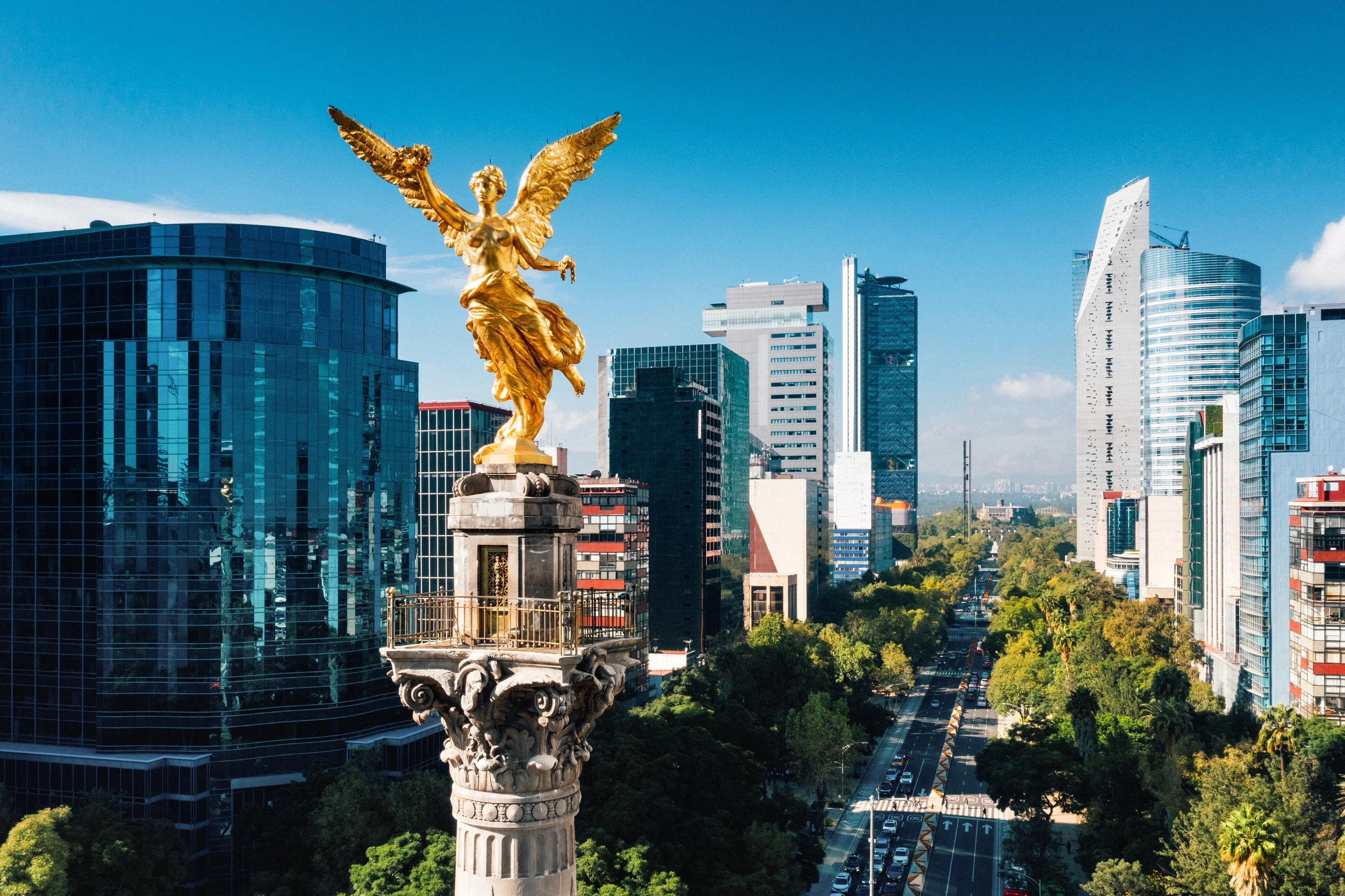
Angel de la Indepencia à Mexico

Top 20 sunny destinations to visit in March 2027

By March, Europe is slowly shaking off the winter chill, but consistent warmth is still a few weeks away. It is an ideal time to head toward milder latitudes. Southern Asia stays in its dry season, East Africa shines under clear skies, and certain Caribbean islands are enjoying their absolute peak weather. Avygeo helps you pick the right destination at the right time, so you can plan your next sunny trip with confidence.

Members' favourite sunny destinations in March

Mexico City

#1 Mexico City (Mexico) +248

9-25°C 8h 2 d.

Mexico City is a megalopolis best experienced through your appetite. With 150 museums, distinct neighborhoods, and Aztec ruins buried beneath its streets, it offers far more than a typical Latin American stopover. From tacos al pastor for 20 MXN (about $1) to the flower-filled canals of Xochimilco, the capital delivers a sensory intensity that few cities can match, all at a surprisingly low cost.

Guadalajara

#2 Guadalajara (Mexico) +107

12-29°C 8h30 1 d.

Guadalajara moves to the sound of mariachi and deep-rooted traditions. This authentic Jalisco city rewards curious travelers with monumental murals in baroque palaces, messy tortas ahogadas eaten with a spoon, and artisan districts where you can watch glassblowers at work. It feels less like a tourist trap than Cancún and more approachable than Mexico City, offering a direct window into the Mexican soul. Expect a city that keeps it real.

Dubai

#3 Dubai (United Arab Emirates) +76

19-30°C 23°C 9h30 2 d.

Dubai rose from the desert in just a few decades, pushing the boundaries of engineering. The Burj Khalifa stands at 828 meters, indoor ski slopes occupy shopping malls, and man-made islands reconfigure the coastline. Yet, behind the glass facades, the souks of the Creek and the red desert dunes reveal an Arab soul beneath the hyper-modernity. It is a destination that polarizes opinion, but it never fails to make an impression.

Marrakech

#4 Marrakech (Morocco) +67

11-25°C 8h 5 d.

Marrakech is an assault on the senses. In the narrow alleys of the medina, the scent of cumin mingles with tanned leather as the call to prayer echoes from the Koutoubia. The red city offers labyrinthine souks, secret riads with tile-covered patios, and tanjia slow-cooked in hammam ashes. It is an intense, occasionally disorienting experience that stays with you.

Cairo

#5 Cairo (Egypt) +47

12-24°C 8h30 1 d.

Cairo is the largest city in Africa and a place where ancient history hits you from every angle. You can spend your days exploring the Giza Pyramids, wandering the historic architecture of the Islamic Quarter, or visiting the spiritual sites of the Coptic Quarter. Top off your trip with a stroll through the local souks or a cruise down the Nile for a perspective you just cannot get anywhere else.

Tulum

#6 Tulum (Mexico) +41

21-30°C 27°C 8h30 5 d.

Tulum thrives on its contradictions. You have Mayan ruins perched over turquoise Caribbean water and cenotes so clear they feel surreal. Yet, rapid gentrification has turned this former fishing village into a hub for luxury yoga retreats and social media influencers. The real Mexico of late-night taquerias and dense jungle still exists, but you have to look past the hype to find the balance between the polished postcard and the raw reality.

Hoi An

#7 Hoi An (Vietnam) +35

22-28°C 25°C 6h 5 d.

Hoi An is a UNESCO World Heritage site in central Vietnam known for its preserved architecture and narrow streets anchored by the iconic Japanese Covered Bridge. The city is a hub for regional food, offering hands-on cooking classes and a daily market, with the coastal sands of An Bang Beach and the ruins of the My Son Sanctuary within easy reach. Plan your trip between February and April for the best weather to explore this mix of history and riverfront calm.

Abu Dhabi

#8 Abu Dhabi (United Arab Emirates) +32

18-28°C 22°C 9h 3 d.

Abu Dhabi stays quieter than Dubai, but the capital of the United Arab Emirates offers plenty to justify a trip. Expect to spend your time at the Sheikh Zayed Grand Mosque, the Louvre Abu Dhabi, and Yas Island for the high-octane Ferrari World. This city blends coastal relaxation with desert excursions and futuristic architecture, making it a more laid-back alternative to its neighbor up the coast.

Aswan

#9 Aswan (Egypt) +27

14-30°C 10h 0 d.

Perched on the east bank of the Nile, Aswan serves as Egypt's southernmost major city, acting as a cool oasis amidst the desert. As the gateway to the ancient Kingdom of Nubia, it has a history deeply rooted in trade routes and caravans. While many travelers treat it as a fleeting pit stop before heading to the temples of Abu Simbel, the city itself possesses a distinct character defined by its lush, green landscapes, scenic islands, and significant historical sites.

A market you cannot miss

Navigating Aswan is straightforward, as the corniche runs along the Nile for several miles, concentrating most of the city's cafes and restaurants. It makes for a pleasant stroll, with the city unfolding into the streets perpendicular to the water. The souk is one of the city's most vibrant landmarks. Day or night, this large covered market is packed with vendors, and the stalls overflow with Egyptian and African goods including perfumes, spices, textiles, handicrafts, incense, fruits, and flowers. It is the place to hunt for deals, and on the outskirts, Nubian culture is on display through traditional items like talismans, jewelry, and basketry. The market is a sensory experience of color and scent. A local specialty is stuffed pigeon, often prepared with rice, served on skewers, or simply grilled. You will also find molokhia (a traditional vegetable soup), eggplant dishes, mezzes, tahini, and fresh fish. Pair your meal with local flatbread, fresh fruit juices, and a Nubian coffee spiced with cardamom.

Island hopping

Directly across from the city center, Elephantine Island is a must-see. You can reach it by hiring a felucca, one of the traditional sailboats that remain the most common way to get around on the water here. Siou and Koti, two Nubian villages, sit nestled between farm fields and palm groves on the island, where the colorful homes create a quiet, timeless atmosphere. You can explore the ruins of the Temple of Khnum, dedicated to the ram-headed deity. Within this archaeological site, you will find the nilometer, which is arguably the most famous staircase used to measure the Nile's annual flood levels. Colonnades decorated with hieroglyphs round out the site, and from here, you can see the elegant pink granite Aga Khan Mausoleum, built in 1959, overlooking the water. A small museum dedicated to Nubian culture provides context on the region's history, which is closely linked to the construction of the Aswan High Dam. You can visit the dam itself, and the recent Nile Museum offers a complete overview of the project.

The neighboring island is a small slice of paradise. Kitchener Island is home to the fabulous Botanical Garden, established in 1896. The relief provided by its greenery in the middle of the desert is striking. Plants, flowers, and trees from equatorial Africa, India, and tropical Asia create a lush canopy. The contrast with the arid sand on the opposite bank is sharp, and the garden serves as a peaceful refuge for birds.

On the west bank of the Nile, the Tombs of the Nobles feature long ramps used for transporting sarcophagi. It is a mysterious site that offers panoramic views. Further west, the Monastery of Saint Simeon sits atop a plateau. It was once home to 300 monks until 1321, and this complex of four buildings remains one of the most important monuments from the Christian era. With its 26-foot walls, it resembles a fortress and is remarkably well-preserved. About 1.2 miles from Aswan, the granite quarry houses the Unfinished Obelisk. Commissioned by Queen Hatshepsut nearly 1,500 years before the common era, the project was abandoned after the stone cracked, leaving us with a massive relic still lying in its excavation trench. Six miles away, on Philae Island, the Temple of Isis from the 4th century BCE is yet another architectural marvel. Aswan is a legitimate destination in its own right, offering a genuine and compelling experience.

When to go

The climate is arid and dry. It is most pleasant from December through February when temperatures are mild. From June through September, the heat can become extreme.

How to get there

You can find numerous flights into Aswan International Airport, located 12 miles from the city center. Public transportation and taxis are available for the transfer. If you are coming from Cairo, 520 miles away, you can take a sleeper train, which is a popular choice for the distance, or a direct 80-minute domestic flight.

Luxor

#10 Luxor (Egypt) +25

13-30°C 10h30 0 d.

Luxor holds the highest concentration of ancient pharaonic ruins on the planet. You can walk through the massive temple complexes of Karnak and Luxor, explore the tombs in the Valley of the Kings, or visit the cliffside mortuary temple of Hatshepsut. Spanning both banks of the Nile, this former capital of ancient Egypt functions today as an open-air museum where three millennia of history appear around every corner.

Amritsar

#11 Amritsar (India) +23

12-28°C 7h 3 d.

Amritsar is located in Punjab, a state in northern India. It is the spiritual capital of Sikhism, a monotheistic religion founded in the 16th century by gurus. Sikhism emphasizes peace and equality. This is why the Golden Temple, the city's centerpiece, features four entrances, symbolizing openness to everyone regardless of faith or background. Construction on the Golden Temple began in 1573. It sits in the middle of a sacred pool that gave the city its name. In Punjabi, Amritsar means "pool of nectar."

Learning about Sikh culture in Amritsar

You will see many people wearing turbans while walking through Amritsar, as it is a primary symbol of the Sikh faith. Start your visit at the Golden Temple, a stunning religious structure inlaid with gold that houses the sacred Sikh scripture, the Adi Granth. Visitors must follow a specific ritual: cover your head, remove your shoes, and walk around the temple complex in a clockwise direction. The temple operates on a community model, managed by volunteers who run a large communal kitchen where you can share a meal.

Beyond the Golden Temple, Amritsar has plenty to see, and most sites are within walking distance of each other. Climb the Baba Atal tower, dedicated to a Sikh guru, for a panoramic view of the city. To understand the region's history, head to Jallianwala Bagh. This memorial commemorates the hundreds of victims of a massacre carried out by the British colonial army in 1919.

Exploring the history of India

Other cultural sites are worth the trip, such as the Partition Museum, which chronicles the 1947 division of the country. Another significant landmark is the 250-year-old Gobindgarh Fort, which once protected the city from invasions. It now houses several museums focused on local arts and history.

For something different, head out of the city center to the Khalsa College, a university campus that has served as a filming location for several Bollywood movies. The Maja Sheetla Temple is a unique cave temple worth exploring. Finally, travel a few miles outside of Amritsar to the Wagah border post. It is the only land crossing between Pakistan and India, and it hosts an impressive daily flag-lowering ceremony each evening.

When to go

The best time to visit northern India is between October and March. Be aware that December and January can be quite chilly, with temperatures dropping to 5°C (41°F).

How to get there

You can fly into Amritsar from New Delhi or Mumbai, or take a train from New Delhi. The city is also well-connected by road, with frequent bus and car services available.

Manila

#12 Manila (Philippines) +18

23-33°C 28°C 8h30 3 d.

Manila is a city of extreme contrasts. Some travelers suggest skipping the Philippine capital entirely, arguing it lacks the polish western tourists expect. Others call it the "Pearl of the Orient," claiming its appeal is widely overlooked. If you are traveling through the Philippines, here is why you should consider giving Manila a fair shake.

Churches and history

Manila often takes heat for its gridlocked traffic, political volatility, and smog. However, specific neighborhoods offer a deep look into the local past. The historic colonial district, known as Intramuros, holds the city's most significant landmarks, including a high concentration of churches. The San Agustin Church, dating back to 1589, is the oldest religious structure in the country. Its earthquake-resistant baroque architecture earned it a spot on the UNESCO World Heritage list. For a deeper dive into national history, head to Fort Santiago, which houses a museum dedicated to José Rizal, the Philippine national hero. If you enjoy cultural institutions, you will likely spend time at the National Museum of Natural History and the Ayala Museum for a look at pre-Hispanic history. For something more unconventional, the Marikina Shoe Museum displays 800 pairs of shoes once owned by the former First Lady.

A cultural melting pot

The capital serves as a crossroads for a diverse range of cultures and ethnicities. A prime example is the Chinese Cemetery, built in 1843 just outside the city center. You will find incredible mausoleums and sarcophagi that blend Chinese and western influences. From turtle-shaped tombs to three-story "houses" for the departed, the variety is striking. After exploring, head back into the chaos of the city in Chinatown. Filipinos, Chinese, and Spanish influences have coexisted here for centuries. Often cited as the oldest Chinatown in the world, founded in 1594, it is the place to eat. Grab some pancit (Chinese noodles), empanadas, or lumpia, a crispy snack similar to a spring roll.

Shopping and nightlife

Manila has fully embraced the 21st century. You can shop in trendy boutiques or catch a performance at the Cultural Center of the Philippines. Makati, a modern financial hub located 5 kilometers (about 3 miles) away, contains some of the largest shopping malls on the planet. Grabbing a drink at a rooftop bar in Makati is a standard evening activity, as the area is packed with high-end cocktail lounges.

When to go

You can visit Manila year-round, but the most pleasant weather arrives between December and February. You will avoid the worst of the rain during the summer months, but the heat and humidity can become intense.

How to get there

Expect to pay at least 550 USD (about 30,800 PHP) for a round-trip flight from the United States. Your flight will likely involve at least one layover, often in the Middle East or East Asia, resulting in a total travel time of roughly 18 to 22 hours depending on your departure city.

Las Vegas

#13 Las Vegas (United States) +16

9-23°C 9h 2 d.

Whether you are a night owl or not, a high roller or a penny pincher, Las Vegas is a place you have to see at least once. It is hard to describe the sheer scale of this neon-soaked city, where the American dream reaches its most surreal heights. Ready to hit the Strip?

Unforgettable nights on the Strip

The largest city in Nevada draws more than 43 million visitors every year. This massive turnout speaks for itself, attracting everyone from party seekers to couples looking to tie the knot at the Graceland Wedding Chapel. Sin City saw its biggest boom in the 1930s, fueled by relaxed laws on gambling and vice. Since then, it has cemented its reputation as the entertainment capital of the world. Your first walk down Las Vegas Boulevard, known as "The Strip", is sensory overload. Neon signs and flashing lights compete for your attention at every turn. Casinos are everywhere, starting with the Flamingo, the first of its kind, built by Benjamin Siegel in 1946. Plenty of people have seen their fortunes shift at the poker tables and slot machines here.

An open-air amusement park

Las Vegas is all about the spectacle. The dancing fountains of the Bellagio create an illusion of a lake right in the middle of the Nevada desert. At the Venetian, gondolas ferry tourists through canals in a kitschy nod to Italy. The Luxor Pyramid and its massive sphinx illuminate the night sky, the Stratosphere Tower offers the highest observation deck in the US, and the Mirage Volcano regularly erupts in a choreographed show. When it comes to entertainment, you have endless options, from the Cirque du Soleil productions to celebrity impersonators, the 4,000-seat Colosseum at Caesars Palace, or the pirate-themed showdowns at Treasure Island. You will not run out of things to do. Even if you are not staying at these resorts, walk through them to see the over-the-top architecture, private beaches, nightclubs, and massive aquariums.

For a grittier, more vintage vibe, head to Downtown, which is packed with street art and murals. If the lights and the crowds start to wear you down, the great national parks of the American West are just a short drive away.

When to go

Las Vegas is a year-round destination. If your schedule allows, aim for the spring or fall. July and August bring intense, dry heat, while winter temperatures from December through February can be surprisingly chilly.

Getting there

If you are flying in from Europe, expect about 12.5 hours of travel time. Round-trip airfare typically runs between 700 and 900 EUR (about $760-$975) depending on the season.

Phuket

#14 Phuket (Thailand) +7

24-34°C 29°C 8h30 5 d.

As the largest island in southern Thailand, Ko Phuket, or simply Phuket, refers to the entire paradise archipelago surrounding it. You can lounge under coconut trees before hitting the high-energy Full Moon parties, take advantage of modern amenities that offer great value, or get pampered at one of the many spas. The range of excursions is extensive, from long-tail boat rides and mangrove kayaking to jungle trekking. The lush pearl of the Andaman Sea is full of hidden treasures, and it is a perfect opportunity to dive into Thai culture, food, and traditions.

The climate is tropical with two seasons per year, and it stays hot year-round. The rainy season, where you can expect 1 to 3 hours of rain daily, runs from June through October.

Postcard-perfect beaches

The most visited spots are Patong, Karon, and Kata. These are the places to try parasailing or rent a jet ski. You can also shop and sample street food at Malin Plazza Patong. At night, partygoers head to Bangla Road for the bar scene. If that is not your speed, check out the ladyboy show at Phuket Simon Cabaret or catch a Thai boxing match.

For a quieter vibe, the beaches of Sai Kaew beach, Mai Khao beach, Nai Yang beach, Layan beach, Bang Tao beach, and Surin beach are better choices. Stay alert, as strong currents can be dangerous.

At the far south of Patong, Cristal Beach is a peaceful cove with a small beach called Paradise Beach. You can reach it by walking 1.5 miles past the Merlin Beach resort.

Those seeking total solitude should head to Ko Kho Kaho, famous for its 9 miles of completely untouched sand at Nok Nah beach. Paradise Island near Ko Rang, accessible from Ko Yao, is also a great option, located near Ko Hong, which feels like a true pirate island.

Lush landscapes for sunrise and sunset

Take in a 360-degree view over the Nai Harn bay at the southern tip of the island. Phrom Thep Cape translates to "Cape of Divine Purity" in Thai.

Explore Phang Nga by motorboat for a vibe that feels like a scene from Crocodile Dundee. The landscape, filled with massive limestone formations, is striking (about 600 THB/approx. $17 for 3 hours).

Kho Phi Phi, Phi Phi Ley, Coral Islands, and Ko Tao are known for their white sand and crystal-clear water. Coral reefs in some areas have been damaged by heavy snorkeling traffic and are now subject to preservation measures, as seen at Maya Bay since October 2018. Check for updates online before you head out.

Living Thai culture

With its charming Sino-Portuguese colonial houses and pedestrian alleys, Phuket Town hosts three major festivals: the Vegetarian Festival in October, Chinese Pimai (Chinese New Year) in February, and Songkran, the Thai New Year, in April. Expect a festive, family-friendly atmosphere. On weekends, the Naka Market is worth a visit for local street food and crafts.

The Thai people value family time and enjoy picnicking on Sundays. The pine forest at Sirinat National Park offers an ideal setting, with entry via Thepkrasattri Road.

Perched on a green hill, the 147-foot-tall white marble Big Buddha of Chalong was built by a local foundation. The view from the top is impressive.

The Thalang National museum provides context on the history of southern Thailand, including migration patterns and the region's tin mining history. The exhibit also covers the December 2004 tsunami and the subsequent reconstruction efforts.

When to go

The best time to visit Phuket is from December through March, when the temperatures are comfortable and the skies are clear.

How to get there

Airlines like Air France and Thai Airways International offer direct flights from Paris Roissy Charles de Gaulle to Bangkok (flight duration is 12 to 13 hours). From there, plan for a 1.5-hour connecting flight to Phuket.

Getting around

The tourist office in Phuket Town provides schedules for buses and minibuses. The Phuket bus terminal 1 serves the main points of interest for shorter distances. The state-run 999 bus company is a reliable choice. You can also rent a scooter (around 300 THB/approx. $8 per day). The roads are in good condition. Be sure to carry an International Driving Permit, as police checks are common and carry a fine of around 1,000 THB (approx. $28) if you cannot produce one.

Havana

#15 Havana (Cuba) +2

21-29°C 27°C 8h 5 d.

Havana is a city you experience with your senses. It is the sound of a bolero drifting from a courtyard, the sight of a pink Cadillac cruising past a peeling turquoise facade, and the warmth of a conversation started along the Malecón at dusk. More than just a destination, it is a trip into another era. It is an intense experience where beauty emerges from the wear of time, leaving a lasting impression on every traveler.

Cartagena

#16 Cartagena (Colombia) +1

24-31°C 27°C 8h 1 d.

Cartagena ranks as a top destination in Colombia, defined by its preserved colonial architecture and Caribbean rhythm. The UNESCO-listed Old Town is enclosed by massive Spanish fortifications that tell a history of colonial struggle. You will find narrow, brightly painted streets, local markets, and neighborhoods where music spills out of every doorway. Nearby island beaches provide a quick escape, offering white sand and turquoise water just a short boat ride from the city center.

Cape Town

#17 Cape Town (South Africa) +79

15-27°C 19°C 9h30 3 d.

Wedged between turbulent oceans and a flat-topped mountain, Cape Town packs a lot into its borders. You will find postcard-perfect beaches with freezing water, historic townships, hillside vineyards, and penguins lounging on white sand. Dining here competes with major global capitals, and adventure waits at every turn, all for a reasonable price. Expect a mix of raw wilderness and relaxed cosmopolitan life under the Southern Hemisphere sun.

Bangkok

#18 Bangkok (Thailand) +73

26-35°C 29°C 9h 4 d.

Bangkok is a sprawling metropolis of eight million people where thousand-year-old gold temples sit against futuristic skyscrapers. The scent of street food, which costs around 70 THB (about $2), fills the humid air as saffron-robed monks navigate past busy office workers. From the shimmering Grand Palais and the forty-six-meter Reclining Buddha to the smoky alleys of Chinatown and the high-rise rooftops of Silom, the city never stops. It is a capital where tradition and modernity collide twenty-four hours a day.

Agra

#19 Agra (India) +56

16-33°C 9h 2 d.

Agra offers much more than the iconic silhouette of the Taj Mahal. This former Mughal capital, set along the banks of the sacred Yamuna River, holds architectural heavyweights like the Red Fort, the tomb of Itimad-ud-Daulah, and the sprawling city of Fatehpur Sikri. Beyond the postcard views, you will find a raw and authentic city where imperial history intersects with modern India in a stark, compelling contrast.

Siem Reap

#20 Siem Reap (Cambodia) +40

24-35°C 9h 3 d.

As the former capital of the Khmer Empire, Siem Reap serves as your gateway to the massive Angkor archaeological complex and its jungle-swallowed temples. Beyond the ruins, this northwestern Cambodian city offers bustling local markets, a rising Khmer food scene, and stilted villages on the Tonlé Sap lake. With daily costs for a modest guesthouse and meals often running 80,000 to 160,000 KHR (about $20 to $40), it remains a primary destination for history enthusiasts and travelers alike.

Where to head in March for a family sun getaway

The Canary Islands, a convenient tropical escape for kids

The Canary Islands are a top choice for family travel in March. You can expect mild, pleasant weather that is perfect for outdoor time. The beaches on Lanzarote or Fuerteventura are well-suited for children, and the local wildlife parks, boat trips, and volcanic terrain provide plenty of exploration for all ages. It is a relatively easy flight from major hubs, making it a stress-free option for families.

Where to go in March for a romantic sun-soaked trip

French Polynesia, an island dream for two

In March, French Polynesia looks exactly like the photos. Couples will find clear lagoons, secluded beaches, and iconic overwater bungalows. Spend your days on outrigger excursions, quiet waterfront dinners, and watching sunsets that make for a perfect getaway.

Where to find a budget-friendly sunny escape in March

Portugal, a sun-drenched trip that is easy on the wallet

By March, the southern part of Portugal is already seeing nice weather. The Algarve draws visitors with its rugged, natural beaches, whitewashed villages, and reasonable pricing. Flight costs are generally manageable. Expect to spend around 300€ ($325) for a long weekend and 600€ ($650) for a full week including your stay.

March, a month of light to shake off the winter

As the days begin to stretch out, March is the right time to get moving. It is the perfect opportunity to grab a preview of summer. The sun is a great mood booster, and the beaches are just starting to see life. The world feels like it is waking up, and travel becomes a reachable luxury to recharge before spring fully settles in.

Frequently asked questions

Where in Europe is sunny in March?
The Canary Islands, Madeira, or southern Portugal offer the most reliable sunshine in Europe during March.
Where can I travel long-haul for sun in March?
French Polynesia, Mexico, Sri Lanka, or Thailand are excellent destinations for a long-distance trip in the sun.
What is the most budget-friendly sunny destination in March?
Portugal is a great pick for a low-cost sunny trip, especially if you focus on the Algarve region.
Where should I go for a family sun trip in March?
The Canary Islands are perfect for families, thanks to accessible beaches, plenty of activities, and a comfortable climate.
Where is best for a romantic trip in March?
French Polynesia offers a dream setting for romance, featuring lagoons, quiet beaches, and high-end resorts.
What budget should I plan for a sunny March trip?
For Europe, budget between 400€ ($435) and 700€ ($760). For long-haul trips, expect to shell out between 1000€ ($1085) and 2000€ ($2170) depending on your destination and choice of lodging.
Where in France can I find sun in March?
The French Riviera or Corsica see mild temperatures in March, though they are generally cooler than destinations further south.