
Marrakech, where chaos becomes an art form
The scent hits you before your eyes even adjust to the light. It is a mix of toasted cumin, tanned leather, and orange blossoms, carried by a breeze that feels like it belongs to another century. In the alleys of the medina, a khobz vendor carries a board loaded with freshly baked flatbreads on his head, walking toward the neighborhood's communal oven.
A few yards away, the roar of a scooter drowns out the call to prayer echoing from the minaret of the Koutoubia. The Red City has stood for nearly a millennium, and it stubbornly refuses to slow down.
A city that leaves no one indifferent
This destination suits travelers who enjoy having their routines shaken up. If you love the unexpected, serendipity, and impromptu encounters, you will be well rewarded. Fans of handicrafts, gastronomy, and architecture will find an endless playground here.
Let's be honest: the city can wear you out. The constant pitches from vendors in the souks, fake guides popping up at every corner, summer heat, and non-stop noise require some mental preparation. Travelers seeking pure relaxation might find the experience grueling. GPS regularly loses its mind in the maze of the medina, and getting lost is simply part of the trip.
A budget-friendly destination for European visitors
Plan for between $45 and $90* per day for a comfortable trip including a riad, three meals, and a few sights. A hostel dorm bed runs $9 to $17* a night, while a boutique riad costs between $45 and $90*. A tagine at a local spot goes for $3.40 to $5.70*.
Jemaa el-Fna square and the medina: the beating heart
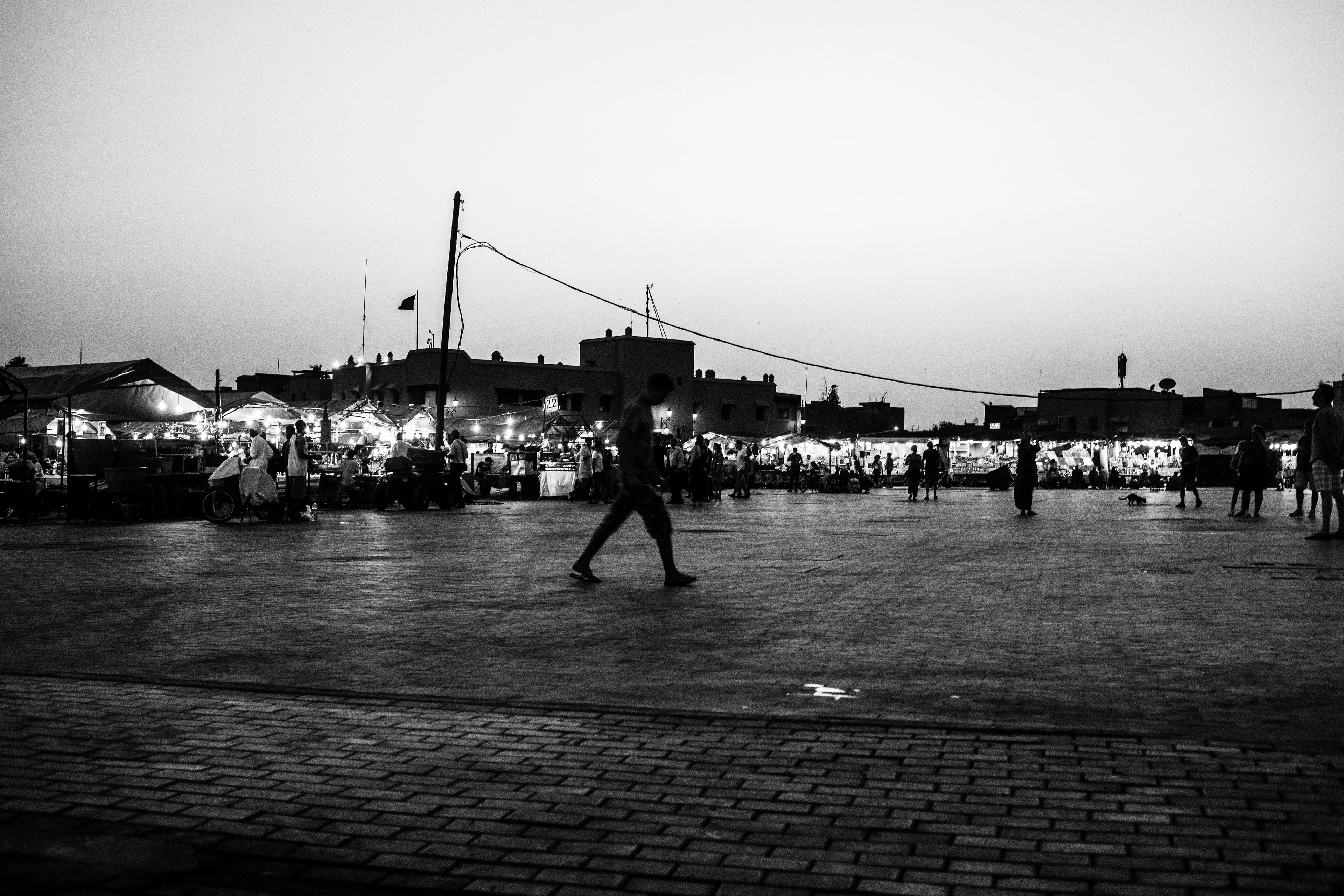
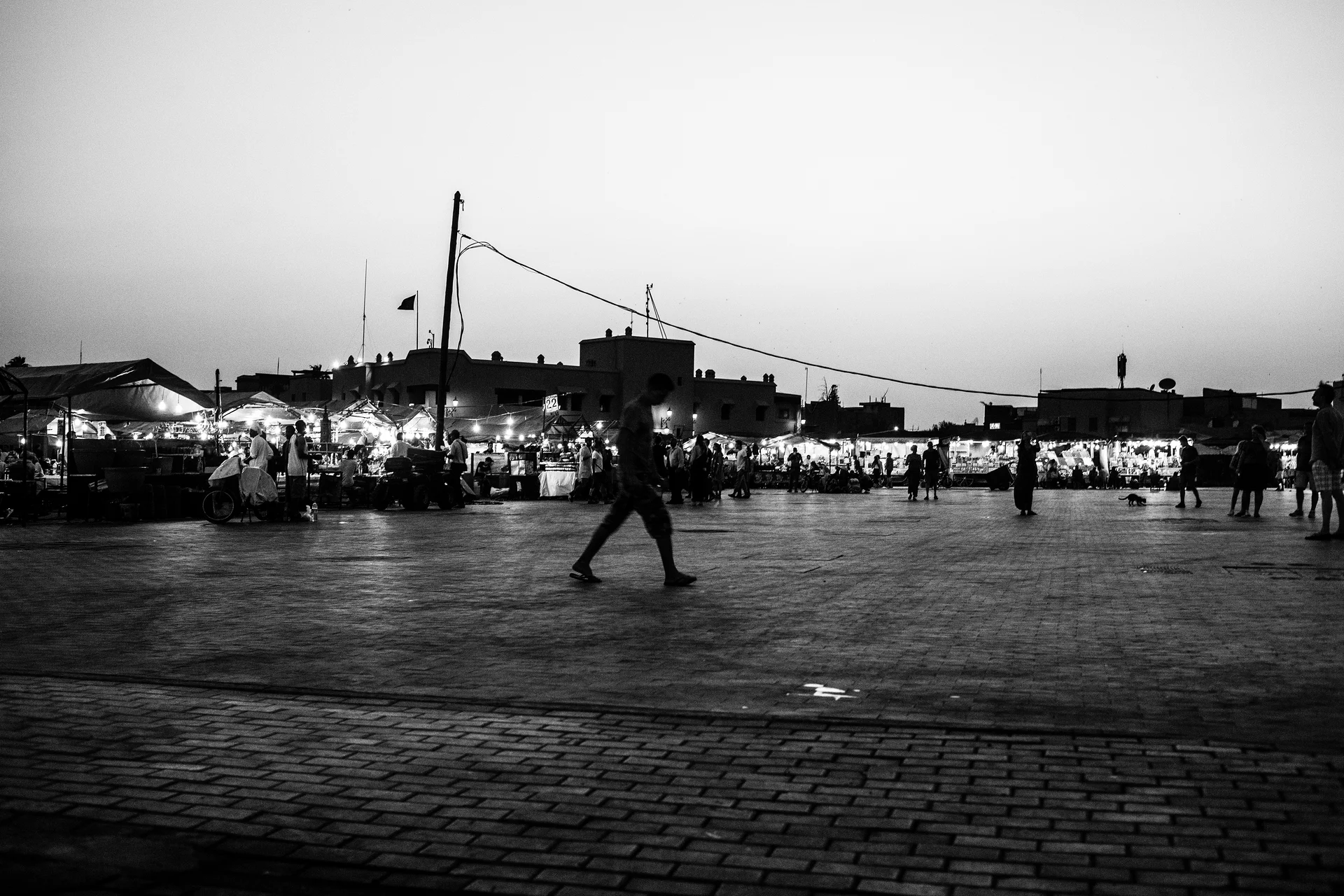
Everything starts and ends on this square, which is recognized as intangible cultural heritage by UNESCO. Mornings belong to the vendors squeezing fresh orange juice for 4 dirhams a glass. Starting around 5 PM, the space transforms. Storytellers, Gnawa musicians, snake charmers, and food stalls take over. While it feels touristy, local Moroccan families still gather here to dine every night.
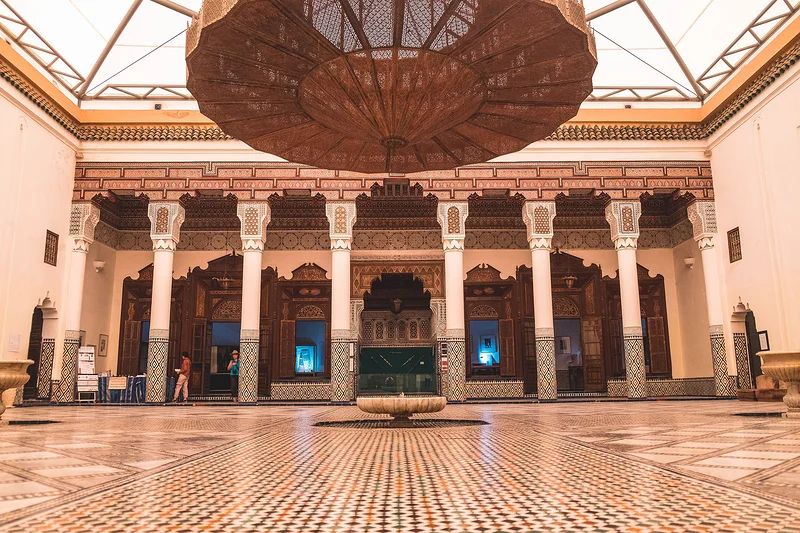
The medina is a living organism. Behind anonymous doorways lie riads featuring interior courtyards covered in zellige, hand-painted mosaic tiles. Every neighborhood has its own communal bread oven where locals bring their dough to bake, along with a hammam and a corner grocer. Artisans still work with leather, copper, and cedarwood using techniques handed down for generations.
Friendly tip: tour the souks early in the morning before 9 AM, when shops are just opening up. It is the only time you can take photos in peace and watch artisans at work without dealing with sales pressure.
Monuments: between splendor and quiet reflection
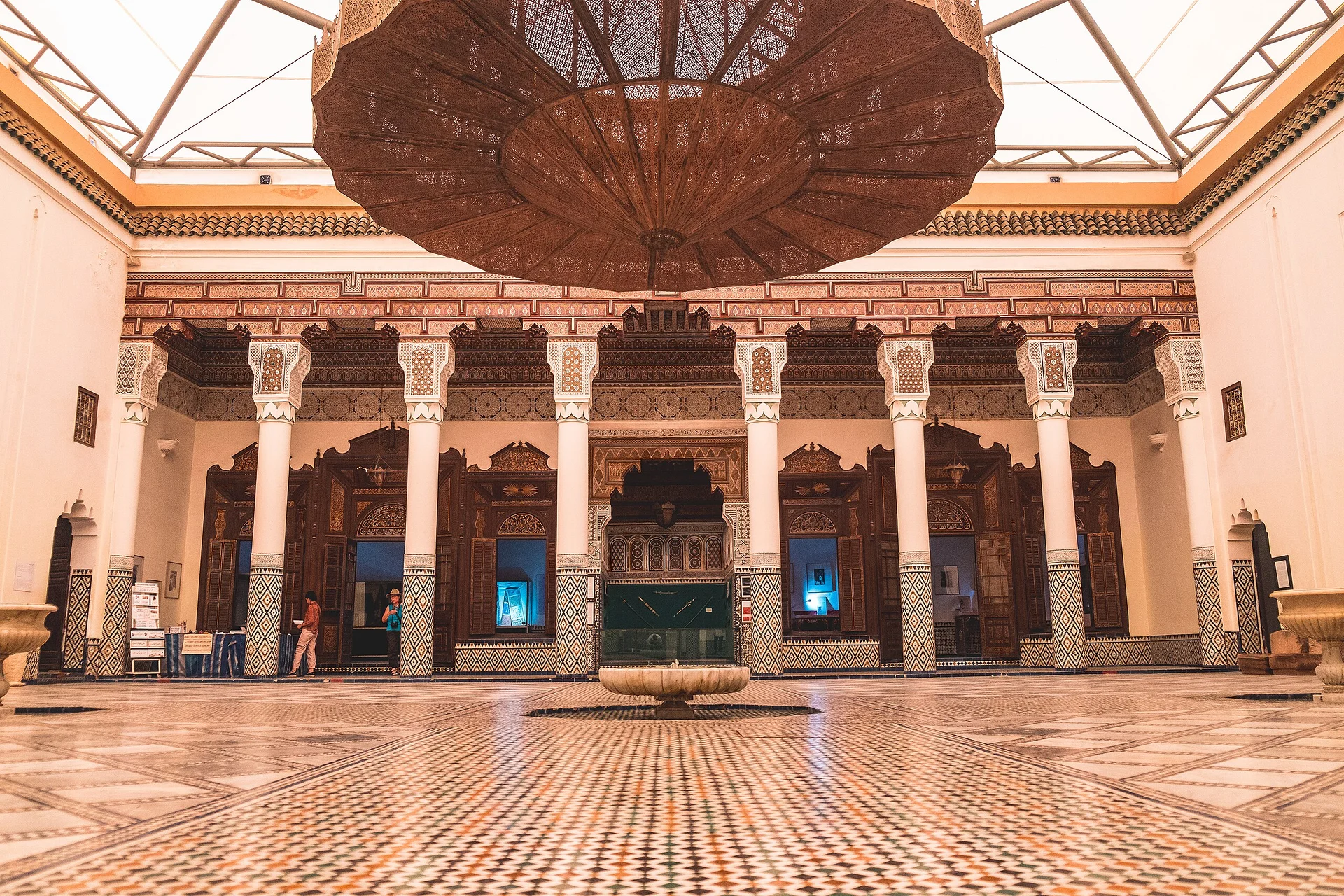
The Ben Youssef Madrasa is worth the trip all by itself. This 16th-century Quranic school once housed up to 900 students. Its carved stucco walls, central reflection pool, and student cells offer a glimpse into the golden age of Islamic scholarship in Morocco. Admission costs 100 dirhams for foreign visitors. Arrive right at opening time to enjoy the courtyard before the tour groups flood in.
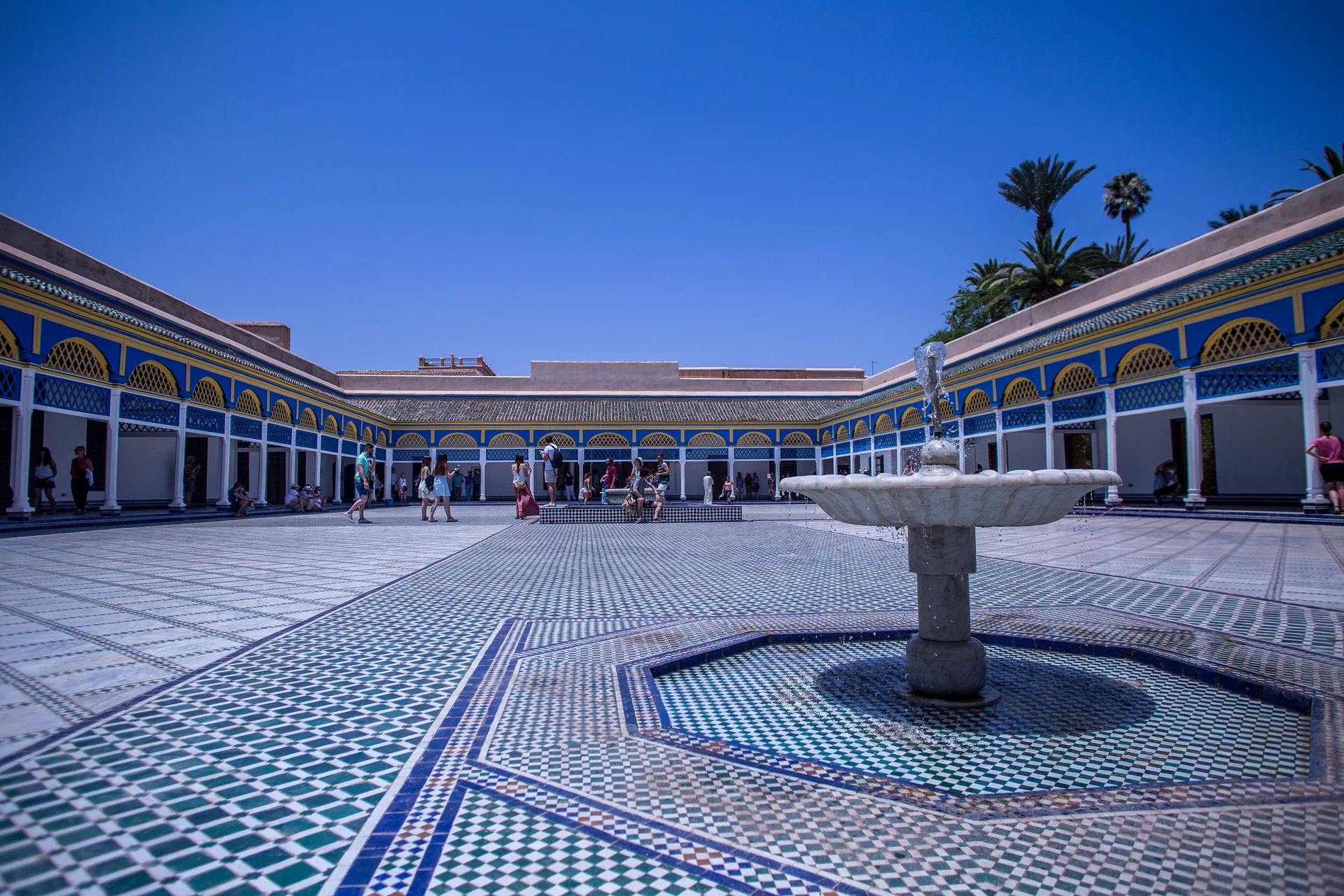
The Bahia Palace sprawls across 8 hectares of gardens, boasting 150 rooms decorated with painted ceilings. This 19th-century palace was built for a grand vizier looking to dazzle his peers. The Majorelle Garden, featuring an intense blue envisioned by a French painter and later rescued by Yves Saint Laurent, offers a leafy, cool retreat. Meanwhile, the ruined yet peaceful El Badi Palace lets you escape the crowds pressing in elsewhere.
Beyond the medina: Gueliz and excursions
The Gueliz neighborhood represents the other side of the city. This new town, built during the French protectorate, features tree-lined boulevards, art deco cafes, and contemporary art galleries. This is where trendy locals head for weekend brunch at the restaurant +61 or at Chez Elle. The contrast with the medina is well worth experiencing.
A 45-minute drive away, the Agafay Desert lets you sleep under the stars without committing to a 9-hour trek out to the Sahara. Its rocky hills provide a solid alternative for a short trip. The Atlas Mountains, visible from the city's rooftop terraces, lend themselves to day hikes through Berber villages. The coastal town of Essaouira is reachable in 2.5 hours by bus.
Friendly tip: book a cooking class inside a riad. You will tag along with your host to the Rahba Kedima market to pick out spices before preparing your own tagine. It is the best way to crack the code of Moroccan cooking, costing about $45* per person.
Where to eat and drink in Marrakech?
Marrakchi cuisine revolves around a few iconic dishes. The tagine, a stew slow-cooked in a conical clay dish, comes in dozens of variations including chicken with preserved lemons and olives, lamb with prunes and almonds, and spiced vegetables. Tanjia is the quintessential local specialty: marinated lamb shoulder cooked for 5 hours in the ashes of the neighborhood hammam's oven.
To eat like a local, head to the restaurant Chaabi near Jemaa el-Fna square, where a tagine runs about 50 dirhams. Chez Chegrouni, right on the corner of the square, has been dishing out generous portions for decades. Terrasse des Épices serves up modernized Moroccan dishes with views over the medina rooftops. For a guided street food run, evening walking tours with a local guide let you sample from the stalls without risking any stomach issues.
How to get to and around Marrakech?
Menara Airport sits 6 km from downtown. A taxi to the medina costs between 70 and 150 dirhams depending on your negotiating skills. The L19 airport bus connects to Jemaa el-Fna square for 4 dirhams. Ride-hailing apps like Careem and Heetch operate locally and save you from haggling.
From France, expect about a 3-hour direct flight. Low-cost carriers run routes from Paris, Lyon, Bordeaux, and Nantes for under $113* round trip if booked in advance. Inside the medina, everything is done on foot. Small beige taxis get around the new town but cannot enter the narrow alleys of the old city.
When to go?
Spring and fall offer the ideal conditions. March through May and September through November bring temperatures between 20 and 28 degrees, making it comfortable to explore the medina without melting. Summer is best avoided since temperatures exceeding 40 degrees turn the alleys into a furnace.
The month of Ramadan requires some thought. Nightlife becomes magical after breaking the fast, but daytime logistics can be tricky with closed shops and staff who may be running low on patience. Check the dates before booking your trip.
Marrakech remains the tourism capital of Morocco, and the city is highly sought after these days.
Granted, the red city is developing very quickly, but it is more welcoming than ever and will definitely win you over!
I loved its new riads, its varied restaurants, its warm locals, and its unique heritage.
From Jemaa el fna square, I admired the mountains and the gardens lined with giant palm trees.