Marrakech 9

Top 9 most beautiful cities in Morocco to visit2026 ranking

Photo : Sebastien Poncelet

Discover our members' favourite cities in Morocco. Feel free to publish your own reviews to take part in this collaborative ranking.

Favourite cities in Morocco among our members, approved by the editors

#1 Marrakech +74 recs

Marrakech is an assault on the senses. In the narrow alleys of the medina, the scent of cumin mingles with tanned leather as the call to prayer echoes from the Koutoubia. The red city offers labyrinthine souks, secret riads with tile-covered patios, and tanjia slow-cooked in hammam ashes. It is an intense, occasionally disorienting experience that stays with you.

Must-sees

#2 Rabat +17 recs

Morocco's capital sits right on the Atlantic coast, offering a distinct alternative to the country's busier tourist hubs. Founded in the 12th century, this imperial city operates as a genuine center of daily life and culture where you experience Moroccan rhythms firsthand.

At the heart of Moroccan history

A UNESCO World Heritage site, the Kasbah of the Udayas is an absolute must-see in Rabat. Walking through this ancient fortified military camp offers a direct look into Morocco's political and cultural past. You can wander narrow alleys framed by whitewashed walls and enjoy the surprising quiet inside the kasbah, located just steps from the Rabat Beach. Make time for the exceptional Museum of History and Civilizations, which traces Morocco's timeline from prehistory all the way through the contemporary Islamic era.

Head about a mile and a half from downtown to reach the Chellah Necropolis. Built over the ruins of an ancient Roman city, this atmospheric site holds layers of history. Stork nests sit atop the ruined tombs, and the grounds offer sweeping views over the Bouregreg River. It carries a remarkably peaceful and poetic energy, making it a favorite spot for a late afternoon walk as the light hits the stone.

Life at the local rhythm

Skip the overwhelming crowds found in Fez or Marrakech and head instead to the Rabat Souk. You will find a much calmer environment here for browsing. The finest leather goods are concentrated on Rue des Consuls. If you do not mind getting slightly turned around, dive deeper into the stalls to track down authentic pastillas (flaky pigeon or chicken pies with almonds and cinnamon), traditional tajine, or local sweets like chebakias (sesame and honey pastries scented with orange blossom and anise), briwates (crispy almond triangles), and other Maghrebi baked goods.

To decompress after the market noise, head to the Botanical Trial Gardens, established in 1914 during the French Protectorate. It is an ideal spot to put the local proverb into practice: those who hurry are already dead. If leafy paths and local flora are not your priority, you can check out the coast, though swimming here requires caution because the surf can run rough and debris occasionally washes ashore.

When to go

Rabat enjoys an oceanic climate where temperatures rarely top 86 degrees Fahrenheit, making it comfortable to visit nearly year-round. To minimize rain and maximize sunshine, plan your trip between May and October.

How to get there

No airline flies nonstop from North America to Rabat itself. Royal Air Maroc serves Casablanca direct from New York, Washington, Miami and Montreal, and a train runs from that airport to Rabat in about an hour and a half. If you are already in Europe, low-cost carriers fly straight into Rabat-Salé from a number of cities, with fares from $90 to $230* depending on the airline.

Must-sees

#3 Fez +12 recs

Fez holds its own against Marrakech, its larger Moroccan counterpart. This imperial city boasts a history stretching back over 1,200 years, and travelers increasingly view it as a top-tier destination in North Africa.

The Medina, a World Apart

The defining neighborhood here is the ancient medina, a UNESCO World Heritage site since 1981. It stands as the largest medieval city in North Africa, sprawling across more than 9,000 narrow alleyways. Getting lost in Fez-el-Bali, the historic walled quarter, is practically part of the itinerary. You enter through one of the monumental gates cut into the ramparts that frame the old town. Bab Boujloud is the most striking, with brilliant blue and green ceramic tiles laid in 1913. The commercial corridors of Talâa Kbira to the north and Tala Seghira to the south overflow with traditional merchants and food stalls amid a lively sensory mix of sounds, spices, and bright textiles. Local cooperatives offer hands-on introductions to argan oil production, Moroccan pastry baking, and traditional weaving. The Bou Inania madrasa ranks as the architectural crown jewel of the medina, showcasing intricate bronze metalwork, carved cedar wood, onyx, marble, and colorful tilework. The Merenid Tombs sit on a nearby hill, offering panoramic sunset views over the entire medina.

Mosques, Festivals, and Tanneries

Fès-el-Jdid, the new town the Merinids built beside the medina in the 13th century, holds the royal palace and the mellah. Back in Fez-el-Bali, Karaouine functions simultaneously as the oldest continuously operating university in the world and a major mosque capable of holding 20,000 worshippers. Because interior access is restricted to Muslims, non-Muslim visitors view it from the threshold. Housed in a 19th-century summer palace, the Batha Museum displays an extensive collection of Moroccan craftsmanship, including wood carvings, Berber textiles, and regional musical instruments. Its Andalusian-style garden hosts the annual World Sacred Music Festival, a major international gathering featuring musical acts from around the globe alongside literary debates, film screenings, and art exhibitions. The Nejjarine Museum of Wooden Arts and Crafts also warrants a stop.

Another essential stop is the tanners' quarter, an area known for intense aromas and striking visual contrasts. Near Place Seffarine, the Chouara Tanneries process leather goods famed for their durability. Visiting in the morning lets you watch artisans working alongside stone vats filled with natural dyes.

When to go

Temperatures stay mild year-round in Fez, but spring and autumn offer the most comfortable weather. Summer temperatures spike significantly, often reaching oppressive levels during the afternoon. June is an ideal time to visit if you want to experience the World Sacred Music Festival firsthand.

How to get there

There are no nonstop flights from North America: you connect in Madrid, Paris, or Casablanca, and the final European leg into Fez runs about two hours and forty-five minutes. Airfare drops considerably during the off-season, with tickets starting as low as $45*.

#4 Casablanca +3 recs

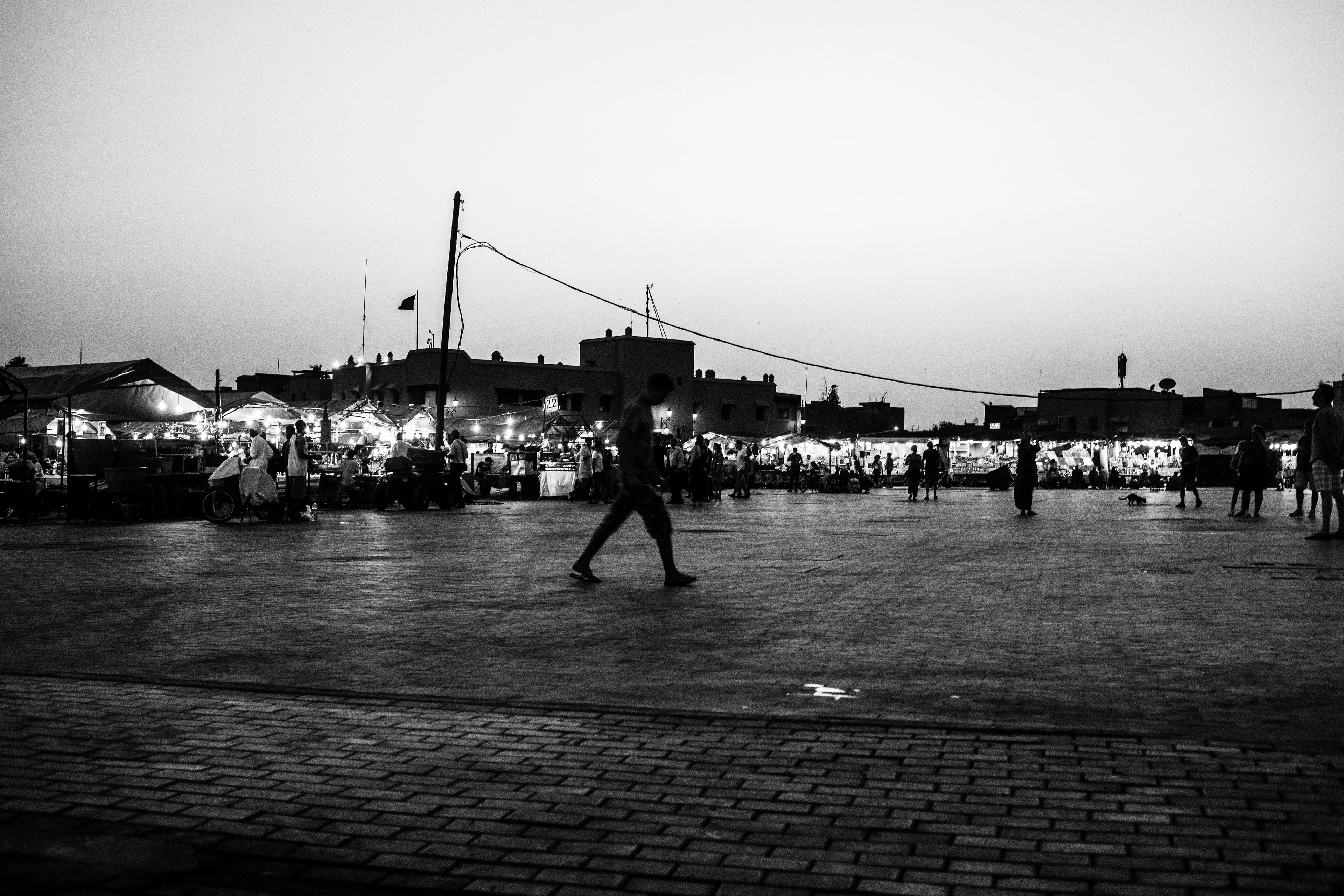
Casablanca is Morocco's largest city, blending high-rise modernity with deep historical roots. You can spend your morning at the Hassan II Mosque, which features one of the tallest minarets in the world, before wandering the traditional alleys of the medina. The city also showcases a striking collection of Art Deco architecture from the colonial era, while the Aïn Diab waterfront offers a coastal scene for relaxing that feels similar to a Pacific beach town.

#5 Agadir +2 recs

Flattened by a 1960 earthquake, Agadir was rebuilt for the sun rather than for history. Forget the old-world medina, because this city is all about its six kilometers of beach and an Atlantic light that feels like Santa Monica. It is a secure, accessible seaside base that works well for families or a quiet off-season trip.

Twenty minutes away, Taghazout draws surfers from all over the globe to breaks like Anchor Point.

#6 Essaouira +1 rec

Tempered by trade winds and the low hum of guembri strings, Essaouira offers an artistic escape on the Moroccan Atlantic coast. Its white and blue medina, where salty air mixes with the scent of cedarwood, is built for aimless wandering, far removed from the intensity of the imperial cities. It is a destination for those seeking a slower pace, where the rhythm of the ocean and a local creative scene provide a grounded, quiet experience.

#7 Chefchaouen +1 rec

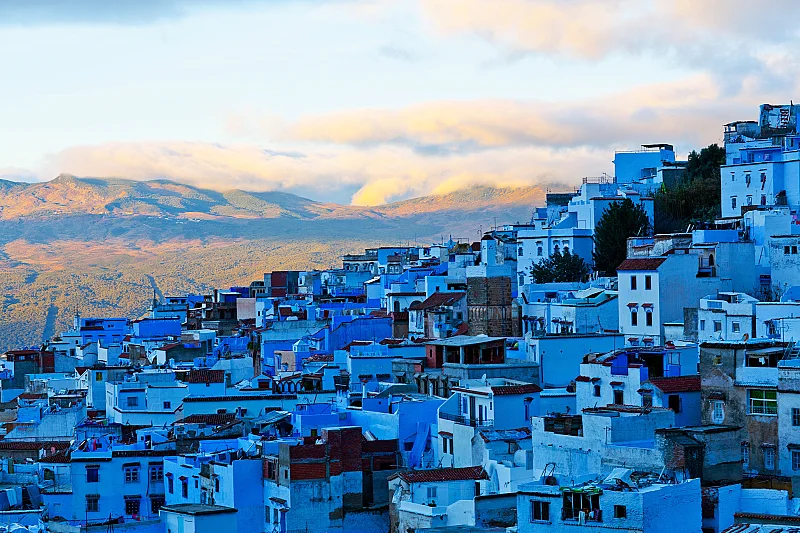
Everything here is painted blue, from the narrow alleys and stairways to the geranium pots and even the cats dozing on doorsteps. This mountain town is entirely walkable and serves as the perfect base camp for trips to Talassemtane National Park and the Akchour waterfalls.

A world away from the chaotic pace of Fes or Tangier, most travelers come here simply to wander aimlessly with a camera in hand.

Must-see

#8 Ouarzazate

In Ouarzazate, you might find an Egyptian pyramid standing next to a papier-mâché Tibetan temple. This city has served as a backdrop for Lawrence of Arabia, Gladiator, and Game of Thrones. Unlike the crowded medinas you find in other cities, this ochre-toned stopover acts as a base camp for trips to the Sahara and the Taourirt Kasbah, before you head out toward the dunes of Erg Chebbi.

#9 Tangier -2 recs

Perched on a hillside overlooking the Strait of Gibraltar, Tangier ranks among the essential stops of any trip to Morocco. Dating back to its roots as an ancient Phoenician port, this strategic meeting point between Europe and Africa, on either side of the Strait of Gibraltar, has evolved over centuries into a distinct coastal city with a multicultural spirit.

Alleys, Markets, and Palaces

Tangier centers around its old medina, a labyrinth of narrow, shaded lanes where you navigate by following the scent of fresh mint tea and local spices. These winding paths frequently lead you out to the Grand Socco, a wide public square that serves as a primary gateway to the medina. A lively open-air market fills the space daily, offering fresh produce beneath palm trees and a central fountain.

From there, head toward the Grande Mosquée, a traditional Alawite place of worship built over the ruins of an ancient Roman temple. Nearby, the place de la France delivers panoramic views across the city. Deeper inside the medina lies the Kasbah district, home to artisan craft shops and neighborhood cafés. The Kasbah Museum occupies a historic palace with 13th-century ramparts, holding exhibits dedicated to regional history and Moroccan arts.

Ocean, Caves, and Gardens

Outside the city center, the coastal road toward Talâa Cherif reveals sweeping views over the Atlantic Ocean. Located 15 kilometres from downtown, the grottes d'Hercule draw visitors for their mythological ties. Local legend holds that Hercules rested inside these seaside caverns between labors. For a similar pace, the municipal beach and the adjacent Corniche gardens offer an easy stretch of sand where families gather along the shore.

Further up the coast, the parc Perdicaris spans 67 hectares of protected green space. This botanical garden shelters local flora like laurels, acacias, and pines, while serving as a stopover point for migratory birds. Along the coastal drive leading to the park stands the Cap Spartel lighthouse, marking the northwestern tip of the peninsula.

When to go

Tangier works as a year-round destination thanks to its temperate coastal climate. From March through December, expect sunny days with temperatures hovering between 20 and 30 degrees. January and February bring cooler conditions around 15-16 degrees, though rainfall remains low.

How to get there

Flights from major European hubs connect directly to Tangier Ibn Battouta Airport, while ferry service across the Strait of Gibraltar links the city from Spain, including a 45-minute crossing from Tarifa. Travelers arriving from other parts of Morocco can take domestic flights or drive north from Marrakech, a route taking about 5 hours and 30 minutes by car.

Must-see

Find the best travel deals in Morocco

Hotels and stays Flights Car rentals Custom trips

Trip ideas and themed activities

Top 7 best travel agencies in Morocco

Planning a solo trip to Morocco involves coordinating Sahara treks, booking riads in Marrakech, and managing transport between imperial cities. It takes time, and the wrong agency can turn your vacation into a logistical headache. We compiled this list using feedback and recommendations from the Avygeo community to help you identify agencies that actually know the lay of the land in Morocco.

Latest reviews

At the gateway to the mountains

Gateway to the national park and the Toubkal mountain. Imlil was my base for heading out to discover the highest mountain in Morocco. I loved its location, you feel far from everything and at the same…

277

A vibrant and endearing city

Marrakech remains the tourism capital of Morocco, and the city is highly sought after these days. Granted, the red city is developing very quickly, but it is more welcoming than ever and will definite…

232

Colors, food, and warmth

Marrakech is an incredible city, full of color and life. Jemaa el-Fna square is the number 1 recommendation on Avygeo, and I totally agree. It is a must-see, especially in the evening with its street…

52

A maze of streets

Fez is an incredible city, an absolute must-visit during a trip to Morocco. You get woken up by the sound of prayer, because there are mosques on every street corner. The streets are very narrow, a re…

56

The vibrant heart of Morocco

In my opinion, Marrakech is the most interesting city in Morocco, along with Fes. Besides the big souk and the Jemaa el-Fna square, where you can do some shopping and try local specialties, I really e…

48

Rankings by travellers, for travellers

Our rankings are powered by thousands of reviews from travelers like you, not the arbitrary pick of a single editor. Every positive review you publish raises the destination’s score.

1 positive review = +1 reco

Your voice matters!

Have you travelled and discovered amazing places? Share your experience and help the community rank the most beautiful destinations! Sign up for free to post reviews and make your voice heard.