
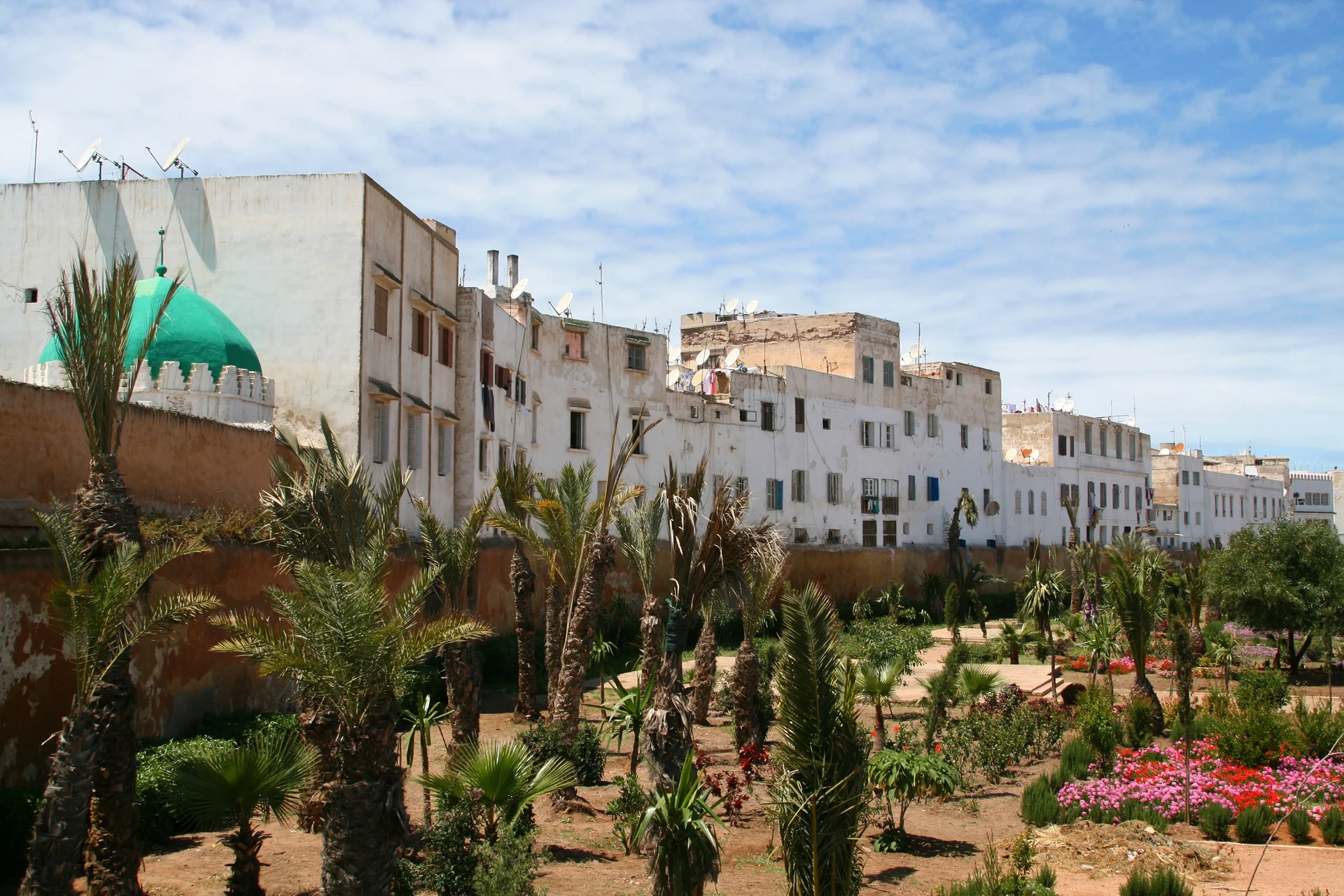
The Medina of Casablanca, a crossroad of histories between two worlds
Amid the hustle of the economic capital of Morocco hides a neighborhood that defies all conventions. The Medina of Casablanca, rebuilt after the devastating earthquake of 1755, stands as the country's newest and arguably most singular medina. Here, Arab-Islamic architecture blends with European influences, creating a unique architectural cross-breeding that tells the story of three centuries of cultural exchange.
A phoenix born from the ashes of Anfa
Between the 12th and 15th centuries, the city of Anfa thrived as an active port before being completely razed by the Portuguese in 1468 in retaliation for corsair activities. The site slipped into obscurity for three centuries. In 1770, Sultan Sidi Mohammed Ben Abdallah decided to rebuild the city, renaming it Dar El-Beïda, the White House. He had mosques, hammams, ovens, and mills erected while consolidating the ramparts to establish a strategic defense point on the Atlantic coast.
By the 19th century, a substantial European community had settled in the medina. Three quarters of the current structures date from the 20th century, bearing witness to an era when the medina housed hotels, restaurants, consulates, and the very first bank in Morocco.
Architecture unlike any other
What strikes visitors about this medina is its architecture, which stands in sharp contrast to other Moroccan medinas. Bourgeois homes and private mansions with a distinctly Hispano-Moorish flair feature carved wooden doors, wrought-iron balconies, and mashrabiya windows. The streets, often wide enough for cars to pass, break away from the traditional labyrinths found in imperial medinas.
In some ways, the medina evokes Mediterranean towns with its white facades, Moorish arcades, and Andalusian patios. This architectural singularity reflects its cosmopolitan past, where Europeans and Moroccans coexisted within a unique commercial hub.
The monotheistic triangle, a symbol of harmonious coexistence
At the heart of the medina stands a poignant testament to religious tolerance. The monotheistic triangle brings together the baroque Spanish church of Santa Buenaventura, now secularized and turned into a cultural center, the Ettedgui synagogue, and the Ould El Hamra mosque, the oldest in Casablanca, completed in 1795. The Hamra mosque is said to get its name either from the red city of Marrakech where its builder originated or from the color of his henna-tinted beard.
The Jewish community maintained a strong presence in the medina, particularly within the Mellah quarter. Local legends add color to every corner. The story of Lalla Taja, a benefactor of children in the 19th century whose mausoleum was funded by the Belgian Consulate, continues to touch visitors.
Stone guardians: from the Sqala to the sanctuaries
The Sqala remains one of the jewels of the medina. This fortified bastion was built in 1769 by Sidi Mohammed Ben Abdallah to protect the city with its imposing cannons aimed at the Atlantic Ocean. The structure draws inspiration from European Renaissance fortifications and was built by Genoese master craftsmen. Today transformed into a Moorish cafe-restaurant, it offers a peaceful pause in an Andalusian garden with panoramic views of the port.
Sanctuaries dot the route. The tomb of Sidi Allal al-Kaïraouani, the city's first saint, and the koubba of Sidi Bou Smara serve as important commemorative sites for locals. Visitors typically enter the medina through Bab Marrakech, the Marrakech gate, one of the eight gates that pierced the ramparts standing 6 to 8 metres high over a 4-kilometre perimeter.
The soul of the souks between tradition and modernity
The labyrinth of narrow alleys conceals a vast souk selling linens, ironwork, leather goods, and traditional crafts. The African market known as "Little Dakar" brings a fresh dynamic with its sub-Saharan goods, highlighting Casablanca's cultural diversity.
Contrary to expectations, the stalls display not just spices and babouches, but also European brand-name goods that Casablancans love. The fruit, vegetable, and fish markets still provide an authentic dive into daily local life.
Friendly tip: Do not miss the free Heritage Interpretation Center, located on rue de la Marine near the Ould El Hamra mosque. This visit will considerably enrich your understanding of Casablanca's history before you wander the alleys.
Experiencing the medina at the Casablanca rhythm
At 5 am, when the sky glows with the first light, the medina stretches and the first shopkeepers open their doors. Carts and donkeys laden with goods roam the lanes while street vendors set up their spots. At dusk, as the sky turns deep crimson, the illuminated medina hums with human activity while a languid melody drifts toward the sky.
For a snack break, settle into the small square where street vendors dish out bowls of snails cooked in a spicy broth served piping hot. The medina sits right in the city center, a 5-minute walk from the Casa-Port station and the port, offering a striking contrast to the modern city surrounding it.