Visiting Quebec
Montreal sits on an island, at the foot of a hill the locals call the mountain. Two hundred and fifty kilometres downstream, Quebec keeps the only fortifications still standing north of Mexico. Between them the Saint Lawrence widens until you lose sight of its banks.
What surprises first is the scale. The river turns salty long before the ocean, whales come up as far as Tadoussac, and the forest begins forty minutes from either city, without closing again before Labrador.
You will love it if
- You want a North American city where everything happens in French
- Wide open spaces appeal to you more than monuments
- You come in September for the colours, or in February for the snow
Look elsewhere if
- You hate driving: outside the two cities there is no alternative
- You plan to see it all in a week: a thousand kilometres separate the extremes
- Dry cold at minus twenty frightens you more than it amuses you
The must-sees
The highlights
-
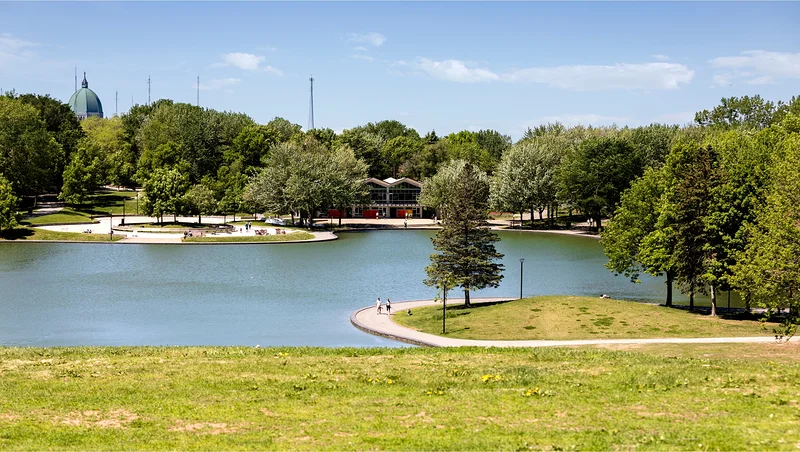
1 Mount Royal Park +23 recs
Designed by Frederick Law Olmsted, the architect of Central Park, on the hill that gave the city its name. The Kondiaronk lookout shows downtown, the river and, on a clear day, the Vermont mountains. It is a thirty-minute walk up.
-
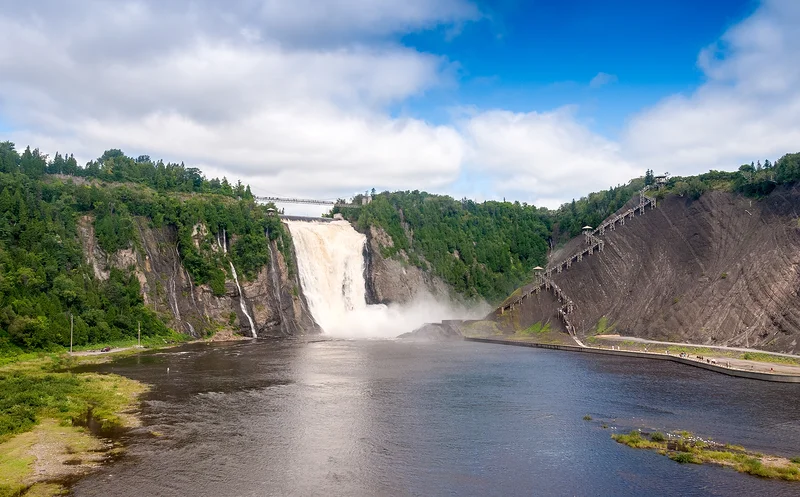
2 Montmorency Falls +17 recs
Eighty-three metres high, some thirty more than Niagara. A suspension bridge crosses directly above the lip, and in winter the frozen spray builds a cone of ice at the foot that climbers go up.
-
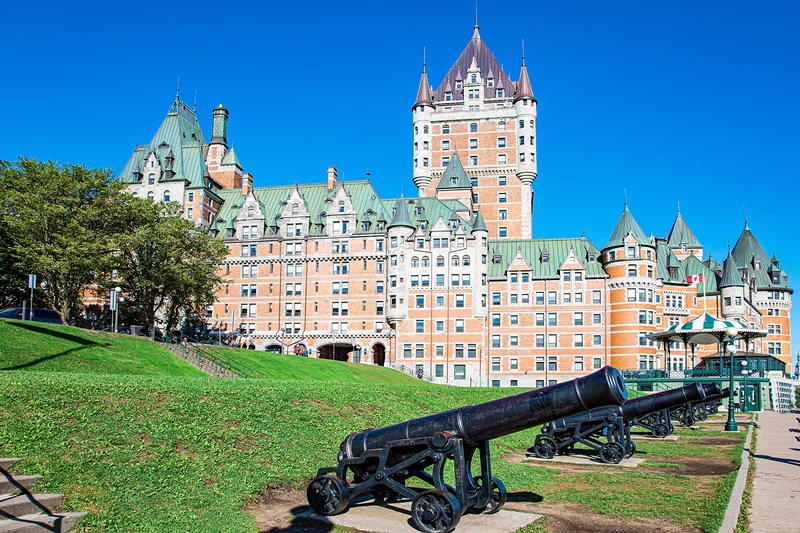
3 The Château Frontenac +12 recs
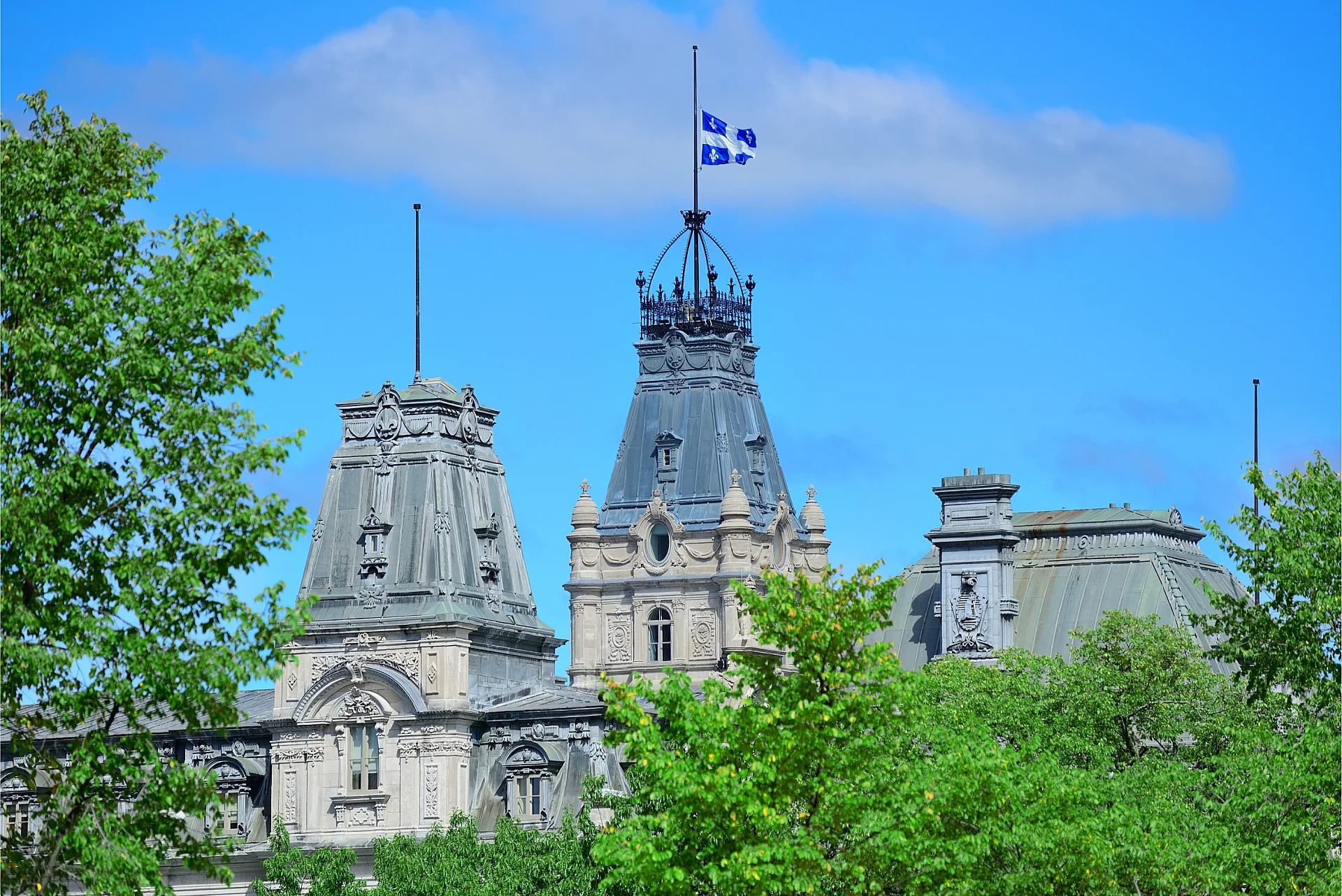
Opened in 1893 by a railway company, set on Cap Diamant above the river. Churchill and Roosevelt held the Quebec Conferences here in 1943 and 1944. The Dufferin Terrace in front of it is public and free.
-
4 The Quebec Citadel +10 recs
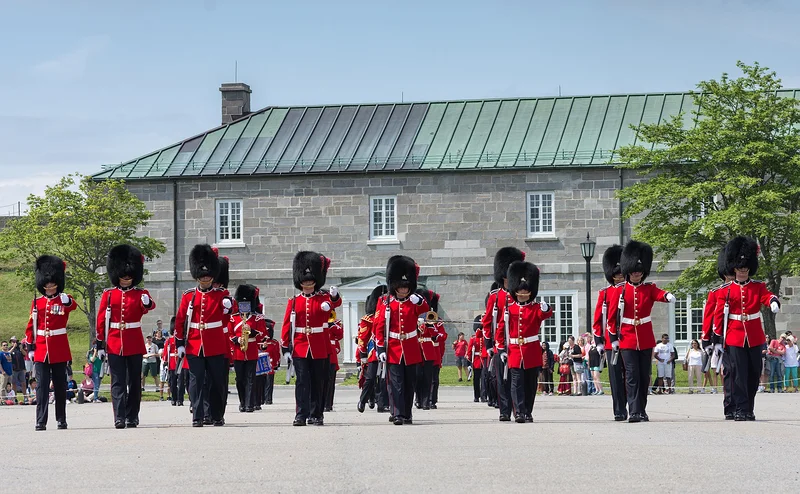
A star-shaped fortification completed in 1850, and still an active military base: the Royal 22e Régiment is garrisoned there. The changing of the guard takes place in summer, in red dress, in the inner courtyard.
-
5 The Montreal Botanical Garden +14 recs
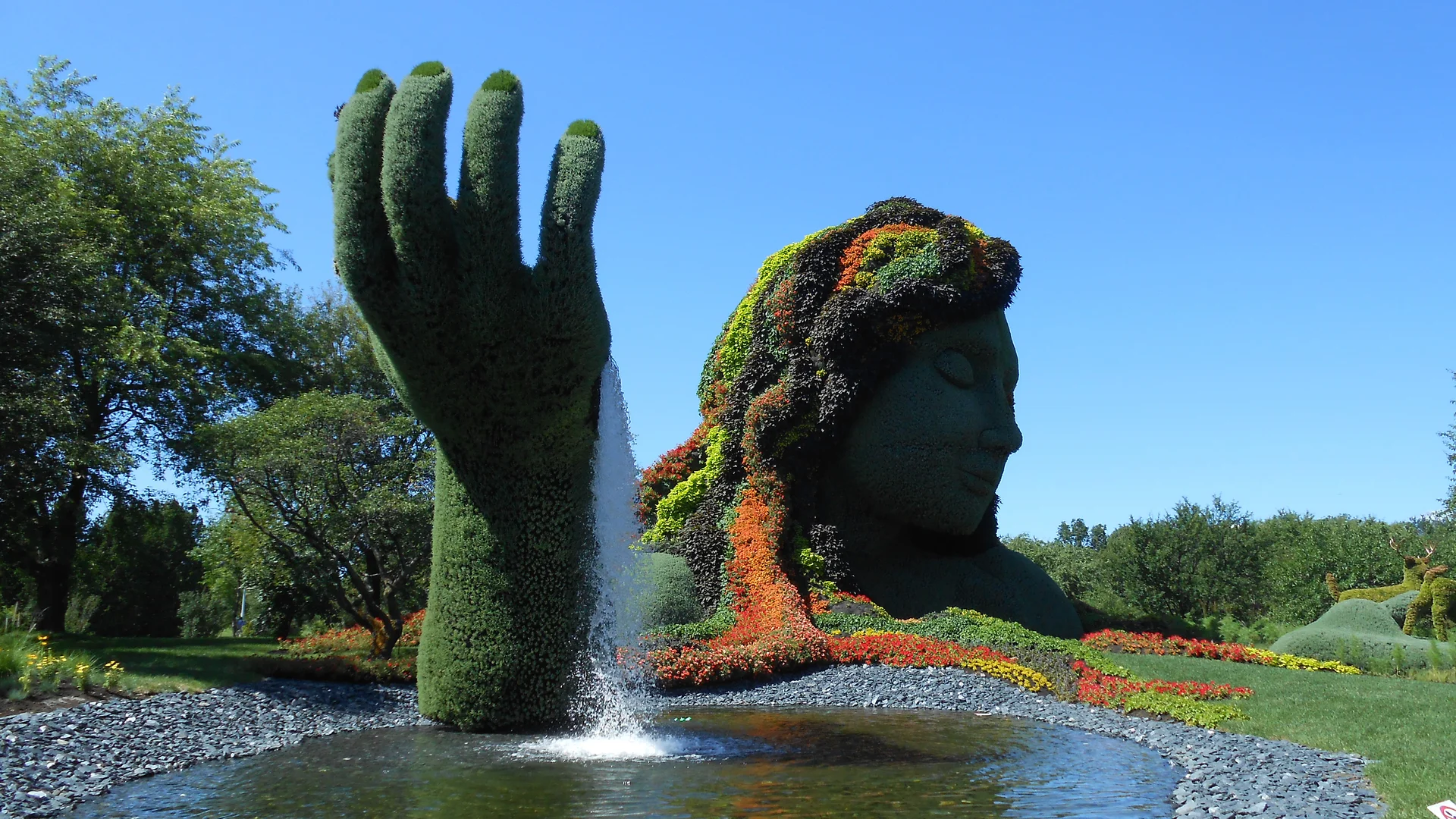
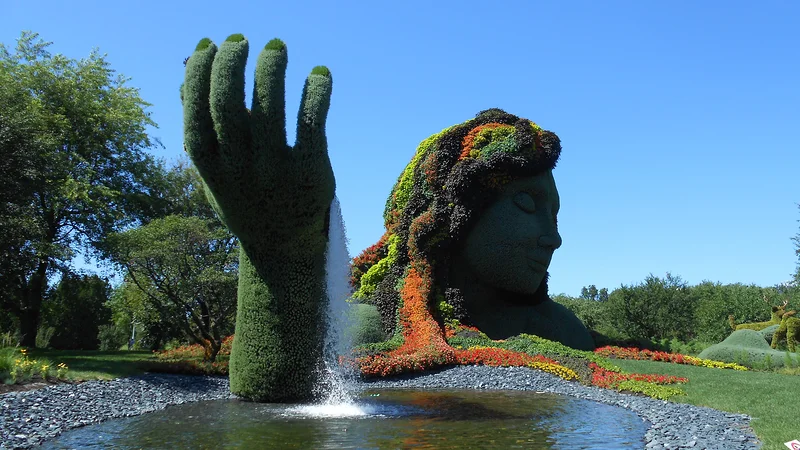
Seventy-five hectares and around thirty themed gardens, among them a Chinese garden built by craftsmen from Shanghai and a First Nations garden. The autumn illuminations in the Japanese garden are worth the queue.
Our itineraries in Quebec
| Length | Itinerary | What you see |
|---|---|---|
| Long weekend (4 days) | Montreal › Quebec | Both cities, the river, the train between them |
| 1 week | Montreal › Quebec › Tadoussac | Cities, waterfall, Saguenay whales |
| 2 weeks | Montreal › Shawinigan › Quebec › Tadoussac › Saint-Félicien | Mauricie, Charlevoix, Saguenay and Lac-Saint-Jean |
The train links Montreal to Quebec in three hours, city centre to city centre, and it is more restful than Highway 20. For those two cities alone a car is useless and expensive to park.
As soon as you head down the river or north, it becomes essential. A two-week loop runs to around fifteen hundred kilometres, which stays comfortable on empty roads.
When to visit Quebec
| Rating | Season | Weather | Crowds and prices |
|---|---|---|---|
| September and early October | 10 to 20 °C, dry and bright | Busy, mid-range prices | |
| June to August | 20 to 27 °C, humid | Peak, high prices | |
| January to March | minus 20 to minus 5 °C, snow | Moderate, good prices outside carnival | |
| April and November | 0 to 10 °C, mud and rain | Quiet, many closures |
Our advice
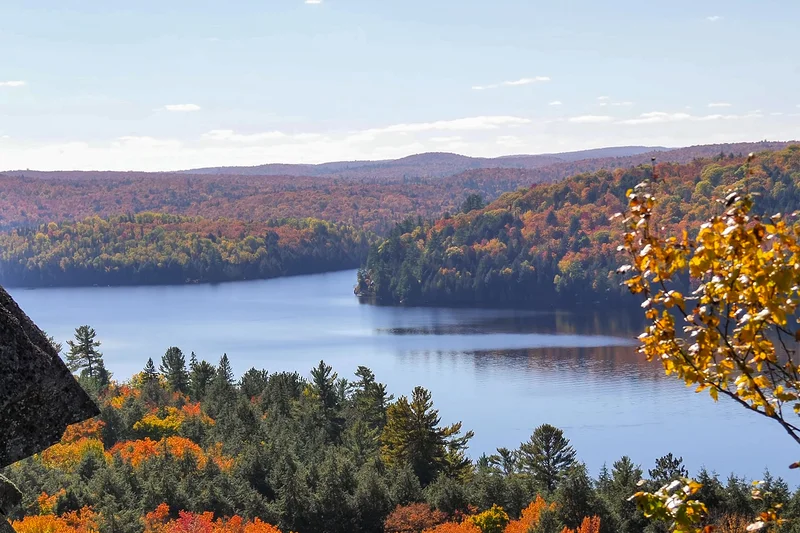
The last week of September is the best compromise of the year: the maples have turned, the whales are still there, the mosquitoes have gone and summer rates have dropped. The colours start in the north and come down to the river over two weeks.
Getting to Quebec
-
1 By plane Fastest
Montreal-Trudeau takes direct flights from London in about seven hours, and connections through Paris with Air France work from anywhere in Britain. The airport is twenty minutes from downtown on the 747 shuttle, which runs around the clock.
-
2 Through Quebec City Smartest
Jean-Lesage airport takes seasonal links from Europe. Flying into one city and out of the other saves driving the same road twice, and the rental companies allow one-way between them.
-
3 Paperwork Do it first
an electronic travel authorisation is required before boarding for British and Irish citizens arriving by air. You apply online, it costs a few dollars and it is usually granted in minutes.
Getting around Quebec
Montreal has a four-line metro and a bus network that covers everything, Quebec is walkable as long as you stay in the old town. The corridor train and the coaches link the river cities; beyond them, a car is the only option.
Worth knowing
Winter tyres are required by law from 1 December to 15 March on every vehicle registered in Quebec, hire cars included. Check they are actually fitted when you collect the car: some companies charge for them separately.
What to eat in Quebec
- Poutine: chips, cheese curds and brown gravy, served scalding. The cheese has to squeak between your teeth, and that is how the place is judged.
- Tourtière: two different dishes under one name. The Lac-Saint-Jean version is a deep pie of hand-cut meat and potato, baked six hours; elsewhere it is a thin minced-meat tart.
- Montreal bagel: smaller and sweeter than the New York kind, boiled in honeyed water then baked in a wood oven. Two bakeries in the Mile End have run day and night since the 1950s.
- Smoked meat: beef brisket cured with spices, smoked then steamed, hand-sliced and served on rye.
- Maple taffy: boiled syrup poured onto snow and rolled onto a stick. Eaten at a sugar shack, in March and April, when the sap rises.
- Ice cider: apples frozen on the tree or after picking, then cold-pressed. A Quebec invention from the 1990s, sweet and sharp, served very cold.
- Pouding chômeur: a dish from the 1929 crash, plain batter drowned in maple syrup and cream, which caramelises in the oven.
Taxes are not in the displayed price: reckon on about fifteen per cent more at the till, and a tip of roughly the same in restaurants and bars. The Jean-Talon market in Montreal is open all year and remains the best place to taste the local cheeses and ciders.
Where to stay in Quebec
| Area | What it is for | Worth knowing |
|---|---|---|
| Montreal, Old Montreal | River, Old Port, museums | The most touristy, cobbled and lively |
| Montreal, Plateau or Mile End | Cafés, bagels, outside staircases | Neighbourhoods where people live, metro ten minutes away |
| Quebec, old town | Fortifications, terrace, Petit Champlain | All on foot, full in summer and at carnival |
| Tadoussac | Whales, fjord, dunes | One street of hotels, book early |
| Sherbrooke | Eastern Townships, lakes, vineyards | The cheapest, a base for the south |
Two nights in Quebec and three in Montreal cover the urban essentials. The two cities are nothing alike: one is a European garrison town, the other a North American metropolis.
For the whales, sleeping in Tadoussac changes everything: the morning sailings are the calmest, and the river is already salt water there.
How much does a trip in Quebec cost?
| Style | Length | Budget per person |
|---|---|---|
| Budget (hostel, groceries, walking) | 10 days | 700 to 950 € |
| Comfortable (hotel, restaurants, one whale trip) | 10 days | 1,600 to 2,300 € |
| High end (boutique hotels, well-known tables) | 10 days | 3,500 to 5,000 € |
- Taxes and tipping: reckon on roughly thirty per cent to add mentally to a restaurant bill. It is the line visitors forget most often.
- The car: hire it only for the driving days. Parking at a downtown hotel often costs the price of a meal per night.
- National parks: the day rate is modest and a season pass pays off from the fourth day, with the provincial and federal networks counted separately.
- Whale trips: the zodiac costs less than the big boat and gets closer, but it is wet and cold. Both leave from the same quay.
- Lunch: the midday table d'hôte is half the price of the evening card, in good Montreal kitchens included.
Traditions and way of life in Quebec
The French spoken here is not an accent of the French of France, it is another branch of the same tree: it comes from the speech of the west and north of the kingdom, cut off from Paris in 1763. Hence words the mother country has lost, and a switch to first names that comes faster than you expect.
Winter is not endured, it is organised. The underground cities of Montreal and Quebec link metros, malls and offices over kilometres, and the February carnival fills the streets at minus fifteen.
Two useful habits. You take your boots off when you enter someone's home, always, and your host will not ask. And in shops you are often greeted with « bonjour, hi »: answer in whichever language you like, which is exactly what the formula is for.