
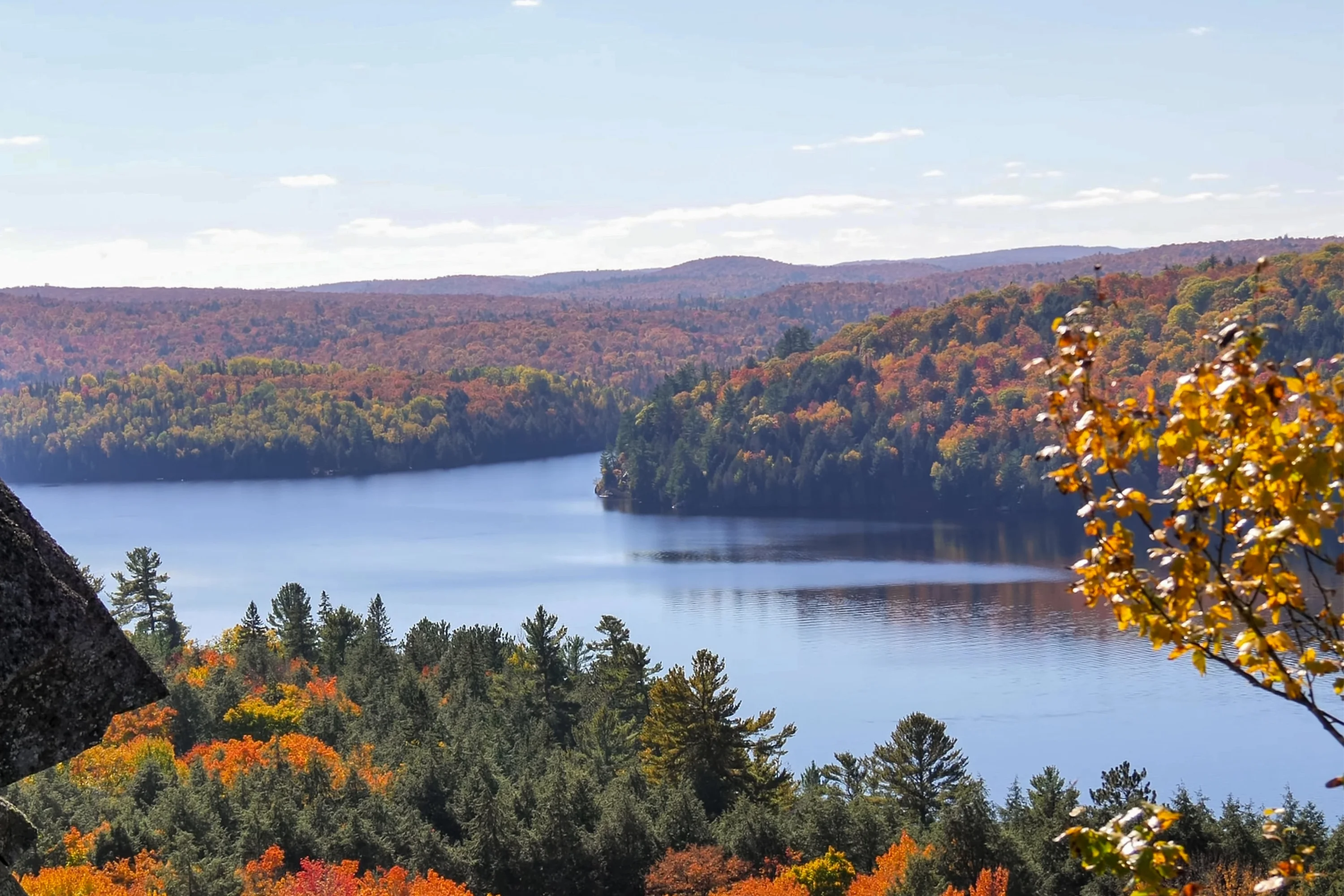
"Bonjour, welcome to Quebec!" From the moment I stepped off the plane in Montreal, that melodic accent wrapped around me like a promise of adventure. I spent two weeks in September crisscrossing the roads of Quebec and Ontario, driving solo with nothing but a flight to Montreal and a rental car. This road trip gifted me with dizzying skylines, thunderous waterfalls, endless lakes, and connections that I still cherish today.
In this article, I’m sharing my full itinerary, my personal highlights, the hiccups I faced, and all the practical tips I wish I’d known before I left. Whether you're traveling as a couple, with family, or on your own, this account is designed to help you build your ideal road trip.
My day-by-day itinerary: The great Montreal - Ontario - Quebec loop
Before diving into the details of each stop, here is an overview of my route. The idea was simple: start in Montreal, head down toward Toronto and Niagara Falls, loop back up through Algonquin Park and Ottawa, then return to Quebec to finish in Quebec City before my flight home.
| Days | Stop | Nights | Drive Time |
|---|---|---|---|
| Day 1 to 3 | Montreal | 3 | , |
| Day 4 | Drive to Toronto (via Thousand Islands / Kingston) | , | ~5h with stops |
| Day 5 to 7 | Toronto | 3 | , |
| Day 8 | Niagara Falls & Niagara-on-the-Lake excursion | , | ~1h30 round trip |
| Day 9 to 10 | Algonquin Park | 2 | ~3h from Toronto |
| Day 11 to 12 | Ottawa | 2 | ~3h30 from Algonquin |
| Day 13 to 14 | Quebec City (+ Montmorency Falls) | 2 | ~4h30 from Ottawa |
| Day 15 | Return to Montreal & flight | , | ~2h30 |
⚠️ Good to know: This itinerary is a loop, so you can start at either end depending on your arrival city (Montreal or Toronto). It works just as well in reverse!
Why September is the perfect time for this road trip

I chose September almost by accident, and it was a stroke of genius. The summer crowds have thinned out, the temperatures remain mild (15 to 22°C), and most importantly, it’s the start of the Indian Summer. The maples begin to turn shades of red and gold, creating a postcard-perfect backdrop along the roads. If you can travel between mid-September and mid-October, go for it.
Planning your road trip: solo or with an agency?
This is THE question everyone asks. I chose to organize everything myself: flight, airport car rental, and booking a few accommodations in advance. I improvised the rest. Result? Total freedom, but also a few evenings spent frantically searching for an available B&B.
The "flight + rental" method: what I learned
Booking your flight and car separately helps you keep your budget in check and maintain maximum flexibility on your itinerary. However, you have to be comfortable with the unexpected and accept losing a bit of time on logistics, especially for accommodations during peak season.
- Itinerary freedom: You can change plans at the last minute without penalties or extend a stay if you love a place.
- Potential savings: By comparing flights and booking your car early, you can significantly lower the bill.
- Mental load: You have to plan everything yourself (routes, distances, accommodations, activities), which takes time to prepare.
The organized self-drive tour option: who is it for?
Looking back, if I were to do this trip again with children or for a first visit to Canada, I would probably opt for a self-drive tour with Canada en liberté. The concept is appealing: an agency handles the itinerary, books your hotels and car, but you stay behind the wheel and keep your daily freedom. You combine the comfort of professional planning with the flexibility of a road trip.
Pros of an organized self-drive tour
- Zero logistical stress: accommodations, car, and road book provided
- Itinerary optimized by Canada specialists
- On-site assistance in case of trouble
- Ideal for a first trip or a family vacation
Limitations to consider
- Higher budget than organizing it all yourself
- Pre-defined itinerary, less room for total improvisation
- Accommodation dates fixed in advance
Montreal, my first stop and an immediate love affair

As soon as I got off the plane, I delighted in the Quebecois accent while chatting with airport staff. I love the way Quebecers speak and the colorful words they use. "Char" for car, "dépanneur" for corner store... We’re speaking French, and yet everything is delightfully exotic.
Old Montreal, the Old Port, and Notre-Dame Basilica
I stayed in Montreal for three days, and I could have easily stayed for five. Old Montreal is a neighborhood where every alleyway tells a story. I spent hours wandering around the Old Port, which is truly worth the detour with its redeveloped spaces along the St. Lawrence River. That’s where I spotted the country’s first skyscraper, built in 1887.
But the real aesthetic shock was the Notre-Dame Basilica. Construction began in 1672, and it remains one of the province's oldest monuments. Inside, it’s a true museum of religious art with vaulted blue ceilings and gold leaf that leaves you speechless. I went back in the evening for the Aura light show, and honestly, it was magical.

Mount Royal and a skyline unique in the world
Did you know that Montreal forbids skyscrapers from exceeding the height of Mount Royal? It’s this commitment to aesthetics that gives the city such a unique profile. The downtown area is packed with architecturally impressive buildings, but none steal the spotlight from the mountain. Climb to the top of Mount Royal to understand why: the view of the city and the river is breathtaking.
Central Montreal is also very lively thanks to its three major universities that attract students from all over the world. The vibe is young, cosmopolitan, and the terraces are always packed.
Neighborhoods I wish I’d explored more
Looking back, I regret not spending more time in the Plateau Mont-Royal and Mile End, two bohemian neighborhoods with artisanal coffee shops, street art on every corner, and a buzzing food scene. English-language blogs call it the "Brooklyn of Montreal," and after catching a glimpse of the vibe while passing through, I can confirm you need to dedicate at least half a day there.
💡 Foodie tip: Don't leave Montreal without trying a poutine (fries, gravy, and cheese curds). It’s Quebec’s iconic dish, and there are as many debates about the best spot as there are restaurants serving it!
After the Museum of Contemporary Art, which I loved, and a walk by the Olympic Stadium (nicknamed "the Big O" because of its shape, designed by Roger Taillibert, the architect of the Parc des Princes), it was time to hit the road toward Ontario.
On the road to Ontario: The Thousand Islands, the stop French travelers often miss

Here is a secret I discovered after my trip while reading English blogs, and I’m still kicking myself. Between Montreal and Toronto, most travelers just speed down the highway without stopping. Big mistake.
Near Gananoque, dubbed the "Gateway to the Thousand Islands," the St. Lawrence River widens and is dotted with 1,864 islands (yes, way more than a thousand!). Some are tiny with just one tree, while others house extravagant castles like Boldt Castle, built in the early 20th century by the manager of the Waldorf Astoria for his wife. A tragic love story that guides tell with passion.
Cruises depart from Gananoque, Rockport, or Kingston. Expect to pay between $35 and $80 CAD depending on the duration (1 to 5 hours). The 3-hour cruise is a great compromise. If you opt for the 5-hour one with a stop at Boldt Castle, remember to bring your passport: the castle is on the American side!
⚠️ Book your cruise in advance during the summer, as spots fill up fast. Off-season (September-October), it’s quieter, but check for reduced schedules.
Toronto, the megacity that caught me by surprise

After driving through vast open spaces for hours without seeing a city, I was suddenly thrust into a bustling metropolis. The contrast is striking. Canada is a vast and relatively sparsely populated country (you can drive for miles without passing a single village), but in Toronto, it’s a whole different story.
The CN Tower, the waterfront, and the Toronto Islands
Toronto is easily recognizable thanks to its CN Tower, which stands at 553 meters. It’s one of Canada’s symbols. The city is made up of six neighborhoods, each distinct from the others, offering multiple facets to the newly arrived visitor.
A tip I found in English guidebooks that I 100% endorse: take the ferry to the Toronto Islands. In 15 minutes, you go from the urban jungle to a green park with a spectacular panoramic view of the Toronto skyline. It’s free (excluding the ferry) and one of the best photo spots in the city.
Distillery District and Kensington Market: the soul of Toronto
If the downtown area impresses with its verticality, it’s in the character-filled neighborhoods that Toronto reveals its true personality. The Distillery District is a former industrial complex converted into a pedestrian village with art galleries, microbreweries, and trendy cafes. The atmosphere is unique, especially in the late afternoon when the low light plays on the red bricks.
Kensington Market is the quintessential bohemian neighborhood: colorful Victorian houses, thrift stores, international grocery shops, and a permanent market energy. It’s the kind of place you walk into for 30 minutes and end up staying for 3 hours.
Victorian heritage: the Old City Hall and Osgoode Hall
I personally loved the Old City Hall, dating from the late 19th century, with its 103-meter tower. Built around the same time, Osgoode Hall also caught my attention. This building currently serves as the Ontario Court of Appeal, and you can visit it. The great hall, gardens, stained glass, and library are particularly impressive. An architectural gem that many tourists ignore in favor of the CN Tower.
Niagara Falls (and the secret village of Niagara-on-the-Lake)

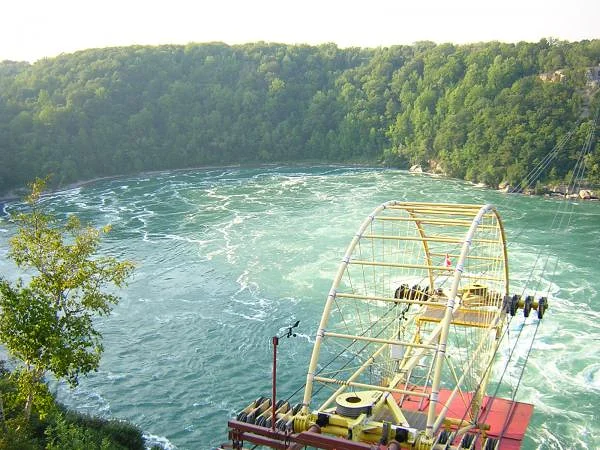
First thing on my list: the famous Niagara Falls, which I absolutely had to see. I headed south from Toronto, about a 1.5-hour drive to reach the opposite shore of Lake Ontario and follow the Niagara River.
The spectacle that awaits you is simply insane. The roar of the falling water is deafening, and the mist rising from the falls soaks you in seconds. There are actually several cascades: the Horseshoe Falls on the Canadian side (the most impressive) and the American Falls on the US side.
💡 My advice: Take the time to cross the American border to vary your viewpoints. From the Canadian side, you get the most iconic front-facing view. From the American side, you can get much closer to the edge. Bring your passport and a raincoat!
The detour to Niagara-on-the-Lake: a gem
Just 20 minutes from the falls, on the way back, Niagara-on-the-Lake is a village with incredible charm that most French tourists completely skip. Streets lined with Victorian houses, vineyards (yes, there is Ontario wine, and it’s good!), artisan shops, and total calm after the roar of the falls. It’s a striking contrast and a stop I highly recommend.
Algonquin Park: when Canadian nature reclaims its rights

A radical change of scenery. Heading north from Toronto toward Algonquin Park. This forest park of nearly 7,725 km² is crisscrossed by countless lakes and streams. From the moment you enter, you realize that this is where wild Canada truly begins.
The park is best explored on foot or by canoe, and I quickly realized I wouldn't have enough time to see it all. Two days is the bare minimum. I did enough to see that the nature is sumptuous, and in fact, city dwellers from southern Ontario flock here every weekend to get some fresh air.
🦌 Wildlife tip: September is moose rutting season. Head out early in the morning on trails near the lakes to maximize your chances of spotting one. Beavers are also very active at dusk.
How much time should you plan for Algonquin Park?
If you are a hiker or a canoe enthusiast, plan for 3 to 4 days to fully enjoy the park. With 2 days like I had, you can take the scenic route that crosses the park (Highway 60, 56 km), stop at the lookouts, and do one or two short hikes. The beauty of the lakes surrounded by deciduous forests in autumn is unforgettable.
Ottawa, the Canadian capital you don't see coming

My path then headed east toward Ottawa. I spent one night and two half-days there, and it’s my only regret: I should have stayed longer. Less publicized than Montreal or Toronto, Ottawa made an excellent impression on me, far beyond what I imagined.
Parliament: the highlight of the show
My favorite moment was visiting Parliament. Built in the 19th century on a hill overlooking the Ottawa River, this grand neo-Gothic building is partially open to the public. You can even go up into the great central tower to get an overview of the city, the river, and the Gatineau Hills across the way. Free and impressive.
Rideau Canal, ByWard Market, and museums
I also loved walking along the Rideau Canal, a UNESCO World Heritage site. In summer, people bike or boat along it; in winter, it transforms into the world's largest natural skating rink (7.8 km!). The city is also remarkably green, with many parks, including Major's Hill Park, where I spent a well-deserved moment of relaxation.
If you have a little more time than I did, two museums are worth the detour: the Canadian Museum of History (just across the river in Gatineau) and the National Gallery of Canada. ByWard Market, meanwhile, is Ottawa’s historic market with its stalls of local produce, restaurants, and shops. Perfect for lunch on a terrace.
Quebec City: the grand finale of this road trip

From Ottawa, I hit the road east to reach Quebec City, the final stop of my journey. And what a way to conclude! I loved this capital crossed by the St. Lawrence. Because yes, the capital of the province of Quebec is indeed Quebec City, not Montreal, contrary to what many believe. Everything there is magnificent. I never imagined that Quebec was a fortified citadel, the only city in North America to have preserved its ramparts.
Upper Town: Place d'Armes, Seminary, and Dufferin Terrace
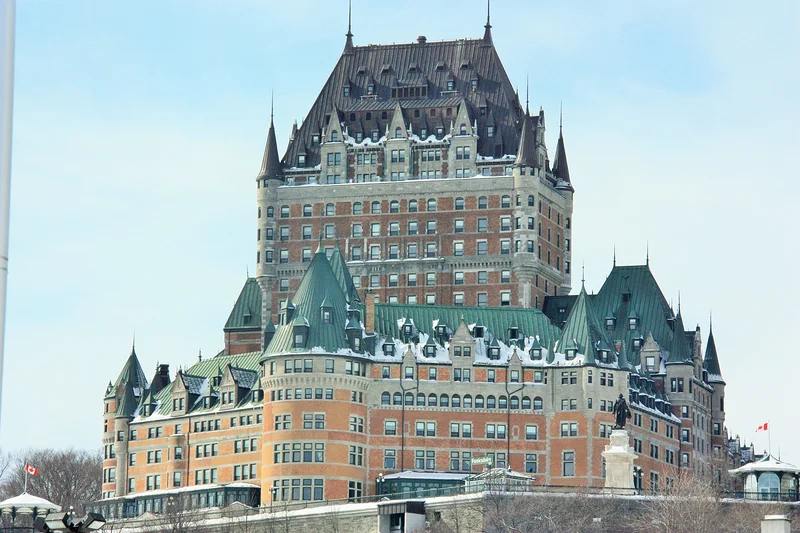
From the upper town, the view is extraordinary. I loved Place d'Armes, the City Hall with its towers, and the Seminary of Quebec, one of the oldest educational institutions in North America. But the highlight remains the climb up to Dufferin Terrace. This long wooden boardwalk that runs along the Château Frontenac offers a grandiose view of the St. Lawrence. At sunset, with the golden light on the river, it’s one of the most beautiful panoramas I’ve ever seen.
I was lucky enough to be hosted by an adorable Quebecois family, with whom I’ve become friends since. This hospitality is an integral part of the experience: Quebecers have a disarming generosity.
Petit-Champlain and Old Quebec: a fairy-tale setting
Descending the Breakneck Stairs (the oldest stairs in the city, no less!), you emerge onto rue du Petit-Champlain, often cited as one of the most beautiful streets in Canada. Artisan shops, cozy cafes, colorful facades... You feel like you're in a French village frozen in time, with that little something extra from North America. It’s a neighborhood that English-speaking travelers adore and that really deserves to be explored without a watch.
Quebec is also a surprisingly green city, laid out with many parks and gardens. You can spend hours walking there without ever tiring of the scenery.
Express excursion: Montmorency Falls, taller than Niagara!

If I had known, I would have planned an extra half-day in Quebec just for Montmorency Falls. Located just 15 minutes by car from the city center, this 83-meter-high waterfall is 30 meters taller than Niagara Falls! The site is accessible via a panoramic staircase of 487 steps, a cable car (about $15 CAD), or even a suspension bridge that overlooks the chasm.
💡 Tip: Arrive early in the morning to avoid the summer crowds. In September, it’s much quieter. Thrill-seekers can also test out the 300-meter zipline over the falls (about $30 CAD) or the via ferrata along the cliff.
As my trip drew to a close, all that was left was a bit of driving toward Montreal to board my flight home. Two weeks already, and the feeling that I had barely scratched the surface of this immense country.
What I couldn't do (and am saving for next time)
Two weeks seems long, but Canada is so vast that the list of "I wish I hads" grows quickly. Here is what remains on my bucket list:
- Hudson Bay: This immense expanse of saltwater, frozen for a good part of the year, is home to belugas and polar bears. I would have loved to go, but you can’t get there by car, and I would have needed to fly. I lacked the budget and time.
- Tadoussac and whale watching: At the confluence of the Saguenay and St. Lawrence rivers, it’s one of the best spots in the world to see whales (belugas, blue whales, rorquals). The ideal season is from May to October.
- Saguenay Fjord: A spectacular fjord with dizzying cliffs, hiking trails, and even a via ferrata.
- Mont-Tremblant: A resort town in the Laurentians, magnificent in autumn, about 1.5 hours from Montreal.
- Mauricie National Park: A national park halfway between Montreal and Quebec, with a 63 km scenic route through lakes and forests.
In other words, there is plenty of reason to come back for a second road trip, this time heading north up the St. Lawrence!
Budget, practical tips, and what I would do differently
Estimated budget for 2 weeks (1 person)
| Expense | Estimate | Notes |
|---|---|---|
| Round-trip flight Paris - Montreal | 450 to 700 € | By booking 3-4 months in advance, September is often cheaper than July-August |
| Car rental (14 days) | 400 to 700 € (depending on category) | Compare on several platforms, watch out for insurance |
| Gas | 150 to 250 € | About 2,500 to 3,000 km covered on the loop |
| Accommodation | 700 to 1,200 € | Mix of B&Bs / hotels, count on 50 to 90 € per night on average |
| Meals | 350 to 500 € | Alternate between restaurants and grocery shopping |
| Activities & visits | 150 to 300 € | Cruises, museums, national parks |
| Estimated total | 2,200 to 3,650 € | Excluding personal shopping and souvenirs |
Car rental: what you need to know
I picked up my car directly at the Montreal airport. A few important points to anticipate:
- Driver's license: A French license is accepted in Canada for stays of less than 6 months. No need for an international permit, but bring it anyway just in case.
- Insurance: Check your credit card coverage before signing up for the insurance offered at the counter. Some premium cards already cover collision and theft.
- Driving: The roads are excellent and well-marked. Watch out for speed limits (100 km/h on highways, strictly enforced) and distances, which are always longer than you imagine.
- Unlimited mileage: Essential for this type of road trip. Check this option carefully when booking.
Accommodation: my tips
I alternated between bed and breakfasts (the Quebec "gîtes," often run by charming families) and classic hotels in large cities. In September, rates are softer than in mid-summer, but I still recommend booking at least the first and last nights of each stop to avoid stress.
📱 Mobile data tip: European roaming doesn't work in Canada. Buy an eSIM or a local SIM card as soon as you arrive at the airport. Count on about $30 to $40 CAD for 2 weeks of data. Essential for GPS and last-minute bookings!
My 5 tips for a successful road trip in Canada
- Never underestimate distances. Canada is immense. A "short" 3-hour drive doesn't surprise anyone there. Plan for breaks and leave early.
- Book popular activities in advance: Thousand Islands cruises, whale watching if you go to Tadoussac, CN Tower climb... Spots fill up fast in season.
- Bring layers of clothing. In September, mornings can be chilly (8-10°C) and afternoons pleasantly warm (20°C+). The weather changes quickly, especially in the mountains.
- Taste everything. Poutine, maple syrup on snow (in season!), Montreal bagels, smoked meat... Quebec gastronomy is worth lingering over.
- Talk to people. Canadians are among the most welcoming people I’ve ever met. A spontaneous conversation can lead to an insider tip or an invitation to dinner.
My verdict: a trip that changes your perspective
This two-week road trip between Quebec and Ontario remains one of my best travel memories. From the basilica in Montreal to Niagara Falls, from the deep silence of Algonquin Park to the vibrant energy of Toronto, every day brought its share of surprises.
If I were to do it again, I would add the Thousand Islands to my route, stay one more day in Ottawa and Quebec, and organize myself to push through to Tadoussac. But that’s also the beauty of a road trip in Canada: there is always a reason to return.
So, ready to hit the road?

Comments (0)
No comments yet. Be the first!