
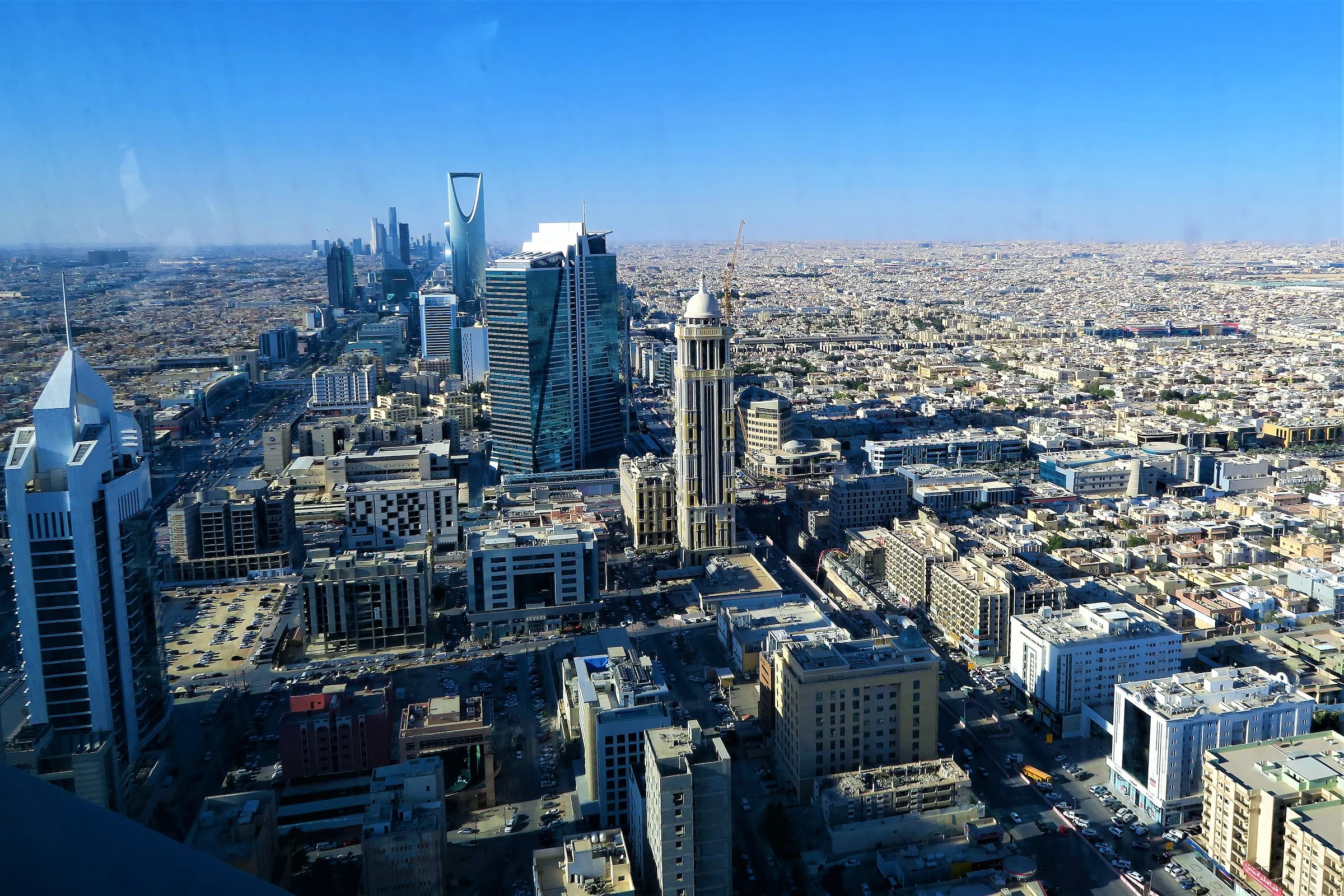
Sent on a work assignment, I spent two months in Saudi Arabia, specifically in the capital, Riyadh, during November and December.
For anyone who, like me, might find themselves heading there, I’m sharing a bit of my modest experience so you know what to expect and can prepare for your trip as best as possible, given that this country doesn’t easily give up its secrets (see also my post: "Tips for a trip to Saudi Arabia").
Riyadh is inseparable from the country's history: during the time of the first Saudi state, Riyadh was part of it, but it wasn't the capital, that was Diriyah, now a suburb of Riyadh. After various struggles led by the Al Saud family, and with the help of the British, they rose to the throne, notably conquering Riyadh in 1902 (the Al Masmak Fort museum stands as a testament to this today). The city became the base for the country's reconquest, and the current kingdom was born in 1932. The ruling royal family still lives in the western suburbs of the city.
Working in Saudi Arabia
Saudis don't work much in the morning, take a long break in the afternoon, but stay up late into the night. Working with them means you might be exposed to phone calls or meetings around midnight or 1:00 AM... Additionally, expect to participate in "majlis" (approximate spelling), which are meetings held in tents where men drink coffee or tea, eat, and talk, often about business, near a fire. On that note, if you are passed an incense burner, know that it is customary to waft the smoke toward yourself with broad hand gestures to perfume your clothes. But remember to close your eyes: it stings!
As for the rest, if you don't want to drink liters and liters of coffee or tea during work meetings, remember to conspicuously shake your cup when you hand it back to your host. They will then know you don't want any more and will stop serving you. Then, you will eat lamb and rice with your hands. The meals are truly generous.
Another surprise for me regarding work there: a Saudi man, hired by a French public works company, showed up for his first day of work more than two hours late. His employer pointed it out to him, but it didn't seem to bother him at all. The next day, a Filipino man showed up for work: the Saudi had subcontracted his job! This story is anecdotal, of course, but it still reflects a mindset where some Saudis consider certain tasks beneath them, despite the growing unemployment in the country.
Finally, it’s important to understand that their concept of time and urgency is not the same as ours. You will need to be patient and take it all with a grain of salt.
Getting around the city: the car
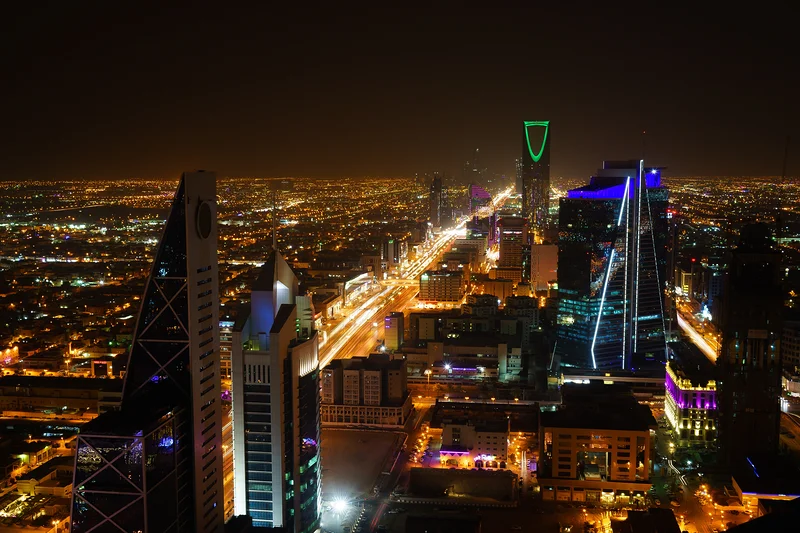
 A city bathed in light and teeming with life, Riyadh is a car lover's paradise. Everything is designed so you don't have to walk anywhere. In fact, being a pedestrian often feels like a death wish because there are almost no sidewalks. And the Saudi or Filipino drivers show no compassion for the poor, lost pedestrian. The massive number of cars is also explained by the fact that gas is very cheap.
In short, traffic is dense, and it’s common to see more or less spectacular road accidents. It’s said that women offer a prayer to the Prophet to thank him when their husbands return home safe and sound... During my stay, I had the chance to see a rusty, beat-up truck that had lost one of its wheels, a car balanced on the parapet of an overpass, fender-benders everywhere, and a car flipped on its roof in the middle of the highway. It’s always impressive, especially since the risk of a secondary accident is very real: in the event of a collision, drivers must not move their vehicles until the police and insurance adjusters arrive, or they risk having their insurance claim flatly denied. Fortunately, the highway patrol is very present on the city's infrastructure, whether in marked or unmarked vehicles. For speed enthusiasts, you should also know that fixed speed cameras have become common and traffic enforcement has become significant, unlike just five years ago.
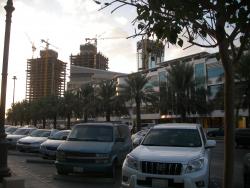
Also, for your information, if you are driving, know that at a fixed red light, if you need to turn right and no one is there, you can go. It’s surprising at first, but you get used to it quickly!
In any case, fans of beautiful, powerful cars will be delighted because you can find all the most luxurious models: Maserati, Ferrari, Porsche, Mercedes, BMW, Ford Mustang, Bentley, Lexus, etc. Some dealers specialize in one brand, but others are true supermarkets where you can find every brand and model, as long as it reeks of luxury.
There is no real public transportation network, although you could try to take a smoking, coughing bus packed with Filipinos, who make up the majority of the kingdom's immigrants. Some of these immigrants specialize in this type of "parallel" transport: you get on where you can, pay for your ride in advance (without knowing exactly where you'll get off...), and jump off the bus when you think you've arrived at your destination. Otherwise, there are always taxis.
Safety
In the city, you might be chilled by the presence of numerous checkpoints, armored vehicles, and police and military personnel everywhere around sensitive buildings. It’s worth remembering that the kingdom paid a heavy price to Islamist terrorism during the "years of blood" in the early 2000s.
Before adopting a firm policy toward violent extremists, Saudi Arabia somewhat turned a blind eye to certain activities, but it backfired, notably with attacks against its highest authorities.
Today, the situation has improved significantly, but the kingdom is still fighting, which explains the precautionary measures taken everywhere. These measures are particularly visible around government ministries, especially the Ministry of the Interior. This situation also explains why expats live clustered in compounds, sorts of fortified camps bordered by barbed wire with entrances controlled by armed guards.
Entertainment in Riyadh
You won't find much to do other than going to the only amusement park or sitting on a café terrace to drink tea or coffee and smoke shisha. I remind you that you must banish the idea of a cold beer on a terrace from your mind: alcohol is forbidden. There are non-alcoholic beers that taste like apple juice and non-alcoholic wine that has... an indefinable taste! There are no cinemas, theaters, or music concerts either. So, the youth spend their evenings, especially on weekends, revving the powerful engines of their cars or cruising on quads on the equivalent of our Champs-Élysées.
The city certainly comes alive during the day, but also for a good part of the night, as the outside temperature is cooler and more bearable.
Working out in Riyadh happens indoors. Jogging enthusiasts will be disappointed because there aren't really any suitable facilities for it. However, it is possible to run on a few hundred meters of paved sidewalk in the center (I’ve forgotten the name of that street). It’s also a place for family walks.
The city of Jeddah is somewhat considered the rival of Riyadh: more liberal, it benefits from a slightly special regime that the current power is trying to contain. As such, the rulers are trying to attract investors to the capital rather than Jeddah. To do this, they are pouring in resources, causing a good number of huge complexes intended to house businesses to spring up from the ground. This explains the number of cranes that dot the Saudi sky.
The city, and mainly its outskirts, is full of huge shopping malls where you can go shopping. You should know that for sales, there is no maximum percentage. You can see sales of up to 90% off the original price! And to close a sale, your word is enough: if you don't have the money on you, no problem, you can come back the next day. Don't forget that the centers close during prayer times...
Must-sees
Modern Architecture
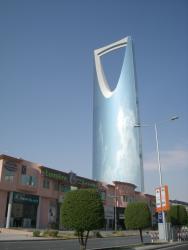 You won't be able to miss two gigantic towers that stand out in the Saudi sky above the city: the Kingdom Tower (or Kingdom Centre) and the Faisaliah Tower.
Both are definitely worth a look. The first is 302 meters high and shaped like a huge bottle opener. You can visit it for a fee, and it allows you to take in all of Riyadh, giving you a sense of the city's scale. It must be said that it never stops expanding, as construction spreads outward but rarely upward. Saudis prefer to live in their own homes, protected from prying eyes behind high walls.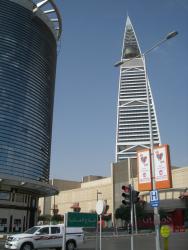
On the other hand, residential towers have a regulated height so as not to offend God. Thus, the towers we visited didn't have apartments on the top floors but were reserved for work, allowing them to accommodate the restrictions.
For the second tower, I had the pleasure of being able to eat in the restaurant located in the sphere. Besides the refined dishes, the view is superb, provided you’ve taken care to request a table near the glass surfaces. Before heading down, stop by the smoking room where you’ll discover an even more impressive view of the city at your feet.
Museums
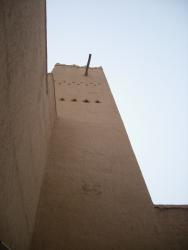 There are two museums. The first is the Al Masmak Fort Museum. It retraces the capture of Riyadh by Abd al-Aziz ibn Abd al-Rahman Al Saud in 1902. You can see the well, the source of life, around which the fort was built, as well as evidence of the craftsmanship of the era. The visit will be fairly quick because the collections are being redesigned. You can also see a model of what Riyadh was like at the time of its capture, at the beginning of the 20th century.
The second is the King Abdulaziz Museum (or King Abdulaziz Historical Center).
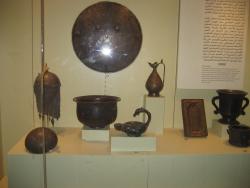 This one is somewhat shunned by Saudis because it causes a certain unease. Indeed, it suggests the possibility that there were traces of life before the Prophet was born. These archaeological discoveries are sometimes refuted by certain strict religious figures, and the museum does not show all the discoveries made. There is a good chance that, like me, you will find yourself having the museum all to yourself. It is well worth the trip if you want to learn a little more about the country.
The Souk
By parking in the lot near Al Masmak Fort, you can walk to the souk, where you can find gold jewelry as well as quality fabrics and parchments. It could be the perfect opportunity to bring back a thobe, a ghutra, or a camel stick. This neighborhood is presented as the historical center of the city. In any case, it is the oldest and most typical. It contrasts with the modern, soulless buildings of the rest of the city.
For information, some ATMs (you can withdraw Rials directly with bank cards without having to go through a currency exchange office) in the souk area are programmed not to dispense anything during prayer hours.
The "Camel" Market
This camel market is actually a market for dromedaries, as camels do not live in this region. To find it, just ask the locals or taxi drivers; they all know it. Located on the outskirts of the city, you can see Bedouin tents where they sell the animals. Saudi notables love to own a dromedary, especially for racing. Some specimens are sold for astronomical sums (sometimes a million rials, or more than €215,000!). Perhaps you will be offered a taste of "camel" milk. Don't hesitate, as it's full of good things. On the other hand, be careful if you have a sensitive stomach!!
Another thing to know about these lovely critters: even if they are credited with superior intelligence, dromedaries are sometimes capable of getting angry. And in those cases, be careful: the animal doesn't kick like you might expect by throwing its legs forward or backward. It delivers lateral kicks! And, from experience, that hurts...
The Desert
As I told you in my first post about Saudi Arabia, I invite you to get out of Riyadh a bit to go into the desert. Be careful, this outing cannot be improvised, and you must take all necessary precautions, especially regarding information related to terrorist activity in the Arabian Peninsula, particularly near the border with Yemen. For this, consult the embassy website, which is updated regularly based on the evolution of conflicts.
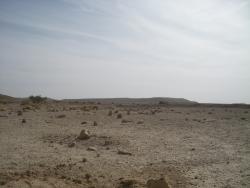 The Saudi desert in this region is somewhat rocky. You can find some pretty sites and, if possible, treat yourself to a sunset: it’s magnificent!
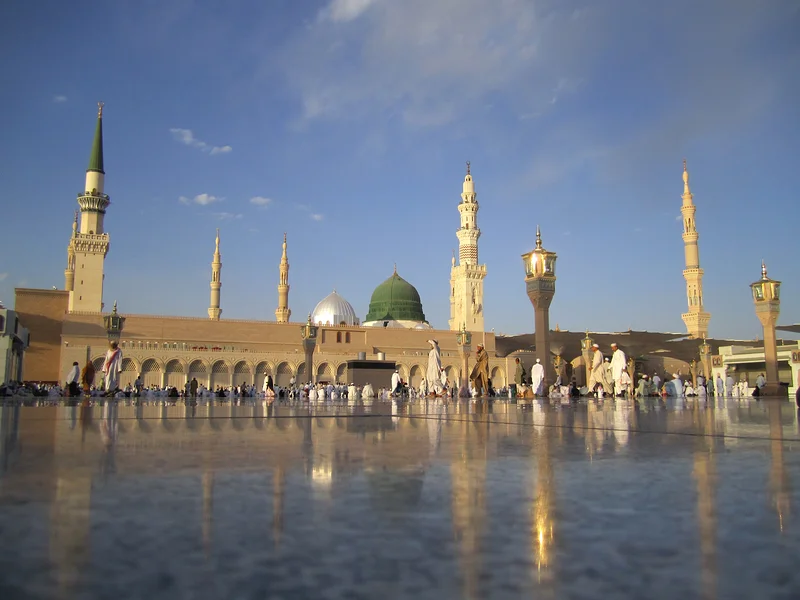
To conclude, as you will have noticed, this city offers a culture totally different from our Western way of life. For example, the call to prayer and the streets emptying out are powerful moments to experience. In that sense, it is extremely enriching. On the other hand, in terms of entertainment, eight days will be enough for you to have seen everything it has to offer, especially since it is very difficult, if not impossible and not recommended if you are not Muslim, to enter one of the city's many mosques, which would allow you to discover the Arabic style more closely. So, plan to bring some reading material and don't hesitate to take an interest in the kingdom's turbulent history: there is plenty to learn!

Comments (3)