
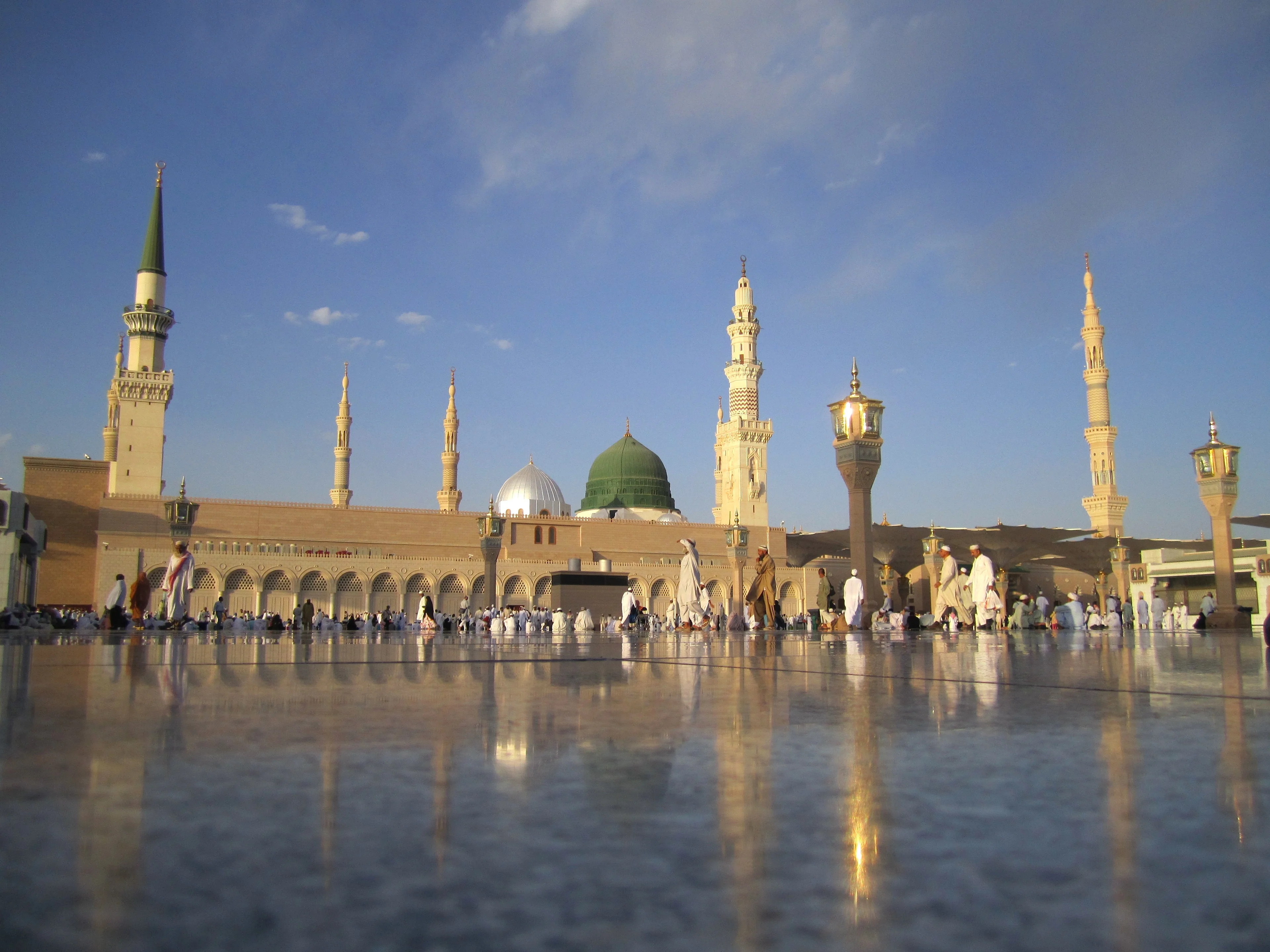
Tips for Expats

That said, the number of French expats in the country continues to rise, and companies keep sending staff on assignment, not just in the oil sector, as you might expect, but also in public works, civil engineering, and renewable energy. After all, they have to prepare for life after oil. I headed to Saudi Arabia for work a while back, specifically to Riyadh, the capital. I would have loved to find some "real-life" accounts before I left, which is why I’m sharing these notes. I hope they’ll help you get a sense of a country that is as wealthy as it is incredibly complex.
The Status of Women
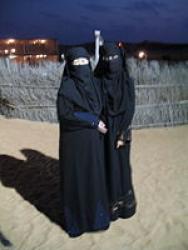 To start, I should mention that this post is primarily addressed to men. Not because I’m sexist, but simply because you need to know that Saudi Arabia is not exactly an empowering destination for women, in my opinion. Without passing judgment on the culture, you have to quickly grasp that women’s freedom is virtually non-existent there. Being a woman (at least a local woman) in this kingdom comes with very strict duties rooted in a specific interpretation of the Quran. All women wear the abaya, a type of black fabric cloak that covers the body from head to toe. Furthermore, women cannot go out without being accompanied by their husband, father, brother, or uncle, essentially, a male relative, even if it’s their own son. You cannot speak to them, stare at them, touch them, or take their photo. Don't even try to snap a picture of these women, or you’ll face serious trouble with their family or, worse, with the mutawa, the religious police who enforce Islam as the one and only religion of the kingdom.
This segregation extends to restaurants, where dining rooms are split in two: men on one side, families (women) on the other. Waiters will set up screens behind which some women dare to remove their veils, safely hidden from the eyes of other men. As a European, I actually felt like my mere presence in a Riyadh restaurant was a disturbance, a feeling confirmed when, after several glares directed at our table, a family left the premises, clearly uncomfortable. So, once again, don't tempt fate by playing amateur photographer, or you might find yourself being escorted out quickly. I found the photo opposite on the web just to show you; it’s not mine :)
The Flight to Riyadh
Personally, I flew Saudi Airlines. The Airbus was very comfortable, and the staff were polite and courteous. Then again, I was in business class... I was quickly immersed in the atmosphere by the writing on the fuselage and the announcement over the speakers asking the prophet to grant us his blessing and ensure a smooth flight.
Welcomed with my first cardamom coffee and dates, I didn't yet know that this was just the beginning and that I’d be eating more of them than I ever needed during my stay.
The flight took seven hours on the way there, and a little less on the way back.
Time Zone and Weather
There is a two-hour time difference with Paris. When your watch shows 6:00 AM in Riyadh, it’s 4:00 AM in Paris.
Since I was in Saudi Arabia at the end of the year, I was spared the stifling summer temperatures (my colleagues told me about days over 50°C/122°F!!), and I enjoyed mild days with an average of 24°C (75°F) in the afternoons. However, toward the end of December, the hardest part was dealing with the temperature swings, as I’d start the morning at 7°C (45°F) and end the day around 24°C. I even had the "luxury" of experiencing two or three rainy days.
Evening fell early at that time of year, with daylight starting to fade around 4:30 PM, 5:00 PM.
The weekend consists of Thursday and Friday, with Friday being a very quiet day dedicated to religion, where the city only wakes up after the final prayer.
Religion
On that note, you should know that since Islam is the state religion, other religions are forbidden, with even more intense hostility toward the Jewish faith. If your passport shows a visit to Israel, for example, you will not get your visa. Furthermore, if you aren't Muslim, you must be careful not to wear any ostentatious religious symbols. You wouldn't make it very far down the street before a mutawa approached you...
And for those who don't believe in any god, leave your stance at the door the day you land on Saudi soil. You’ll have a small form to fill out where you must mention, in addition to the name and address of your host, the reason for your stay, your marital status... and your religion. To avoid upsetting your host and drawing attention to yourself, don't hesitate to stretch the truth a little... This form will be handed to the police who greet you as you exit the plane, and then to the Saudi authorities.
But don't think being Muslim opens every door: you’ll still be confined to the area where you are expected.
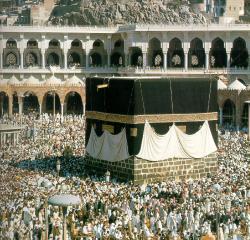 For non-believers and foreign Muslims, the area of Mecca is forbidden to you under penalty of death, unless you have obtained a special visa for pilgrims.
But this visa is restricted and will still require you to stay within that sector. Saudi authorities are considering easing this to allow pilgrims to boost local commerce. The Foreign Affairs website is very well put together and will be a valuable resource on this subject.
In accordance with the Quran, prayers take place five times a day at the call of the muezzin. During these times, all shops close and activity comes to a halt. The mutawa make sure of it... It’s up to you to pay attention to the times, which vary by season, and plan accordingly.
Also, don't be surprised: polygamy is accepted, provided one can provide for the needs of his wives in strictly equal proportions.
Finally, Sharia law applies in Saudi Arabia.
Customs
As I mentioned in the previous chapter, in addition to your passport, you will have filled out and handed to the crew (who then pass it on) the form detailing your life and the reasons for your visit.
An international vaccination record can be a plus depending on the area and the reason for your visit to Saudi Arabia. Specific recommendations are issued for pilgrims.
Regarding prohibited items, be careful not to carry any alcohol, as it is purely and simply banned from the territory. Likewise, be careful not to bring any pornographic or even just erotic materials... And be aware that all your magazines may be subject to censorship. Don't be surprised if you find your suitcase opened and Post-it notes stuck over certain images in your gossip magazines. Sometimes, there will be marks from an indelible marker. You likely shocked the censors with a photo of a Hollywood star sunbathing on a beautiful beach in a swimsuit...
The Death Penalty
Another notable difference from most Western countries (though not all!): the death penalty has not been abolished despite international pressure. While walking around Riyadh, I found myself in the Al Masmak fortress district, near the souks. Nearby, there was also a beautiful, large square. It was, in fact, the square where capital executions take place.
Stoning is still in force for adulterous women. On the plane taking me to Saudi Arabia, during the seven-hour flight, I read an article in a Saudi magazine where a high-ranking official justified stoning by saying it was less cruel than it seemed because the woman had a fifty-fifty chance of surviving and the number of stones was limited... I don't know if it was the plane's air conditioning, but I felt a chill run down my spine...
The Desert
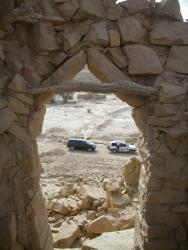 On the weekend (Thursday and Friday), Saudis enjoy taking trips into the desert. To do this, you just need to head out of Riyadh.
Be careful, however, if you want to venture deeper into the desert: prioritize going with a trusted Saudi, preferably a Bedouin. Travel with two vehicles. Use off-road vehicles in good condition. Never stray from your vehicle and bring reserves of water and food (last summer, two German expats, despite being used to the desert, were found dead four hundred meters from their vehicles). For the rest, these are standard recommendations for this type of trip.
I was lucky enough to make this trip with some very welcoming Bedouins and French expats who were great connoisseurs of the kingdom's history.
Beyond the historical appeal, I was overwhelmed by the beauty of the landscape and the feeling that everything has its place in this universe. This kind of trip is perfect for meditation!
However, no sign of Lawrence of Arabia...
Those with time can try to visit the ancient Nabataean city of Madain Saleh (about a thousand kilometers from Riyadh) to admire the site, which is almost equivalent to Petra in Jordan. You’ll need to plan for three days, with one night on-site.
The People
Very welcoming, especially if you show humility, the population is eager to know what people abroad think of the kingdom. Relationships are still faster to build with your work colleagues than with the average Saudi you might meet in town. Speaking English is essential, even if not everyone speaks it.
Men are always dressed in traditional costume, which consists of the thobe, a long-sleeved tunic with a straight collar, almost always white. Under the thobe, they wear cotton trousers (the sirwal). For special occasions or depending on their rank, they may wear a wide black coat over the thobe, the bisht or aba, with edges that are often richly embroidered. Men cover their heads with a very fine square of white (or red-checkered) fabric called a ghutra, folded into a triangle and placed on the head with a fold on the forehead. It is held in place by an igal, a black circle made from camel hair.
 Women, for their part, wear the abaya, as I explained earlier.
A large number of Filipino immigrants work in Saudi Arabia. They perform the most menial tasks, considered beneath the Saudis.
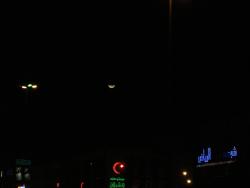
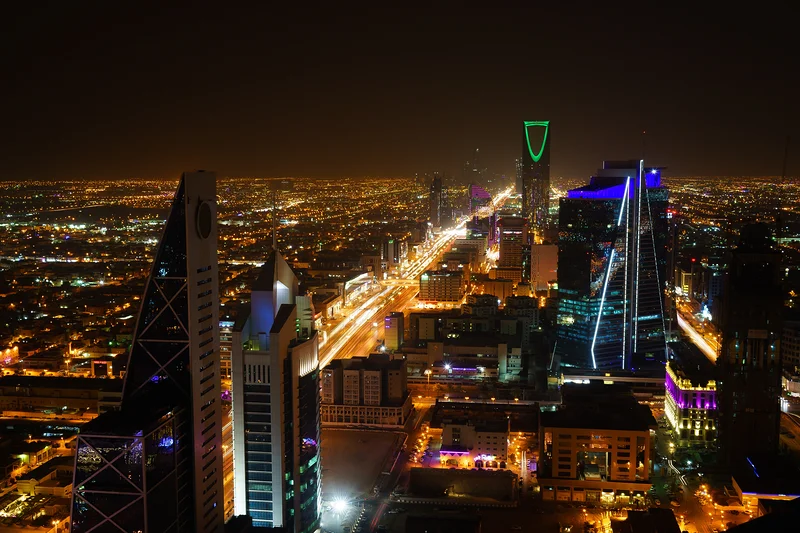
As an anecdote, in the photo opposite, you can see the real crescent moon above the red crescent neon sign. You might notice it’s horizontal, which is why it’s written in the tales of One Thousand and One Nights that the moon is like a cradle that can hold a child... Poetic, isn't it?
For the history of the country and a description of Riyadh, I invite you to read my post "on living and working in Riyadh."

Comments (2)