
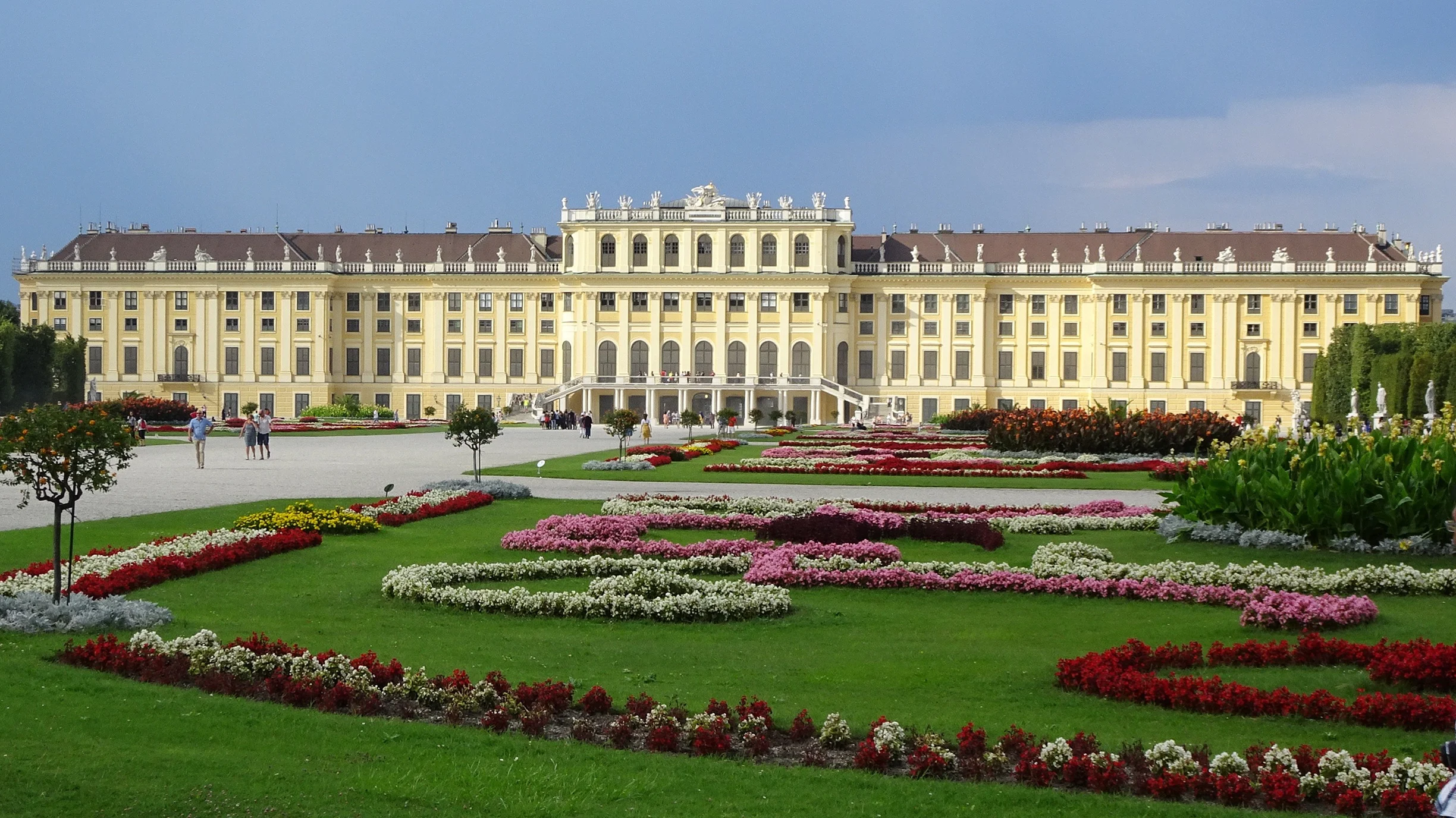
When I told you about my trip to Vienna, I mentioned that I visited the magnificent Schönbrunn Palace grounds. It’s an absolute must-see for any getaway to Vienna, and I can’t resist sharing it with you because the experience was just so delightful.
How to get to the Palace

To start, you should know that it’s located in the thirteenth district, west of the city center. Here is the address for your notes:
13th District, Schönbrunner Schlossstraße
Metro U4: Schönbrunn station, Tram 60: Hietzing, Tram 10, 58, Bus 10A: Schloss Schönbrunn
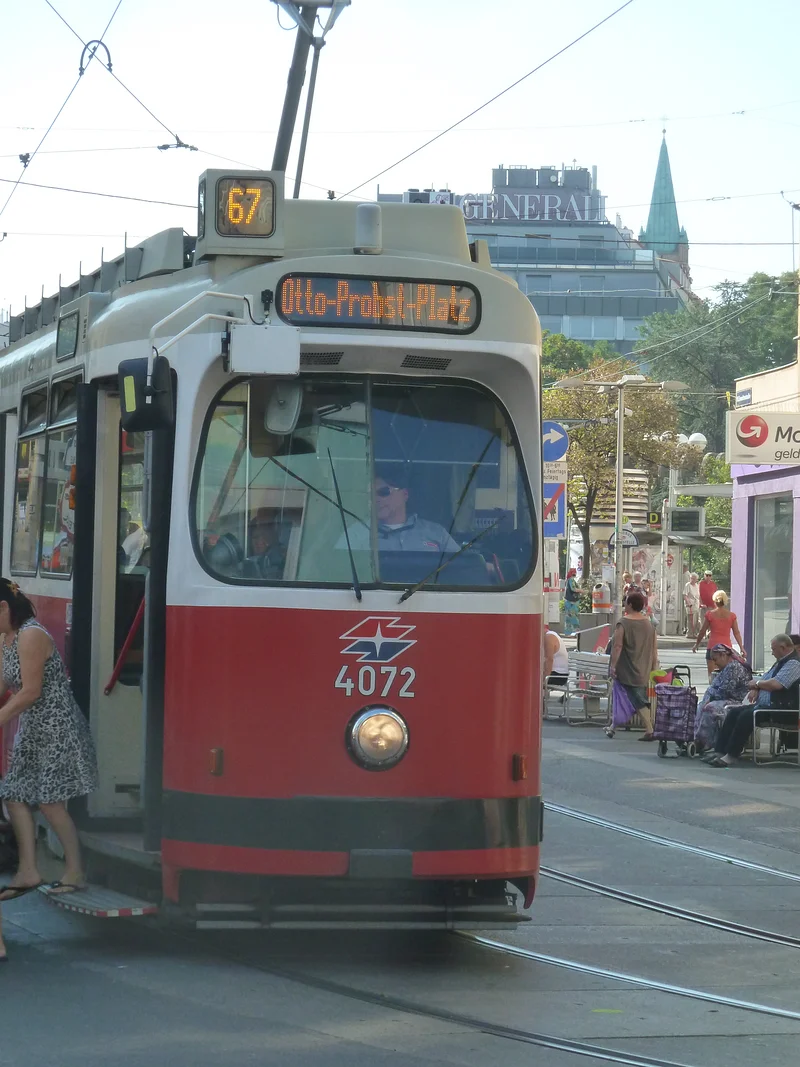
I took public transport to get there, specifically the tram, which offered a lovely ride from the center of Vienna. You can also get there very easily by metro. In any case, the palace is so famous and well-visited that the stations are named after it, you won't be able to miss your stop!
Practical Info
No need to worry about finding the doors locked: the palace is open every single day of the year, starting at 8:30 AM. However, depending on the season, it may close at 4:30 PM, 5:00 PM, or 6:00 PM. For your entrance ticket, expect to pay between €15 and just over €20, depending on whether you want to visit the entire palace and whether you opt for an audio guide or a guided tour.
A quick tip: if you’re visiting during a peak tourist season and want to escape the crowds, the Hietzing metro station is a better bet than the Schönbrunn station. There is an imperial pavilion there that was the entrance reserved for Emperor Franz Joseph, allowing him to avoid his subjects when he came to relax. You can combine the practical with the pleasant, as the decor is stunning! If you read about this pavilion in guidebooks, you’ll likely see that he only used this station once: on the day it was inaugurated…
All the information you need to prepare for your visit is available on the official palace website, which is even translated into English: http://www.schoenbrunn.at.
Note that the palace park opens at 6:00 AM or 6:30 AM depending on the season (it’s perfect for a morning run!), but it closes at varying times, ranging from 5:30 PM to 9:00 PM. Again, this information is available on the website.
After the tram, I had to walk along the palace perimeter. That was just the beginning of the stroll, as the site is so vast that I was very glad I wore comfortable shoes. I highly recommend you do the same!
I remember the trees offering a bit of shade (it must be said that this long weekend was quite sunny) along the path leading to the estate, which was very much appreciated.
The Palace
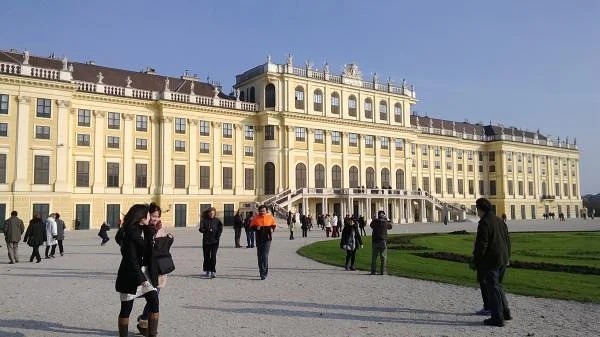
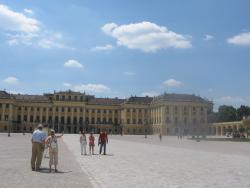 Arriving in front of the palace, I remember a massive courtyard where the white cobblestones reflected the sun intensely, thank goodness for sunglasses! The white and ochre tones of the facade also caught the bright light.
Without being an architecture expert, it seemed to me like a caricature (in the noble sense of the word) of Austro-Hungarian art. The clean lines, the lack of curves, the tall windows, it all reminded me of the sets from the Sissi films, featuring the Empress Elisabeth, whom everyone knows, played by the magnificent Romy Schneider.
In fact, if you walk through the palace, you’ll see that her presence is everywhere, and some fans of the actress and/or the Empress gather there for a sort of pilgrimage.
Its History
This is a good opportunity to quickly introduce the history of this site, which is a UNESCO World Heritage site:
- The name Schönbrunn is said to come from a particularly beautiful spring (schöner Brunnen in German, "beautiful fountain") discovered during a hunting trip. Originally a small hunting lodge, it quickly became a seasonal residence for the imperial family in the 16th century. The Turkish invasions (see my post on the cultural weekend in Vienna and the cute legend of the croissant) took their toll on the residence, which was almost entirely destroyed.
- In the following century, Emperor Leopold I wanted to rival Versailles and ordered the construction of a palace, with initial work beginning in 1696. But as the ruling families changed, the palace underwent several renovations that altered its original character, notably under Empress Maria Theresa, who gave it a Rococo style and added a grand gallery 40 meters long and 10 meters wide in the purest Baroque style. The Empress and her court (nearly 1,500 people!) lived in these magical surroundings during the summer months.
- In the 19th century, when Franz Joseph ascended to the throne, he spent every summer there and initiated significant improvements that have lasted through the centuries.
Inside the Walls
The palace is open for tours and offers incredible insights into both the private apartments and the common areas. The rooms are sometimes immense and intricately decorated. There are a multitude of them to discover. I invite you to check out the permanent exhibition on the lives of the imperial children (an extra fee applies). And if you’re visiting with your kids, they’ll love getting their photos taken dressed up as princes or princesses.
Another interesting visit involves the coronation carriages and all the ceremonial or leisure carriages that belonged to the imperial family. For those who have been to London, it’s a similar type of exhibition to the British Royal Mews.
Schönbrunn Park
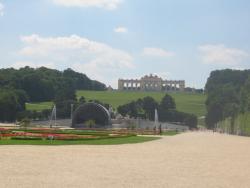 Magnificent, huge, superb, splendid... there’s no shortage of adjectives to describe how pleasant my memories of visiting the park are. It must be said that the sun was out and it was truly lovely to wander through the paths. Even though there were people, lots of people, it was still possible to find quiet, serene spots.
And if you’re worried about getting dehydrated while walking, don't panic: besides the various restaurants and cafes found throughout, there are several ice cream and cold drink stands you’ll come across around the bushes.
It was Empress Maria Theresa who ordered the layout of the palace park in 1750. These gardens are recognized worldwide and showcase the art of the Baroque garden in Austria. I’ve always loved French-style gardens; well, this isn't far off, it has a similar spirit at times.
Within the park itself, several areas have been landscaped.
The Crown Prince Garden
These were the former private gardens of the imperial family, which are now open to everyone.
The Fountains
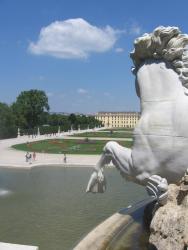 Pay attention to the times and schedules to see them in action. Ranging from monumental to smaller, they are always a surprise, and when they are running, you’ll be amazed by the spectacle they offer and the refreshing breeze they provide (especially when the sun is beating down!).
The Maze and Labyrinth
For both young and old. The maze was a source of amusement for courtiers as early as the 18th century. Even today, you can spend a fun time there. Right next door is a playground that will delight children: the Labyrinthikon. It has everything they need to play safely and burn off some energy, provided the running around the paths hasn't already exhausted them!
The Gloriette and its Cafe
It’s a sort of Austrian triumphal arch. Built in 1775, its summit offers a beautiful view of the park and the city. A cafe also invites you to relax. Don't get caught out like I did: watch out for sunburn if you stay there for a while... a stinging memory.
The Greenhouses
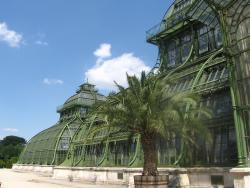 Built in 1880, the Great Palm House (it’s the largest palm house in Europe) features part of the national garden collections, including Mediterranean, tropical, and subtropical plants. It’s humid inside, and you’ll feel like you’ve been transported to another world. There’s a palm tree nearly 23 meters tall and the largest water lily in the world. Some species are enormous, and personally, I had never seen anything like it. These greenhouses were the pride of the Emperor, and he loved having new species sent there after every expedition or through exchanges with botanists from around the world passing through Vienna.
The Marionette Theater
In the greenhouses, near the Orangery, this small theater offers a moment of relaxation and laughter for the little ones. No need to speak the language to understand: it remains very visual and, therefore, accessible to everyone.
The Desert House
Here, you’ll find plant and animal species from hot regions. In the past, this was the Sun Dial House.
The Zoo (Tiergarten)
The oldest zoo in the world, which was also the pride of the Emperor, is now individually listed as a UNESCO World Heritage site. It houses over 500 animal species, some of which are currently endangered. Initially reserved for a privileged audience, the Emperor later opened his menagerie to the public in 1779. Thus, the people of Vienna could come and marvel at the animals for free. Constantly renovated and updated, everything is done to ensure the animals feel comfortable and live peacefully.
And... the Swimming Pool!
But that’s not all: the icing on the cake is that the gardens also contain a swimming pool!! When it’s open, you can enjoy it, and, at least according to the audio guide, Emperor Franz Joseph supposedly learned to swim there. Let’s just say my frustration was immense (as was my disappointment) when I discovered it, but unfortunately, I hadn’t brought my swimsuit! A word to the wise: keep it in mind...
When evening falls, the park remains open late enough, depending on the season, to enjoy the cool air and treat yourself to a romantic stroll through the gardens.
Classical Music Concerts in the Orangery
And the park has one last surprise in store: if you book in advance (and change your clothes, as you won't be admitted in shorts and flip-flops...), you can attend one of the magnificent classical music concerts held almost every evening in the Orangery. The musicians wear period costumes and play many pieces by Mozart and Strauss. Nothing could be more natural, you might say, we are in Vienna, after all! If you can, plan to attend this concert on a different night than the one you visit the palace and park, or you might be too tired to enjoy it.
To finish, I can only urge you to make the detour to the Schönbrunn estate if you’re spending a few days in Vienna. Not going would mean missing out on a visit of great historical and aesthetic richness. And besides, you really do get the feeling that you might run into Empress Sissi or Emperor Franz Joseph around a corner in the park!

Vous n'avez pas fait mention des Tilleuls dans les allees qui pour moi, maintenant en Australie, n'en n'avais pas vue depuis pres de 50 ans. et qui avaient ete q q chose d'important dans ma jeunesse.
Je m'etais retrouve dans le zoo par surprise and cherchant un endroit pour des besoins personel mais n'avais aucune idee qu'il pouvait etre le plus vieux du monde!
J'avais pris le metro a Vienne (St Stephane) et change deux ou trois stations plus loins pour finir a ShonBrunn et me suis ballade dans le park jusqu'a la Joliette en prenant bcp de photos. Pas de marionette pour moi! Alor merci pour les informations suplementaires :)