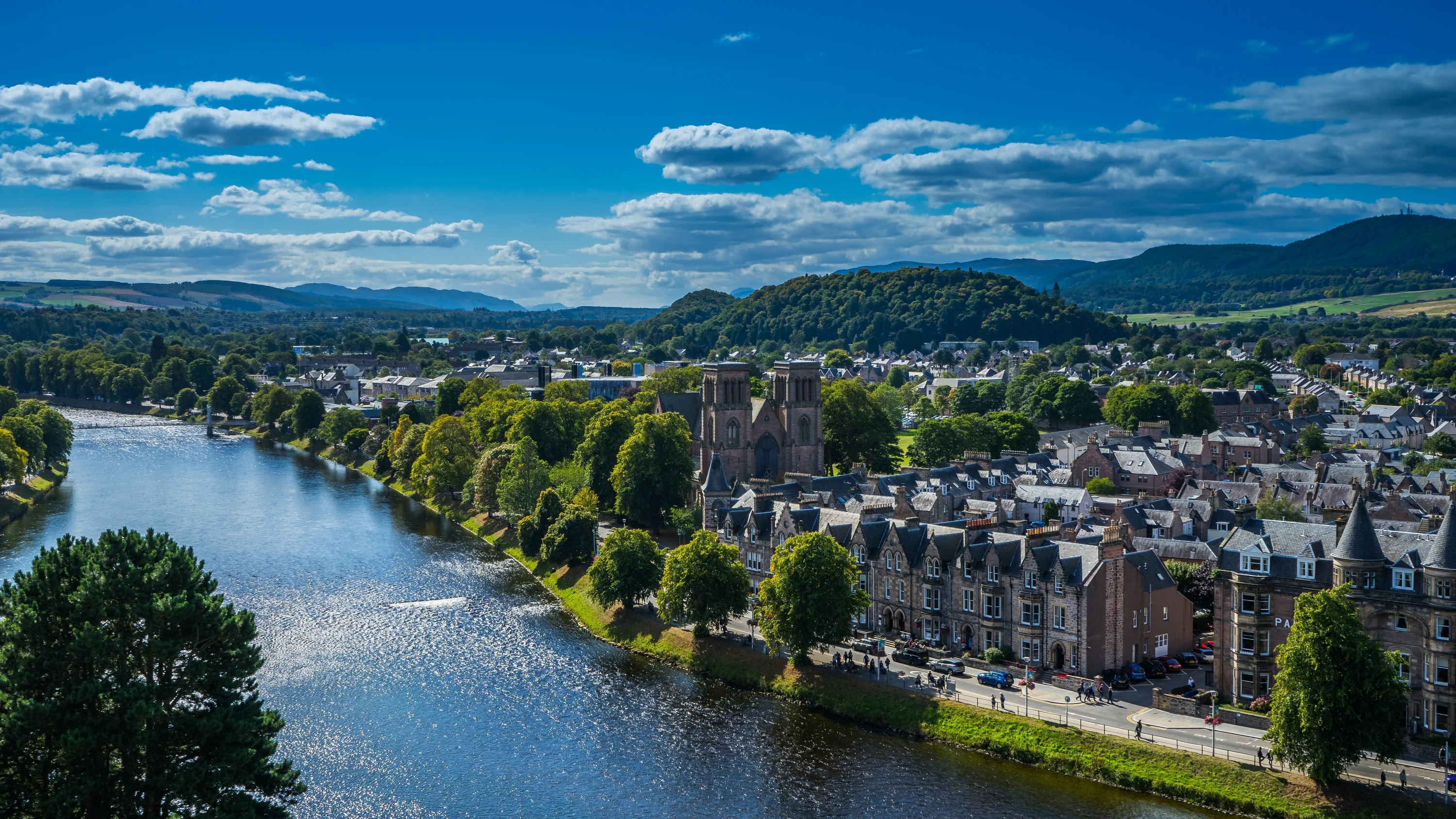
Visiting Scotland
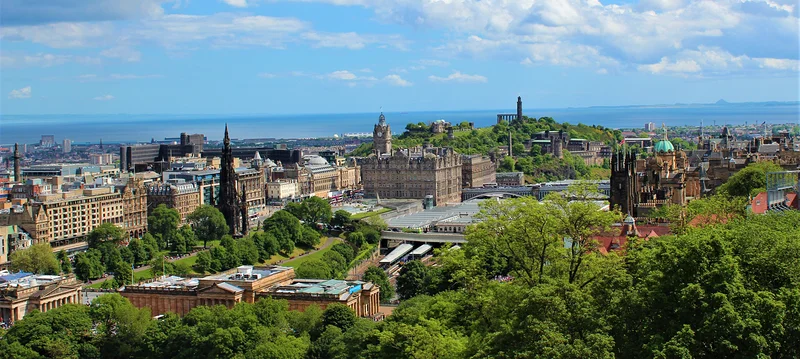
Edinburgh is built on an extinct volcano, with an old town running down a ridge from the castle and a Georgian new town laid out in a grid right beside it. Fifty minutes away by train, Glasgow is its opposite: industrial, Victorian, bigger and more direct.
The north changes everything. From Inverness onwards the roads follow the lochs, moorland replaces fields, and you count in driving hours rather than kilometres.
You will love it if
- You walk: the Highlands are not seen from a car
- A dense city and empty country in the same trip suits you
- You accept four seasons in one day without taking it personally
Look elsewhere if
- You need sun: it rains roughly one day in two on the west side
- You plan to do the north by train: beyond Inverness the network thins out
- July and August midges would ruin a walk for you
The must-sees
The highlights
-
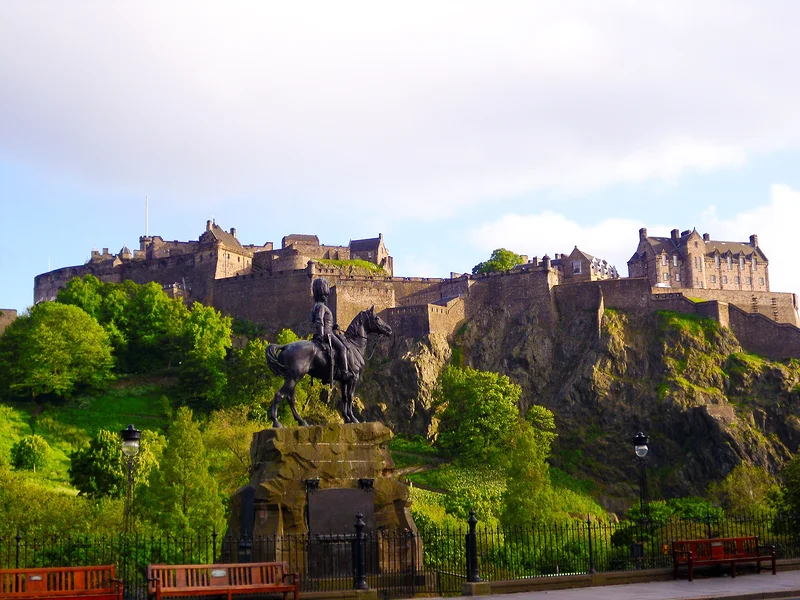
1 Edinburgh Castle +21 recs
Set on a plug of basalt, occupied without a break since the twelfth century. It holds the Crown Jewels of Scotland and the Stone of Destiny, on which the kings were crowned. The one o'clock gun fires every day except Sunday.
-
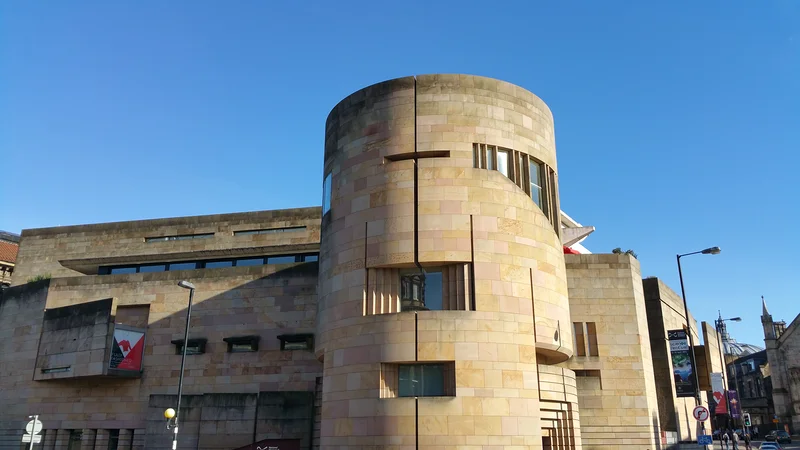
2 The National Museum of Scotland +13 recs
Free, and one of the most complete museums in the country: archaeology, natural sciences, design. Dolly the sheep, the first cloned mammal, is on display. The Victorian glass-roofed gallery is worth the visit on its own.
-
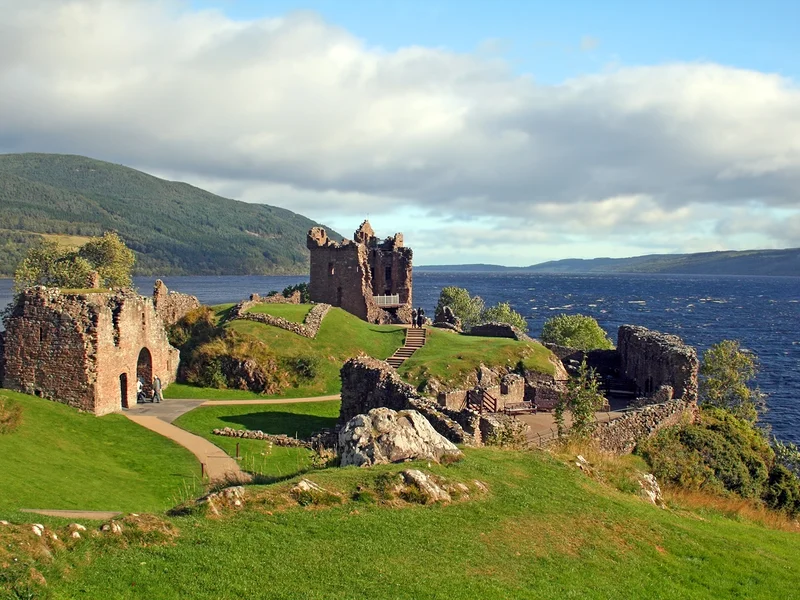
3 Urquhart Castle +16 recs
A ruin on a headland of Loch Ness, fought over for five centuries then blown up in 1692 so it could serve no one. The keep gives the widest view down the loch, which runs thirty-seven kilometres.
-
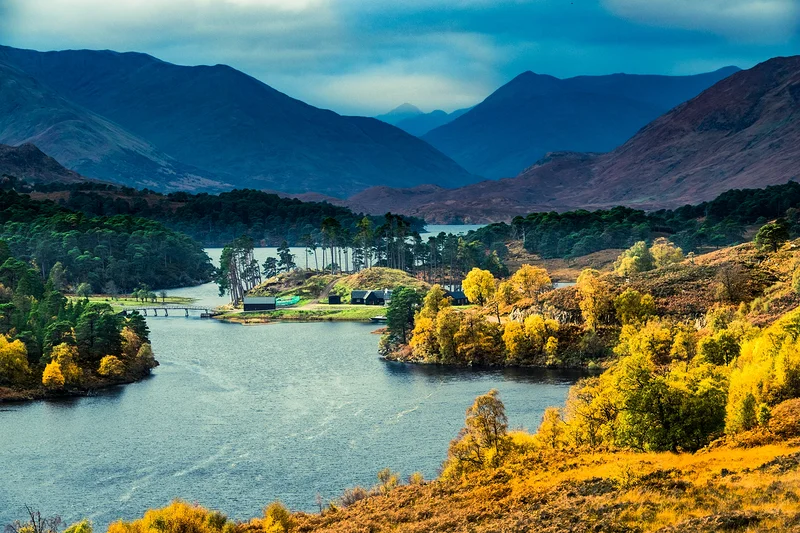
4 Glen Affric +13 recs
A valley of Scots pine, remnants of the Caledonian forest that once covered the country. A dead-end road leads in from Inverness, and the late October colours there are the finest in Scotland.
-
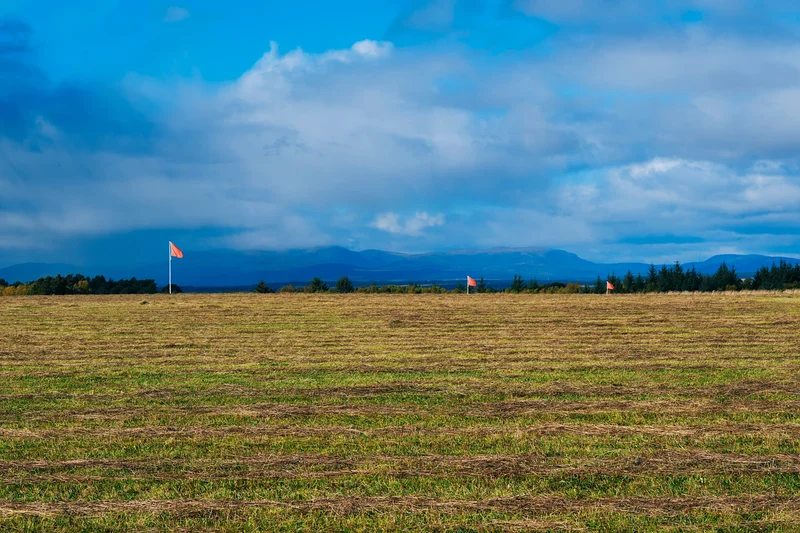
5 Culloden Battlefield +12 recs
Forty minutes of fighting in April 1746 ended the Jacobite rising and the clan system. The ground has been left bare, the lines of both armies are marked with flags, and the visitor centre tells both sides.
The classic mistake
Trying to do the Isle of Skye as a day trip from Inverness. That is two and a half hours each way, single track in places, and the island's sights are an hour apart from each other. Two nights there, minimum.
Our itineraries in Scotland
| Length | Itinerary | What you see |
|---|---|---|
| Long weekend (3 days) | Edinburgh › Glasgow | Both cities, by train, without a car |
| 1 week | Edinburgh › Inverness › Skye | City, Loch Ness, western Highlands |
| 10 days | Edinburgh › Inverness › Ullapool › Skye › Glasgow | The north west, the lochs, the full loop |
The train is enough between Edinburgh, Glasgow and Inverness, and the line to Kyle of Lochalsh is one of the finest in Europe. Beyond that it grows scarce and the car takes over.
A ten-day loop covers around a thousand kilometres. The north west drives slowly: many roads are single track with passing places, and meeting or overtaking there is a negotiation.
When to visit Scotland
| Rating | Season | Weather | Crowds and prices |
|---|---|---|---|
| May, June and September | 12 to 19 °C, very long days | Busy, mid-range prices | |
| July and August | 15 to 21 °C, midges | Peak, high prices | |
| October | 8 to 14 °C, colour and wind | Moderate, good prices | |
| November to March | 2 to 8 °C, dark by four | Quiet, northern roads difficult |
Our advice
Aim for late May or early June: the day lasts seventeen hours, the midges are not out yet, and the northern roads are clear. It is the only window that has all three, and it lasts a few weeks.
Getting to Scotland
-
1 By train Simplest
four and a half hours from London to Edinburgh along the east coast, city centre to city centre. A sleeper also runs from London to Inverness, with cabins, which gains you a whole day.
-
2 By plane Fastest
Edinburgh and Glasgow both take flights from across these islands, with easyJet and Ryanair on most routes and an hour and a quarter from Dublin. The Edinburgh tram reaches the centre in thirty minutes.
-
3 By car On the ground
useful only once you are there. The single-track roads of the north take practice: you stop in the passing places, you never park in them.
Getting around Scotland
Edinburgh is entirely walkable, with steep climbs between the old town and the new. Trains link the Lowland cities every half hour, and coaches run up to Ullapool and onto Skye.
Worth knowing
Access rights are unusually wide in Scotland: you may walk and wild camp on most land, private included, as long as you act responsibly. It does not extend to vehicles, and some camping areas are regulated in summer.
What to eat in Scotland
- Haggis: sheep offal, oats and spices, cooked in the stomach lining. Served with mashed turnip and potato, and far better than the description suggests.
- Smoked salmon: cold-smoked over oak, cut thick. The smokehouses of the west coast and the islands open to visitors and sell on site.
- Cullen skink: a thick soup of smoked haddock, potato and onion, named after a village in Moray. A fisherman's dish that fills you up.
- Whisky: five producing regions with distinct profiles, from the peat of Islay to the softness of Speyside. Distilleries run tours with tastings, often by booking.
- Shortbread: three ingredients, flour, butter and sugar, baked at a low temperature. The real thing crumbles without falling apart.
- Scotch pie: an individual minced mutton pie with a straight crust, eaten standing at the football. The rim stands proud so you can pour the gravy in.
- Cranachan: whipped cream, raspberries, toasted oats and whisky, layered in a glass. A summer pudding, for when the Perthshire raspberries are ripe.
Kitchens close early outside the big cities, often by half past eight, and booking is wise once you are in the Highlands. In Edinburgh, the Sunday morning Stockbridge market brings together growers and cheesemakers from around the country.
Where to stay in Scotland
| Area | What it is for | Worth knowing |
|---|---|---|
| Edinburgh, Old Town | Castle, closes, museums | All on foot, very expensive in August during the festival |
| Edinburgh, New Town or Stockbridge | Georgian streets, restaurants, market | Quieter, ten minutes from the centre |
| Glasgow | Free museums, music, architecture | The better value of the two cities |
| Inverness | Highland base, Loch Ness, Culloden | A small town, everything within the hour |
| Skye or Ullapool | Coasts, walking, island ferries | Low capacity, booked out months ahead |
How much does a trip in Scotland cost?
| Style | Length | Budget per person |
|---|---|---|
| Budget (hostel, self-catering, walking) | 7 days | 450 to 650 € |
| Comfortable (hotel, restaurants, one distillery) | 7 days | 1,000 to 1,500 € |
| High end (country houses, well-known tables) | 7 days | 2,500 to 3,500 € |
- The national museums: free, in Edinburgh and Glasgow alike. It is the cheapest part of the whole trip.
- August: the festival doubles Edinburgh room rates and fills the city. Sleeping in Glasgow and coming in by train is a real saving.
- The heritage pass: the public body's membership pays for itself at the third castle, and there are plenty on any loop.
- Island ferries: the foot passenger fare is modest, the vehicle fare much less so. Leave the car on the mainland when the island can be walked.
- Pub lunch: the midday menu is half the price of the evening card, from the same kitchen.
Traditions and way of life in Scotland
Scottish Gaelic is still spoken, mostly in the Hebrides, and it appears on every sign in the north west alongside English. The country has its own legal system, its own banknotes and its own parliament since 1999, and that distinction from England is not folklore.
Tartan and clans are more recent than people think: assigning a precise pattern to each family largely dates from the nineteenth century, after the ban on Highland dress that followed Culloden.
Two useful habits. In a pub you order and pay at the bar, you do not sit and wait to be served. And on a single-track road you raise a hand to the driver who pulled in to let you past: everyone does it, and its absence is noticed.