
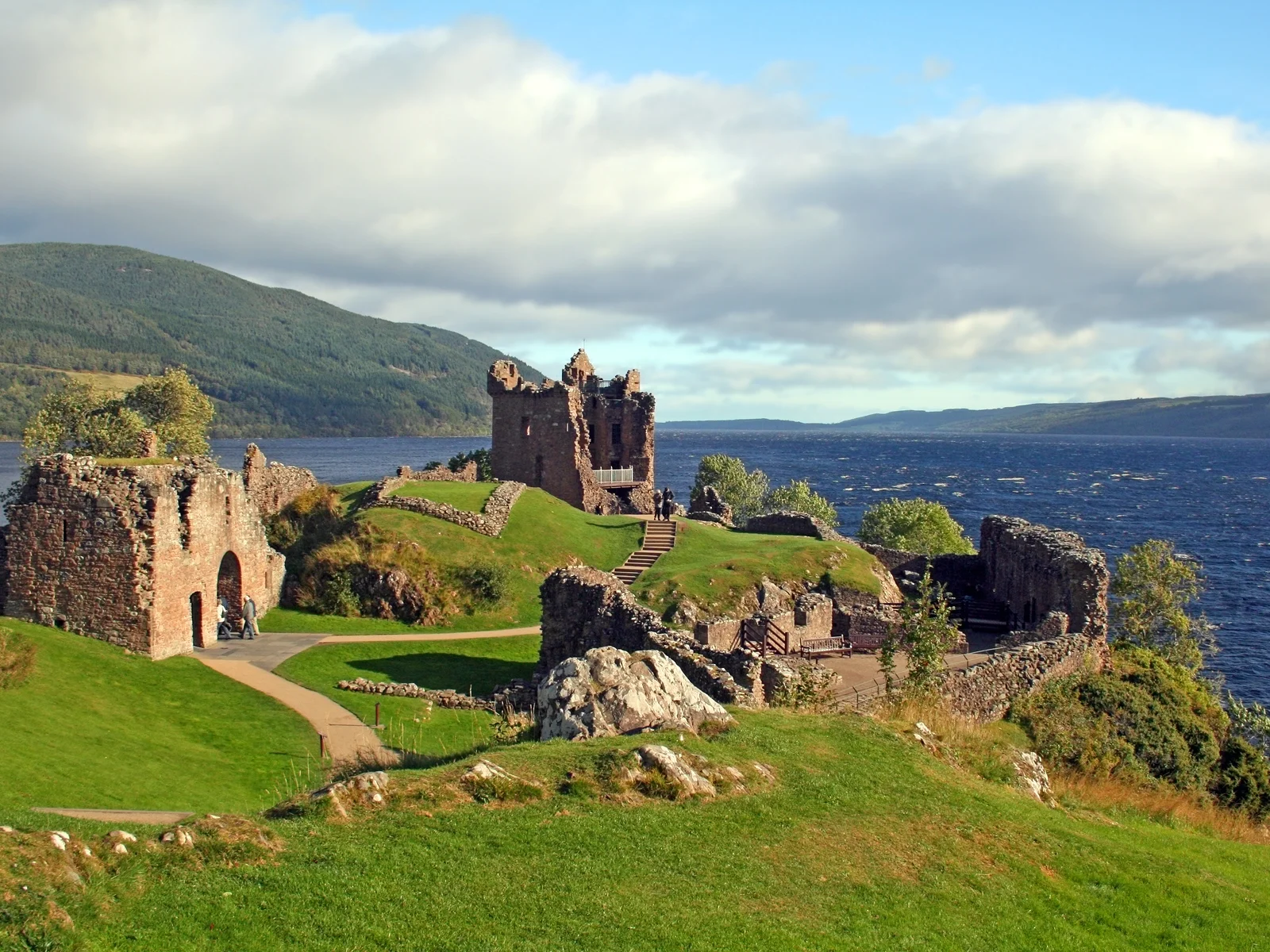
Visiting Urquhart Castle, the Romantic Sentinel of Loch Ness
The ruins of Urquhart Castle rise from the banks of Loch Ness like a medieval dream frozen in stone. Its collapsed towers and jagged curtain walls tell of a thousand years of battle, betrayal, and Scottish resilience. Framed against the dark waters where the legend of Nessie lingers, this ghost castle remains one of the most photographed sites in Scotland.
Why Urquhart Castle Embodies the Tumultuous Spirit of the Highlands
Built in the 13th century on a strategic promontory, Urquhart once controlled the Great Glen, the vital thoroughfare cutting across the country. English and Scottish forces fought bitterly over it during the Wars of Scottish Independence. The stronghold changed hands roughly a dozen times before being partially blown up in 1692 to prevent it from falling to the Jacobites.
Today, its remarkably preserved remains offer a visceral dive into medieval history. The contrast between its violent past and the quiet serenity of the present creates a singular, almost mystical atmosphere.
Exploring the Vestiges of a Legendary Fortress
Grant Tower and Its Sweeping Views
The Grant Tower, the 16th-century keep, stands as the most imposing structure on the site. Climb its spiral staircases worn down by centuries of footsteps, and you will find a breathtaking panorama of Loch Ness at the top. The dark waters of the loch stretch for 37 kilometers, framed by the wooded hills of the Highlands.
On a clear day, the view reaches all the way to Fort Augustus to the south. This vantage point served medieval lookouts well when watching for approaching enemies by water and road.
The Vaulted Cellars and Great Hall
The vaulted cellars and semi-subterranean kitchens hint at daily life inside the fortress. The thick walls, in places exceeding two metres, reflect the defensive obsession of the builders. The Great Hall, now open to the sky, once hosted grand banquets and war councils.
Friendly tip: arrive right at opening time to enjoy the grounds in relative peace. Crowds pick up considerably by 10:30am, particularly in the summer. Morning light hitting the gray stones and the loch also makes for incredible photos.
The Visitor Center and Immersive Experience
The modern visitor center, opened in 2002, provides a solid historical overview before you step out to the ruins. A 3D theater presentation brings the castle back to its medieval peak, complete with slate roofs, fluttering banners, and bustling courtyards.
Display cases feature items recovered during archaeological digs, including rusted swords, old coins, and pottery fragments. Each artifact speaks to a sliver of everyday life within these long-gone walls.
Other Highlights of the Visit
- The medieval trebuchet: a full-scale replica of a siege catapult
- The herb garden: medicinal and culinary plants from the Middle Ages
- Informational displays: illustrated accounts of the castle's major historical milestones
Nessie and Loch Ness Cruises
Plenty of visitors scan the water from the ramparts hoping for a glimpse of the famous Loch Ness monster. While Nessie tends to stay hidden, the actual wildlife of the loch delights nature lovers, with salmon, trout, and pike swimming these mysterious depths. Boat tours depart regularly from the small harbor right next to the castle, giving you a unique angle on the ruins from the water.
Opening hours
- October: 9:30 AM to 5:00 PM.
- November to March: 9:30 AM to 4:30 PM.
Last entry is 45 minutes before closing.
Closed December 25 and 26.
*Information subject to change

A truly iconic spot to visit while you are at Loch Ness. The tour doesn't take very long, but it is a great stop to take a little break in a place where time has stood still. If you visit when it is foggy, I guarantee the atmosphere is absolutely incredible!