
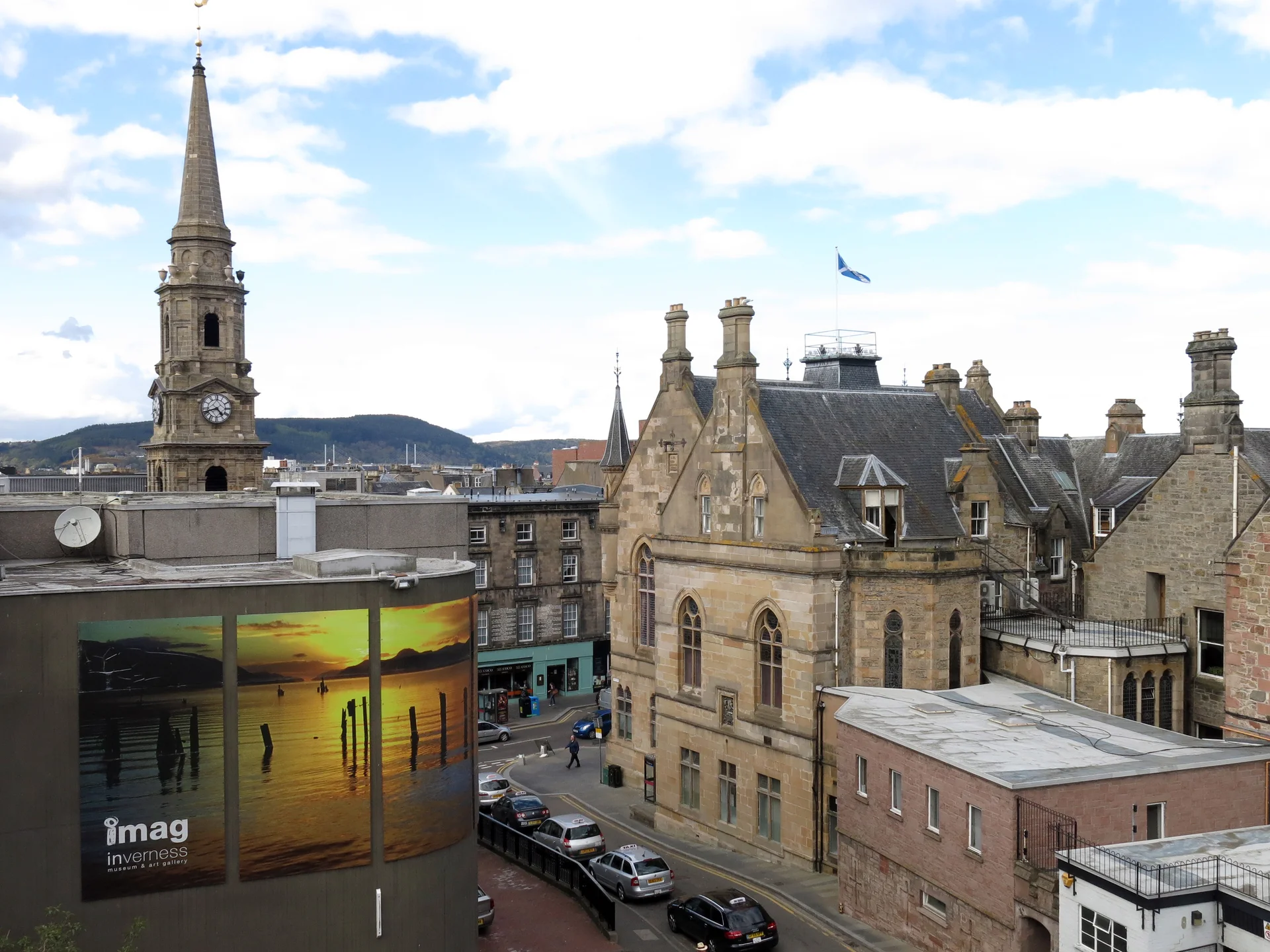
Two centuries of Highland history at the foot of the castle
Sitting just below the Inverness castle hill, this free museum and art gallery has been capturing the spirit of the Scottish Highlands since 1825. Behind its 1960s modernist facade lies one of the most significant collections of Pictish artifacts in Scotland, alongside Jacobite treasures and contemporary art exhibits that bring four centuries of regional history to life.
Why the Inverness Museum and Art Gallery is worth the detour
Established in 1825 by the Northern Institution for the promotion of science and literature, the museum navigated a winding path before finding its permanent home on Castle Wynd in 1963. Following major renovations in 1982 and 2006, the current building offers bright, accessible spaces across two levels. With free admission, it provides an open door for everyone to explore the deep heritage of the Highlands.
What sets this museum apart from other Scottish institutions is its ability to place objects within the grand saga of the Highlands. Every artifact tells a human story, spanning from the early Iron Age inhabitants and the Pictish and Jacobite eras to the social upheavals of the Clearances.
Pictish treasures, the jewels of the ground floor
The ground floor houses the "Home of a Warrior Society" exhibit, which dives into the mysterious world of the Picts. The collection features ten symbol stones dating from the 5th to the 7th centuries, unearthed in the area around Inverness and the Eastern Highlands. These carved stones display enigmatic symbols like the crescent and V-rod, the double disc and Z-rod, and the mirror and comb.
The stylized animals draw the eye immediately. The bull decorates the stones from Lochardil and Kingsmills, while the legendary Ardross Wolf Stone and Ardross Stag Stone embody Pictish power and mystery. The Wolf Stone, dating back to the 6th century, has become the museum emblem and even inspired the name of the Celtic rock band Wolfstone.
Friendly tip: download the SMARTIFY app before your visit to get free access to the Top 10 Highlights Audio Tour narrated by Carrie Forbes. This audio circuit spotlights ten must-see items with their backstories and ties to the history of Inverness.
Exceptional Pictish metalwork
The Inverness Museum and Art Gallery holds the only collection of Pictish metalwork from the Highlands. Notable pieces include the terminal of a silver-gilt penannular brooch found at Urquhart Castle in the 1800s, a gold belt clasp discovered at Easter Dalziel in 2000, and most impressively, a rare pendant carved from cannel coal found at Breakachy near Beauly. One side features an interlaced Christian cross, while the other shows a complex composition of a biting beast, a serpent, and a cross.
The Jacobite legacy and Inverness silver upstairs
The first floor continues the journey through time, focusing on more recent Highland history. Located only five miles from the site of the Culloden battlefield, the museum naturally places a heavy emphasis on Jacobite memorabilia. Basket-hilted swords, targes, and historical portraits of the Stuart family, including a depiction of Prince Charles Edward Stuart attributed to Pompeo Batoni, transport visitors to the heart of the Jacobite uprisings.
An entire section celebrates the skill of Inverness silversmiths, whose work highlights local craftsmanship. Bagpipes, violins, tartans, and traditional weaponry illustrate the Highland influence on broader Scottish culture. The exhibits do not shy away from difficult eras, including the Clearances and the agricultural revolution that profoundly changed Highland communities.
The contemporary art gallery and rotating exhibits
The art gallery hosts a dynamic schedule of temporary exhibits featuring contemporary local and international artists. From pottery workshops to photography displays, the programming is always evolving.
The museum cafe, which seats 24 people, offers a welcome break after your walk through history. The gift shop carries thematic items, often priced more reasonably than those found in larger urban institutions.
Opening hours
- April to October: 10:00 AM to 5:00 PM
- November to March: 12:00 PM to 4:00 PM (11:00 AM to 4:00 PM on Fridays and Saturdays)

I didn't know much about the history of the Highlands, and this museum really helped me learn more. It is very comprehensive and lets you get a better understanding of the region. Plus, when I went, admission was free, though I am not sure if that is still the case. You can easily take kids here, the visit is pretty fun and interactive.