
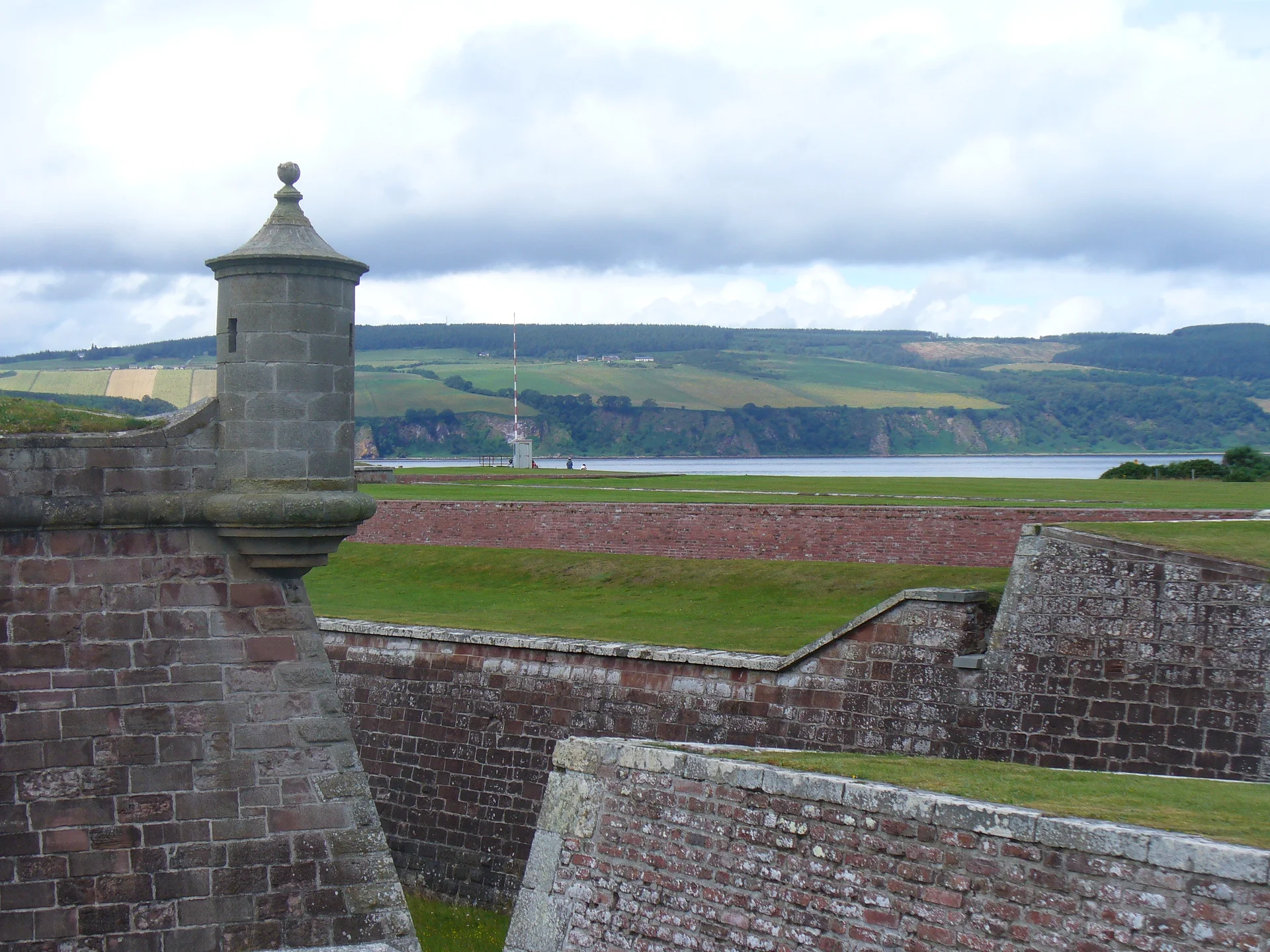
Visiting Fort George, the Ultimate Highland Stronghold
Perched on a rocky headland jutting out into the Moray Firth, Fort George deploys its massive ramparts right against the water. This 18th-century citadel, a true masterpiece of military architecture, never actually saw the roar of battle it was built to repel. It is a striking paradox for one of the most accomplished artillery fortifications in Europe.
Why Fort George Embodies Post-Culloden British Might
Built between 1748 and 1769 after the bloody Battle of Culloden, Fort George symbolizes the determination of the British government to keep the rebellious Highlands under control. Its astronomical cost, the modern equivalent of billions of dollars, demonstrates the strategic importance placed on this bastion. Ironically, peace took hold even before construction was finished.
Today, the fort remains an active military base while still welcoming visitors. This dual purpose gives it a rare authenticity, where British military history meets the present day.
Exploring the Defenses of a Timeless Citadel
The fortified enclosure spans 17 hectares, protected by ramparts of unbelievable thickness. Walking along these walls offers soaring views over the strait and the Highland mountains. On a clear day, your gaze sweeps across the entire Moray Firth.
The Bastions and Their Period Cannons
Each angular bastion still houses its original cannons, pointed toward a threat that never came. These 18th-century artillery pieces, meticulously maintained, give you a clear sense of how sophisticated Georgian defensive systems were. The interlocking fields of fire left no approach zone vulnerable.
The Grand Storehouse and the Barracks
The Grand Storehouse, with its barrel vault, could store tons of gunpowder safe from marine humidity. The barracks, aligned with Prussian regularity, once housed up to 1,600 soldiers in Spartan conditions. Period reconstructions recreate the harshness of daily military life.
Friendly tip: Visit in the late afternoon between April and September. The low light illuminates the golden stone of the fort while the dolphins of the Moray Firth often swim close to the shore. Bring binoculars to spot these marine visitors from the northern ramparts.
The Highlanders' Regimental Museum
Fort George houses the Highlanders' Museum, an exceptional collection tracing three centuries of Scottish regimental history. Victoria Cross medals, colorful uniforms, and ceremonial weapons fill every display case, telling the stories of men who went off to fight across the four corners of the British Empire.
The section dedicated to the Napoleonic campaigns holds a particular fascination. Accounts from Highland soldiers at Waterloo sit alongside moving personal items like letters, pocket watches, and yellowed photographs. Here, history takes on a human face.
Not to be missed:
- Saint George's Chapel: a sober building featuring commemorative stained glass windows dedicated to the regiments
- The fort-lieutenant's house: an elegant residence contrasting with the surrounding military austerity
- The blacksmith workshops: occasional demonstrations of 18th-century armorers' techniques
Wildlife as an Unexpected Bonus
The maritime location of the fort makes it an ideal viewing post for wildlife. Gray seals, bottlenose dolphins, and porpoises regularly frequent the waters of the strait. Birdwatchers will appreciate the variety of seabirds, with terns, oystercatchers, and shags nesting on the nearby cliffs. Spring turns the sloping glacis into a carpet of wildflowers buzzing with countless pollinating insects.
Opening hours
- April to September: 9:30 AM to 5:30 PM
- October to March: 10:00 AM to 4:00 PM
Closed December 25 and 26.
*Information subject to change

This fort has pretty impressive architecture. You get a really beautiful view of the sea from the heights. Even though it is still being used by the military, you can visit it. Even if you do not have access to the entire fort, plenty of rooms are open to the public. An audio guide can accompany you during your visit.