Lagos City Center

Things to do in the Algarve: top 11 highlights in 2026

Photo : Petite-Terre

Ochre cliffs pierced with caves, coves at the foot of wooden stairways and a lagoon where clams are still dug by hand. The rankings below are made by travellers like you.

Our members' favourite places in the Algarve

Ranked on recommendations from travellers who went there

#1 Lagos +10 recs

Inhabited since prehistoric times, its port was already active under the Phoenicians. It took an earthquake and a tsunami to slow down its influence and strip Lagos of its status as the capital of the Algarve. Until 1755, it held a leading role, particularly in international trade, and its shores were the departure point for caravels heading toward the New Worlds. The canning industry and fishing drove its economy before tourism took over. Now a popular beach destination, the turquoise waters are best enjoyed across its many beaches, while the remnants of its history continue to captivate.

A storied past and raw charm

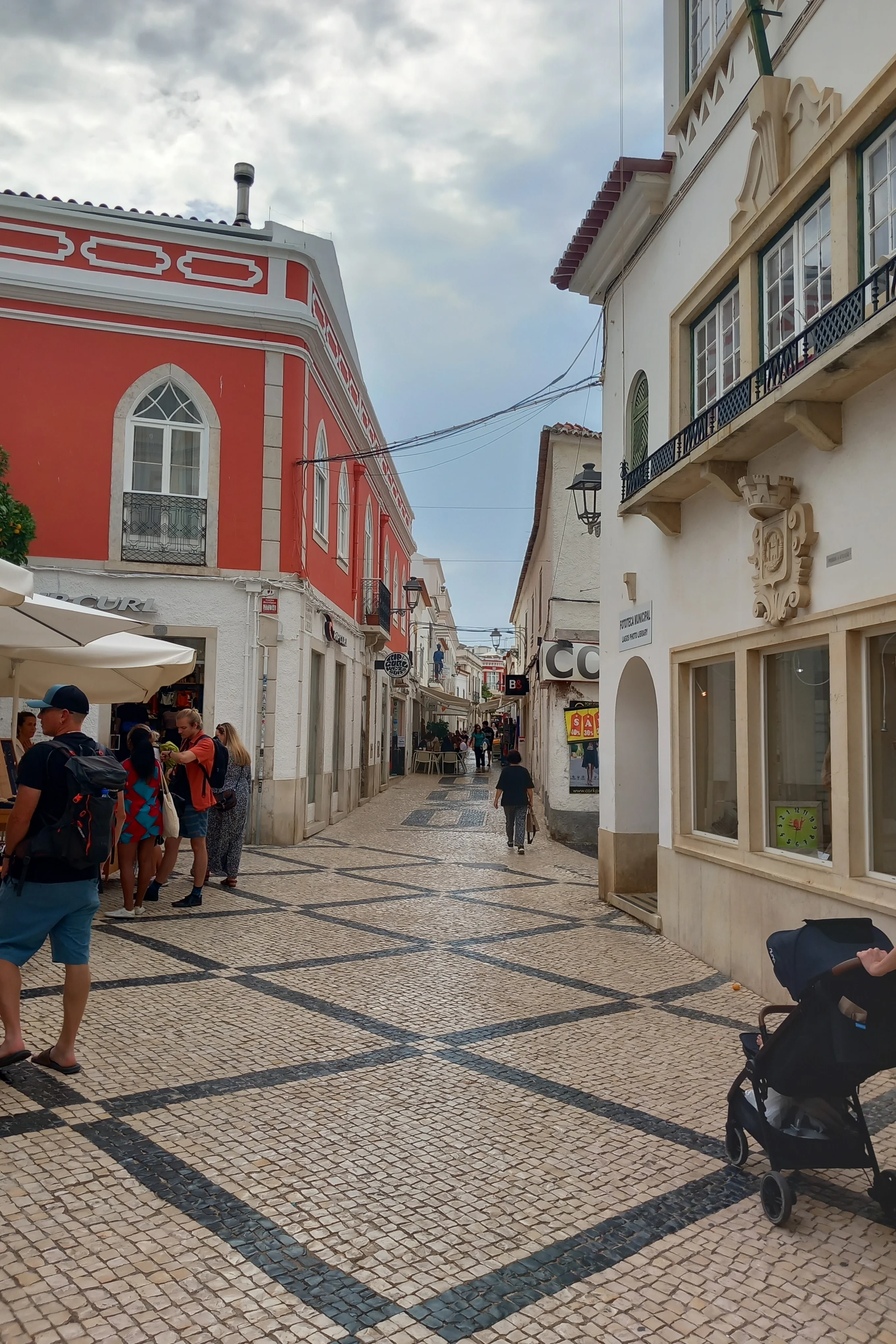
Colorful and lively, brightened by azulejos (the ceramic wall tiles found on many facades), walking through Lagos feels like moving through an open-air museum. The sights are everywhere, especially in its historic center protected by city walls. The beach is just a short walk away, and the two towers of the São Gonçalo Gate serve as reminders of its defensive past. The fortification dates back to 1520 and offers exceptional views over the bay and the Serra de Monchique.

The neighborhood is almost entirely pedestrian. At Praça Infante Dom Henrique, the building of the 15th-century former slave market has been converted into a cultural center, and further along, the church of Santa Maria stands proudly with architecture from the same era. Inside Santo António from 1707, you will find a rich collection of baroque woodwork highlighted with gold, alongside the Dr. José Formosinho Museum dedicated to archaeology and ethnography. Religious heritage matches the flavorful architecture in scale, while stone doorframes and wrought iron give the alleys endless charm along the way. On Avenida dos Descobrimentos facing the estuary, the 17th-century square fort of Ponta da Bandeira is one of the finest in the region, and you should not miss the Centro Ciência Viva, a science and arts museum recounting the great Portuguese discoveries.

Traditional craftsmanship remains thriving in Lagos, with shops showcasing windows filled with ceramics, hammered copper, printed fabrics, and leather goods. At the municipal market, three floors of fresh and flavorful produce await you. Naturally, seafood takes center stage, with shellfish and fish featured in every restaurant. Monkfish stew, grilled tuna, chorizo-stuffed squid, the daily catch dictates the menu. As throughout the Algarve, dom-rodrigos are the local pastry to try, crafted from almonds, egg yolk, and cinnamon.

Cliffs carved by turquoise water

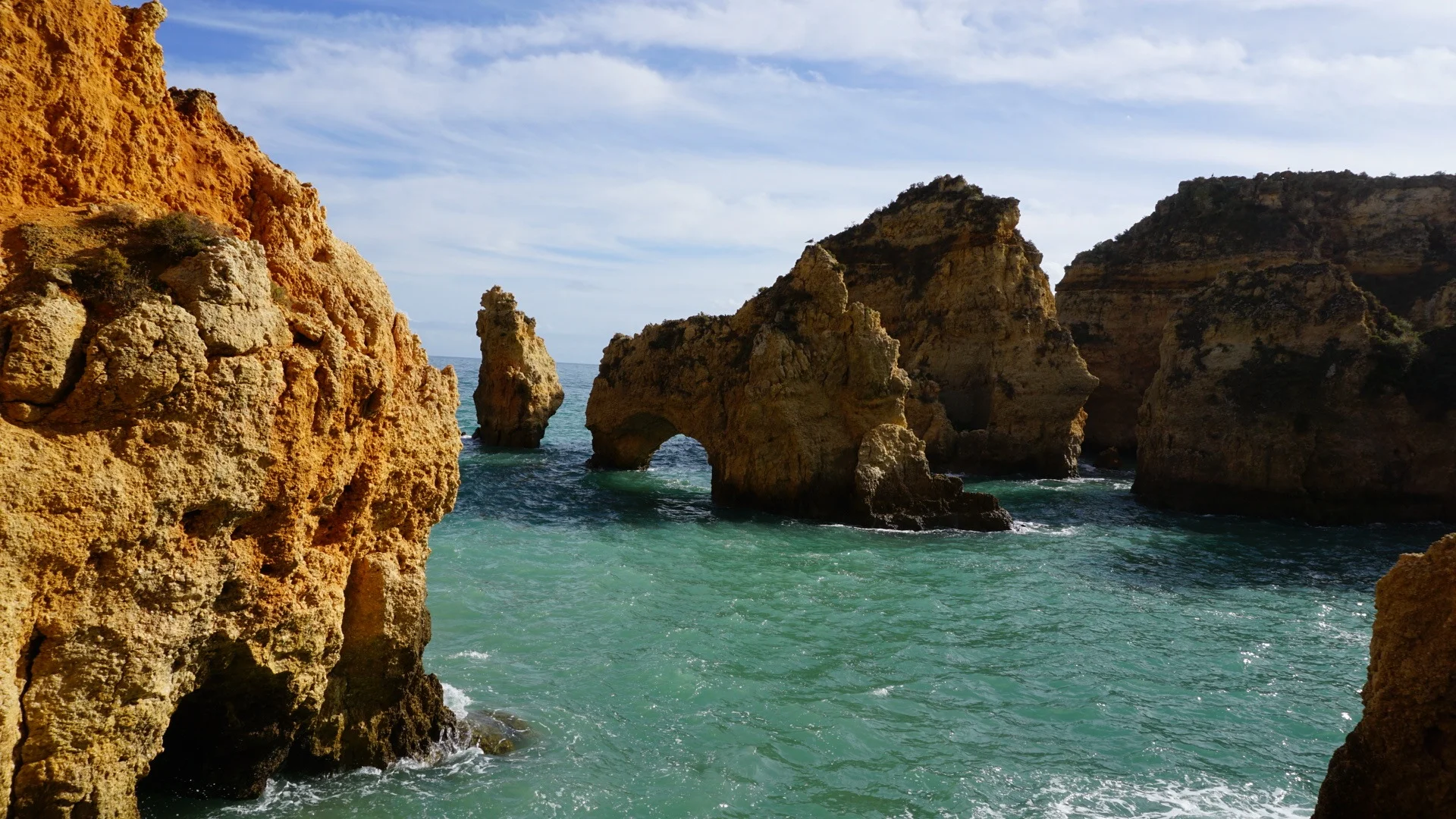
Its striking natural environment made Lagos popular in the first place, with ochre cliffs resembling massive sculptures carved by the waves, and rocks and caves shaping the coastal scenery at every turn. Beyond miles of fine sand, the coastline is truly magnificent. Ponta da Piedade is a prime example with its lighthouse and sea caves; this incredibly scenic headland can be explored on foot or by boat with equal payoff. Dona Ana Beach is a must-visit, bordering the historic district. Smaller and a bit tougher to access, Camilo Beach offers a fantastic setting, while the larger stretches belong to Porto de Mós, a favorite among surfers, and Meia Praia. All water sports are readily accessible here. The waterfront lined with massive palm trees makes for an ideal stroll, and you can keep an eye out for dolphins down at the marina.

When to go

The Mediterranean climate ensures nearly constant sunshine. From April to November, the weather is mild with summers occasionally turning very hot. Winters are never harsh, though the water is too cold for swimming and winds pick up along the beach. Visiting in the shoulder season brings fewer crowds, making it a great time to experience Lagos.

How to get there

The nearest airport is in Faro, 90 km (55 miles) away. Buses make the trip in 2h10 and trains take 1h50, with the station right in downtown Lagos. Plan your route ahead of time, especially in the summer. The highway network is well-maintained, allowing arrival via toll roads or national highways. If you are driving, motorways link Lagos to both Lisbon and Seville.

#2 Faro +7 recs

Most travelers only see the airport, but Faro is the genuine soul of the Algarve. It is a city of contrasts where the quiet medieval Old Town meets the wild beauty of the Ria Formosa lagoon. Far from the noise of typical beach resorts, it offers an authentic Portuguese experience focused on local culture and fresh seafood. This is the spot for travelers who want to see a different, more grounded side of southern Portugal.

#3 Lagoa +7 recs

Lagoa is the unsung wine capital of the Algarve, where family-run estates have been working fertile soil between the hills and the sea since the 19th century. Skip the crowded beach resorts for quiet, whitewashed villages like Ferragudo and Porches, or use this as a base for quick trips to the cliffs at Benagil and Praia da Marinha. It is the authentic side of the region, perfect for travelers prioritizing local vineyards and a slower pace over the typical tourist track.

#4 Portimão +6 recs

Long defined by its fishing fleet, boat building, and seafood canning plants, Portimão has pivoted to become a destination known for its expansive beaches and motorsport circuit. Located in the south of Portugal, the city has managed to retain its local character even as tourism has surged. The mild climate and dramatic limestone cliffs make this Algarve port a compelling stop.

A legacy of elegance

While the modern high-rises reflect the city's recent growth, the historic center offers a different perspective. The architecture here carries real character, starting with city hall, which is housed in the former palace of the Viscounts of Bivar. Walking through the cobblestone alleys, you will see two-story houses adorned with azulejos (traditional ceramic tiles), along with ornate ceramic balustrades and wrought-iron balconies. The city was a major international trading hub before the 1755 earthquake caused widespread destruction. While little remains of the medieval structures, a few wall sections endure. The majestic Jesuit College also took damage during the disaster, but today it stands prominently on Praça da República, gleaming in white with orange trim. Its church, the largest in the Algarve, cuts a sharp silhouette against the sky. Nearby, the 15th-century Igreja Matriz remains immaculate, featuring a Gothic portal with gilded capitals that is worth a close look.

Beaches and local life

Make a stop at Praça Manuel Teixeira Gomes, a fully paved plaza with a water feature that serves as a perfect spot to grab a coffee at a kiosk and watch the world go by. At Jardim 1° Dezembro, you will find more azulejos depicting Portuguese history amidst fountains and greenery. To understand the local heritage, the Portimão Museum is essential; it is housed in a former sardine cannery and covers everything from Roman and Arab archaeological finds to the history of the local canning industry. Sardines are still the star of the local menu, usually served grilled right on the docks. The local cuisine is robust, featuring bread and tomato soup, fresh seafood, fish stews, rice with razor clams, and corn porridge with sausage. For dessert, look for morgados and bolas de ovo, traditional sweets that combine almonds and figs.

Before hitting the sand, head to the 17th-century Fortress of Santa Catarina de Ribamar for one of the best viewpoints in the area. The villa and chapel sit perched on the rock, and a spiral staircase leads down to the marina and Praia da Rocha. Sheltered by cliffs, this famous stretch of fine sand is the largest and most popular beach in the city. It functions as a full-service resort area that stays active day and night. The caves of Praia dos Três Castelos are more challenging to reach, while the intimate Praia dos Careanos, located 2 km away, offers a quieter alternative. The waterfront promenade is one of the best walks in town, stretching from the Ribeirinha with its palm trees past the docks to the Praça de Bívar, where the quay becomes a hub for evening nightlife.

How to get there

The nearest airport is in Faro, about a 45-minute drive away. Lisbon Airport is roughly a 2.5-hour drive. If you fly into Lisbon, you can take a train directly to the station in the city center. If you are driving from elsewhere in Europe, the highway network is modern and well-maintained.

#5 Carvoeiro +1 rec

Carvoeiro began as a small fishing village tucked between gold-toned cliffs and turquoise coves, keeping its low-key character intact despite its popularity. You can spend your days exploring the Benagil sea caves, hiking the Seven Hanging Valleys Trail, or relaxing at Praia da Marinha, which feels like a scene straight out of a postcard. It offers a slower pace than the larger Algarve resorts, making it a solid choice if you prefer coastal simplicity over high-energy nightlife.

Our members' favourite things to do in the Algarve

Ranked on recommendations from travellers who did them

#1 Benagil Beach (Lagoa) +3 recs 4/5

Benagil Beach sits along the coast of the Algarve in Portugal. Tucked between cliffs, it houses one of the region's most popular sights, the Benagil sea cave. Sculpted by millennia of erosion, this natural cathedral features light filtering through its top, illuminating the water in brilliant shades of blue. You will find a small snack bar, restrooms, and showers near the beach entrance.

#2 Slide & Splash Water Park (Lagoa) +2 recs 4.5/5

Operating in Lagoa since 1986, Slide & Splash Water Park is the oldest in the Algarve and spans 10 hectares with over 25 attractions. Towering slides like the Black Hole and the Kamikaze sit alongside family zones and animal shows. Balancing pure thrills with downtime in the wave pools and Jacuzzi, this aquatic hub guarantees a full day out in Portugal for visitors of all ages.

See the guide See deals

#3 Marinha Beach (Lagoa) +2 recs 5/5

You may already know this place without realizing it. Marinha Beach is the kind of postcard landscape that shows up on travel sites and in guidebooks, and according to Michelin it ranks among the 10 most beautiful beaches in Europe. Its photos are regularly used to promote the region and draw visitors.

It sits in the Algarve, at the far southern tip of Portugal, one of the country's most pleasant regions and one of its most popular. The Algarve is known for its exceptional sunshine (among the highest totals in Europe), its beautiful beaches and its wild side.

Tall golden cliffs drop into the clear, turquoise waters of the Atlantic. The shoreline is dotted with small coves of pale sand, ideal for swimming and strolling. In short, this little corner of paradise has everything it takes to win you over.

What to do at Marinha Beach

Beyond swimming, the area has plenty of hiking trails, with options for every taste and fitness level. The paths lead to sweeping views and to rock formations that will appeal to geology buffs and landscape lovers alike (most notably the famous rock bridge formation!).

Another way to see Marinha Beach is by boat, which can take you to coves, caves and sea chasms you can't reach on foot.

It's also worth knowing that this spot is a true ecosystem. The seabed here is what marine biologists call a seagrass meadow, something like an underwater prairie where many species live side by side. Marine life is very diverse, and if a dive or snorkeling outing appeals to you, you could spot anemones, octopuses and even seahorses.

#4 Portimão Museum (Portimão) +2 recs 4/5

Located along the Arade River inside a former fish cannery, the Portimão Museum tells the story of the Algarve from prehistoric times to the present. Explore archaeological finds, local art, and industrial maritime history. Kids love the basement submarine replica. It is a compact yet essential stop for understanding Portimão.

#5 Camilo Beach (Lagos) +2 recs 4/5

Camilo Beach is a small cove tucked between high, ochre-toned cliffs typical of the Algarve, the southern coast of Portugal. It is easily accessible via a massive wooden staircase. Pause during your descent to take in the views. With its wave-sculpted rock formations and turquoise water, Camilo Beach is a highlight of the country. Expect crowds, so visit off-season.

See the guide See deals

#6 Faro Municipal Museum (Faro) +1 rec 4/5

The Faro Municipal Museum sits in the heart of the old town in Faro, Portugal. Its diverse collections span from prehistoric times to the modern era, focusing on regional history. Housed in the 1512 Convento de Nossa Senhora da Assunção (Convent of Our Lady of the Assumption), the building features a garden cloister, arched galleries, and a 16th-century dome.

Map of the Algarve

Visiting the Algarve

The southern tip of Portugal, a hundred miles of coast facing Africa, from the wild Atlantic to the Guadiana river. In the west, around Lagos and Sagres, ochre cliffs drop into turquoise water, carved into arches and caves. In the centre, from Portimão to Albufeira, one resort follows another. In the east, past Faro, the coast flattens into lagoon and sand islands.

Behind the coast, the hinterland is still farmland: orange groves, almond trees, white villages with lacy chimneys, and the Monchique hills for cooler air. You come for the sea, the clifftop paths and grilled fish. Expect more than three hundred days of sunshine a year, and water colder than you think.

You will love it if

  • You are looking for beaches beneath spectacular cliffs
  • You like walking the coast from one cove to the next
  • You want sunshine in May or October, when the rest of Europe clouds over

Give it a miss if

  • You dream of a warm sea: the Atlantic rarely tops 22°C
  • You hate crowds: in August the famous beaches overflow
  • You travel without a car and want to see everything: the trains barely follow the coast

The must-sees

  1. Benagil cave

    1 Benagil cave +3 recs

    A cathedral of rock opened to the sky by a round hole, between Carvoeiro and Albufeira. Light falls from above onto a beach of golden sand. Access rules have tightened: you now admire it from the water, by boat or kayak, setting off from the nearby beaches. Go early in the morning, before the queue of boats.

  2. 2 The Seven Hanging Valleys trail Hike

    Nearly four miles of cliffs between Marinha beach and Vale Centeanes beach in Carvoeiro. The path runs along the edge, passes above Benagil and dips into small valleys hanging over the sea. Walk it in the direction that keeps the sun at your back, and take water: there is no shade at all.

  3. 3 Ponta da Piedade Coast

    South of Lagos, the cliff breaks up into needles, arches and tunnels the sea runs through. A stairway leads down to the water, where the fishermen's boats set off. Come late in the afternoon, when the rock turns orange.

  4. 4 Ria Formosa Lagoon

    A lagoon nearly forty miles long, sheltered by a chain of islands from Faro to Cacela. Boats leave Faro and Olhão for Ilha Deserta and Culatra, where you walk for miles on sand without a single road. Stay for a grilled-fish lunch, then catch the last boat back.

  5. 5 Portimão's sardine festival Festival

    Every summer, in early August, the port of Portimão fires up its grills along the quays. The sardines are eaten on a slice of bread, with a glass of wine and concerts until late. It is the most popular festival on the coast: arrive early to find a table.

The classic trap

Booking Benagil cave for an August afternoon. At that hour the boats queue at the entrance, and the light no longer gets in. Come first thing, or in September, when the sea is still mild and the quays are quiet.

Our itineraries in the Algarve

Our itineraries by length of stay
LengthItineraryWhat you see
3 daysLagos › SagresPonta da Piedade, the cliff beaches, Cape St. Vincent
5 daysLagos › Carvoeiro › FaroThe west, Benagil and the Seven Valleys, the Ria Formosa
1 weekFrom Sagres to Tavira, with Silves and MonchiqueThe whole coast, the Moorish hinterland and the hills

Start in the west, in Lagos, for the old town and Ponta da Piedade, then head out to Cape St. Vincent for sunset at the end of Europe. Come back towards the centre, to Carvoeiro, for Benagil and the clifftop trail. Got a week? Drive up to Silves and Monchique, then finish in the east, between Faro, the lagoon islands and Tavira.

When to visit the Algarve

When to go, season by season
InterestSeasonTemperaturesThe highlightCrowds and prices
WinterDec. to Feb.8 to 17°CThe almond trees in blossomLow
SpringMar. to May11 to 24°CTrails in flowerMedium
SummerJune to Aug.18 to 30°CSwimming and village festivalsHigh
AutumnSept. to Nov.14 to 27°CA sea that is still mildMedium

Our advice

Come in May or September: the sun is the same as in July, the beaches have room and prices drop by a third. July and August remain the swimming season, but the crowds are dense. In January the almond trees blossom inland: a mild winter for walking, not for swimming.

Getting to the Algarve

  1. By plane to Faro The simplest

    Direct flights link London, Manchester, Dublin and many other UK and Irish airports to Faro in under three hours. The airport is ten minutes from the centre and an hour from Lagos by motorway.

  2. By train from Lisbon No car to start with

    Direct trains link Lisbon to Faro in about three hours, across the plains of the Alentejo. The coastal line then takes over between Lagos and Vila Real de Santo António.

  3. By car from Spain For a road trip

    From Seville, allow two hours to Faro over the bridge across the Guadiana. Coming from further afield, most travellers combine a flight with a hire car.

Pick up your hire car at Faro airport: that is where the choice is widest and prices lowest. If you arrive via Lisbon, keep a day for the city before heading south.

Getting around the Algarve

A car gives you the most freedom: the coast can be driven end to end in two hours, and the finest coves lie at the end of small roads. The coastal train links Lagos to Vila Real de Santo António, but its stations are often far from the beaches. For a settled stay in Lagos or Faro, regional buses and shuttles are enough.

Good to know

The A22 motorway across the Algarve has no toll barriers: tolls are electronic. Ask the hire company for a car fitted with the transponder, otherwise you will have to pay afterwards at a post office. A UK or EU licence is enough to drive in Portugal.

What to eat in the Algarve

  • Grilled sardines: served whole on a slice of bread, the great business of summer in the ports.
  • Cataplana: fish, clams and prawns simmered in a shell-shaped copper pot.
  • Octopus: grilled, in a salad or with rice, above all in Santa Luzia, near Tavira, which calls itself its capital.
  • Guia chicken: charcoal-grilled and spiked with chilli, in the village of Guia, near Albufeira.
  • Almond and fig sweets: little marzipan fruits, and the dom rodrigo of Lagos.
  • Medronho: a strawberry-tree brandy distilled in the Monchique hills, drunk after dinner.

To eat like the locals, leave the seafront and look for a tasca in the back streets, where the catch of the day is chalked on a board. At Olhão market in the morning, you will see the lagoon fish come in. And order Ria Formosa clams wherever they are offered.

Where to stay in the Algarve

Where to base yourself
AreaWhat forGood to know
LagosOld town, Ponta da Piedade, covesThe most complete
Sagres and the west coastSurf, Cape St. Vincent, wild beachesWindy, with few places to stay
Carvoeiro and LagoaBenagil, the Seven Valleys, clifftop villagesThe heart of the cliffs
Albufeira and VilamouraBeaches, nightlife, golfThe liveliest
Faro, Olhão and TaviraRia Formosa, sand islands, old townsThe east, more authentic

Read the full guide: where to stay in the Algarve

How much does a trip in the Algarve cost?

Indicative budget per person, excluding the flight
TripLengthBudget per person
Budget (hostel, bus, tascas)5 days€350 to €550
Comfort (boutique hotel, car, good restaurants)5 days€700 to €1,200
Luxury (clifftop resort, fine dining)5 days€1,800 to €3,500
  • The season: an August room often costs twice the same room in May; shift by a month and you save a lot.
  • Meals: a tasca's set menu, fish and a glass of wine included, costs far less than a seafront terrace.
  • Boat trips: outings to Benagil and Ponta da Piedade are short and affordable; compare departures on the quay.
  • The car: book early for summer, and keep some margin for the A22's electronic tolls.
  • Beaches: all are public and free; only parasols and sunloungers are for hire.

Traditions and way of life in the Algarve

The name comes from the Arabic al-Gharb, "the west": for five centuries the Algarve was the western tip of the Muslim world, and Silves, its capital, keeps a castle of red sandstone. It gave the region its almond and orange trees, its water wheels and perhaps the lacy white chimneys that still crown the houses.

In the 15th century, Prince Henry the Navigator made Sagres and Lagos the base of the great voyages of discovery: the caravels sailed from here towards Africa, and in 1444 Lagos opened Europe's first slave market. The earthquake of 1755 flattened much of the coast. Passing through Lagos? Take time to read the plaques by the old harbour: the history is written there without varnish.

Top photos posted by members

Rio Gilao
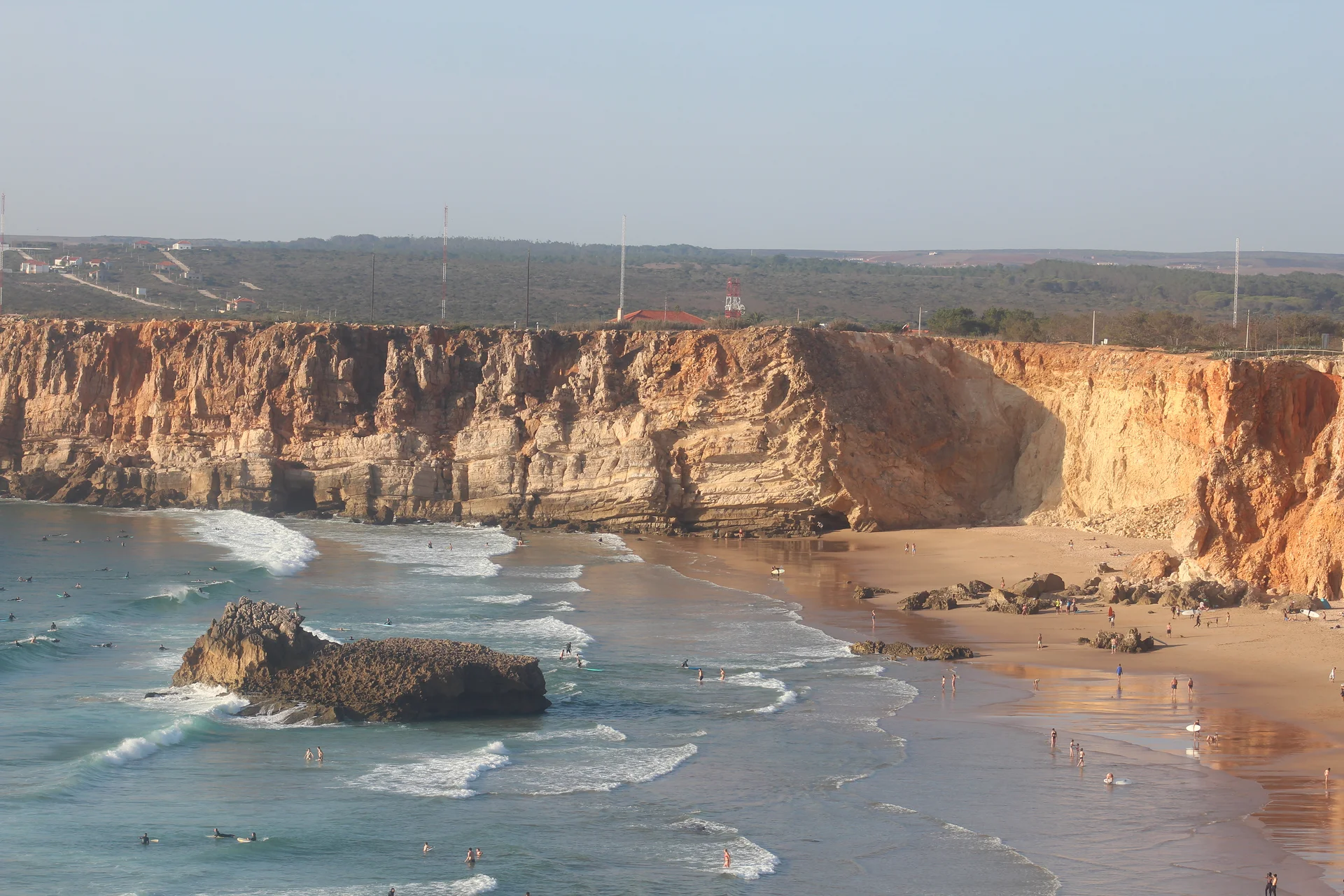
Pretty beach in Sagres
Camilo Beach in Lagos

Articles posted by members

Traveler reviews

The western tip of Portugal

Popular with surfers, the town of Sagres is a nice stop on a Portugal road trip. As you might expect, it is very windy! But it is a friendly destination with small restaurants that have a great atmosp…

0

Fun and complete, but watch out for crowded days

I have been to this park twice, and the experience is not exactly the same depending on when you go. - The first time was in early September: super fun, with different types of slides to try alone or…

94

The perfect little family beach town

My favorite spot in the south of Portugal, without a doubt! The town has a friendly and pretty peaceful vibe, with its small pedestrian city center, gorgeous beaches, and especially some really beauti…

149

THE water park of southern Portugal, victim of its own success

I went there with my kids during the summer vacation. In a word, it was good but way too crowded. I still want to thank the park employees, who were thoughtful with the kids, as is often the case in P…

90

Seriously overrated destination

I do not know why Faro is often highlighted as a top choice for the south of Portugal, but I was pretty disappointed. You can finish walking around the old town in 1 hour, it is not that lively, and t…

28