
Manarola, the village where you forget to catch your train
A former railway worker named Mario Andreoli spent more than thirty years building, entirely on his own, the world's largest illuminated Christmas nativity scene on the hillside overlooking the village. It features over 300 statues made from recycled materials and 15,000 bulbs powered by solar panels. Mario passed away in 2022, but every December, his nativity display still lights up at sunset.
This story captures the essence of Manarola: a tiny, stubborn place where people pull off outsized feats with modest means. As the second smallest village in the Cinque Terre, perched on a rocky spur above the Ligurian Sea, it is also the hardest one for travelers to tear themselves away from.
Manarola: a favorite for romantics and dreamers
This village is tailor-made for couples, photographers, and wine enthusiasts. The view from the Punta Bonfiglio belvedere is among the most photographed in Italy, and the terraced vineyards encircling the village produce two of the region's most distinctive wines.
Hikers will love the trails climbing up to the hamlet of Volastra through vineyards and olive groves. Food lovers will find a small but focused culinary scene anchored by two or three cult-favorite spots.
If you are looking for nightlife, sandy beaches, or diverse water sports, Manarola is not the right choice. The village has no real beach, only rocky access to the sea down by the marina. There are no nightclubs and no flashy souvenir shops.
That is precisely the appeal. However, day-trippers arriving in waves by train between 10 AM and 4 PM can disrupt that peace. The true character of the village comes out early in the morning and after the last trains depart.
A steep village with no cars and no elevators
Like all the Cinque Terre villages, Manarola is entirely car-free. The streets are narrow and steeply sloped, meaning everything must be done on foot. Travelers with mobility issues will face serious difficulties. The closest parking lot, Park Manarola Loc. Posella, sits high above the village, about a 15-minute walk downhill. Expect to pay around $23* a day for parking. As for safety and comfort, Italy handles the rest effortlessly with its mild climate and warm hospitality.
Budget: prices aligned with the rest of the Cinque Terre
Expect to budget $135 to $230* a night for a double room in peak season, $40 to $68* per person for restaurant meals, and $23 to $40* per day for transport with the Cinque Terre Treno Card. In the off-season, prices drop by 30 to 50 percent, and the atmosphere gains in intimacy what it loses in guaranteed weather.
The belvedere and the marina: the visual heart of the village
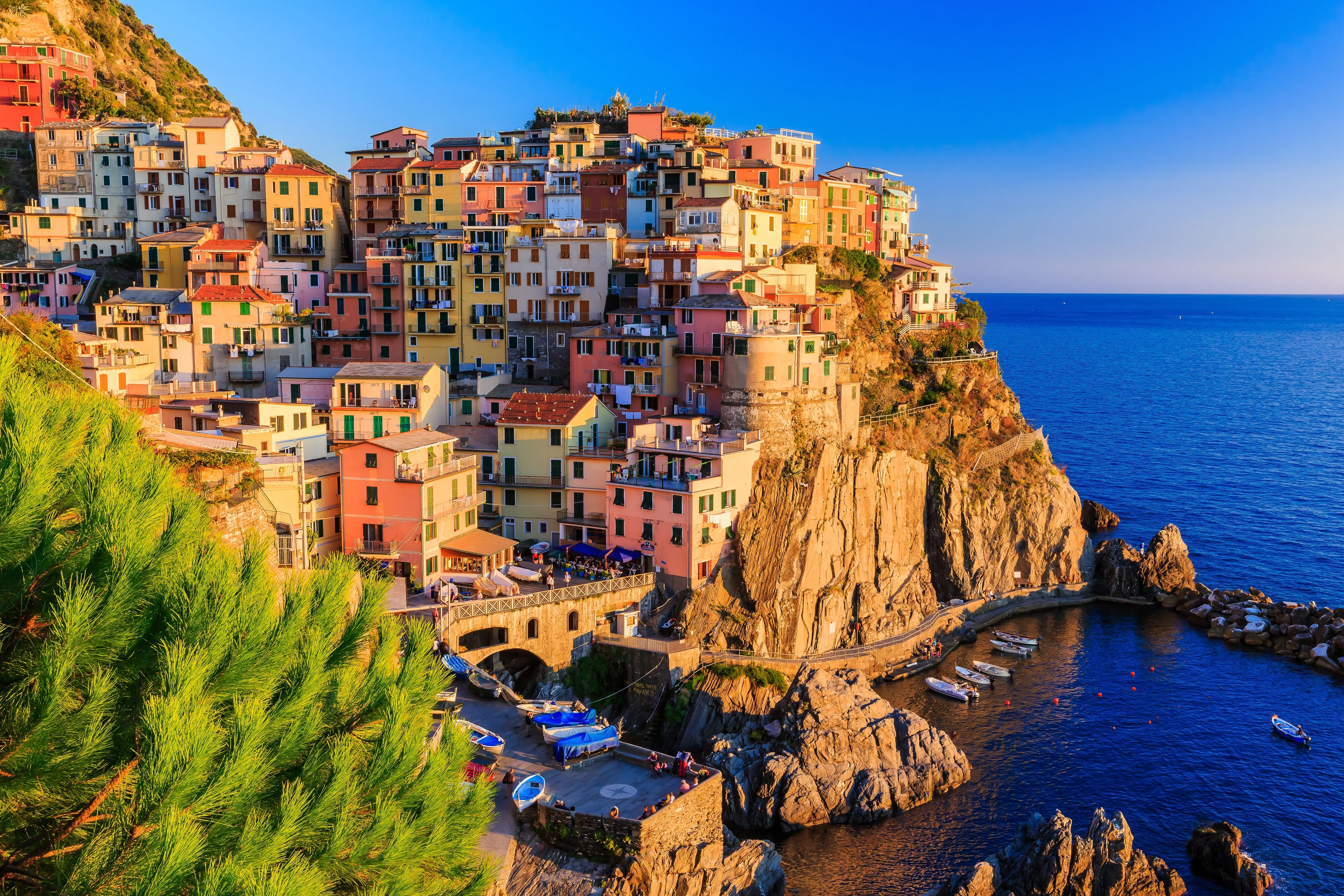
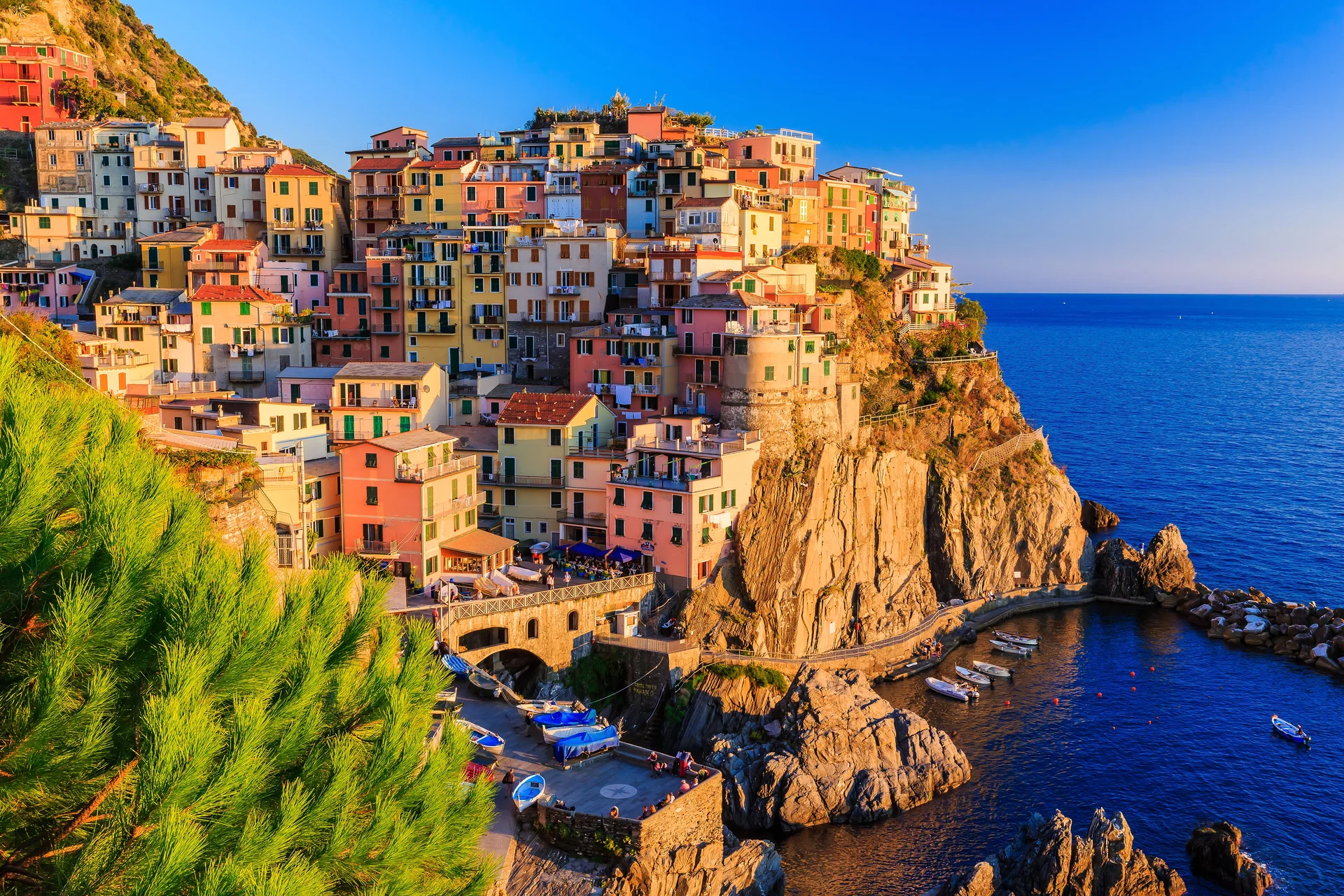
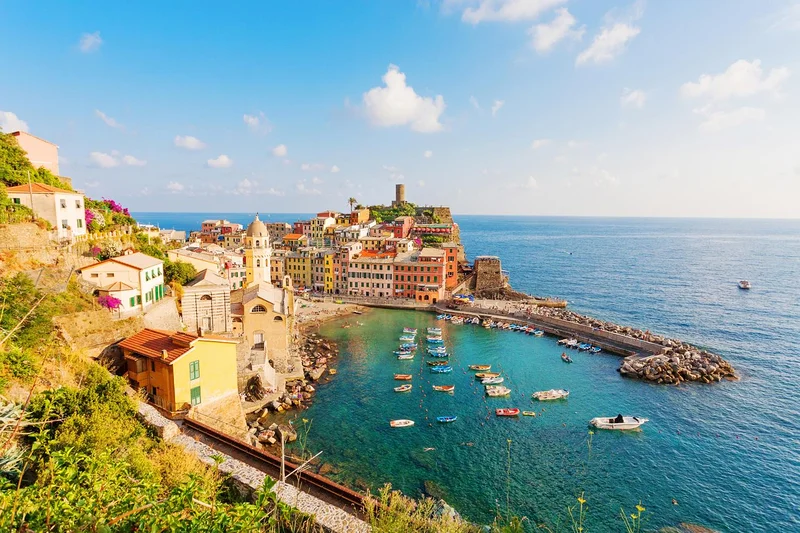
The most famous viewpoint in all the Cinque Terre is right here. From the path leading to Punta Bonfiglio, the pink, yellow, and terracotta tower houses seem to tumble in neat rows toward the sea. The light changes everything. In the early morning, the facades are soft and pastel, while at dusk they practically catch fire. The best shots happen a few minutes after sunset, when the pinks in the sky blend with the first lights turning on in the windows.
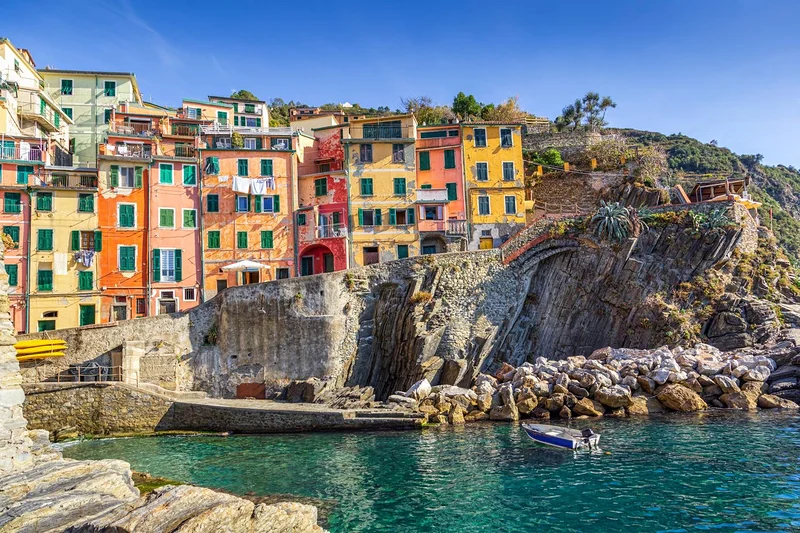
Down below, the marina remains the social hub of the village. You will find a few colorful fishing boats hauled up on the concrete ramp, flat rocks where people sunbathe, and clear water where the brave leap off the rocks. This is not a beach: there is no sand and there are no lounge chairs. It is better than that.
Friendly tip: The Manarola cemetery, just steps from the belvedere, offers a view almost identical to Punta Bonfiglio with a fraction of the crowds. It is also a surprisingly peaceful spot, featuring graves decorated with ceramic photo portraits, as is common in Italy.
The terraced vineyards and the climb to Volastra
Manarola is the Cinque Terre village most deeply tied to winemaking. The surrounding hills are covered in terraced vineyards, cultivated entirely by hand for centuries on slopes so steep that harvesting amounts to an athletic feat. Miniature monorails have been installed to help haul the grapes, but the bulk of the work remains manual.
The hike to Volastra ranks among the finest walks in the region. This tiny hamlet of 200 residents, perched high above Manarola, lives off olive groves and vines. The climb takes about an hour straight up from the village. Along the way, a detour through Groppo lets you visit the Cantina Cooperativa Cinque Terre, the cooperative cellar that produces most of the local wines. Stop in to taste the Cinque Terre DOC, a dry white with herbal notes, and the famous Sciacchetrà, an amber dessert wine made from grapes dried in the sun for 40 days.
From Volastra, trail 586 descends toward Corniglia through the vines with the sea as a constant backdrop. Plan for a solid two hours for this stretch, which is mostly flat or downhill. It is the absolute best way to experience the rural landscape of the Cinque Terre far away from the coastal crowds.
Friendly tip: Start from Volastra and head toward Corniglia rather than the other way around. That way, most of the elevation change is downhill. You can take the ATC shuttle bus from Manarola or Riomaggiore up to Volastra to skip the initial grueling climb.
The upper village: church, alleyways, and utter quiet
The upper section of Manarola, above Via Renato Birolli, is a place most day visitors never see. San Lorenzo Church, founded in 1338 in the Ligurian Gothic style, overlooks a small square with sweeping views over the rooftops. Across from the church, a detached octagonal stone bell tower doubles as an old watchtower.
The surrounding alleys are quiet, lined with colorful shutters and wild grapevines overhead. This part of the village holds the deepest history. Manarola dates back to the 12th century, when settlers from Volastra chose this promontory as a lookout post against pirates. The village later belonged to the lords of Carpena, the bishop of Luni, and eventually the Fieschi family of Genoa. In fact, Sinibaldo Fieschi was born right here before becoming Pope Innocent IV, the pontiff who excommunicated Emperor Frederick II.
Where to eat and drink in Manarola
Two spots dominate the scene and are worth planning your entire day around. Nessun Dorma, set on a cliffside terrace overlooking the marina, has become one of the most photographed locations in Italy. The menu features no pizza or pasta, focusing instead on fresh tomato bruschetta boards, local cured meats and cheeses, all washed down with a limoncino spritz served in a glass jar. Their mortar pesto-making classes are hugely popular. Reservations are not accepted, so you will need to queue up, especially in the late afternoon.
For a proper seafood meal, Trattoria dal Billy sits near the top of the village with terrace tables looking straight out over the bay. House classics include seafood squid ink pasta and tuna steak. The setting matches the quality of the food. Reservations are mandatory at least a day ahead. On a tight budget, the Panificio Rosi bakery sells warm, filled focaccia for just a few euros, perfect for a picnic right on the harbor rocks.
Where to stay in Manarola and nearby
Accommodations in Manarola consist almost entirely of guesthouses and small apartments. There are no major hotels and no resorts. Among the reliable choices, Ca' D'Andrean is central and modern, Affittacamere Da Paulin offers rooms and apartments with Wi-Fi and air conditioning, and Su per i Coppi works well for tighter budgets. Book as far in advance as possible for the summer months when supply is tight and prices spike.
To save money without sacrificing the experience, La Spezia and Levanto make the best alternative bases. La Spezia is less than 10 minutes away by train, with hotel rates two to three times lower. Levanto adds a proper beach and a classic seaside resort town vibe.
How to get to and around Manarola
The train is king. From La Spezia Centrale, Manarola is about a 10-minute ride on the Cinque Terre Express. From Pisa, expect about an hour and a half with a transfer in La Spezia. From Florence, it takes 2.5 to 3 hours. From Genoa, plan for roughly 1.5 hours via Levanto. Single village-to-village tickets cost $5.70 to $12* in peak season.
For international travelers flying into Italy, flights into Pisa or Genoa serve as the most practical gateways. The Cinque Terre Treno MS Card, ranging from $22 to $37* depending on the season, covers unlimited train travel between La Spezia and Levanto plus access to the park's paid hiking trails. Remember to validate your paper ticket in the yellow machines before boarding the train.
When to go
The sweet spot for visiting runs from mid-May to late June and from September to mid-October, bringing gorgeous light, pleasant temperatures, and manageable crowds. July and August are stifling and packed. Manarola also features a rare winter draw: its giant nativity scene illuminates the hillside from early December to mid-January, turning the village into an unexpected holiday destination. Expect very few tourists during this window, low prices, and a wonderfully unique atmosphere.
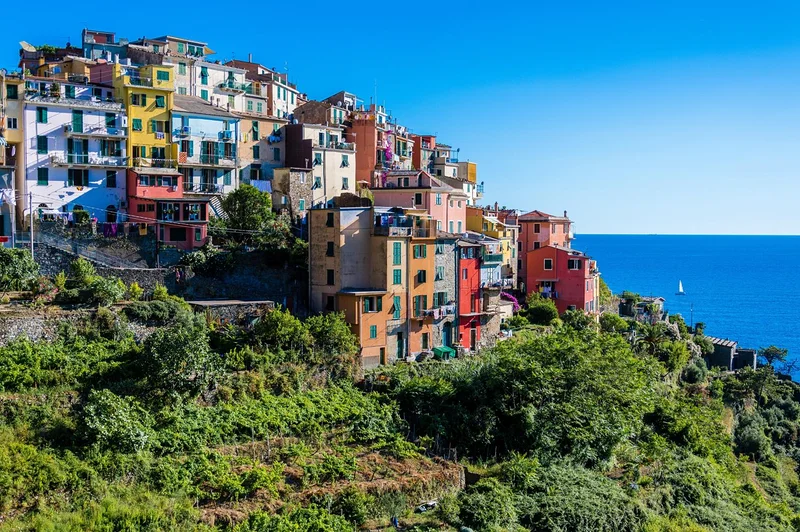
I can confirm that the view from the cliff lives up to its reputation! The sunset is magnificent. To enjoy the view, I recommend doing at least the trail that connects it to Riomaggiore. The walk is neither difficult nor very long. Also, be sure to enjoy the local specialties, which are absolutely delicious.