
Visiting Genoa
They call it la Superba, and few cities can claim to be as visually arresting as Genoa. The capital of Liguria pulls you in with an incredibly dense history. Its streets function as an open-air museum filled with palaces, grand squares, and opulent architecture. Once a dominant maritime republic with an empire stretching across the Mediterranean and Black Seas, this city of shipbuilders and navigators was a fierce rival to Venice. It has successfully balanced its deep-rooted cultural heritage with modern amenities, establishing itself as a serious destination for food lovers. This is the city of Christopher Columbus, and it retains a sense of wonder in every corner.
A Cradle of Grand Architecture
Piazza de Ferrari serves as the heart of Genoa. It is the best starting point to explore both the 113-hectare historic center and the modern districts, and it features its famous bronze monumental fountain dating back to 1936. Surrounding the square, iconic buildings stand with authority, such as the Teatro Carlo Felice from 1827 with its original columns and the Palazzo della Nuova Borsa, a fine example of Genoese Art Nouveau. Just a few steps away, you will find the side facade of the massive Palazzo Ducale, residence of the Doge since 1339. This complex includes its "People's Tower", the Grimaldina, which once served as a prison and now houses incredible exhibition spaces.
The maze of narrow alleys, known as caruggi, defines the medieval quarter. Luxurious buildings, churches, monuments, and small Gothic architectural gems create a unique atmosphere here. On Via Garibaldi, you hardly know where to look. This street is a UNESCO World Heritage site, defined by the opulence of the Renaissance and Baroque eras. The prestigious Palazzi dei Rolli, noble residences from the 16th and 17th centuries, compete in elegance and luxury. There are 42 of them, including those on Via Lomellini and Via Balbi.
The Royal Palace (Palazzo Reale) is one of the most extraordinary museums in Europe, featuring state rooms, a hall of mirrors, a terrace overlooking the city, and exotic gardens. Masterpieces could not ask for a more beautiful setting. Nearby, the Cathedral of San Lorenzo with its incredible striped facade of black and white marble, guarded by sculpted lions, is another local masterpiece. It blends various architectural styles due to multiple reconstructions, and its interior, filled with Gothic columns, is equally lavish. The chiesa del Gesu, an ultimate ode to the Baroque with its paintings and frescoes, the Embriaci Tower, and the Porta Siberia, a remnant of the 1551 city walls, are just a few more highlights. The Musei di Strada Nuova further prove that Genoa shines with countless splendors.
A Flavorful City
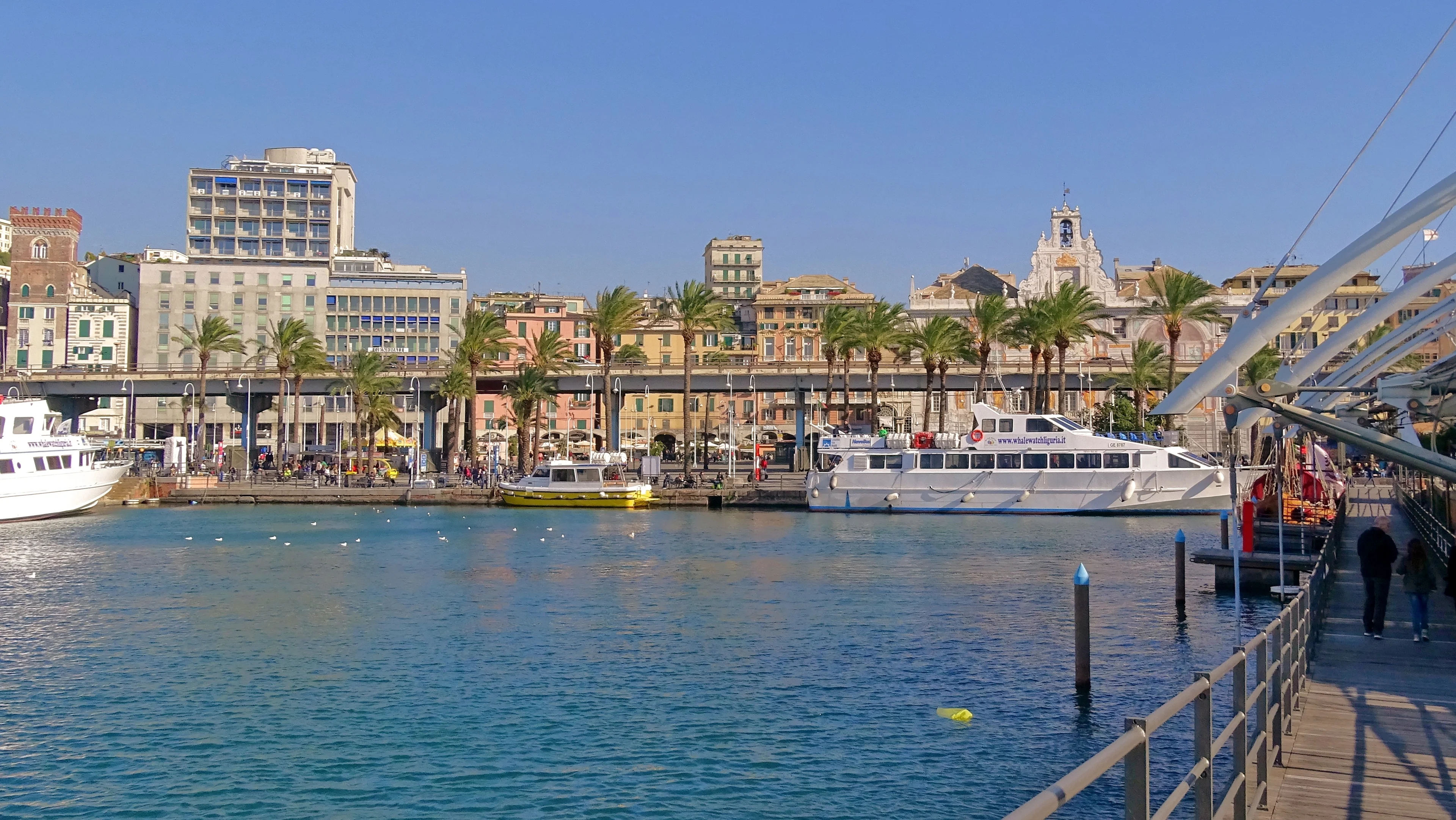
In this quintessential port city, the Porto Antico district has taken a modern turn and is one of the most social spots in town. On the water, you will find the striking Galeone Neptune, a replica of a pirate ship, and the Bigo elevator, which offers a panoramic view. The Palazzo San Giorgio with its beautiful painted facade serves as the port authority building. At the end of the port, in the former Quai Spinola, you will find the Genoa Aquarium. It is one of the most impressive in Europe, with 70 tanks and 12,000 animals, including cetaceans. Standing 76 meters tall on a 40-meter rock, the Lanterna is the oldest active lighthouse in the world and the tallest in the Mediterranean. Climbing into the hills, the Belvedere district is home to the Genoese forts, as well as vegetable gardens and orchards. However, the city would not be complete without its famous gastronomy.
At the top of the list is the famous pesto alla genovese, which is right at home here, made with DOP basil, parmesan, and sometimes pecorino, served with focaccia. Ravioli al tocco and pasta served with walnut sauce are on every menu. The proximity to the sea provides excellent fish stews, salt-cured anchovies, and fried pignolini. Pastries follow the same traditional spirit, especially the famous pandolce. In the heart of the XX Settembre avenue, the Oriental Market of 1899 gathers producers from all regions under its halls, making it the epicenter of these local flavors.
A few minutes from the center, beach clubs and public beaches await, notably in the Nervi district. Just 3 km away, the fishing village of Boccadasse, with its colorful houses overlooking the sea, makes for a superb excursion.
When to go
With a Mediterranean climate, mild weather is the norm year-round. From April to October, the conditions are ideal for exploring Genoa. Tourism peaks in July and August, months you might want to avoid for a more relaxed experience. Cultural events keep the city lively throughout the year.
How to get there
The city's airport is located 6 km from the city center, with the Volabus shuttle providing a connection. Trains and buses are also viable options, especially if you are arriving from the south of France. Genoa is located 175 km from the French border and is well-connected by four major highways.
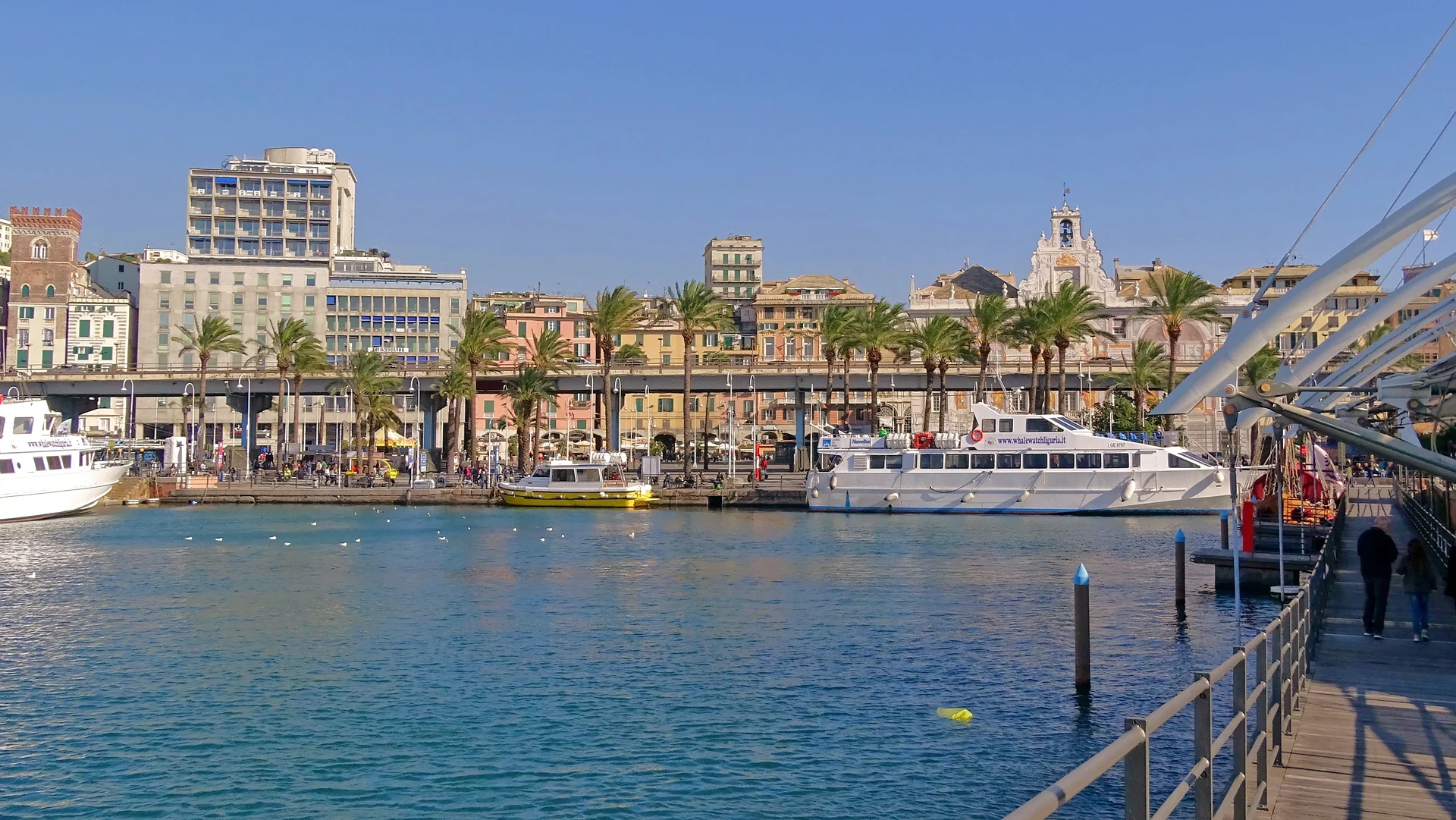
Genoa is a wonderful surprise, raw and rebellious, this port city is passed through much too quickly! I was completely charmed by its old town, so well hidden behind its highway barrier. You have to take the time to explore its narrow streets lined with faded palazzos (some of which are being restored). Huge favorite for Via Garibaldi and its majestic palaces.