
Vernazza, the Cinque Terre village that almost disappeared
On October 25, 2011, a 13-foot wall of mud swallowed the narrow alleys of this village in less than an hour. Cars were swept into the sea, the main piazza vanished under debris, and three people lost their lives. The damage exceeded 100 million euros (about $108 million).
The residents could have walked away. Instead, they chose to rebuild it all, stone by stone, shop by shop. Today, if you know where to look, you can still see the high-water marks from the mud on the streetlamps along the Via Roma. The harbor, restored to its original colors, remains one of the most photographed spots in the entire Mediterranean.
The most beautiful village in the Cinque Terre, and the most vertical
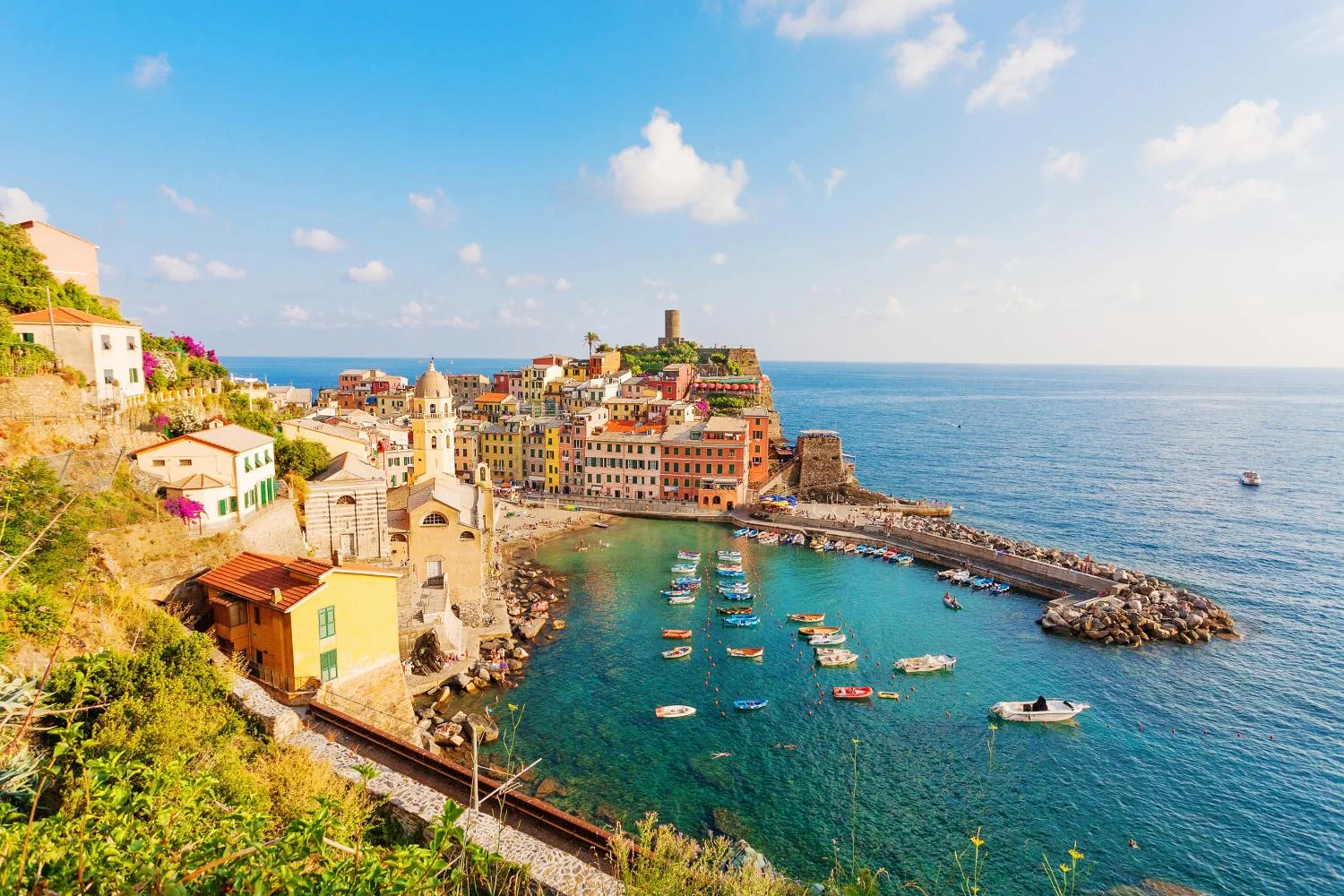
This is the favorite village of Rick Steves, the American travel authority who played a major role in putting the Cinque Terre on the global tourism map. Its natural harbor, the only one among the five villages, its Genoese tower houses, and its medieval castle create a scene that feels almost surreal. Photographers, couples on vacation, and coastal hikers will find exactly what they are looking for here.
But let us be clear. This village is built vertically. Nearly every accommodation requires climbing steep, narrow stairs, with no elevators or luggage assistance. The streets are not wheelchair accessible. Navigating with a rolling suitcase is a challenge. For travelers with limited mobility or families with strollers, Monterosso is a much more comfortable choice.
A tiny village, massive crowds
With fewer than 600 permanent residents, the village absorbs thousands of visitors daily during high season. The Via Roma, the only thoroughfare connecting the train station to the harbor, becomes gridlocked between 11 a.m. and 4 p.m. The vast majority of visitors are day-trippers. The key to enjoying the place is to stay overnight, taking advantage of the village early in the morning and after 6 p.m., when the last ferry has departed and the golden light hits the facades.
Prices that match the reputation
Expect to pay 150 to 300 euros per night ($160, $325) in high season for a decent apartment, 30 to 50 euros ($32, $54) per person for a restaurant meal, and 2 euros ($2.15) for entry to Castello Doria. The Cinque Terre Treno Card costs between 19.50 and 32.50 euros ($21, $35) per day depending on the season. Prices drop significantly in May and October.
The harbor and the piazza: the beating heart of the village
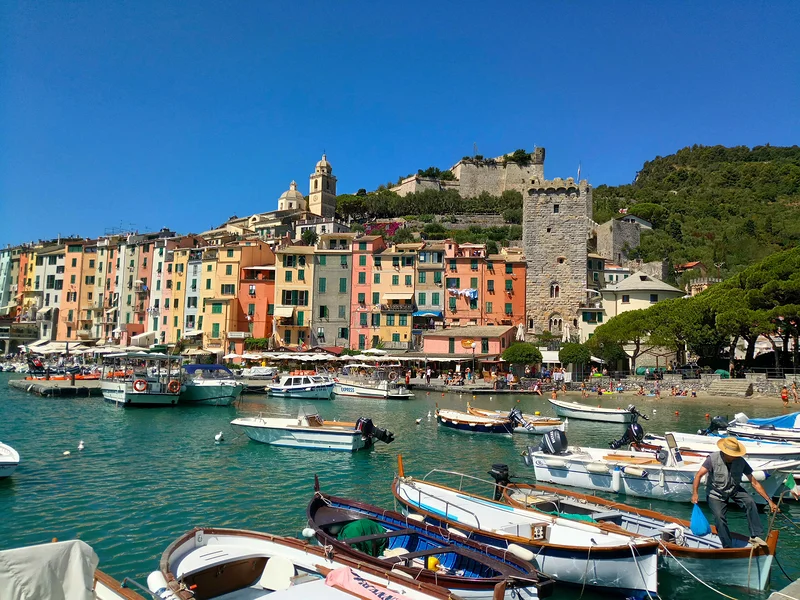
Everything converges on Piazza Marconi, the small triangular square opening onto the harbor. This is where fishermen still pull their colorful boats onto the shore during storms, sometimes dragging them right into the middle of the square. Restaurant terraces set up here as soon as the weather turns warm, facing the sea.
The Church of Santa Margherita d'Antiochia, built in 1318 in the Ligurian Gothic style, juts out on a rocky promontory above the waves. Legend has it that a chest containing the bones of Saint Margaret washed up on this beach, marking the location for the building. Its octagonal bell tower, separated from the main structure, has become one of the most recognizable symbols of the entire Ligurian Riviera. The main entrance, on the sea side, is the least obvious, as most visitors enter through the apse on the square side.
Pro tip: a small hidden beach, accessible through a short tunnel carved into the rock near the harbor, appeared after the 2011 floods. Wilder and rockier than the main harbor beach, it offers a bit of quiet even in mid-summer.
Castello Doria and its thousand years of watch
Perched on a rocky spur 230 feet above the sea, Castello Doria is the oldest preserved fortification in the Cinque Terre. Its core dates back to the 11th century, when the Obertenghi marquises controlled eastern Liguria. The central cylindrical tower served as a lookout against the pirates who raided this coast for centuries. Its nickname, Belforte, means "the place of loud cries," as guards would shout to alert the village of approaching enemy ships.
During World War II, the Germans converted the underground rooms into air-raid bunkers. Entry costs 1.50 euros ($1.60), and the terrace at the top offers a 360-degree view of the village, the harbor, and the coastline. In clear weather, you can see Corsica. The castle is open from 10 a.m. to 9 p.m. in summer, and 10 a.m. to 7 p.m. the rest of the year.
The climb to the Reggio sanctuary: the other hike
The Sentiero Azzurro between Corniglia and Monterosso passes through the village, but another walk deserves your attention. The trail to the Sanctuary of Nostra Signora di Reggio climbs for 1.2 miles through olive groves and terraced vineyards to a shaded esplanade at an altitude of 1,030 feet. Allow a solid hour for the climb, which is steep in places, and 40 minutes for the descent.
The sanctuary was first mentioned in 1248, but the site was already occupied in Roman times. The interior houses a painting of the Black Madonna and Child, venerated since 1615 following healings considered miraculous. On the esplanade, an 800-year-old cypress tree, listed as one of Italy's monumental trees, overlooks a quiet space with a fountain, benches, and a small self-service refreshment stand. It is the perfect counterpoint to the bustle of the village below.
Pro tip: this hike is free, unlike the Sentiero Azzurro. Start early in the morning from the train station by taking the Pastenello stairs, and stop at the cemetery along the way for a sweeping view of the village.
The high alleys: where the locals still live
Most visitors never leave the Via Roma and the harbor square. Yet the caruggi, the steep alleys climbing from the main street toward the upper village, harbor what remains of local daily life. Laundry hangs between facades, cats nap on steps, and tiny votive altars are tucked into stone walls. The north side, called Lùvegu in the local dialect, means "the damp side," where walls are thicker, passages are darker, and the atmosphere is more secretive.
It is also in these heights that a few stubborn winemakers hide. Bartalo Lercari still maintains terraced vineyards above the village, producing Cinque Terre wine on the cliffside. Some of these plots, damaged by the 2011 floods, were rebuilt meter by meter.
Where to eat and drink in Vernazza?
Ristorante Belforte, set within the walls of an 11th-century tower literally carved into the rock, has overlooked the sea for over 50 years. Its terraces tiered on the cliff offer a unique setting, and the food is solid: homemade trofie al pesto, Monterosso anchovies served as antipasti, and the catch of the day. Prices are high and reservations are required, but the experience justifies both.
For a simpler meal, Pippo a Vernazza offers fresh pasta and stuffed focaccia for street food-style takeout, using plastic-free packaging. Il Gambero Rosso, with a terrace directly on the harbor square, serves good local fish dishes with a view of the boats. In the morning, head to Il Pirata delle Cinque Terre, run by two brothers, for breakfast with fresh cannoli and a cappuccino.
Pro tip: Ristorante Bar La Torre, in the heights of the village, offers a panoramic view that rivals the one from Castello Doria, all with a glass of Cinque Terre DOC in hand. Book well in advance.
Where to stay in Vernazza and the surrounding area?
La Mala is a small boutique hotel with terraces facing the sea, regularly cited as one of the best addresses in the village. Gianni Franzi offers rooms and apartments in the historic center with varying levels of comfort and price. For those on a tight budget, options are limited: the rare rooms under 100 euros ($108) are booked months in advance.
A smart alternative: stay in Levanto, 8 minutes away by train, where you will find a sandy beach, more accommodation choices, and significantly lower prices. La Spezia, 18 minutes away, remains the most economical option for exploring the entire region without breaking the bank.
How to get to and around Vernazza?
The train is the only reasonable way to travel. From La Spezia Centrale, it takes 18 minutes. From Levanto, 8 minutes. From Genoa, about 90 minutes with one transfer. From Pisa, 90 minutes to 2 hours via La Spezia. The closest airports are in Pisa and Genoa.
Avoid driving: tourists are not allowed to enter the village by car, and the parking lot 1 km away costs about 20 euros ($22) per day with a shuttle running from 8 a.m. to 8 p.m. The ferry connects the villages during the season and offers the most beautiful approach to the coast from the water.
When to go?
The best time to visit is from mid-May to the end of June and from September to mid-October: the light is ideal, temperatures are pleasant, trails are accessible, and the crowds are manageable. On July 20, the feast of Saint Margaret of Antioch, the village patron saint, turns the streets into a procession with music, fireworks, and a community dinner in the square. Avoid the height of summer: in August, the village far exceeds its capacity.
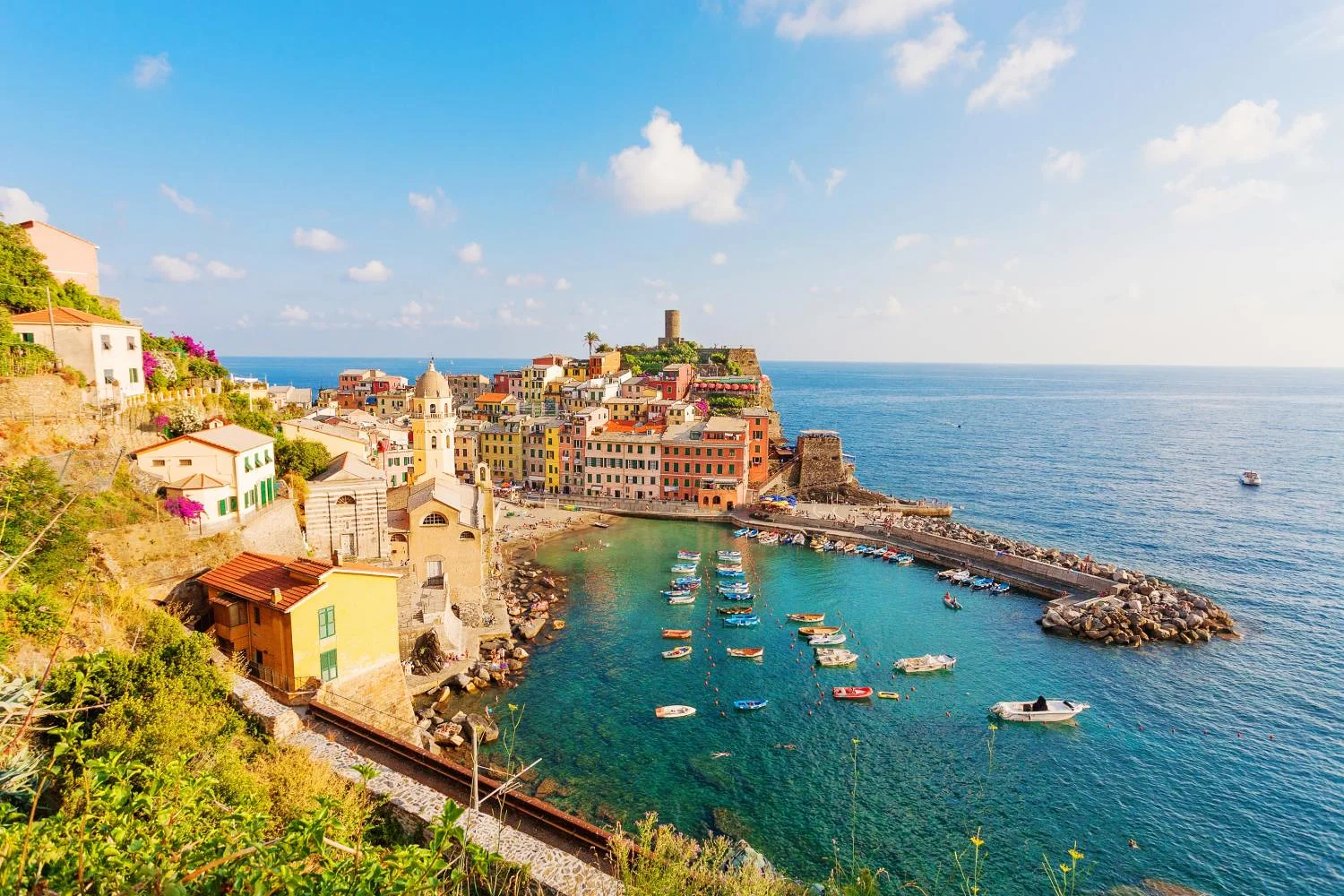
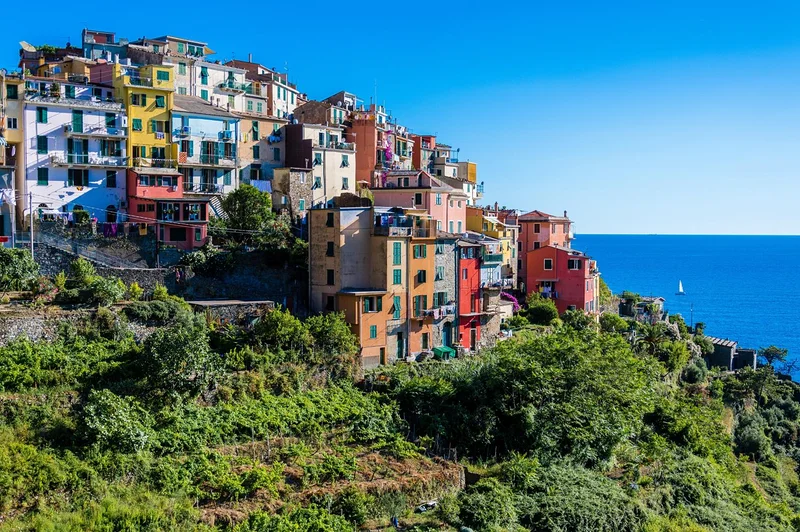
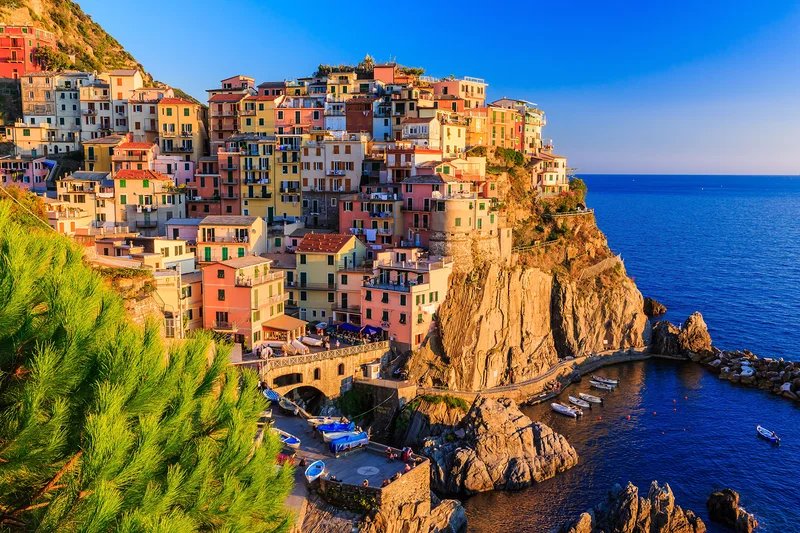
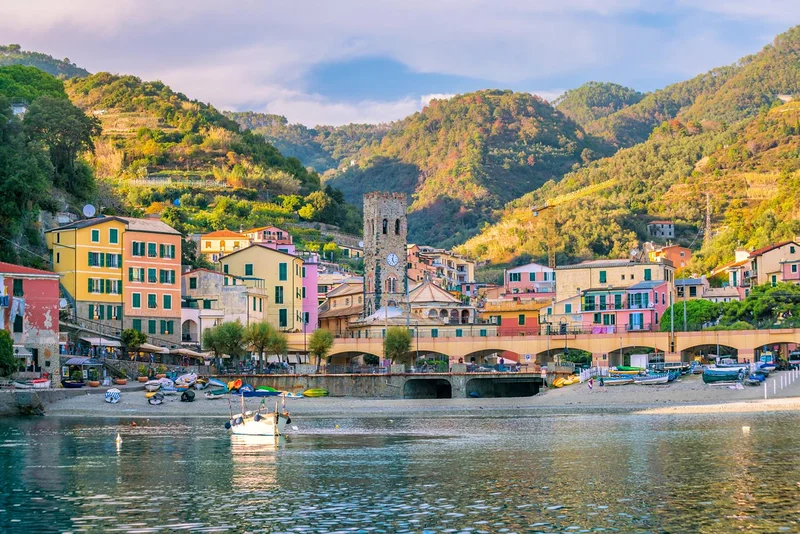
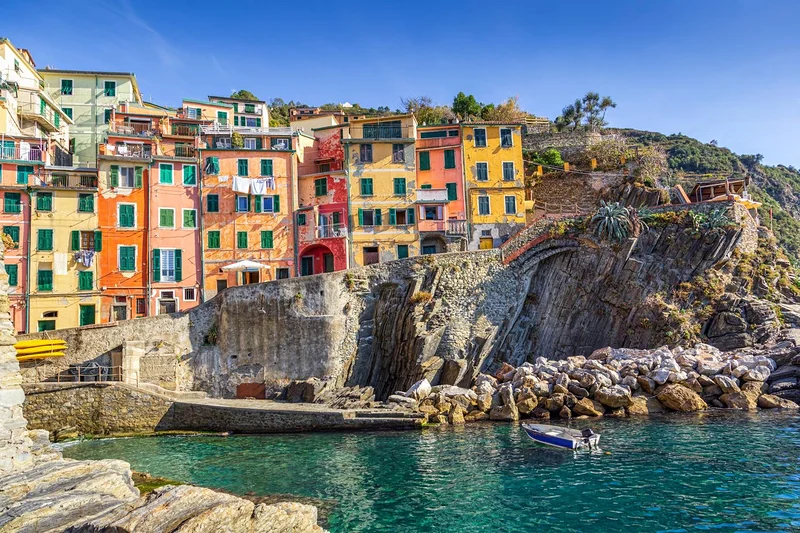
My favorite village in the Cinque Terre. It offers sublime landscapes, but it is overcrowded during the summer vacation.
Try to come in the off-season, the experience is different.