
Manarola, the village where you will lose track of your train
A former railway worker named Mario Andreoli spent over thirty years of his life building, entirely on his own, the world's largest Christmas nativity scene on the hill overlooking the village. It features more than 300 statues made from recycled materials and 15,000 bulbs powered by solar panels. Mario passed away in 2022, but every December, his display still lights up at sunset.
This story is a perfect summary of Manarola: a tiny, stubborn place where people create oversized things with modest means. The second smallest village of the Cinque Terre, perched on a rocky spur above the Ligurian Sea, is also the one travelers find hardest to leave.
Manarola: a favorite for the romantic and the contemplative
This village is built for couples, photographers, and wine lovers. The view from the Punta Bonfiglio lookout is among the most photographed in Italy, and the terraced vineyards surrounding the village produce two of the region's most unique wines.
Hikers will appreciate the trails that climb toward the hamlet of Volastra, winding through vineyards and olive groves. Food lovers will find a small but focused culinary scene anchored by two or three iconic spots.
If you are looking for nightlife, sandy beaches, or a wide variety of water sports, Manarola is not the right choice. The village has no real beach, only a rocky access point to the sea from the marina. There are no nightclubs and no flashy souvenir shops.
That is precisely the appeal. However, the day-trippers who arrive in droves by train between 10:00 AM and 4:00 PM can disrupt that tranquility. The true face of the village reveals itself early in the morning and after the last trains have departed.
A sloping village, car-free and without elevators
Like all villages in the Cinque Terre, Manarola is closed to cars. The streets are narrow, steeply sloped, and everything is done on foot. Travelers with limited mobility will face significant challenges. The closest parking, Park Manarola Loc. Posella, is located above the village, a 15-minute walk downhill. Expect to pay about 20 EUR (around $22) per day for parking. As for safety and comfort, there is nothing to worry about: Italy handles the rest, with its gentle climate and warm hospitality.
Budget: prices aligned with the rest of the Cinque Terre
Expect to pay 120 to 200 EUR (about $130 to $215) per night for a double room in high season, 35 to 60 EUR (about $38 to $65) per person for meals at a restaurant, and 20 to 35 EUR (about $22 to $38) per day for transport with the Cinque Terre Treno Card. Off-season, prices drop by 30 to 50 percent, and the atmosphere gains in intimacy what it loses in guaranteed weather.
The lookout and the marina: the village's visual heart
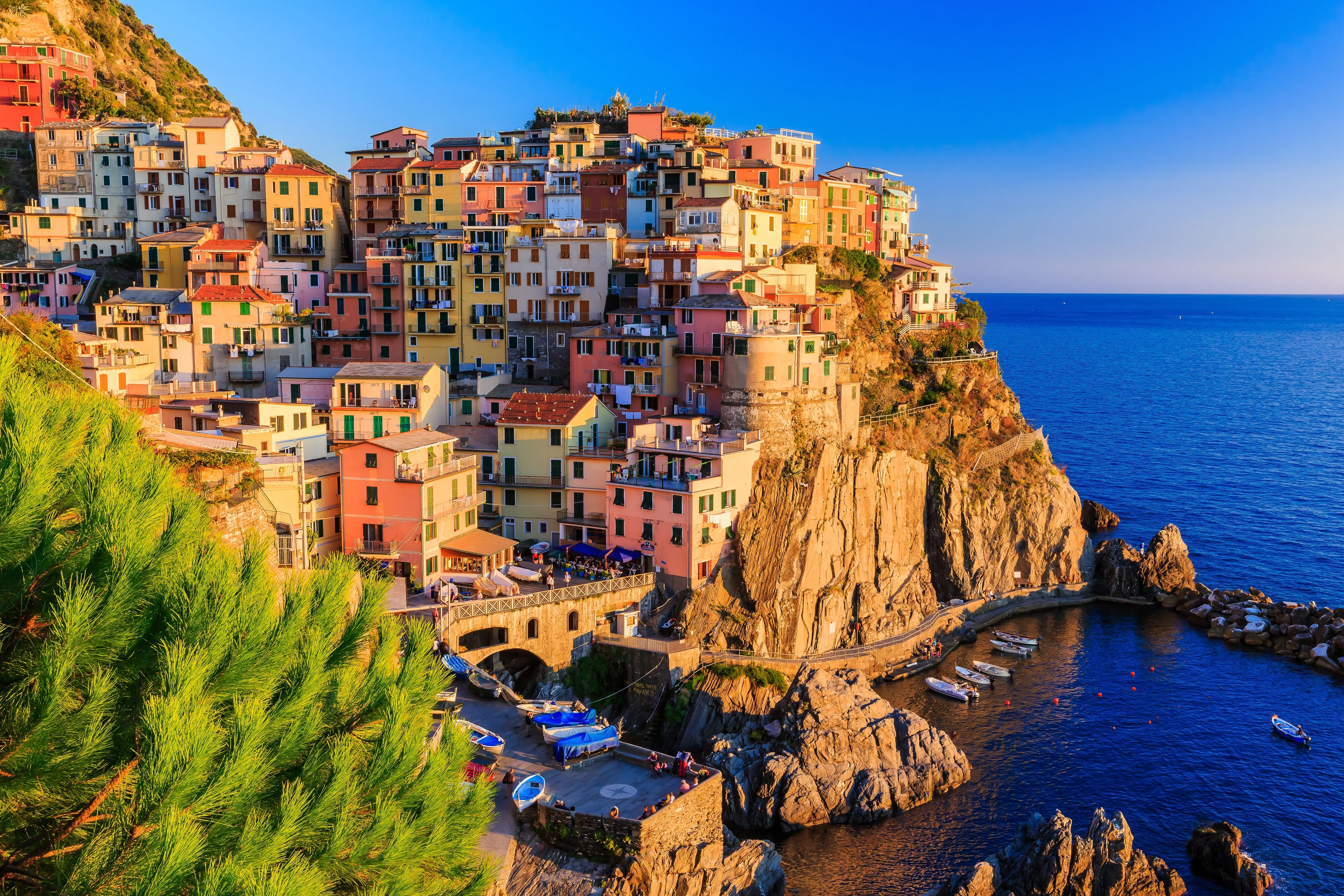
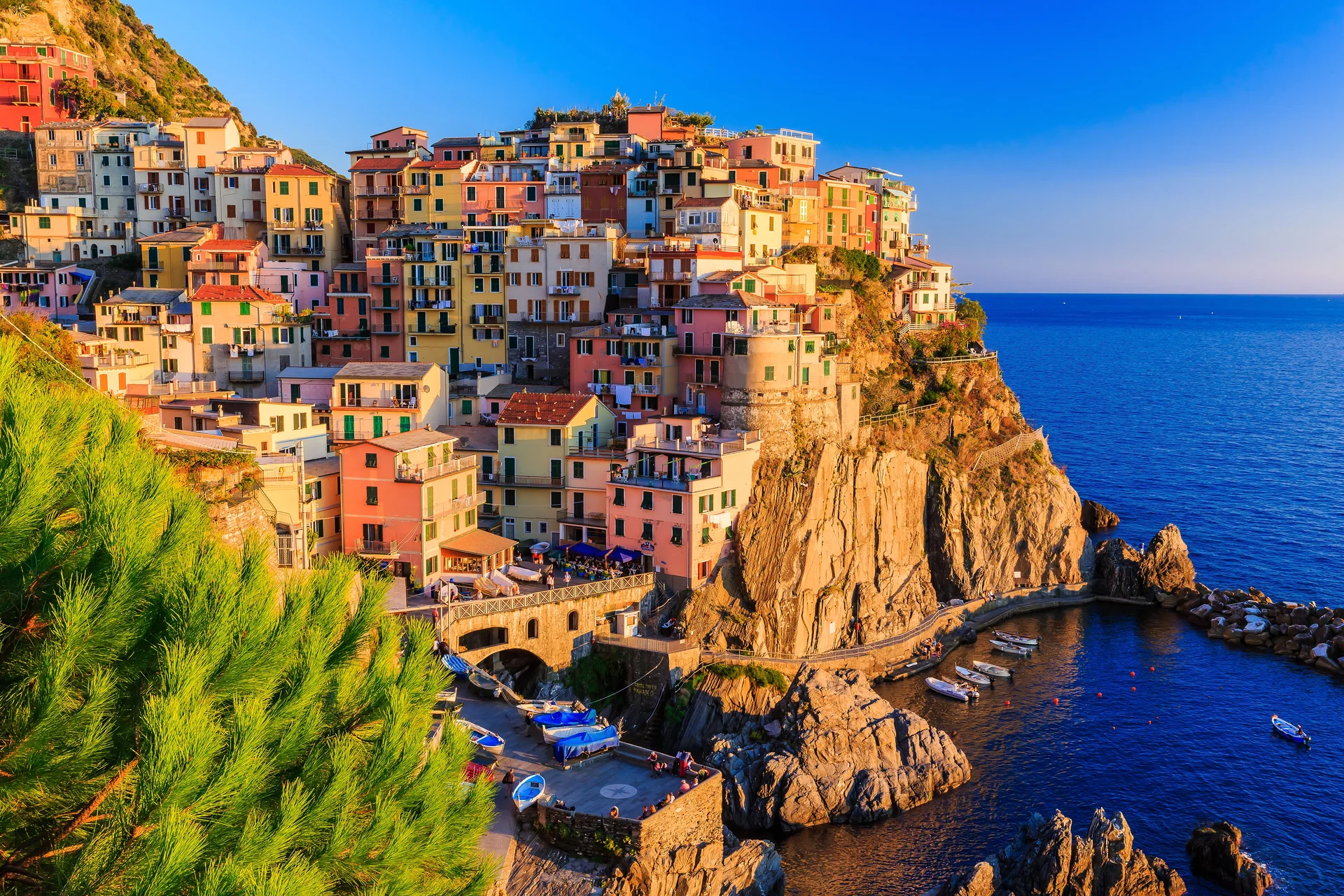
The most famous viewpoint in all of the Cinque Terre is here. From the path leading to Punta Bonfiglio, the pink, yellow, and terracotta tower houses seem to tumble toward the sea in perfect order. The light changes everything: in the early morning, the facades are soft and pastel, while at dusk, they quite literally catch fire. The best shots are taken a few minutes after sunset, when the pinks of the sky blend with the first lights flickering in the windows.
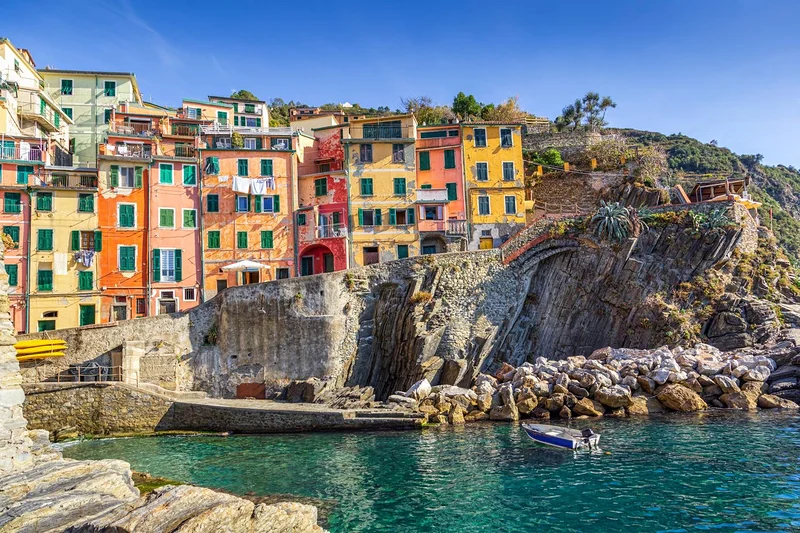
The marina below remains the social heart of the village. A few colorful fishing boats are pulled up the ramp, flat rocks serve as lounge chairs, and the crystal-clear water invites the brave to jump in. It is not a beach: there is no sand and there are no lounge chairs. It is better than that.
Local tip: the Manarola cemetery, a stone's throw from the lookout, offers a view nearly identical to that of Punta Bonfiglio, with far fewer crowds. It is also a surprisingly peaceful spot, with graves adorned with ceramic photos, as is common in Italy.
The terraced vineyards and the climb to Volastra
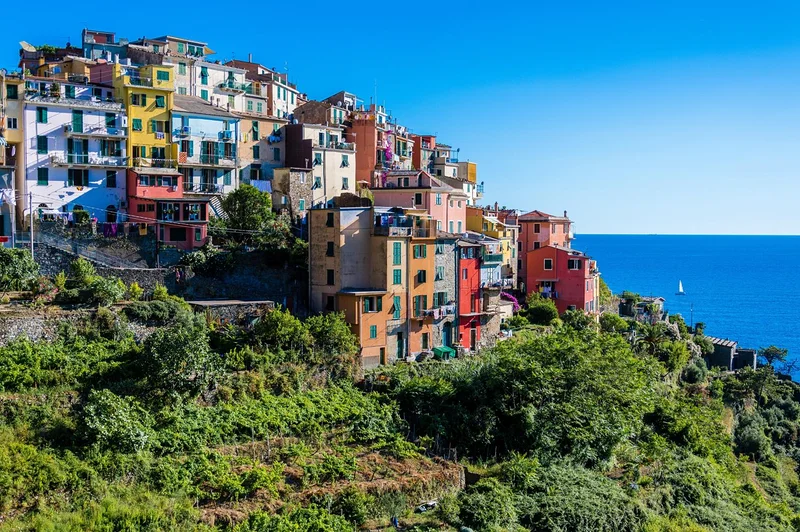
Manarola is the Cinque Terre village most closely tied to viticulture. The hills surrounding it are covered in terraced vines, cultivated by hand for centuries on slopes so steep that harvesting becomes an athletic feat. Miniature monorails have been installed to help transport the grapes, but the bulk of the work remains manual.
The hike to Volastra is one of the most beautiful walks in the region. This small hamlet of 200 inhabitants, perched above Manarola, lives off its olive groves and vineyards. The climb takes about an hour from the village. On the way, a detour through Groppo allows you to visit the Cantina Cooperativa Cinque Terre, the cooperative winery that produces the majority of the region's wines. You can taste the Cinque Terre DOC, a dry white with herbal notes, and the famous Sciacchetrà, an amber dessert wine made from grapes dried in the sun for 40 days.
From Volastra, the sentier 586 trail then descends toward Corniglia through the vines, with the sea as a backdrop. Allow a good two hours for this portion, which is mostly flat before descending. It is the best way to discover the rural landscape of the Cinque Terre away from the coastal crowds.
Local tip: start from Volastra toward Corniglia rather than the other way around. The majority of the elevation change will be downhill. You can reach Volastra via the ATC shuttle from Manarola or Riomaggiore to skip the initial climb.
The upper village: church, narrow alleys, and absolute quiet
The upper part of Manarola, above Via Renato Birolli, is the area most day-trippers never see. The San Lorenzo Church, founded in 1338 in a Ligurian Gothic style, overlooks a small square with a view plunging down over the village rooftops. Facing the church, an octagonal stone bell tower detached from the main building also serves as a watchtower.
The surrounding alleys are quiet, lined with houses featuring colorful shutters and wild grape trellises. It is in this part of the village that one finds traces of a long history: Manarola has existed since the 12th century, when settlers from Volastra chose this promontory as an observation post against pirates. The village later belonged to the lords of Carpena, the bishop of Luni, and then the Fieschi family of Genoa. In fact, Sinibaldo Fieschi was born here, later becoming Pope Innocent IV, the man who excommunicated Emperor Frederick II.
Where to eat and drink in Manarola?
Two addresses dominate the scene and are worth planning your day around. Nessun Dorma, situated on a cliffside terrace above the marina, has become one of the most photographed spots in Italy. The menu features neither pizza nor pasta: you eat boards of bruschetta with fresh tomatoes, platters of local charcuterie and cheeses, all accompanied by limoncino spritz served in a glass jar. The mortar pesto making classes there are a huge hit. No reservations possible: you have to wait in line, especially in the late afternoon.
For a real fish meal, Trattoria dal Billy occupies the top of the village, with terrace tables overlooking the bay. The squid ink pasta with seafood and the tuna steak are the house classics. The setting is as worth the detour as the food. Reservations are essential, at least one day in advance. For a tighter budget, the Panificio Rosi bakery sells warm, topped focaccia for a few euros, perfect for a picnic on the port rocks.
Where to sleep in Manarola and the surrounding area?
Accommodation in Manarola consists almost exclusively of guesthouses and small apartments. No big hotels, no resorts. Among the reliable options, Ca' D'Andrean is central and modern, Affittacamere Da Paulin offers rooms and apartments with Wi-Fi and air conditioning, and Su per i Coppi is suitable for tighter budgets. Book as early as possible in summer: supply is limited and prices soar.
To save money without sacrificing the experience, La Spezia and Levanto remain the best alternative bases. La Spezia is less than 10 minutes away by train, with hotel rates two to three times lower. Levanto offers the added bonus of a real beach and a small seaside town atmosphere.
How to get to and around Manarola?
The train is king. From La Spezia Centrale, Manarola is about 10 minutes away by Cinque Terre Express. From Pisa, allow 1.5 hours with a change in La Spezia. From Florence, 2.5 to 3 hours. From Genoa, about 1.5 hours via Levanto. Single tickets between villages cost 5 to 10 EUR (about $5.50 to $11) in high season.
For travelers, flights to Pisa or Genoa are the most convenient entry points. Expect to pay 50 to 120 EUR (about $55 to $130) round-trip from Paris when booking in advance. The Cinque Terre Treno MS Card, between 19.50 and 32.50 EUR (about $21 to $35) depending on the season, offers unlimited access to trains between La Spezia and Levanto, plus access to the park’s paid hiking trails. Remember to validate your ticket before boarding the train.
When to go?
The best window runs from mid-May to late June and from September to mid-October: superb light, pleasant temperatures, and moderate crowds. July and August are stifling and packed. Manarola also has a rare winter asset: its giant nativity scene illuminates the hill from early December to mid-January, turning the village into an unexpected Christmas destination. Few tourists at this time, low prices, and a unique atmosphere.
I can confirm that the view from the cliff lives up to its reputation! The sunset is magnificent. To enjoy the view, I recommend doing at least the trail that connects it to Riomaggiore. The walk is neither difficult nor very long. Also, be sure to enjoy the local specialties, which are absolutely delicious.