
Pisa, the City That Tilts Toward You
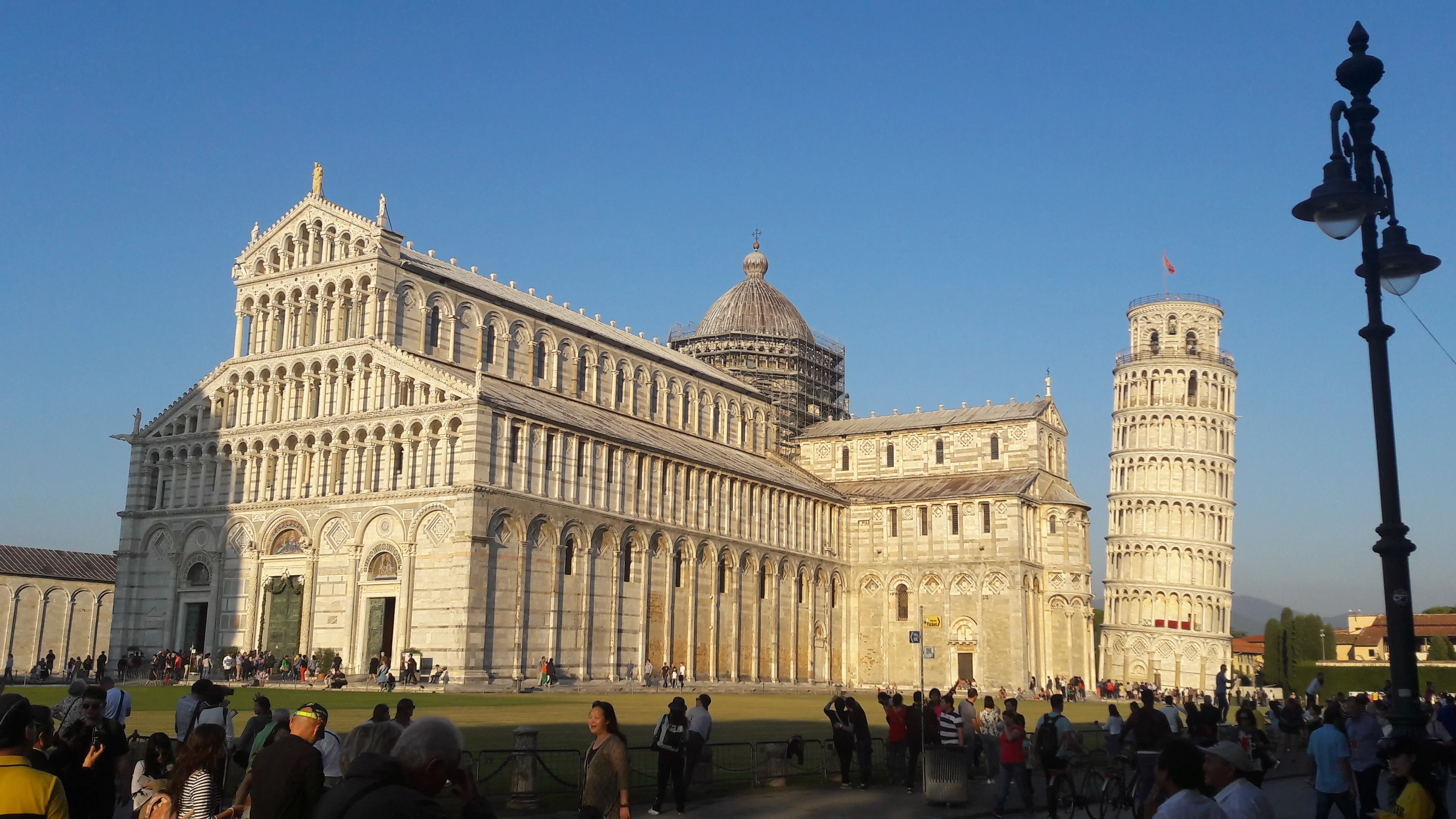
It is 8:00 AM, the low Tuscan light hits the white marble of the Piazza dei Miracoli, and you are almost alone. The hundreds of tourists who will strike the obligatory pose pretending to hold up the tower will not arrive for another hour. For now, the groundskeeper is sweeping leaves, a cat crosses the lawn, and this bell tower leaning at 3.97 degrees gives you the distinct sensation that the whole world is tilting.
Pisa surprises anyone who takes the time to look past the postcard. As a former maritime republic powerful enough to rival Genoa and Venice, the birthplace of Galileo, and a vibrant college town of 90,000 residents crossed by the Arno River, there is plenty to uncover behind the souvenir snapshot.
Pisa: Much More Than a Quick Stop on the Road to Florence
Let's be frank. Most visitors treat Pisa as a two-hour break between a budget flight and Florence. They rush to the tower, snap the photo, grab an overpriced panini at a tourist trap, and leave thinking the city has nothing else to offer. That is a mistake. Pisa is an ideal destination for anyone who loves walkable cities, student energy, medieval art, and great Tuscan food without Florentine price tags.
The city suits cultural travelers, fans of Romanesque and Gothic architecture, and anyone wanting a strategic base to explore western Tuscany. It works well for families too since it is compact, flat, safe, and easy to navigate on foot.
Who Might Be Disappointed by Pisa
If you are looking for high-energy nightlife, picture-perfect beaches, or luxury shopping, you took a wrong turn. The party scene is strictly student-oriented and low-key. The closest beach, Marina di Pisa, is a pleasant pebble shore but falls short of Amalfi Coast resort standards. If you only give Pisa half a day, you will likely leave remembering only the crowds jammed around the tower.
Practical Side: An Easy City to Navigate
Pisa is safe, compact, and entirely walkable. From the Pisa Centrale train station, expect a 20-minute walk to reach the tower. Italian is the dominant language, but English is widely spoken in tourist areas. The climate is Mediterranean with hot, dry summers and mild winters. The only downside is July and August, which bring stifling heat and heavy crowds.
A Very Reasonable Budget for Tuscany
Pisa is noticeably cheaper than Florence or Siena. Plan for between $68 and $113* a night for a decent double room, $12 to $23* for a full meal outside the tourist zone, and about $31* for the combined tower and monument ticket at the Piazza dei Miracoli. A daily budget of $90 to $135* per person lets you enjoy the city comfortably.
The Piazza dei Miracoli and Its Monuments: The Initial Impact
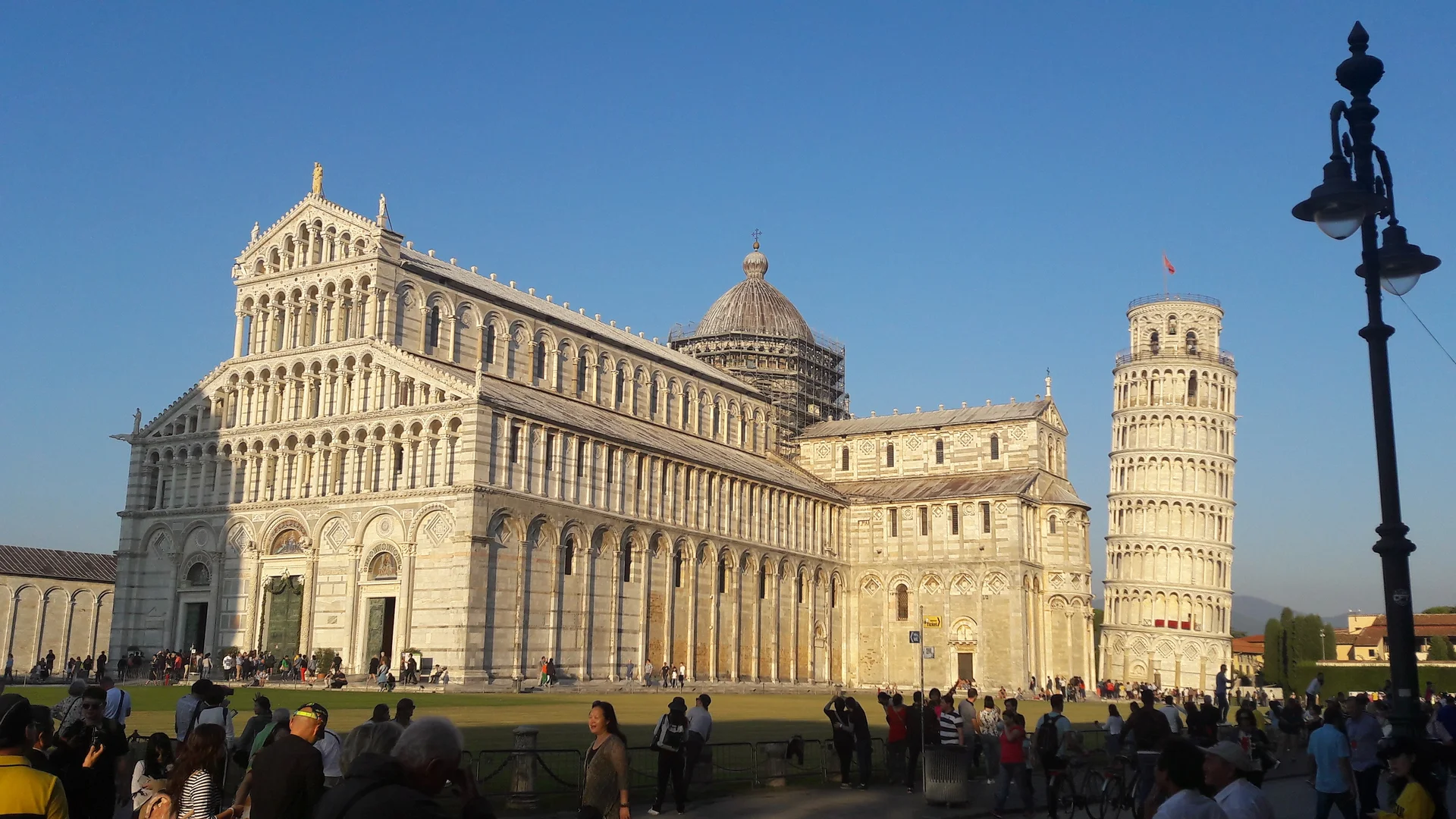
Even when you know the image by heart, your first encounter with the Piazza dei Miracoli hits hard. This green rectangle bordered by white marble brings together the cathedral, the baptistery, the monumental cemetery, and the famous leaning tower. Built between the 11th and 14th centuries to celebrate Pisan naval power, the entire complex is a UNESCO World Heritage site.
The Santa Maria Assunta Cathedral is a masterpiece of Pisan Romanesque style, featuring a Byzantine mosaic in the apse and a gilded ceiling added by the Medici family. Admission is free with a timed-entry slot. The Baptistery, the largest in Italy, impresses with extraordinary acoustics where guards regularly run sound demonstrations that give you goosebumps. As for the Camposanto, this monumental cemetery holds Greco-Roman sarcophagi and 14th-century frescoes, including a striking Triumph of Death.
Friendly tip: buy the $31* combination ticket directly on the official website of the Opera della Primaziale Pisana. It includes climbing the tower and access to all the monuments. The ticket for just the tower already costs $23*, so the combo pays for itself quickly. Come early in the morning or late in the afternoon for better light and much smaller crowds.
The Historic Center: Where Pisa Becomes Pisan
Leave the Piazza dei Miracoli via Via Santa Maria and head toward the river. Within minutes, the souvenir peddlers disappear and the city changes character. This is the Pisa of students, markets, and evening apéritifs along the Arno.
Piazza dei Cavalieri and the University District
The Piazza dei Cavalieri, the city's second-largest square, serves up a heavy dose of power and history. The Palazzo della Carovana, decorated by Giorgio Vasari in the 16th century, now houses the prestigious Scuola Normale Superiore, founded by Napoleon on the model of Paris's École Normale Supérieure. Right across the way, the Palazzo dell'Orologio links two former medieval towers. Count Ugolino della Gherardesca, immortalized by Dante in the Inferno, was locked in one of them and starved to death with his sons.
Next, walk down Borgo Stretto, the liveliest pedestrian street in the center. Cafes, bookstores, and boutiques line the medieval arcades. The pace slows down here, offering the vibe of a city living for itself rather than for visitors.
The South Bank of the Arno: Via San Martino and Piazza della Pera
Cross the Ponte di Mezzo and head to Via San Martino, a street locals love. You will find almost zero tourists here, featuring medieval and Renaissance facades, neighborhood restaurants like Numero Undici where you sit at large communal tables, and quiet wine bars. At the end of the street, Piazza della Pera (officially Piazza Gambacorti) gets its nickname from an Etruscan pear-shaped votive stone visible at the entrance of the square. It serves as the main hangout for local youth during aperitivo hour.
The Surprises Guidebooks Often Forget
The Chiesa di Santa Maria della Spina sits right on the bank of the Arno as a miniature Gothic marvel. Built in the 13th century to house a thorn from Christ's crown, its facade displays astonishing detail mirrored in the river. It is a quick stop, and the walk there runs along the Arno away from the crowds.
On a wall of the Chiesa di Sant'Antonio Abate on the south side of town stands Tuttomondo, a massive mural painted by Keith Haring in 1989. It is his final public work. Thirty colorful figures form an ode to world peace, creating a striking contrast with the medieval marble of the rest of the city.
For a unique vantage point, walk the medieval ramparts (Mura di Pisa). These 12th-century fortifications offer a rare perspective on the tower and the city rooftops. The full path runs 8.5 km, but you can walk just a portion of it. Admission costs about $5.70*.
Friendly tip: Piazza delle Vettovaglie, a marketplace since the Middle Ages, hosts a fresh produce market every weekday morning. It also gathers the most affordable bars and eateries in town, frequented almost exclusively by students. It is ideal for a quick lunch or a budget-friendly aperitivo.
Outside the Walls: Nature and Excursions
The San Rossore Natural Park stretches from Pisa all the way to the coast. You can explore it on foot, by bike, or via horse-drawn carriage. It provides an unexpected green lung with pine forests, dunes, and rich biodiversity. For a half-day trip, the Certosa di Calci, a monumental 1,500-room charterhouse located 13 km from Pisa, is worth the detour. It houses a natural history museum and an old pharmacy.
The city of Lucca sits 25 minutes away by train, making it the perfect day trip. Its 16th-century ramparts can be explored by bicycle, and its medieval center ranks among the best-preserved in Tuscany.
Where to Eat and Drink in Pisa
Rule number one: flee the restaurants surrounding the Piazza dei Miracoli. Prices run high and quality rarely matches. Walk five minutes toward the center and everything changes.
You must try the local specialty, cecina: a thin chickpea flour pancake that is crispy at the edges and tender in the middle, served piping hot with freshly ground black pepper. At Montino, a Pisan institution, they serve it alongside pizza al taglio for a few euros. Another cult address for cecina is Da Nando on Corso Italia.
For a sit-down meal, I Porci Comodi serves top-tier Italian charcuterie and cheese boards alongside generous sandwiches. La Grotta on Via San Francesco is a classic for homemade pasta and Tuscan cooking set under stone arches. For dessert, do not miss torta co' bischeri, a traditional Pisan cake made with rice, chocolate, pine nuts, and candied fruit. For gelato, La Bottega del Gelato on Piazza Garibaldi serves two scoops for $2.30*.
How to Get to and Around Pisa
Galileo Galilei Airport serves as the main gateway to Tuscany. Numerous low-cost carriers fly there from France, notably Ryanair and easyJet out of Paris, Lyon, Marseille, or Bordeaux. Expect round-trip fares between $34 and $90* when booking in advance. The airport sits just 2 km from the center, meaning a 15-to-20-minute walk or a short bus ride.
From Florence, the regional train takes about 1 hour (costing between $9 and $12*). From Lucca, a 25-minute train ride does the job. By car, the A11 highway connects Florence to Pisa in roughly 1 hour and 15 minutes. Once you arrive, everything happens on foot. The center is compact and largely pedestrianized.
When to go
The best windows are May-June and September-October, bringing mild temperatures, gorgeous light, and manageable crowds. Locals especially recommend June. Avoid July and August if possible since the heat is punishing, prices spike, and the Piazza dei Miracoli overflows with people. Winter is mild, but certain sites shorten their hours.
If you are coming to Florence, I recommend a quick trip to Pisa, which is easily accessible by train. While the city is smaller than Florence, it has several must-see monuments, including the famous Leaning Tower of Pisa. I suggest spending the day there if you want to visit the main sights.