
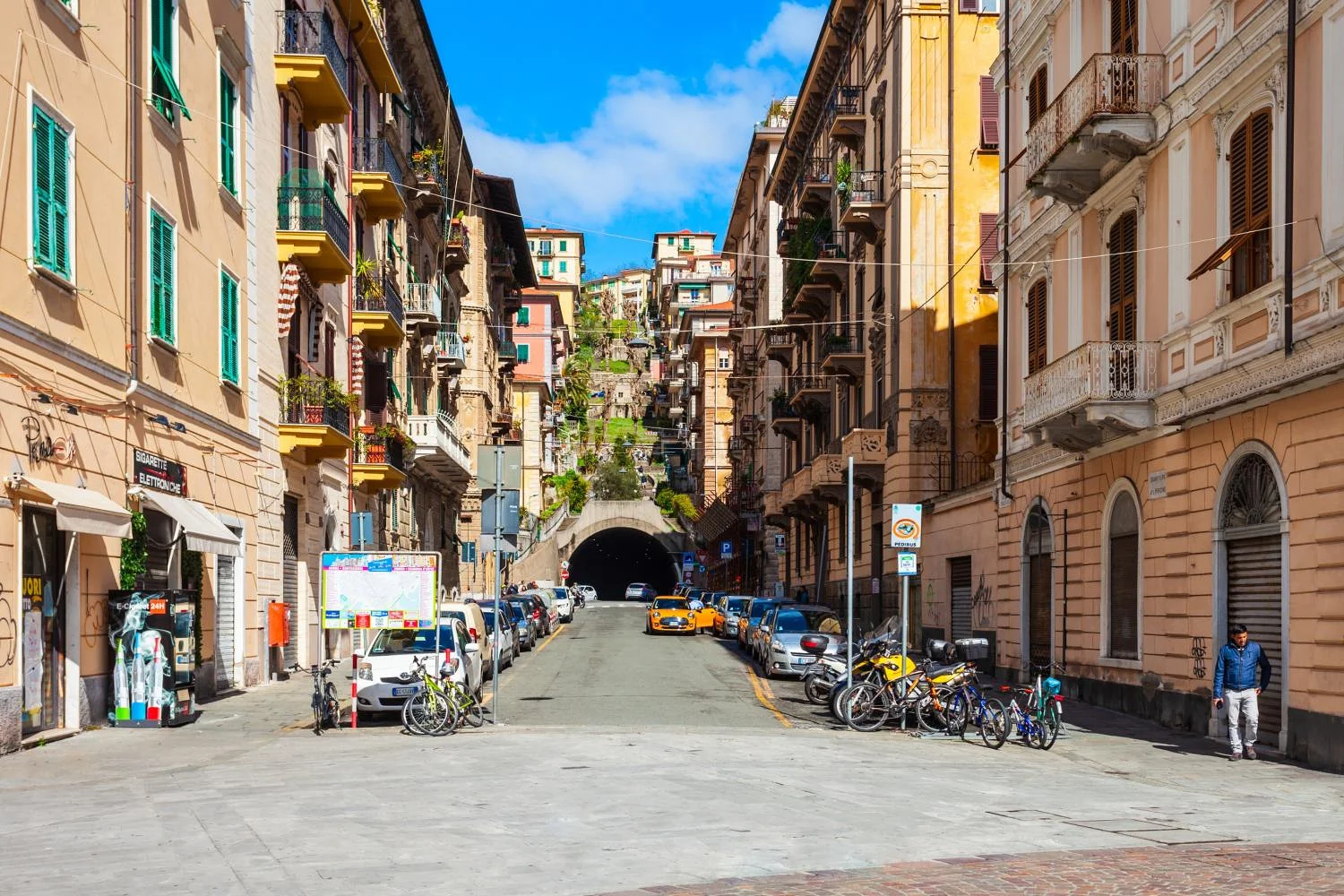
La Spezia, the city everyone drives right past
On July 8, 1822, poet Percy Bysshe Shelley drowned in a sudden storm right in the Gulf of La Spezia. His friend Lord Byron reportedly swam across that exact same gulf to visit him in Lerici. Ever since, this bay has carried a nickname: the Gulf of Poets.
Two centuries later, millions of travelers pass through La Spezia every year. Almost none of them stop. They rush onward to the Cinque Terre, Portovenere, or Florence. That is a mistake, because this port city of 93,000 residents has a distinct personality of its own, featuring Liberty-style palazzi, bustling markets, and unfiltered Ligurian food.
La Spezia: ideal basecamp or just a train station?
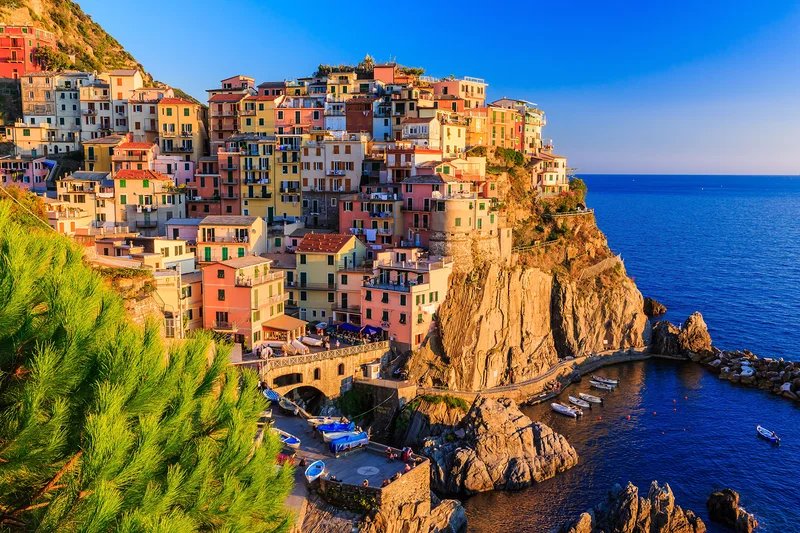
Let's be honest. La Spezia is not a postcard. It is a working city, serving as a military and commercial port with ordinary residential neighborhoods. If you are looking for the pure storybook charm of pastel houses clinging to cliff sides, head straight to Manarola. But if you want a practical, reasonably priced, and well-connected hub with restaurants where locals actually eat, you are in the right spot.
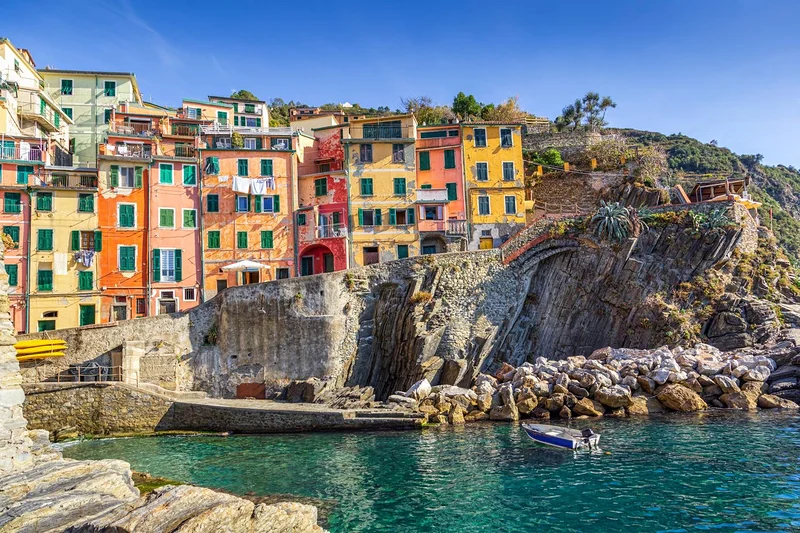
La Spezia suits travelers who want to explore the Riviera di Levante without breaking the bank. In 8 minutes by train, you are in Riomaggiore. In 25 minutes by bus, you are in Portovenere. In 1 hour and 15 minutes, you are in Pisa. Couples, families, and solo travelers will all find what they need here, as long as the goal is not spending the day at the beach, since the city proper lacks a usable stretch of sand. For swimming, head to Lerici, San Terenzo, or Palmaria Island.
What to know before you go
Italy is safe, and La Spezia is no exception. The historic center is compact and entirely walkable. Italian is the primary language, but English works fine in hotels and restaurants. The rhythm follows small-town Italy: shops close between 1:00 PM and 4:00 PM, restaurants open starting at 7:30 PM, and Sundays move at a crawl.
A reasonable budget for Liguria
Plan on $79 to $135* a night for a double room in a B&B or 3-star hotel, and $29 to $45* per person per day for meals. A reasonable traveler budget lands around $102 to $146* per day per person, lodging included. That is 30 to 50 percent cheaper than staying in the Cinque Terre.
The historic center and the waterfront
Two parallel streets anchor the old town: Corso Cavour and Via del Prione. The first serves as the main shopping drag. The second connects the port to the train station, and it is where the nightly passeggiata takes place, the traditional evening stroll where locals parade before dinner. Between the two runs a maze of alleys hiding colorful facades and steep staircases.
Down by the water, the Passeggiata Morin runs alongside the gulf beneath palm trees and leads to Porto Mirabello, connected by the Thaon di Revel pedestrian bridge, an elegant structure of wood and white steel. It is the perfect spot for an aperitivo with sailboats in view.
Friendly tip: the market at Piazza Cavour runs every morning Monday through Saturday. On Fridays, a flea market takes over Via Garibaldi. Go hungry.
The heights and the museums
Castello di San Giorgio has towered over the city since the 13th century. The climb up the stairs is steep, but the panoramic view of the gulf and the archaeological museum with its fascinating Lunigiana stelae statues make the effort worthwhile. On the way back down, the Museo Civico Amedeo Lia, housed in a former convent, holds nearly a thousand works ranging from antiquity to the 18th century. It is rarely crowded and surprisingly high quality.
Day trips from La Spezia
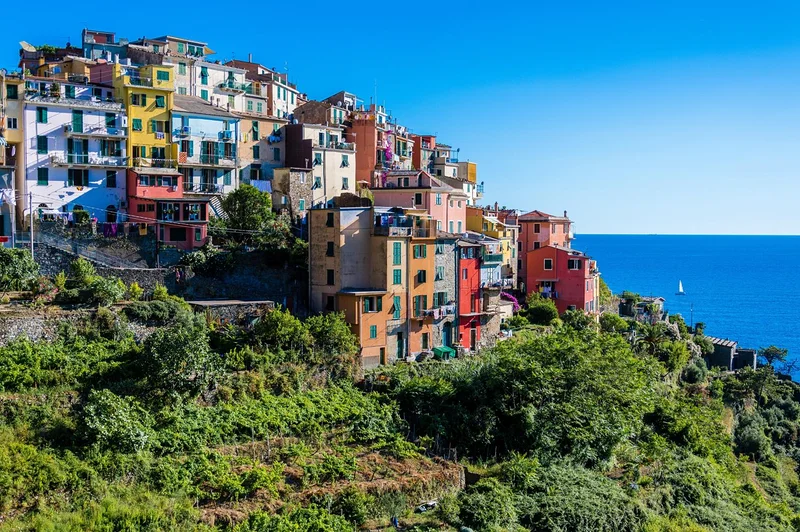
This is where the city proves its worth. From the central station, regional trains reach the five villages of the Cinque Terre in 8 to 25 minutes. The Cinque Terre Treno MS Card costs $37* per day in the summer for unlimited train travel and trail access. Portovenere is reachable by bus or ferry, with the boat option cruising past the coast and the islands of Palmaria, Tino, and Tinetto.
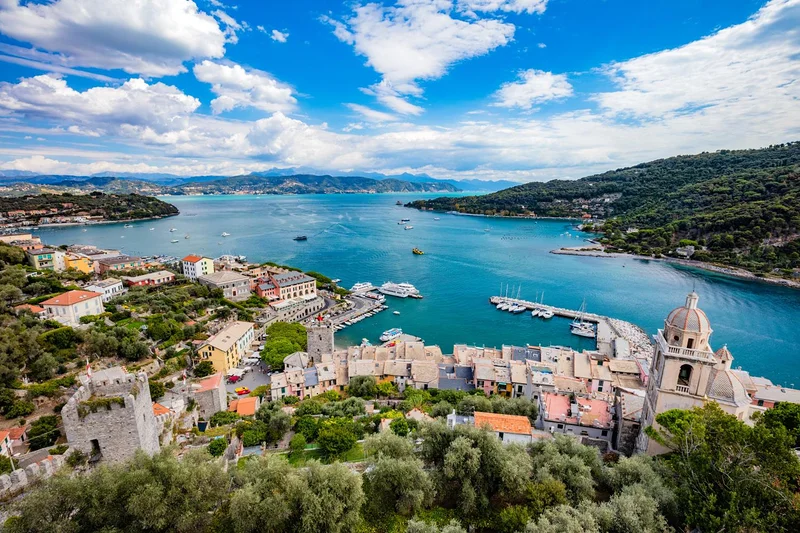
On the other side of the gulf, Lerici offers a medieval castle and a sandy beach, while tiny Tellaro, a fishing hamlet clinging to the rocks, remains untouched by mass tourism. For longer excursions: Pisa is 1 hour and 15 minutes by train, Florence is 2 hours and 30 minutes away, and Genoa is 1 hour away.
Friendly tip: in summer, catch the first train before 9:00 AM for the Cinque Terre, or better yet, visit the villages in the late afternoon after the day-trippers head back.
Where to eat and drink in La Spezia
The signature dish is mesciùa, a thick soup of chickpeas, white beans, and spelt drizzled with olive oil and black pepper, born from dockworkers' lunchboxes. The other local staple is farinata, a large chickpea flour pancake baked in a wood-fired oven. To try it the traditional way, head to La Pia Centenaria, an institution founded in the 19th century. Ask for a focaccia stuffed with farinata, a combination that sounds strange but works.
For budget seafood, the self-service spot Dai Pescatori down on the pier serves generous plates of fried calamari. For refined dining, Osteria della Corte serves creative Ligurian fare. Be sure to also try trofie al pesto, cozze ripiene (stuffed mussels), and sgabei, fried bread dough strips served with cured meats, all washed down with a glass of Vermentino Colli di Luni.
Where to stay in La Spezia and the surrounding area
The historic center, nestled between the station and the port, concentrates most of the lodging options and remains the most practical neighborhood. For a beach vacation, staying in Lerici or San Terenzo makes more sense since they offer direct sea access. Portovenere is pricier but spectacular. Levanto, just north of the Cinque Terre, serves as another popular base equipped with a beach.
How to get to and around La Spezia
The closest airports are Pisa-Galileo Galilei, 1 hour and 15 minutes away by train, and Genoa-Cristoforo Colombo, 1 hour away by direct train. Most travelers fly into Milan, Pisa or Genoa and finish by train. If you are already in Europe, daily trains link Paris to Milan or Genoa with a transfer. From Rome, the train ride takes 3.5 hours.
Once you arrive, everything is accessible on foot and by regional train. Ferries run from April through October. If you drive in, parking lots near the station cost $17 to $23* per day, so park the car and forget about it for the rest of your stay.
When to go
The best window runs from April to June and September to October, bringing mild temperatures, beautiful light, and Cinque Terre paths that are not yet overrun. July and August are hot, crowded, and expensive. Winter is mild, but many tourist services shut down.
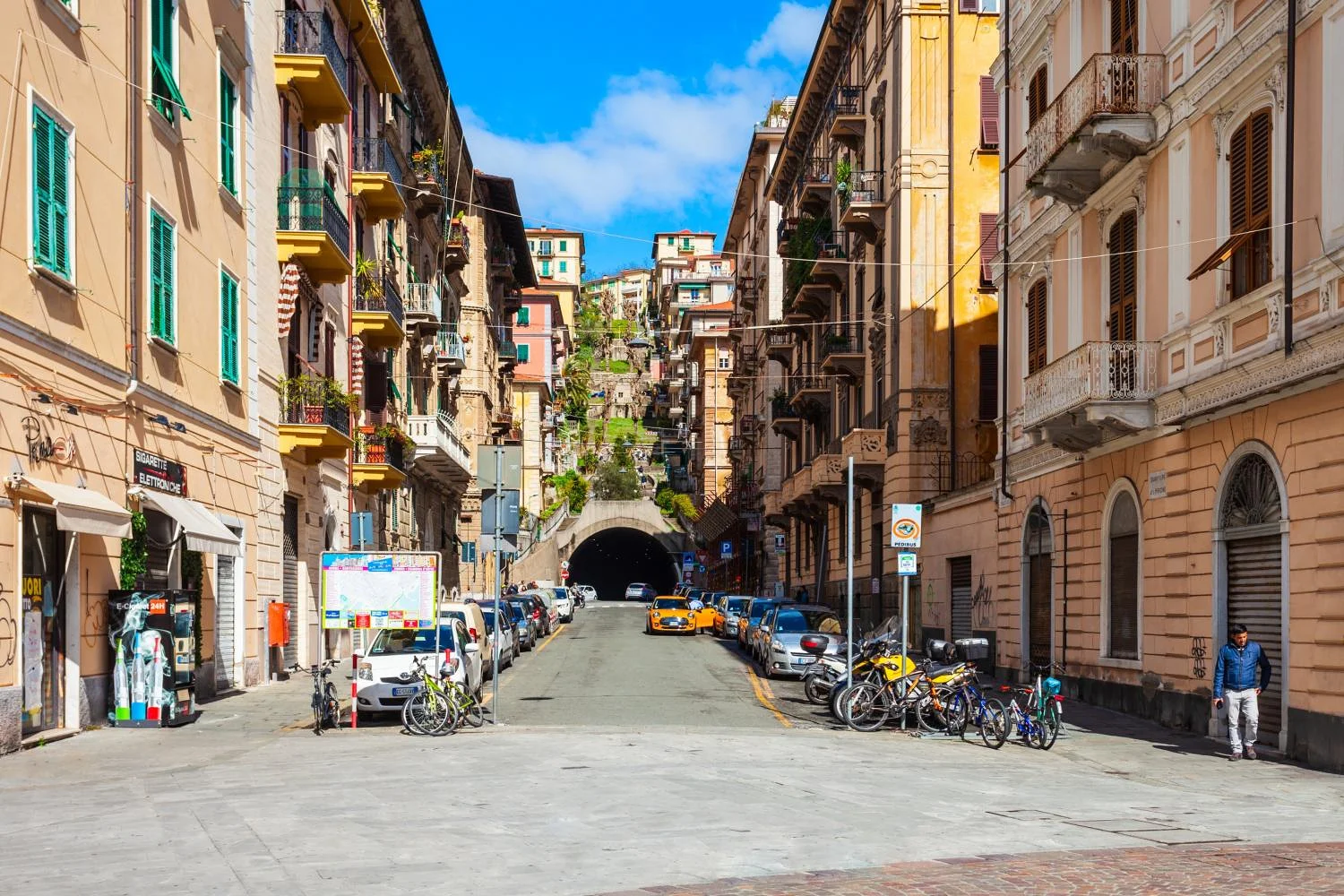
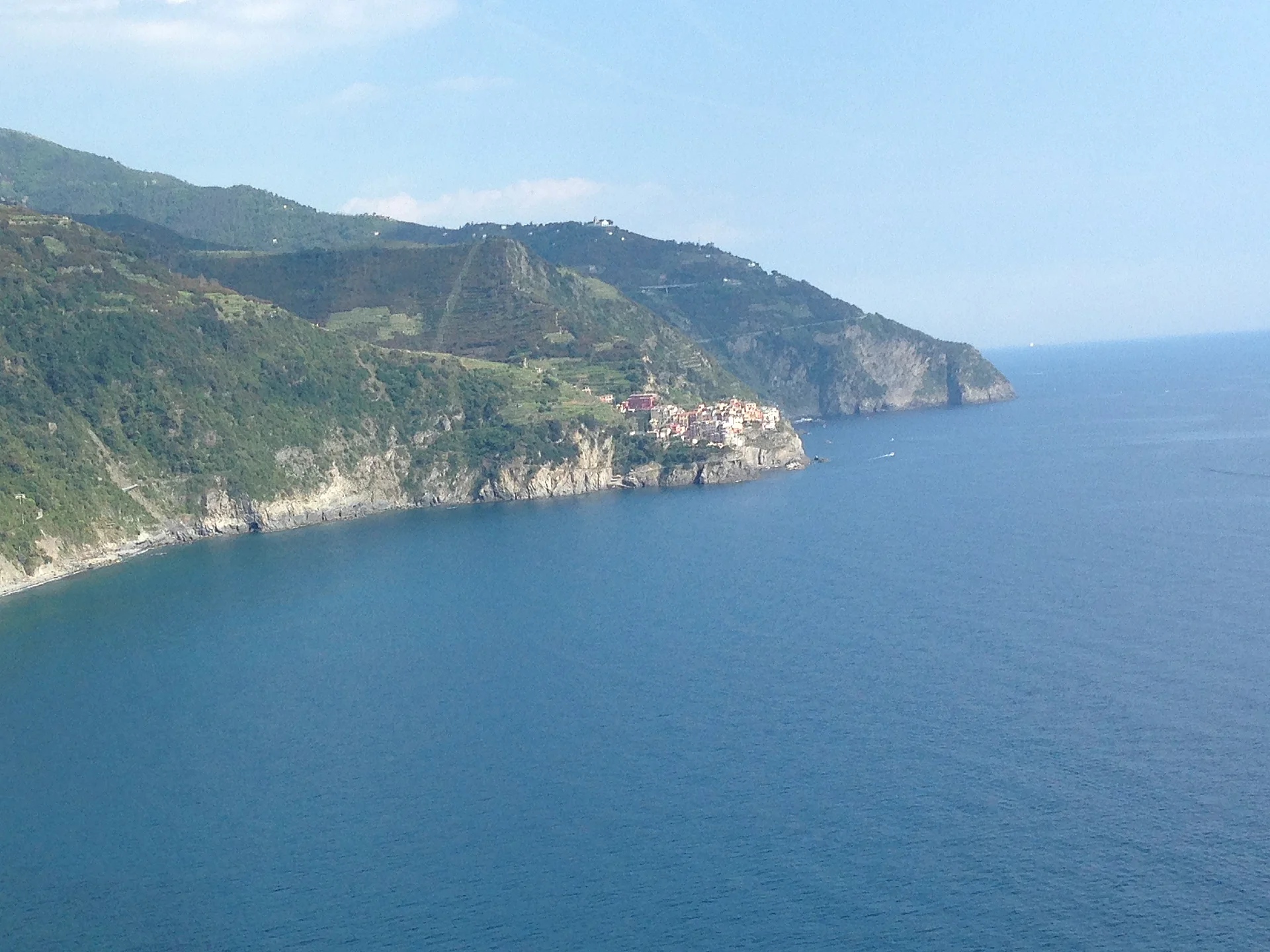
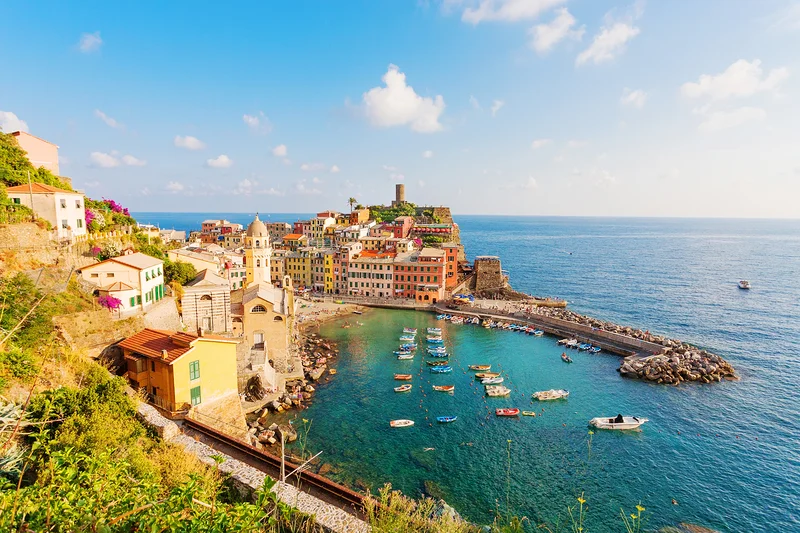
It is a great place to use as a base for visiting the Cinque Terre villages, and the city itself is actually quite nice and convenient for finding much cheaper lodging! While it may not have the charm of its smaller neighbors, it is still a very pleasant city to wander around, with some great restaurants to help you dive into the wonderful Italian gastronomy.