
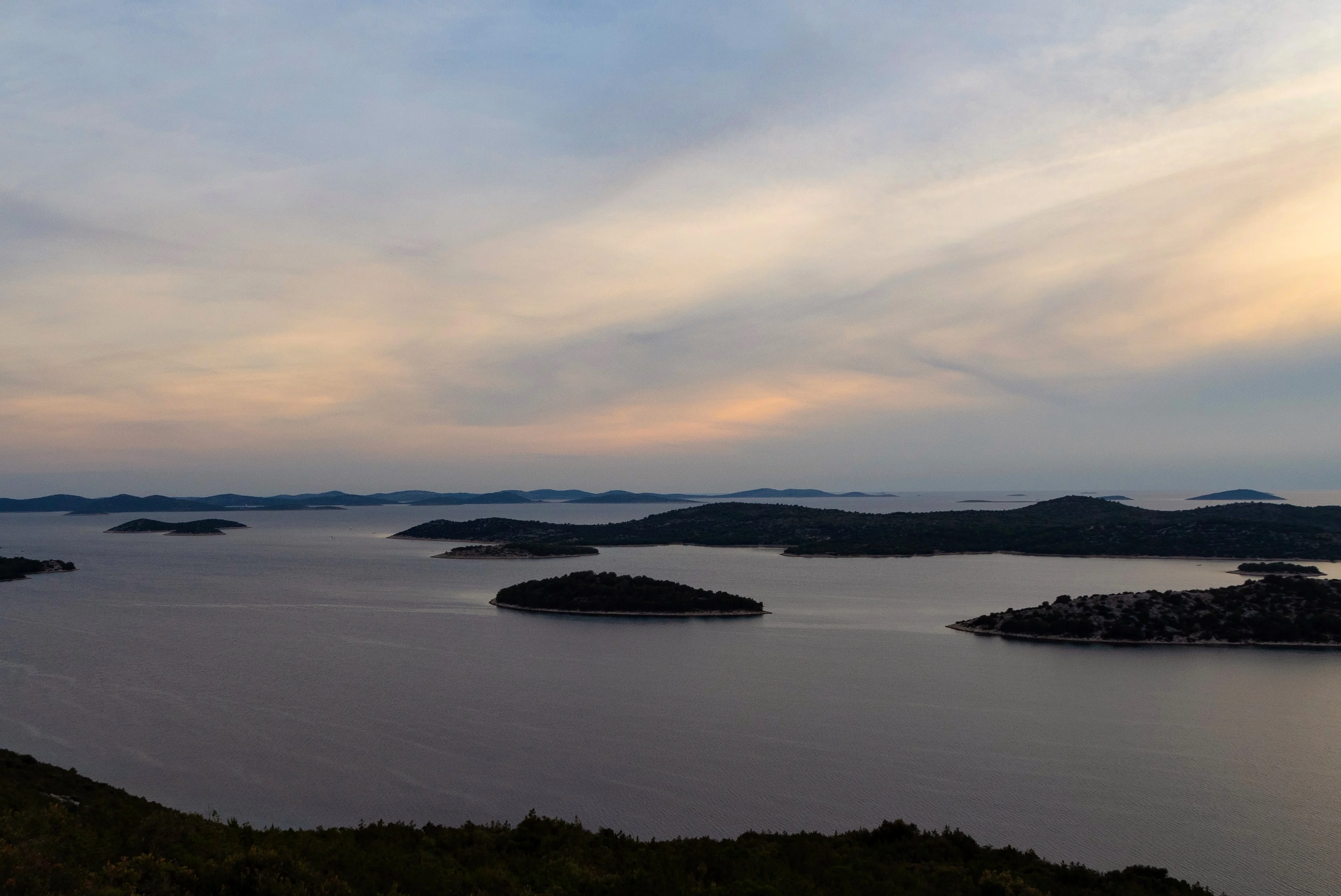
What better destination than Croatia for an adventure through the Balkans? The country offers an incredibly diverse panorama of sites and landscapes. Between the land and the sea, beaches and mountains, there are so many choices that it’s sometimes hard to know where to start!

It’s impossible to cover all of Croatia in just two weeks without rushing and losing the authentic feel of the trip. We had to make some choices. We put together an itinerary from Zagreb to Dubrovnik, starting in the Croatian hinterland with its Eastern European influences, then heading along the Adriatic coast, stopping at the famous Plitvice Lakes National Park and Paklenica National Park along the way.
During your road trip in Croatia, watch out for the regulations regarding recreational vehicles! In Croatia, wild camping is prohibited, especially along the coast, and patrols are frequent. Make sure you choose your overnight spots carefully. In high season, the country is swarming with tourists, which makes parking even harder to find. That’s why we recommend exploring Croatia in the off-season, during the months of April, May, and June, or, as we did, in September and October.
Step 1, two days: Zagreb and its many influences
When visiting a country, it’s always interesting to spend a few days in the capital, if only to soak up the local atmosphere. That’s what we did with two days exploring Zagreb. Perched on its hills, the heart of the city has the feel of a lively little village, reminiscent of archival images of old Montmartre in its heyday. The Strossmayer Promenade is a lovely walk: straddling the old ramparts, it offers beautiful views of the city. The path is lined with pop-up cafes and, occasionally, concerts and art performances. Right nearby, you can also climb the steps of the Lotrščak Tower, one of the few remaining vestiges of the city's old fortifications. The top offers a superb 360-degree panorama of the city!

To get to the city center, we opted for a shortcut that is unfortunately well-known to locals: the Grič Tunnel. It was built during World War II to protect the population from the many bombings that shook the city. Today, it’s just a simple tunnel that connects to the center of Zagreb, but it’s surrounded by legends. It reportedly hosted some of Croatia's most famous rave parties in the 90s, thanks to its acoustics. Furthermore, historians say it is located near many other underground passages that run beneath Gradec Hill. During the 1880 earthquake, some of them allegedly collapsed, taking with them precious gold belonging to the Church.

The next day, we took advantage of the city's many vibrant spots, starting with the Dolac Market. It’s the perfect place to shop, where small grocery stalls and handicrafts mingle in this large central square known as “the belly of Zagreb”! Nearby, you can hop over to visit the Cathedral of the Assumption of the Blessed Virgin Mary, or St. Mark's Church, instantly recognizable by its red, blue, and white tiled roof, which bears the coats of arms of Zagreb and Croatia.
What we preferred, however, was getting lost in the corners of the city, discovering beautiful patios hidden away from the busy streets, and tasting Croatia's rich gastronomy, a perfect blend of Mediterranean cuisine and Balkan influences!
Step 2, two days: Discovering the lakes of Plitvice National Park
The road from Zagreb to the Plitvice Lakes is quite long but has the advantage of showing you the traditional landscapes of inland Croatia. Allow at least two hours of driving and take the opportunity to stop in the countryside! Arriving in the mid-afternoon, we enjoyed the adjacent villages, which are very touristy but no less charming. Since we were visiting in the off-season, the area was relatively quiet, which allowed us to rest before our long-awaited day of hiking.

The next day, we woke up at 8 a.m. It’s never too early to start exploring the 16 natural lakes in the Plitvice reserve! We parked at Entrance 2, which is located at the junction between the upper and lower lakes. Entry to the National Park only cost us 100 kuna per person because we received a discount. Which is still relatively expensive! At the entrance, four different routes are available: H, F, E, and K2. The H circuit allows you to tour the entire site and covers 9 kilometers. The K2 is reserved for the more athletic and gets lost in the park's forests. When we started, we were hesitating between routes E and F because we wanted to take our time. These two routes are shorter and can be finished in 3 hours. On the way, we eventually followed circuit E, because F was poorly marked and we ended up losing it. So we mainly toured the Upper Plitvice Lakes, which are larger and less contrasted, but just as rich in waterfalls and vegetation!

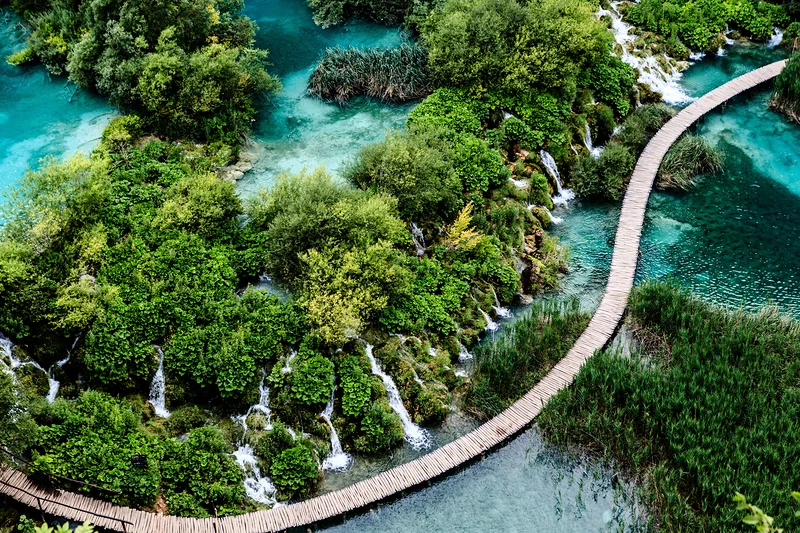
Once inside the park, a geological and natural wonder stretches as far as the eye can see! In October, the site is less crowded, which allowed us to take our time on the small wooden log paths built over the translucent water. You don't know where to look, between the magnificent autumn tones of the surrounding forest, the crystal-clear waters of the lakes, and the many waterfalls cascading happily down the slopes of Plitvice. A treat for all the senses! The entrance ticket also includes a boat ride and a panoramic train ticket that will allow you to reach the parking lot more quickly at the end of the walk.
Step 3, two days: Paklenica, dizzying peaks by the sea
Despite the day's efforts, we left in the late afternoon to reach the coast, specifically at Starigrad, at the gates of Paklenica National Park. Here, we opted for a night at a campsite, as the coast is difficult to access otherwise and accommodations are inexpensive. The location was simply magnificent; we spent a night just steps from the water and went for a swim the next day, despite the threatening weather. As it was rainy, we postponed our ascent in Paklenica Park until the next day. Note that in the off-season, many services and restaurants on the Croatian coast simply close their doors! It’s hard to find something to eat, even just a stone's throw from the coast...

The next day, with the sun back out, we went climbing in the high mountains of Paklenica National Park. Entering the site is a real spectacle: many apprentice climbers scale the dizzying mountain walls, reaching breathtaking heights! For our part, we were content to take the main trail and then one of its branches that leads to Manita Peć Cave, the only one currently open to visitors in the park. The karst rocks of the Paklenica mountain ranges have the particularity of covering many underground surfaces, such as caves or pits. The round-trip hike to the cave is over 7 kilometers, and you will have to climb, so that once you reach the top, you can enjoy a very beautiful view of the Velika Paklenica canyon and the park as a whole.
Step 4, two days: Zadar and Northern Dalmatia
After these long walks in nature, we were eager to rest by the sea. And that’s perfect, because from Starigrad, the fortified city of Zadar is only an hour's drive away! It was with a light heart that we discovered this pretty seaside resort, whose old town, with its narrow streets, strongly reminds one of some of the most beautiful Spanish cities. The walk along the bay is particularly pleasant and leads straight to a curious musical instrument, a sea organ, built by architect Nikola Bašić. The instrument's pipes, connected to the sea, produce a strange music composed directly by the waves that enter it at regular intervals.

There are many places around Zadar suitable for stopping with recreational vehicles, some being very close to the water. Don't hesitate to stop in the area for an extra day to enjoy the coastal leisure activities! In any case, that’s what we did and we didn't regret it.

Step 5, three days: Split and its surroundings; historical sites, seaside towns
The rest of our stay in Croatia consisted mainly of following the wonders of the coastline. On the road to Split, we wanted to pass through the medieval city of Šibenik, which we had heard good things about. Alas, vans and campervans are not welcome in the area and it is very difficult to find parking. We therefore preferred to continue to Split, the second-largest city in Croatia.
What a pleasure to stroll through the streets of Split in the middle of October! The city breathes authentic Croatian life, at least at the beginning of the autumn season. The ancient Diocletian's Palace, whose ruins blend perfectly with the architecture of the old town, left us speechless. The promenade along the sea, the Riva, which runs along the old palace walls, is very pleasant. We didn't hesitate to sit on a terrace to drink a few cocktails while the sun slowly set.

The next day, we continued our discovery of Split and hiked up Marjan Hill from the city center. The walk is all uphill, but it has the advantage of taking us through the authentic Veli Varoš neighborhood, and then a large, refreshing pine forest. The views of Split offered by this walk are among the best!

We could have, like many tourists who choose the Split region for their vacation, taken the afternoon to visit one of the many Dalmatian islands that line the coast. But we were a bit worried about leaving our home on wheels alone! That’s why we hit the road again towards Klis, a small village perched on the high mountains, about thirty minutes in the hinterland of Split. The walls of the Klis Fortress, made famous by the series Game of Thrones, dominate the landscape. For 60 kuna, we toured the ruins and learned a little more about the history of Croatia.

It is south of Split that the Croatian coastline puts on its finest attire. Dedicate a day or two to it, and marvel again and again at the pastel colors offered by the Adriatic Sea at sunrise!

Step 6, two days: Majestic Dubrovnik, in the footsteps of Game of Thrones
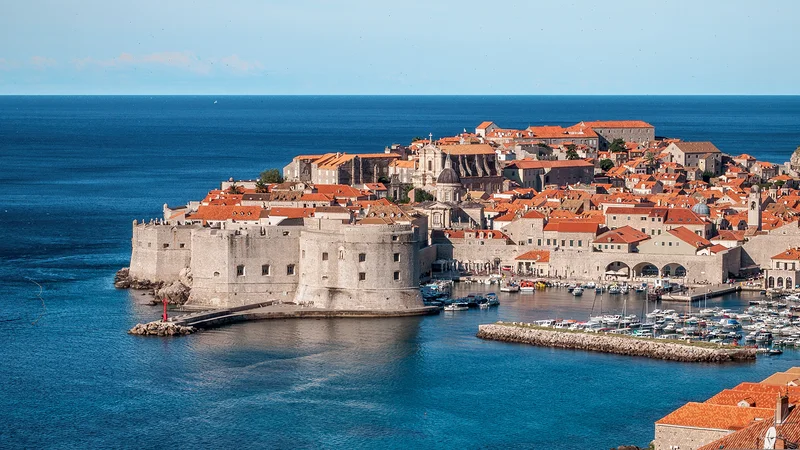
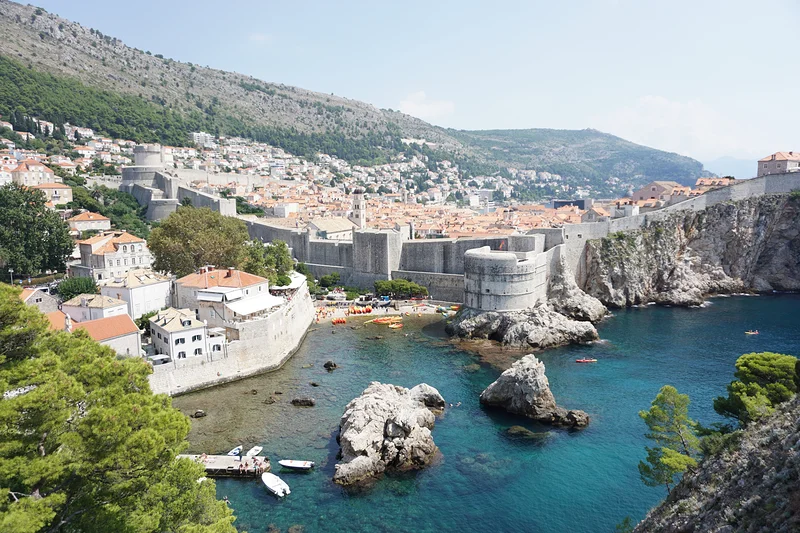
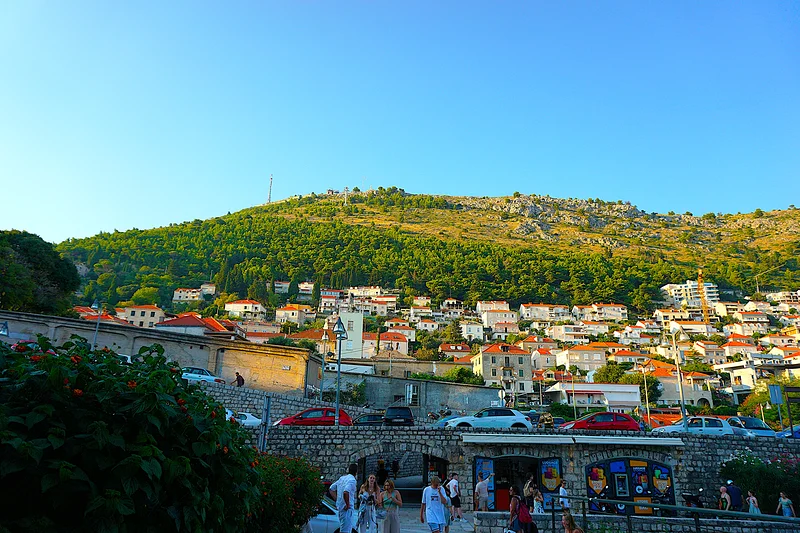
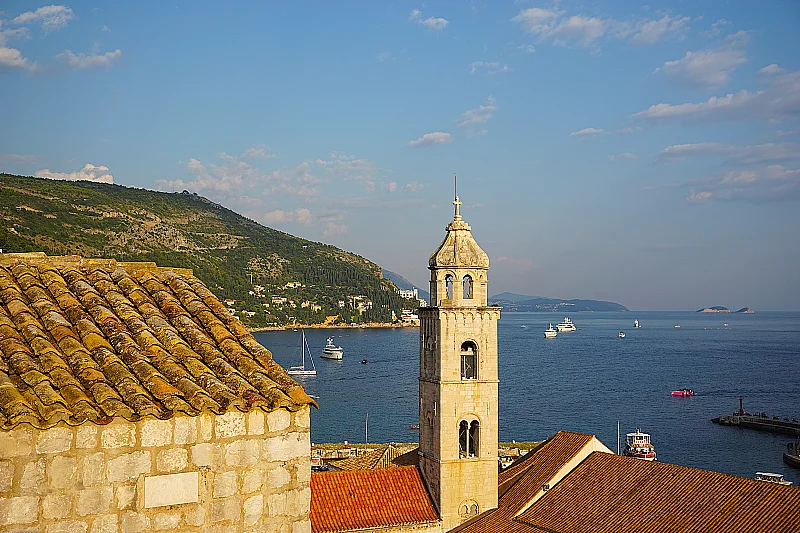
How could we miss the one nicknamed “the pearl of the Adriatic”, the subject of so many fantasies since we watched every episode of the legendary series Game of Thrones for nearly 10 years? Don't hesitate to push your trip to the extreme south of Croatia to meet this beautiful and fierce fortified city that bears the majestic name of Dubrovnik! While walking the ramparts is expensive (20 euros, regardless of the season), it’s a must-see to admire the old fortified city from every angle and recognize, from time to time, the filming locations that served as the setting for the capital of King’s Landing in the famous series!

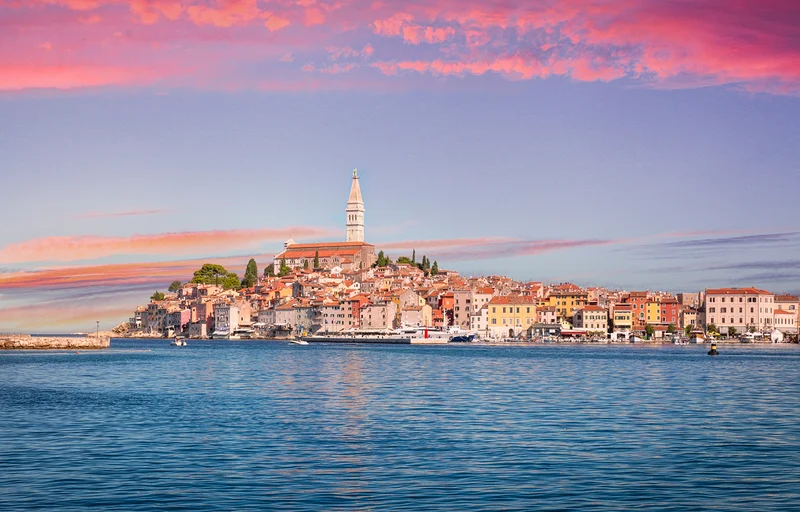
We hope we’ve managed to share a little of the pleasure we felt during our two-week road trip in Croatia. The choice of this itinerary is only one of many: if you have more time, also take a quick tour of Istria, loaded with Italian influences, go discover Krka National Park, and, further into the hinterland, stop at the turquoise springs of the Cetina River, a “blue eye” awaits you there!
Comments (0)
No comments yet. Be the first!