Naples

Top 7 most beautiful cities in Campania to visit2026 ranking

Discover the most appreciated cities in Campania by our members. Feel free to publish your own reviews to take part in this collaborative ranking.

The most beautiful cities in Campania

#1 Naples +72 recs

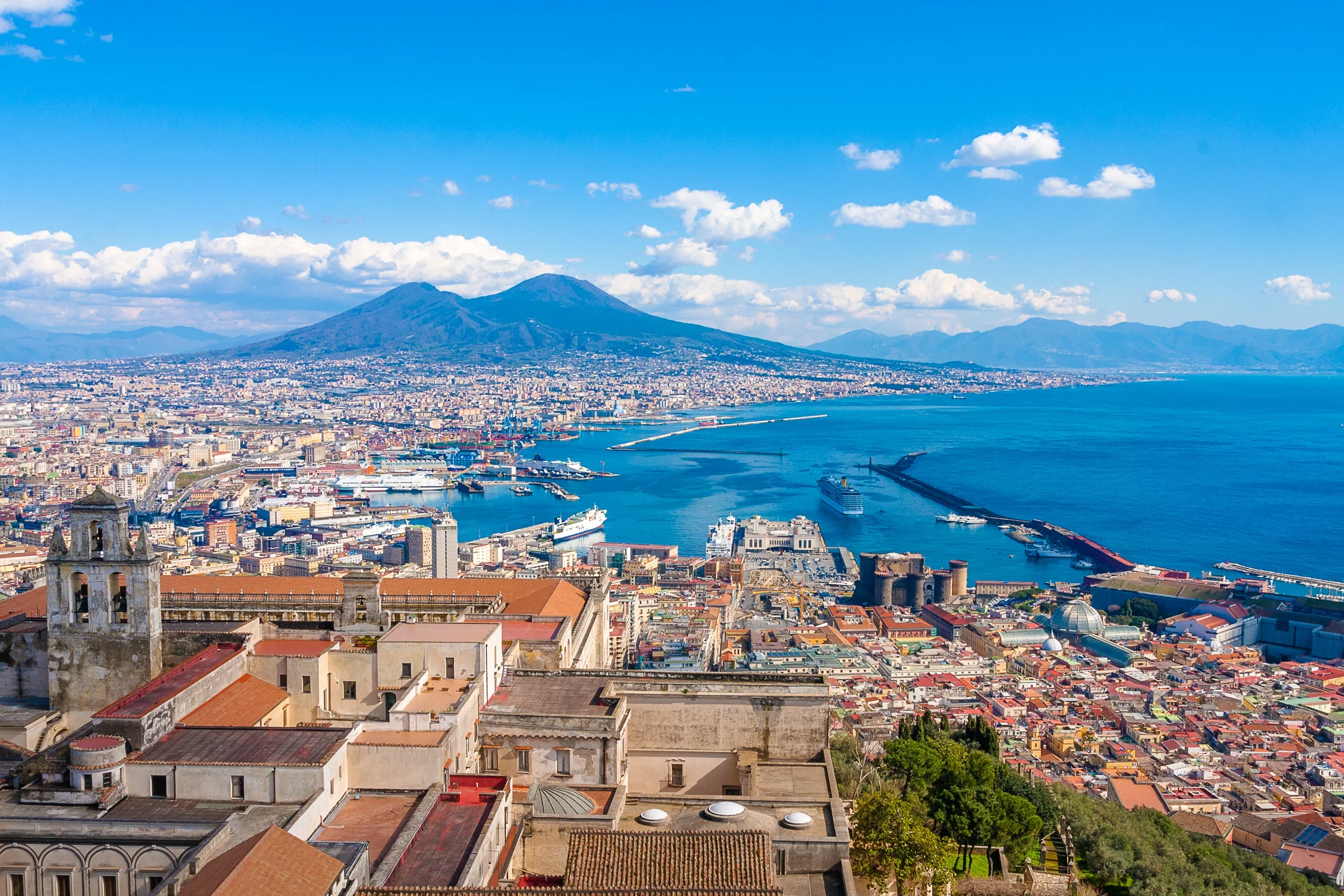
Naples is raw, loud, and unapologetic. It is a city of high-contrast energy where laundry lines crisscross narrow alleys above legendary pizzerias and UNESCO-listed historic streets. With the silhouette of Mount Vesuvius looming over the bay and the ruins of Pompeii just a short trip away, this is an Italy that refuses to sanitize itself for tourists. You will likely walk away either obsessed or overwhelmed, but you will definitely not be bored.

Must-sees

#2 Pompeii +34 recs

Buried under the ashes of Vesuvius in 79, Pompeii functions as a full-scale time capsule. Forums, thermal baths, frescoes, and ancient taverns reveal everyday Roman life on every corner. This 66-hectare UNESCO World Heritage site continues to yield new finds, such as children's drawings uncovered in 2024, offering a striking trip two millennia back in time.

Must-see

#3 Sorrento +15 recs

Sorrento is one of the top destinations in the province of Naples, in Italy. Most visitors use the town as a base to also check out the ancient city of Pompeii and the nearby islands of Capri, Ischia, and Procida. Sorrento itself easily warrants a full day just to take in its coastal atmosphere.

A lively historic center

Often called the city of sirens, Sorrento draws travelers in with its striking historic core and dramatic clifftop setting above the Mediterranean. Sitting right at the gateway to the famous Amalfi Coast, it is an essential stop on any regional itinerary. Start your walk at Piazza Tasso, the town gathering spot since 1886. Grab a drink at an outdoor café while watching the statue of the writer Torquato Tasso, who gave the square its name. From there, wander through narrow lanes lined with baroque and Renaissance pastel facades. During the summer months, souvenir shops sit right alongside small artisan workshops and gelato stands. Via San Cesareo is the ideal street for sampling local food specialties. Gnocchi alla sorrentina featuring tomato sauce, mozzarella, and basil; a panino with pomodorini and prosciutto, there is plenty to eat here. Finish your meal with a glass of authentic limoncello, the lemon liqueur native to the Amalfi Coast.

Cultural treasures

Sorrento holds plenty of architectural and historical gems. The small medieval cloister of the Church of Saint Francis stands out as a prime example, offering a shady, plant-filled retreat from the midday sun. The Cathedral of Saints Philip and James, built in the 15th century, is worth visiting for its bell tower and intricate interior marquetry doors. For elevated views, head up the cliffs to the Villa Comunale and its public gardens, which look out over the Bay of Naples. Tucked away from the main tourist paths, Il Vallone dei Mulini is a striking sight. You can peer down from the street into a deep ravine to see the moss-covered ruins of an old mill sitting at the bottom, creating a moody, atmospheric scene. Finally, an evening stroll around the Marina Grande port lets you watch local fishermen mend their nets after a day out on the water.

When to go

If you prefer to avoid the crowds, skip midsummer when the town fills to capacity. Spring and early fall offer much more manageable visitor numbers.

Getting there

The easiest way to reach Sorrento is through Naples. Naples features an international airport and a major train station, and the drive takes 55 minutes by car. From Naples, you can also take a 40-minute ferry across the gulf straight to the Sorrento pier. The most budget-friendly option is the Circumvesuviana train, which runs from Naples to Sorrento in an hour and fifteen minutes and stops at Pompeii along the way.

Must-see

#4 Capri +14 recs

The legendary island of Capri has drawn travelers for generations with its dramatic cliffs and undeniable Mediterranean charm.

The Legend of Capri

Capri's reputation skyrocketed in the 20th century when artists and intellectuals like Cocteau, Picasso, Gide, Brigitte Bardot, and Godard (who filmed Contempt here) began singing its praises. The jet set followed quickly, turning the island into a playground for the rich and famous.

Today, the island is a premier luxury destination that still captures the attention of everyone from international travelers to locals. Capri makes an immediate impression as your ferry approaches: a steep, rugged rock measuring 6 kilometers by 3 kilometers with striking topography. The typical Mediterranean vegetation blends pine trees, strawberry trees, and vineyards, all framed by open water that shifts through every shade of blue from morning to night.

Capri certainly caters to an affluent crowd, making Capri town feel like Italy's answer to Saint-Tropez. Yet the island remains a natural sanctuary that equally rewards hikers and history buffs. Do not miss Villa Jovis, built by Tiberius in the 1st century AD, or Villa San Michele, the house-museum of Swedish physician Axel Munthe, built on the remains of a chapel dedicated to Saint Michael.

Grottos, Panoramas, and Good Food

Among the top natural sights on Capri, the Blue Grotto is essential. Discovered by a writer in 1826, the cave lets sunlight filter through an underwater cavity and illuminate the stone walls with a vivid cobalt glow. Its counterparts, the White Grotto and the Green Grotto, are equally worth viewing. Capri also features numerous marked walking and hiking trails. The Arco Naturale is the most famous for its sweeping view from the heights of the island. After a long hike around the cliffs, the water is always waiting.

You can also unwind at one of Capri's many wellness spots. The local spas and beach clubs offer relaxing treatments that draw visitors looking to recharge. Away from the bustle of Capri town, wandering the narrow streets of Anacapri offers a quieter pace. Its historic center features colorful homes alongside bars and restaurants specializing in classic Neapolitan cooking. Wood-fired pizzas, lasagna, cannelloni, scorpion fish, cod, and house-made limoncello fill local menus.

The nearby islands of Ischia and Procida are also easy to reach for a day trip.

When to go

You can visit Capri year-round thanks to its mild Mediterranean climate. However, plan your trip between April and early October to experience the island at its best. Keep in mind that crowds peak during July and August.

How to get there

You can easily reach Capri by ferry from Naples (a 1-hour crossing) or by hydrofoil from Sorrento (a 20-minute crossing), as well as from Amalfi, Salerno, and Positano. Capri's harbor handles these regional services only: long-distance ferries from Sardinia, Spain, Corsica, and Tunisia dock in Naples, where you switch to a Capri boat.

Must-see

#5 Herculaneum +8 recs

While Pompeii tends to draw every traveler around the Bay of Naples, skipping its neighbor Herculaneum would be a real mistake. It holds remarkably well-preserved ruins that easily warrant a full-day visit.

A small Italian town that draws visitors

Herculaneum is a municipality located in the southeast suburbs of Naples, within the region of Campania. Sitting at the foot of Mount Vesuvius, it makes a solid base for exploring the area. It used to be called Resina, but it was renamed Ercolano in 1969 because of the ancient city ruins within its borders. On the tourism front, there is not much else exceptional about the town outside of the ruins. Still, the main street, Via Veneto, is a pleasant place for a stroll and window shopping. Stop by one of the pastry shops (pasticceria) to try a regional culinary specialty. Special mention goes to the sfogliatella, a traditional pastry filled with ricotta cream, which pairs perfectly with a hot drink.

Herculaneum, Pompeii's smaller counterpart

The true star of the town is its ancient city of Herculaneum, destroyed by the devastating eruption of Vesuvius in the year 79. In ancient times, it was a seaside town largely occupied by the villas of wealthy Campanian residents. It is less famous than its famous neighbor Pompeii because it is much smaller. However, Herculaneum is much better preserved because it was not covered in ash and small stones, but buried under a thick layer of pyroclastic flows and mud until its rediscovery in the 18th century. Most of the buildings therefore survived the disaster as well as the passage of time.

Herculaneum makes a strong impression at first glance when you discover its remarkably preserved ruins set twenty metres deep in a valley. Entering the archaeological site leads to a walkway descending toward the buildings. Villas with walls adorned with decorative friezes, shops, Roman baths, public buildings.. Walking through the streets of the ancient city, it is easy to picture its residents going about their business without knowing the tragedy heading their way. Plan for about 2 hours for a complete visit. To learn more and see artifacts recovered from the digs, head to the Naples National Archaeological Museum.

When to go

You can visit Herculaneum year round, as the ancient site is open in every season. It never gets the massive tourist crowds you see at Pompeii, but if you prefer true peace and quiet, pick spring and fall over summer.

How to get there

Herculaneum sits right next to Naples, just a fifteen-minute drive away via the A3. If you do not have a car, take the train to the Ercolano Scavi station, which takes 20 minutes from Naples. To reach Naples, you will find plenty of competitive flights from major European hubs. Rome is also not far from Herculaneum, at a 2h15 drive by car.

Must-see

#6 Massa Lubrense +7 recs

Massa Lubrense sits at the tip of the Sorrento Peninsula, where the Gulf of Salerno meets the Gulf of Naples. It offers a rare mix of rugged mountains and Mediterranean coastline, with direct views of Capri that feel like a scene from a classic Italian film. Wander to the Santa Maria delle Grazie cathedral, spend an afternoon on the local beaches, and be sure to taste the regional specialty, the bright and fragrant Massa Lubrense lemon.

Must-see

#7 Amalfi -2 recs

Among the wonders that earned the Amalfi Coast its UNESCO World Heritage status, the town that gave it its name stands out. As early as the 6th century, Amalfi and its port rose to prominence, fueled by sailors who mastered the compass and expanded trade routes to the East. The golden age of Italy's first Maritime Republic thrived until 1343, when a devastating tsunami altered its path. It took the rise of tourism and the 19th century for this jewel of the Salerno province to reclaim its glory. As a charming seaside resort, its natural setting is just as captivating as its historic core, blending rugged rock, stone architecture, the sea, and lush vegetation into a unique landscape.

Below the hillside homes, the beach

Walking through Amalfi feels like stepping into a medieval urban maze. The narrow streets climb and crisscross, punctuated by passageways and staircases that often lead to unexpected corners. Saint Andrew's Cathedral, located in Piazza Duomo, serves as a magnificent landmark. Its imposing flight of 62 steps leads to a building of striking beauty. Inspired by Arab art and reworked over centuries, this 987-construction is impressive. Its Byzantine door, colorful facade, and mix of neo-Gothic, Romanesque, and Baroque influences create a dazzling stylistic ensemble. The crypt is a must-see, and adjacent to the cathedral, the 13th-century Cloister of Paradise, with its interlaced arches and columns, hides palm trees that heighten the Moorish atmosphere. A diocesan museum rounds out the site.

At the bottom of the steps, you will find restaurant terraces, the fountain also dedicated to Saint Andrew, and the historic core, including the incredible Vagliendola neighborhood. Typical of the area with its high passageways between buildings, the main street, Via Lorenzo, is lined with shops ranging from artisan crafts and pizzerias to gelato shops, souvenir stores, and boutiques. The stroll is marked by picturesque squares with fountains, most notably the Fontana de Cape E Ciucci, a miniature wonderland representing the nativity among 18th-century marble figures. The marina facing the Gulf of Salerno sits at the end of the town center. Ferries allow you to explore the surroundings, such as the island of Capri.

The beach is right at the foot of the town, overlooked by hillsides where pristine white houses seem to keep watch. It offers fine sand, transparent water, and an exceptional setting. Popular as it is, the Marina Grande is quite small at 184 meters long. Some locals prefer the beach at Atrani, which tends to be less crowded.

Lemons, nature, and exceptional paper

Amalfi is also renowned for its artisanal paper, a high-quality craft celebrated since the 12th century. The Paper Museum reveals the secrets of this history and the 16 mills that once lined the Via delle Cartiere. This former 14th-century factory remains the only one featuring original machines and mills. The remains of the ancient Arsenal, housing the museum of the compass and maritime duchy, are also unmissable. Equally famous, the lemon grown in terraced gardens is a tasty emblem that local gastronomy elevates through cremoncello, a creamy liqueur with unique fragrances, or the classic limoncello. The port naturally favors fish and seafood dishes, but the buffalo mozzarella, cannelloni, and antipasti are equally impressive.

The hinterland, with vegetation as lush as the coast, is a hiker's paradise. Between waterfalls and rare flora, the Vallone delle Ferriere is a magical playground that includes an area with historic water mills and lemon groves.

When to go

From Easter to the end of October, the tourist season is in full swing, with high density in the summer. June and September are the best months to enjoy the mild Mediterranean climate without the intense crowds, though the spring blooms of April and May are spectacular to witness. From November to February, many businesses close. As for local events, the city celebrates its festivals on June 27 and November 30.

How to get there

The nearest airport is Naples-Capodichino, located 65 km away. Buses provide connections to Sorrento and then on to Amalfi. By car, take the A3 Naples-Salerno motorway, then the SS163 coast road, which gets busy in season. Ferries also run between the various towns on the coast, but Amalfi is not accessible by train. The train line stops in either Sorrento or Salerno.

Must-see

Latest reviews

Pizza lover paradise

For me you either love it or you hate it, there is no in between. Naples is unlike any other city, the people are amazingly kind and the food is top notch. Leave the clichés at home and set out to…

95

The quintessential Italian city

There are tons of beautiful things to see in the city and the surrounding areas. Between the ruins of Pompeii, Mount Vesuvius, and the islands (gorgeous!!), you won't be bored! Not to mention the food…

56

Forget the stereotypes!

Don't listen to what people say about Naples! It is the living and vibrant heart of Italy! An unfairly unpopular city, even though it is safe, the food is great (the famous rum babas and Neapolitan pi…

43

A very pleasant seaside town

I found the city of Pompeii just as interesting as the archaeological site. We stayed in an Airbnb on Via Roma, and it was nice to walk around as a tourist. The architectural style is really beautiful…

37

Spanish Quarter

Naples doesn't deserve its bad reputation as a sketchy city. Sure, it is noisy and congested, but the city center is very pleasant. Contrary to what you might imagine, there are some very chic monumen…

35

Rankings by travellers, for travellers

Our rankings are powered by thousands of reviews from travelers like you, not the arbitrary pick of a single editor. Every positive review you publish raises the destination’s score.

1 positive review = +1 reco

Your voice matters!

Have you travelled and discovered amazing places? Share your experience and help the community rank the most beautiful destinations! Sign up for free to post reviews and make your voice heard.