Visiting Amalfi
Among the wonders that earned the Amalfi Coast its UNESCO World Heritage status, the town that gave it its name stands out. As early as the 6th century, Amalfi and its port rose to prominence, fueled by sailors who mastered the compass and expanded trade routes to the East. The golden age of Italy's first Maritime Republic thrived until 1343, when a devastating tsunami altered its path. It took the rise of tourism and the 19th century for this jewel of the Salerno province to reclaim its glory. As a charming seaside resort, its natural setting is just as captivating as its historic core, blending rugged rock, stone architecture, the sea, and lush vegetation into a unique landscape.
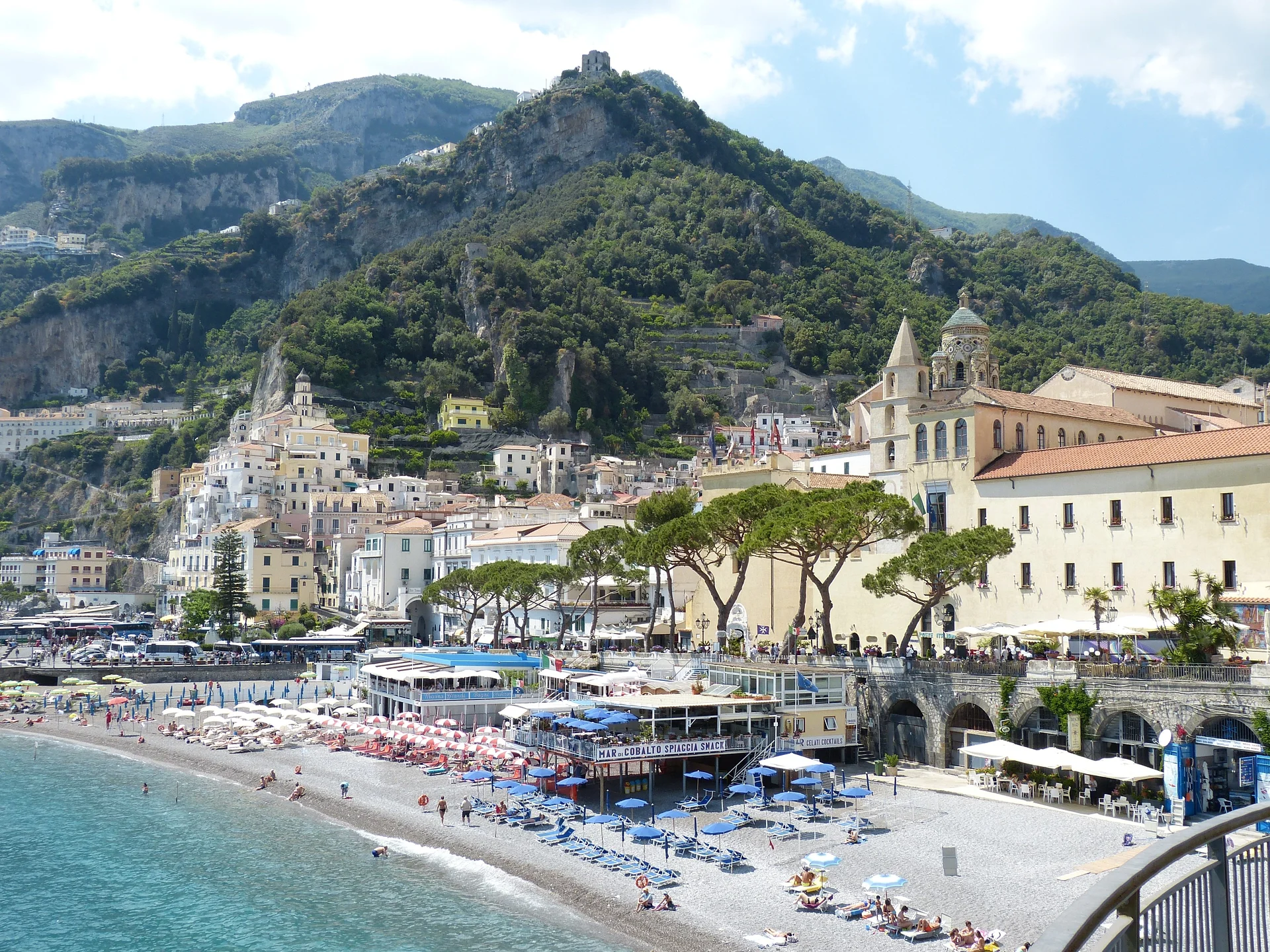
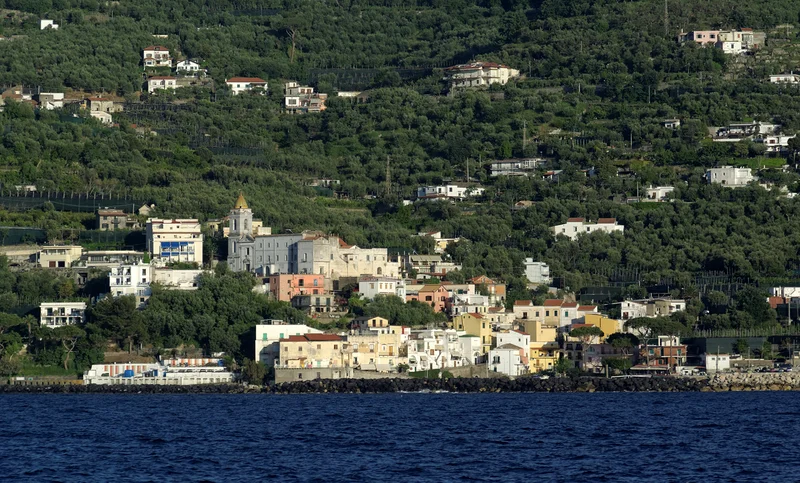
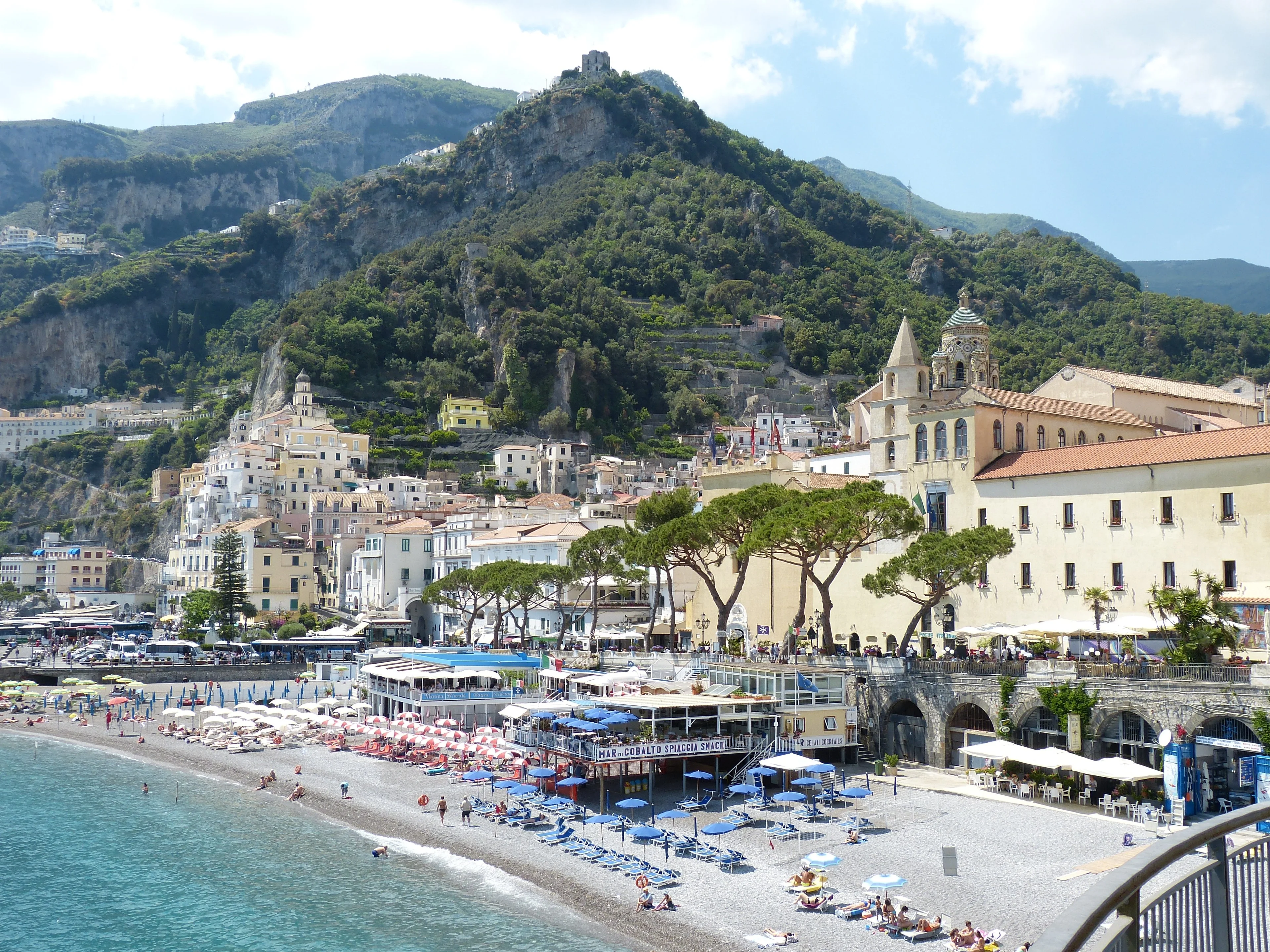
Below the hillside homes, the beach
Walking through Amalfi feels like stepping into a medieval urban maze. The narrow streets climb and crisscross, punctuated by passageways and staircases that often lead to unexpected corners. Saint Andrew's Cathedral, located in Piazza Duomo, serves as a magnificent landmark. Its imposing flight of 62 steps leads to a building of striking beauty. Inspired by Arab art and reworked over centuries, this 987-construction is impressive. Its Byzantine door, colorful facade, and mix of neo-Gothic, Romanesque, and Baroque influences create a dazzling stylistic ensemble. The crypt is a must-see, and adjacent to the cathedral, the 13th-century Cloister of Paradise, with its interlaced arches and columns, hides palm trees that heighten the Moorish atmosphere. A diocesan museum rounds out the site.
At the bottom of the steps, you will find restaurant terraces, the fountain also dedicated to Saint Andrew, and the historic core, including the incredible Vagliendola neighborhood. Typical of the area with its high passageways between buildings, the main street, Via Lorenzo, is lined with shops ranging from artisan crafts and pizzerias to gelato shops, souvenir stores, and boutiques. The stroll is marked by picturesque squares with fountains, most notably the Fontana de Cape E Ciucci, a miniature wonderland representing the nativity among 18th-century marble figures. The marina facing the Gulf of Salerno sits at the end of the town center. Ferries allow you to explore the surroundings, such as the island of Capri.
The beach is right at the foot of the town, overlooked by hillsides where pristine white houses seem to keep watch. It offers fine sand, transparent water, and an exceptional setting. Popular as it is, the Marina Grande is quite small at 184 meters long. Some locals prefer the beach at Atrani, which tends to be less crowded.
Lemons, nature, and exceptional paper
Amalfi is also renowned for its artisanal paper, a high-quality craft celebrated since the 12th century. The Paper Museum reveals the secrets of this history and the 16 mills that once lined the Via delle Cartiere. This former 14th-century factory remains the only one featuring original machines and mills. The remains of the ancient Arsenal, housing the museum of the compass and maritime duchy, are also unmissable. Equally famous, the lemon grown in terraced gardens is a tasty emblem that local gastronomy elevates through cremoncello, a creamy liqueur with unique fragrances, or the classic limoncello. The port naturally favors fish and seafood dishes, but the buffalo mozzarella, cannelloni, and antipasti are equally impressive.
The hinterland, with vegetation as lush as the coast, is a hiker's paradise. Between waterfalls and rare flora, the Vallone delle Ferriere is a magical playground that includes an area with historic water mills and lemon groves.
When to go
From Easter to the end of October, the tourist season is in full swing, with high density in the summer. June and September are the best months to enjoy the mild Mediterranean climate without the intense crowds, though the spring blooms of April and May are spectacular to witness. From November to February, many businesses close. As for local events, the city celebrates its festivals on June 27 and November 30.
How to get there
The nearest airport is Naples-Capodichino, located 65 km away. Buses provide connections to Sorrento and then on to Amalfi. By car, take the A3 Naples-Salerno motorway, then the SS163 coast road, which gets busy in season. Ferries also run between the various towns on the coast, but Amalfi is not accessible by train. The train line stops in either Sorrento or Salerno.