
Visiting Herculaneum
Campania is a striking southern region of Italy, forever linked to Mount Vesuvius and its fury. Still active today, this temperamental volcano unleashed one of the most devastating eruptions in 79 AD, wiping out four towns of ancient Rome. Less famous and smaller than Pompeii, Herculaneum is one of those ruined cities. Buried under a mix of mud and volcanic debris, it is actually the best preserved because it was not hit until the day after the initial blast. Just a few miles from Naples, in Ercolano, it is an invaluable and deeply moving place to visit.
A small town of a thousand wonders
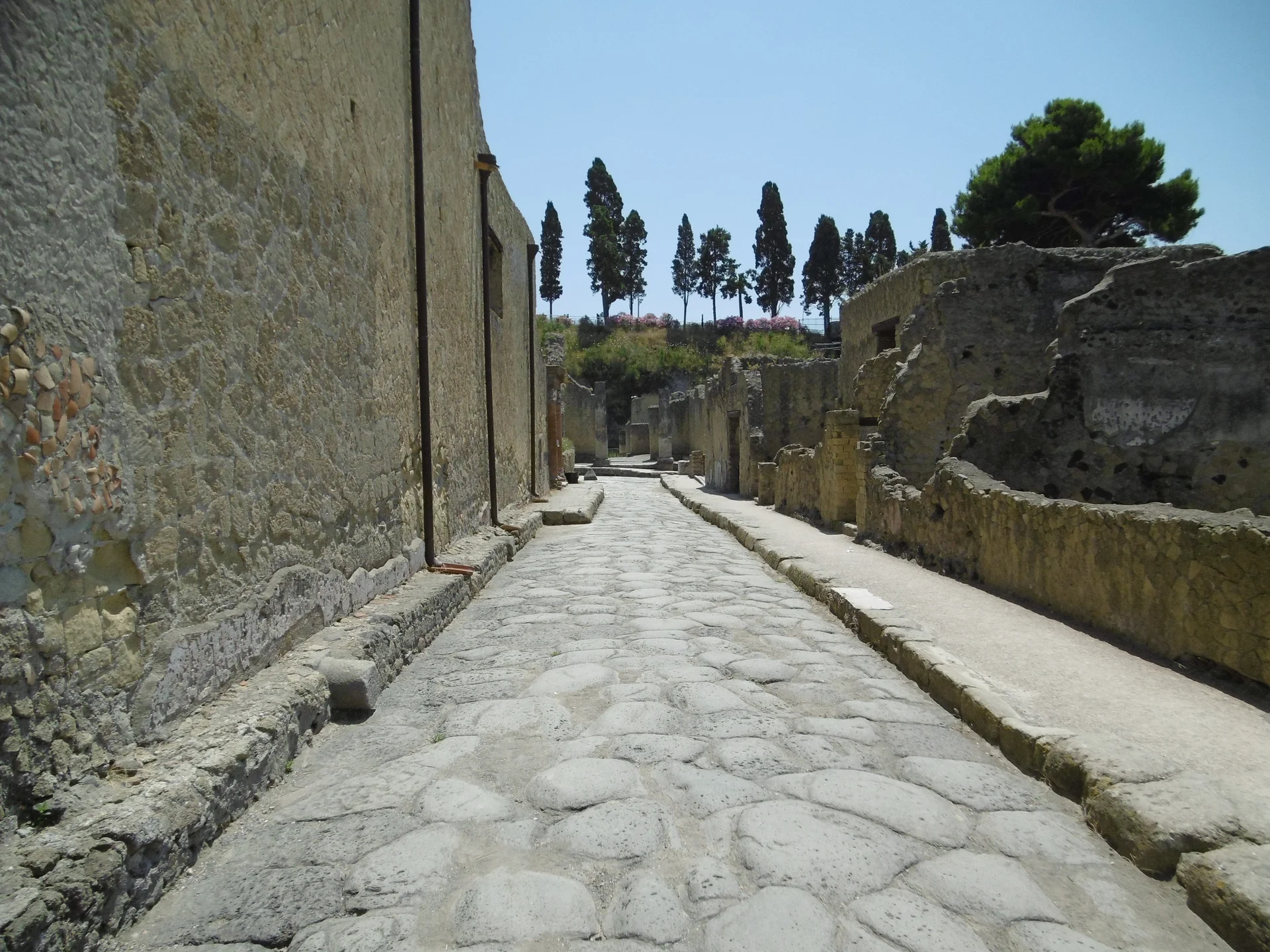
With its remarkably intact ruins, Herculaneum is an extraordinary archaeological site. Of its historical 12 hectares, only a quarter has been brought to light. Excavations began in 1738 with mixed results, and starting in 1828, a true treasure emerged from its hardened shell. While luxurious houses and their artworks were the initial goal of early digs, the town gained recognition as a precious historical record in 1927. With its elaborate road network, sewer system, fountains, patrician homes, and streets, Herculaneum offers an incredible snapshot of a vanished daily life. At the center, you can explore the layout and variety of the insulae, though not every room has been fully excavated. The Decumanus Maximus, the main thoroughfare, was the commercial hub where you can still spot the shops of bakers, jewelers, and blacksmiths, while the urban Thermae showcase the refined tastes of antiquity. The separate men's and women's locker rooms, mosaics, marble details, and colorful floors are striking. A theater featuring decor dating back to Nero and a forum complete this civic core, while near the seafront, the Marine Gate and the Sacred Area are marvelous. The Villa of the Papyri, home to 1,800 precious scrolls, is believed to have belonged to the father-in-law of Julius Caesar. Everywhere you look, the objects, buildings, and stories they tell are simply astonishing.

Herculaneum is a very interesting little ancient site. The houses and streets are well preserved. It is less crowded than Pompeii, so it is more pleasant. Wear good shoes and bring water. A guided tour helps to understand the history. Perfect for seeing the life of the ancient Romans. A very interesting walk for the family, even with young children.