
Positano, the vertical village held together by its staircases
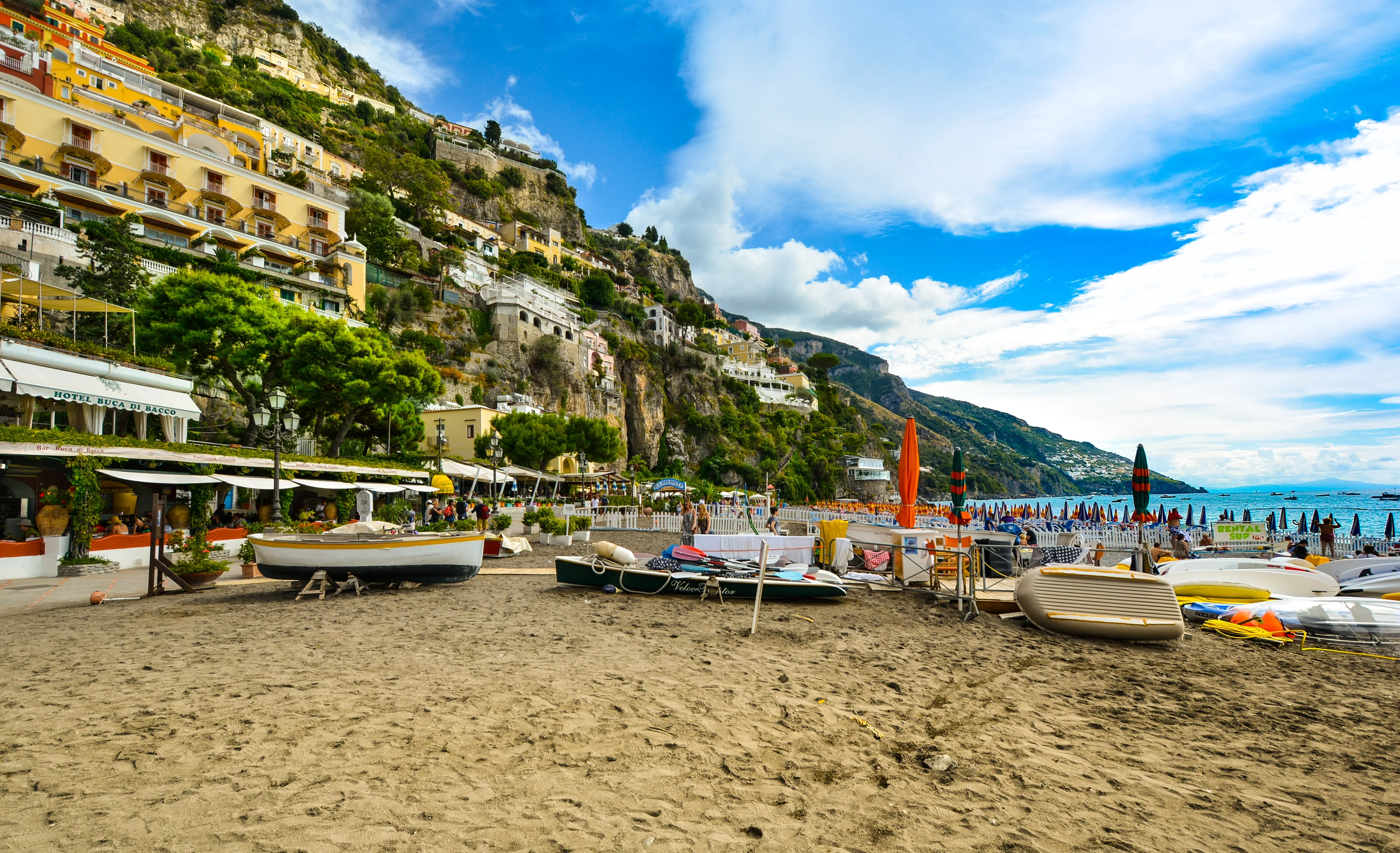
Hundreds of steps connect the top of the village to the sea, and that single fact pretty much explains the whole place. Pastel houses cling to the cliffside like they're suspended in midair, and the sound of waves carries all the way up to the highest terraces.
John Steinbeck wrote in 1953 that Positano "bites deep" while you're there but "fades" once you've gone. Seventy years later, the village still lives up to that dreamlike reputation.
Is this the right destination for you?
If you love walking, don't mind endless stairs, and want to take your time soaking up a view that shifts with every turn, Positano will win you over. It's also a great pick for a romantic trip, a photo-heavy getaway, or a stop along the Amalfi Coast.
On the other hand, if you're after an easy sandy beach, a tight budget, or a quiet scene in peak summer, look elsewhere.
Good fit for:
- Couples looking for romance and dramatic views
- Photography lovers and fans of picturesque architecture
- Strong walkers comfortable with steep climbs
- Travelers combining several stops along the Amalfi Coast
Not a good fit for:
- Tight budgets (this is one of the most expensive spots in Italy)
- Travelers with mobility issues (the village is nearly all stairs)
- Anyone trying to dodge crowds in high season
- Families looking for soft, kid-friendly sandy beaches
Fair warning: the budget here is brutal
Positano ranks among the priciest destinations in Italy, right along with the Amalfi Coast as a whole. Prices spike hard in July and August, and some sea-view hotels double their rates compared to fall.
| Expense | Range |
|---|---|
| Night in a basic hotel, no sea view | 80 to 130 € |
| Night in a comfortable hotel with a view | 250 to 500 € |
| Quick bite (panzerotti, focaccia) | 8 to 15 € |
| Restaurant meal with sea view | 40 to 70 € |
| Transport and activities per day | 20 to 50 € |
Rates are estimates and subject to change
Practical realities to know before you go
You get around the village almost entirely on foot, with constant elevation changes. Walking shoes aren't a nice-to-have, they're mandatory. The main road, the SS163, is narrow and jammed in high season, to the point where buses and taxis crawl along at a walking pace.
Safety isn't really a concern here: Positano is a peaceful tourist village. The language barrier is a non-issue too, since English is widely spoken in shops and hotels.
Exploring the village from the bottom: the beach and waterfront
Spiaggia Grande, the main beach
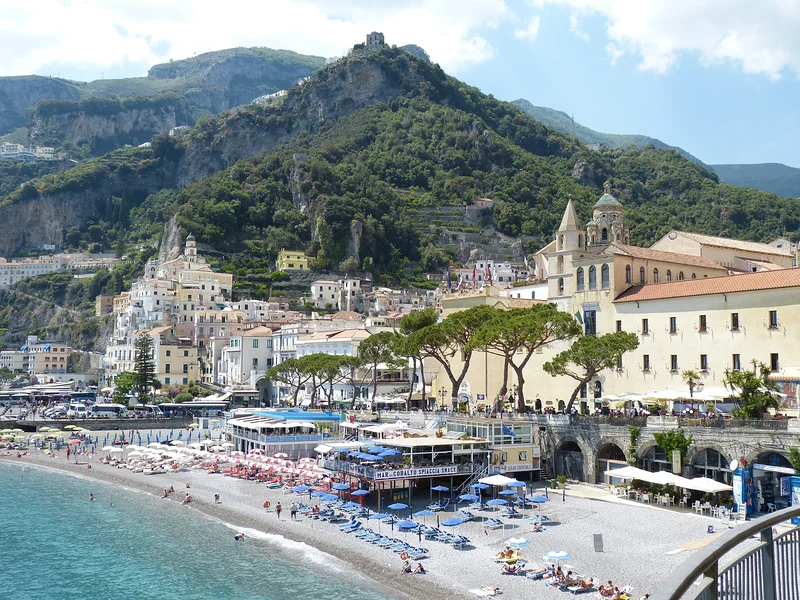
Lined with pebbles, Spiaggia Grande is where most of the action happens: colorful umbrellas, restaurants right at the water's edge, and a postcard view of the stacked houses above. Part of the beach is public and free, the rest rented out by nearby establishments.
Early morning, before 9am, is the calmest window to enjoy it without weaving between towels.
Fornillo, the locals' beach
About fifteen minutes on foot along the coastal path, Fornillo beach draws smaller crowds and is popular with locals for its more relaxed feel. The pebbles are similar, but the atmosphere is noticeably calmer than at the main beach.
Friendly tip: to dodge the ferry and tour bus crowds, visit Positano on a weekday rather than a weekend, even in the off-season.
Heading up: churches, alleyways and viewpoints
The Chiesa di Santa Maria Assunta, easy to spot thanks to its dome covered in yellow and green majolica tiles, towers over the main beach. Inside, a Byzantine icon of the Black Madonna, said by legend to have been recovered by shipwrecked sailors, reportedly dates back to the 13th century.
The alleyways climbing toward the upper village, like Via Cristoforo Colombo, are lined with ceramics shops, tailoring workshops (home of the famous "Positano fashion" look), and small terrace cafes. Every landing gives you a new angle on the gulf below.
Hiking the Path of the Gods
The Sentiero degli Dei ("Path of the Gods") links Bomerano to Positano over nearly 8 km, tracing the coastline at over 600 meters of elevation in places. Plan on 3 to 4 hours of walking, with views that more than earn the effort.
The trail descends into Positano through Nocelle, a hamlet reachable only on foot or by a small local bus, followed by a stretch of roughly 1,500 steps down into the village.
Where to eat and drink in Positano
The local specialty you shouldn't skip is scialatielli ai frutti di mare, thick fresh pasta with seafood, often made with the day's catch. The local limoncello, made from Amalfi Coast lemons (IGP certified since 2010), is best served chilled at the end of a meal.
For a cheaper break, kiosks selling sfogliatelle and other pastries offer sweet snacks at reasonable prices, far from the waterfront restaurant tabs.
Where to stay in Positano and nearby
The village center has the priciest lodging, with guaranteed sea views and a price tag to match. For gentler rates, neighboring villages like Praiano or Montepertuso, perched above Positano, offer a similar setting for less, with just a few extra minutes on the bus.
How to get to Positano
The closest airport is Naples-Capodichino, about a 1h15 drive away. From Naples or Sorrento, seasonal ferries (generally running April through October) connect directly to Positano in 35 to 50 minutes, often a more comfortable option than the drive.
There's no nonstop service from the US to Naples; the usual routing connects through a major European hub like Rome, London, or Frankfurt, with total travel time typically running 12 to 16 hours depending on the connection.
Getting around Positano
You see the village on foot, there's no alternative in the central alleyways. A small local orange bus connects the different levels of the village and the beaches for a few euros a ride.
Driving is strongly discouraged in the center: parking is scarce and expensive, and the alleyways are too narrow. If you're arriving by car, park on the outskirts and finish the trip on foot or by shuttle.
When to go to Positano
May, June and September offer the best balance of mild weather and manageable crowds. Skip July and August if you're trying to avoid the crowds and the prices that come with them, even though the sea is at its warmest during those months.
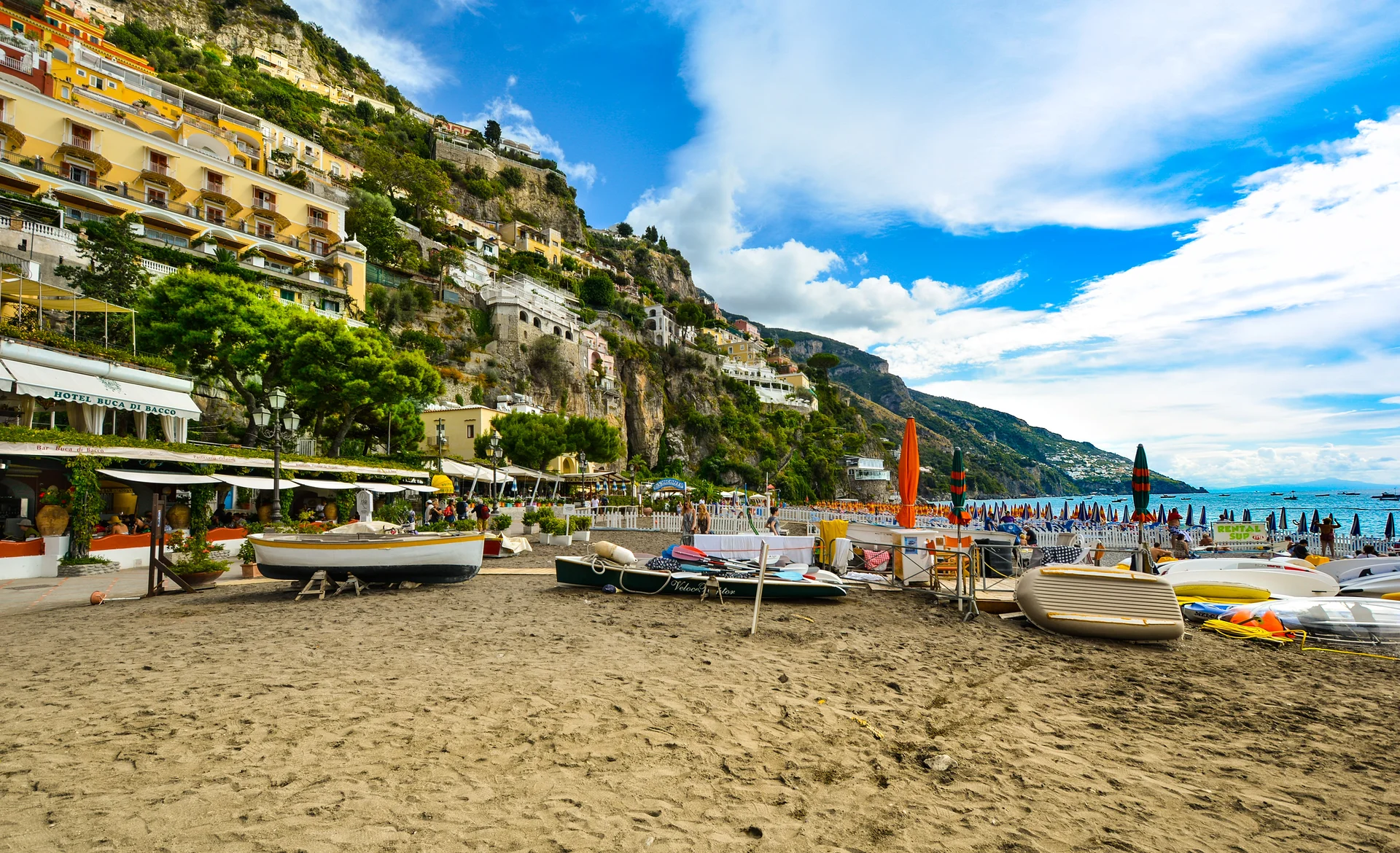
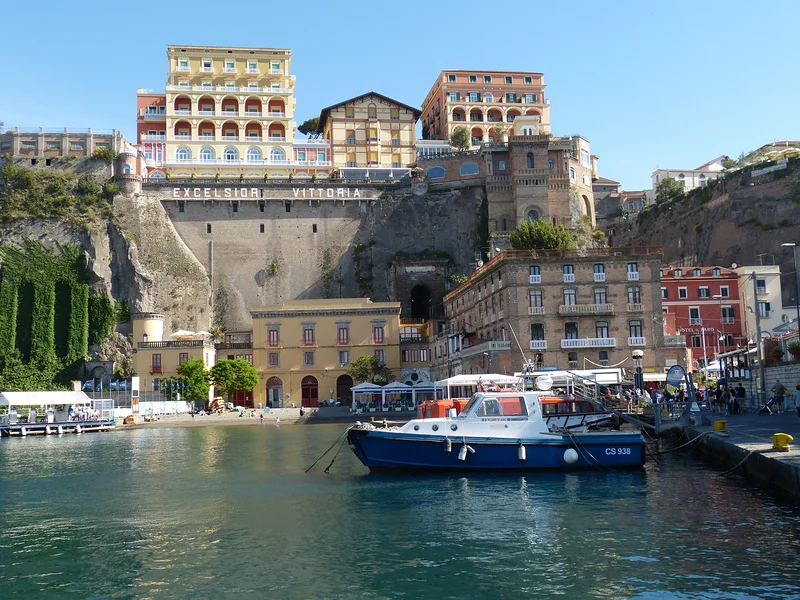
I arrived in Positano by way of the mountains. I actually hiked along the Path of the Gods, a beautiful mountain-side trail that takes about 5 hours. Arriving in Positano, whether by foot or by boat, is surreal. You have to wander through this hillside village, enjoy a lemon pastry, and then go relax by the beach. To get back to Naples, we had to book a minibus for the group.