Le Caire

Top 7 most beautiful cities in Egypt to visit2026 ranking

Discover our members' favourite cities in Egypt. Feel free to publish your own reviews to take part in this collaborative ranking.

Favourite cities in Egypt among our members, approved by the editors

#1 Cairo +47

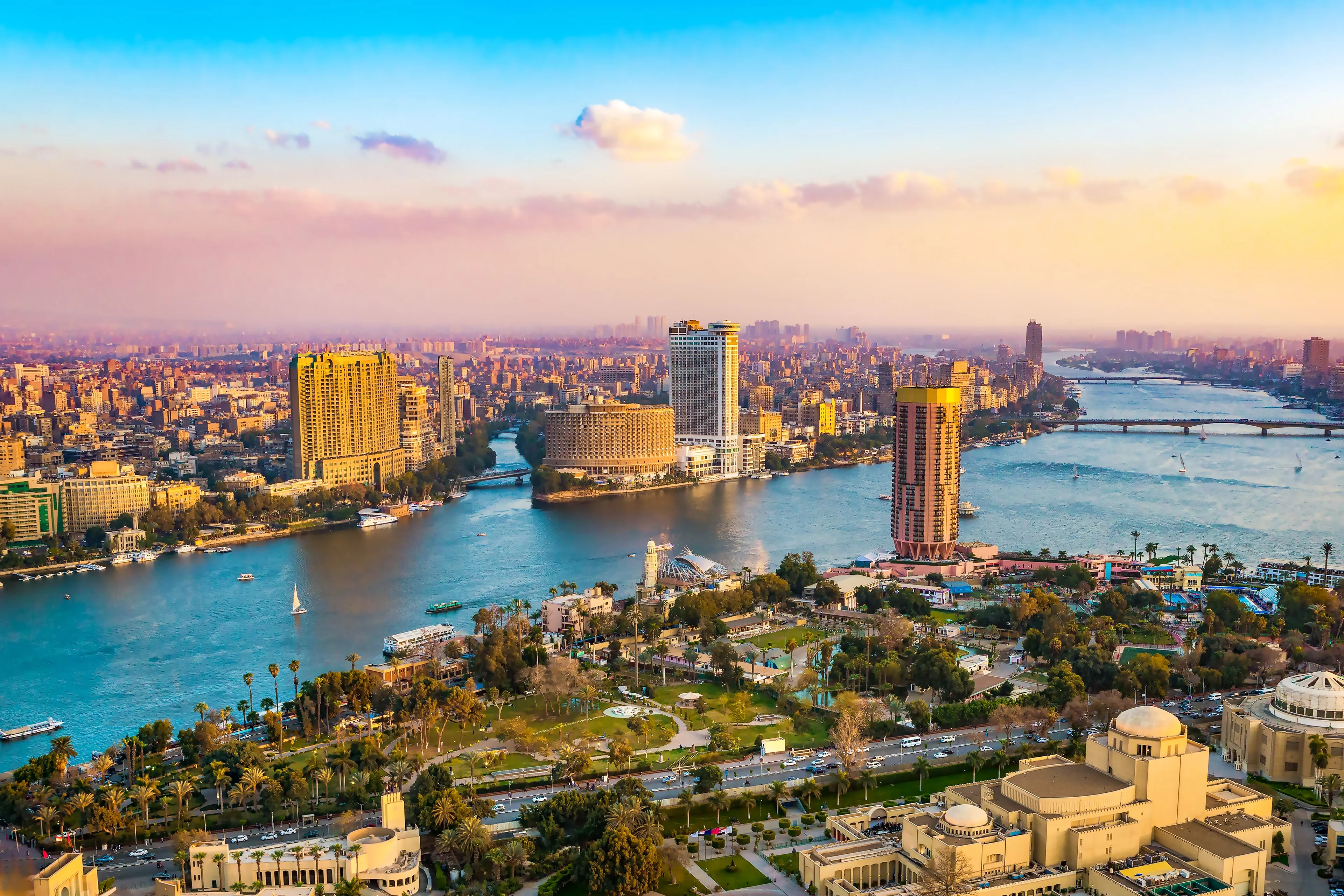
Cairo is the largest city in Africa and a place where ancient history hits you from every angle. You can spend your days exploring the Giza Pyramids, wandering the historic architecture of the Islamic Quarter, or visiting the spiritual sites of the Coptic Quarter. Top off your trip with a stroll through the local souks or a cruise down the Nile for a perspective you just cannot get anywhere else.

#2 Aswan +27

Perched on the east bank of the Nile, Aswan serves as Egypt's southernmost major city, acting as a cool oasis amidst the desert. As the gateway to the ancient Kingdom of Nubia, it has a history deeply rooted in trade routes and caravans. While many travelers treat it as a fleeting pit stop before heading to the temples of Abu Simbel, the city itself possesses a distinct character defined by its lush, green landscapes, scenic islands, and significant historical sites.

A market you cannot miss

Navigating Aswan is straightforward, as the corniche runs along the Nile for several miles, concentrating most of the city's cafes and restaurants. It makes for a pleasant stroll, with the city unfolding into the streets perpendicular to the water. The souk is one of the city's most vibrant landmarks. Day or night, this large covered market is packed with vendors, and the stalls overflow with Egyptian and African goods including perfumes, spices, textiles, handicrafts, incense, fruits, and flowers. It is the place to hunt for deals, and on the outskirts, Nubian culture is on display through traditional items like talismans, jewelry, and basketry. The market is a sensory experience of color and scent. A local specialty is stuffed pigeon, often prepared with rice, served on skewers, or simply grilled. You will also find molokhia (a traditional vegetable soup), eggplant dishes, mezzes, tahini, and fresh fish. Pair your meal with local flatbread, fresh fruit juices, and a Nubian coffee spiced with cardamom.

Island hopping

Directly across from the city center, Elephantine Island is a must-see. You can reach it by hiring a felucca, one of the traditional sailboats that remain the most common way to get around on the water here. Siou and Koti, two Nubian villages, sit nestled between farm fields and palm groves on the island, where the colorful homes create a quiet, timeless atmosphere. You can explore the ruins of the Temple of Khnum, dedicated to the ram-headed deity. Within this archaeological site, you will find the nilometer, which is arguably the most famous staircase used to measure the Nile's annual flood levels. Colonnades decorated with hieroglyphs round out the site, and from here, you can see the elegant pink granite Aga Khan Mausoleum, built in 1959, overlooking the water. A small museum dedicated to Nubian culture provides context on the region's history, which is closely linked to the construction of the Aswan High Dam. You can visit the dam itself, and the recent Nile Museum offers a complete overview of the project.

The neighboring island is a small slice of paradise. Kitchener Island is home to the fabulous Botanical Garden, established in 1896. The relief provided by its greenery in the middle of the desert is striking. Plants, flowers, and trees from equatorial Africa, India, and tropical Asia create a lush canopy. The contrast with the arid sand on the opposite bank is sharp, and the garden serves as a peaceful refuge for birds.

On the west bank of the Nile, the Tombs of the Nobles feature long ramps used for transporting sarcophagi. It is a mysterious site that offers panoramic views. Further west, the Monastery of Saint Simeon sits atop a plateau. It was once home to 300 monks until 1321, and this complex of four buildings remains one of the most important monuments from the Christian era. With its 26-foot walls, it resembles a fortress and is remarkably well-preserved. About 1.2 miles from Aswan, the granite quarry houses the Unfinished Obelisk. Commissioned by Queen Hatshepsut nearly 1,500 years before the common era, the project was abandoned after the stone cracked, leaving us with a massive relic still lying in its excavation trench. Six miles away, on Philae Island, the Temple of Isis from the 4th century BCE is yet another architectural marvel. Aswan is a legitimate destination in its own right, offering a genuine and compelling experience.

When to go

The climate is arid and dry. It is most pleasant from December through February when temperatures are mild. From June through September, the heat can become extreme.

How to get there

You can find numerous flights into Aswan International Airport, located 12 miles from the city center. Public transportation and taxis are available for the transfer. If you are coming from Cairo, 520 miles away, you can take a sleeper train, which is a popular choice for the distance, or a direct 80-minute domestic flight.

#3 Luxor +25

Luxor holds the highest concentration of ancient pharaonic ruins on the planet. You can walk through the massive temple complexes of Karnak and Luxor, explore the tombs in the Valley of the Kings, or visit the cliffside mortuary temple of Hatshepsut. Spanning both banks of the Nile, this former capital of ancient Egypt functions today as an open-air museum where three millennia of history appear around every corner.

#4 Abu Simbel +17

In southern Egypt, Abu Simbel could have easily remained an unassuming village, known primarily to freight drivers for its proximity to the Sudanese border. That changed thanks to ancient Nubia, which left behind two priceless treasures buried under the sand: the Great Temple of Ramses II and the Temple of Nefertari, discovered in 1813 and 1817 by Swiss and Italian explorers. Threatened by the rising waters of the Nile, they had to be moved 160 meters in 1964. It took three and a half years and 3,000 workers to clear and cut the stone blocks, a colossal operation that captivated the world and permanently altered the destiny of this small town in the Aswan region. Located on the edge of Lake Nasser, Abu Simbel now welcomes millions of travelers.

A peaceful haven

Its desert location makes Abu Simbel a destination with real character, and while the archaeological sites are the main attraction, it is worth staying at least one night. Some hotels are true homages to Nubian culture, their architecture and traditional decor possessing immense charm. In local restaurants, you will find distinctive cuisine with specialties such as tahina made from sesame, babaghanouj, which is an eggplant puree, and of course foul, a stew of hearty fava beans. Food lovers often gravitate toward mehallabeyya, a pudding flavored with rose water and topped with pistachios. While some claim Nubian coffee is among the best in the world, the hibiscus tea is a strong contender.

Aside from desert excursions, another highlight of Abu Simbel is Lake Nasser, a magnificent body of water that acts like an inland sea in the middle of the desert. Among the papyrus, birds like herons have made their home here, creating a tranquil environment far from urban noise and bathed in exceptional light. On its shores, the Pharaoh stands guard over his lands as an eternal master.

Ramses II, immense and eternal

In a country filled with remarkable ancient sites, Abu Simbel is certainly one of the most striking. On the ancient sacred hills of Meha and Ibshek, Ramses II launched a massive construction project at the beginning of his reign, in 1279 BC, and standing before it today is truly dizzying. The temples are carved directly into the sandstone cliffs, with the largest dedicated to the worship of several deities including the falcon-headed Ra-Horakhty, and of course, Ramses himself. The 33-meter facade is composed of four statues measuring about 20 meters tall that leave no doubt about their purpose. Dressed in a kilt, wearing the nemes headcloth, and sporting a false beard, the Pharaoh sits in all his splendor. Inside, you find a hypostyle hall with hypnotic engraving detail, and ten side chambers leading to the hall of statues, which are equally massive. The walls recount his victories, including the Battle of Kadesh and his exploits against the Hittites and Libyans. The ingenuity of those who built this oversized temple lies in one detail: at every equinox in February and October, everything is designed so that a ray of sunlight slips inside to illuminate the statue of Ramses for his birthday.

A few meters away sits the temple dedicated to Nefertari, the first and favorite wife of Ramses II, who was deified in the image of Hathor. It is more intimate, with six 10-meter-tall statues on the facade, including four representing the Pharaoh, along with sumptuous bas-reliefs and sculptures of their children at their feet. The queen is depicted with her horned crown and tall feathers, radiating imperial beauty. Inside, texts and reliefs highlight the couple, sometimes with great tenderness, alongside various deities. In the evening, a light and sound show illuminates the site. Ramses II is long gone, but he continues to reign and fascinate.

When to go

The hot season lasts from May to October, with an arid and dry climate that can reach extreme temperatures. January is the coolest month, and if you are sensitive to heat, the period between February and April is ideal. To avoid the crowds, it is highly recommended to visit the temples very early in the morning.

How to get there

Most international travelers fly into Cairo and connect to Aswan, which is 280 km from Abu Simbel. The road crosses the desert, and buses handle the route regularly. Some opt for a private driver. You can also choose a cruise that includes a stop at Abu Simbel. The town has its own airport, and the flight from Aswan takes 45 minutes.

Must-see

#5 Giza +10

Located about 12 miles southwest of Cairo, Giza functions essentially as the metropolis's sprawling suburb. Situated on the west bank of the Nile and separated from the capital by a bridge, the city is defined by distinct neighborhoods with strong individual identities. Millions of travelers visit every year, drawn by the chance to stand before the last of the seven wonders of the ancient world still standing: the Great Pyramid of Giza. On the plateau and within the necropolis, two other pyramids round out a legendary Old Kingdom complex guarded by the iconic Sphinx. It is hard to compete with such monumental history, making Giza a primary stop on any Egyptian itinerary.

Culture in all its forms

Between aging apartment blocks, luxury hotels, and the agricultural community of Qorsaya Island, Giza can be disorienting. This urban landscape illustrates the constant struggle to balance ancient heritage with the demands of a modern city. Giza is energetic and divided into neighborhoods with unique character. Chic and trendy, Mohandessin focuses on elegance and commerce, filled with restaurants and cafes. It is also the home turf of the Ultras Ahlawy soccer fans, so match nights here are high-energy affairs. Kit Kat is a much more working-class area where you will find many tile artisans. Among the notable buildings, the massive Cairo University, founded in 1908, stands out for its impressive architecture. Nearby, the Al-Orman Botanical Garden serves as one of Giza's green lungs. Its 30 acres feature impressive collections of cacti and trees. While it saw some neglect following the Arab Spring, it remains a peaceful escape. Housed in a former private mansion, the Mohamed Mahmoud Khalil Museum gathers 19th-century art, including a significant number of French works. Located in the heart of Egypt, paintings by Delacroix, Gauguin, Monet, and Van Gogh offer an unexpected contrast to the Orientalist canvases on display. You can also find culture in the poignant Taha Hussein House-Museum, an intimate space that provides a window into the life of one of the 20th century's most influential writers and intellectuals.

Craftsmanship often blurs the line into fine art, and those who visit the Ramses Wissa Wassef Art Center will see why. Weaving is the core of this unique educational site, which has received numerous awards for its aesthetic quality and philosophy. In an unconventional space designed by the professor who was also an architect, the visit is as beautiful as it is educational.

Near the Al Bahr Al Aazam avenue, one of the most unusual attractions has opened its doors, acting as a gateway to the past. The Pharaonic Village transports you into a fully reconstructed Ancient Egypt. Through life scenes, traditional trades, period costumes, and music, you encounter the great figures of that era in settings inspired by Nubia. Sports, games, shows, and playgrounds make it a popular entertainment site, and it sets the stage for the most fascinating encounter of all, the one with the pyramids themselves, built 4,500 years ago.

Facing the Pyramids and the Sphinx

A few miles away on the desert plateau, the three largest pyramids in Egypt await. The pyramid of Khufu sits at the center of the funerary complex, serving as the oldest and largest tomb. Standing 479 feet tall, it is a massive structure composed of 2.5-ton limestone blocks. It is a monument of pure mystery and scale. The experience of being here is hard to put into words, and you can visit the interior, though the passages leading to the sarcophagus chamber are extremely narrow. Beside it stand the Pyramid of Khafre and the Pyramid of Menkaure, which are smaller, along with the queens' pyramids, the remains of the funerary temple, and the hidden mastabas, shafts, and underground chambers.

Since 2590 BCE, the Sphinx, measuring 240 feet long and 65 feet high, has watched over the site. Carved from a single block of bedrock, this constant guardian with its broken nose is unique for its human head and lion body. The identity of the monarch it represents remains a subject of debate, but through its sheer scale, it has certainly achieved immortality.

When to go

With spring and autumn temperatures hovering around 90°F, these shoulder seasons are the most comfortable times to explore Giza, especially the pyramid complex where you will be doing a lot of walking. Summer brings many scorching days with dry air. Winters are mild, with an average of 57°F.

How to get there

The pyramid site is about 5 miles from Giza, which sits roughly 12 miles from Cairo. Buses and taxis handle the connection. Flights to Cairo are available from numerous major international hubs.

Must-see

#6 Sharm el-Sheikh +9

Located on the strategic Sinai Peninsula, Sharm el-Sheikh has evolved into a purpose-built resort town. Travelers seeking an unfiltered, authentic look at Egypt may find the experience a bit sanitized.

In a country that is often intense and high-energy, this stop offers a familiar, Western-leaning pace. The natural environment is the main draw of this former fishing village, which still maintains an active port despite commercial shipping restrictions. With pristine beaches, the crystal-clear waters of the Red Sea, and world-class marine life, the setting is hard to beat.

A tourism-focused center

The city stretches across several miles of coastline, which is defined by a series of bays. Naama Bay is the largest and serves as the primary tourist hub. The white sand beach offers a striking contrast between the jagged, red-hued mountains and the vibrant blues of the sky and water. This is where the coastal appeal of the area is most concentrated.

Trendy restaurants and clubs

Things get lively after dark in this neighborhood, which is packed with nightclubs, bars, and attractions like Hollywood, a sprawling entertainment park. You will find plenty of restaurants to choose from, serving everything from fresh seafood and stuffed pigeon to reyash dani, which are lamb chops served with a mint-yogurt dipping sauce.

Shopping for every taste

While the waterfront is lined with shops, those in the Old Market feel a bit less commercial. The area features pedestrianized, cobblestone streets with Parisian-style lampposts, a strange aesthetic mix that defines much of Sharm el-Sheikh. You can browse for knick-knacks, lamps, ottomans, and spices in storefronts that feel like traditional souks.

Al Mustafa Mosque, a landmark of Sharm el-Sheikh

Rising above the local activity, Al Mustafa Mosque is an architectural standout. This place of worship is relatively modern, but its two 76-meter minarets make it an impressive example of Ottoman-style design. Visitors are welcome in designated areas, provided they observe local religious customs.

Things to see in the region

The Sinai Desert

At the edge of the Sinai Desert, you can sign up for camel treks, horseback riding, or quad bike excursions. Hiking Mount Sinai is a major draw, though it requires a guide and careful planning. It involves a three-hour drive and a challenging trek to the 2,285-meter summit. At the base, the 6th-century Saint Catherine's Monastery offers a deep look into the region's history.

Preserved nature and magical marine life

The water of the Red Sea is the region's greatest asset. It is warm and clear, hiding an incredibly rich marine ecosystem that attracts divers from around the world. While some of the more popular bays have seen coral degradation, the protected sites remain in excellent condition, making them perfect for both beginner and experienced snorkelers.

Ras Mohammed National Park

Sharm el-Sheikh is flanked by two national parks. To the south, Ras Mohammed is a protected paradise. Because construction is prohibited, the natural landscape remains untouched, featuring mangroves and salt marshes. It is home to some of the most vibrant pristine coral reefs you will find, teeming with thousands of colorful fish species, starfish, and mollusks.

Other natural reserves

Further afield, Shark Reef is a hotspot for larger marine life like barracuda, tuna, and sharks. Nabq Park, located about 25 km away, is another stunning reserve known for its birdlife and unique vegetation.

Ras Nasrani features a reef dotted with large bays and impressive coral formations. Taking a boat trip from the pier is a highlight, and swimming alongside dolphins is a common enough occurrence to make you forget the artificial feel of the resort areas.

Local culinary specialties to try

While Sharm el-Sheikh is famous for its fresh seafood, the city also serves a variety of classic Egyptian dishes that are worth seeking out.

Look for koshari, a hearty mix of pasta, rice, lentils, and chickpeas topped with a spicy tomato sauce. Foul moudammas, which consists of slow-cooked fava beans seasoned with olive oil, garlic, and lemon, is another popular traditional dish.

If you have a sweet tooth, try basbousa, a semolina cake soaked in sweet syrup.

Where to eat?

  • El Masrien Restaurant (Old Town): Located in the historic district, this spot serves authentic Egyptian cuisine in a traditional setting.
  • Fares Seafood Restaurant (Il Mercato): Known for fresh catches and large portions, this is a go-to for anyone craving seafood.
  • Rangoli (Naama Bay): An Indian restaurant that offers a panoramic view of Naama Bay.
  • Pomodoro (Naama Bay): An Italian option that turns out solid fresh pasta, rich sauces, and well-executed pizzas.

Where to stay?

  • Four Seasons Resort Sharm El Sheikh (Shark's Bay): A luxury property with a private white-sand beach, lagoon-style pools, and a variety of Mediterranean, Arabic, and Italian dining options.
  • Royal Savoy Sharm El Sheikh (Soho Square): A five-star hotel that blends luxury with traditional Egyptian style, featuring private villas with pools and ocean views.
  • SUNRISE Arabian Beach Resort (Sharks Bay): A beachfront resort with elegant rooms, multiple pools, and an international selection of restaurants.
  • Rixos Sharm El Sheikh (Nabq Bay): An adults-only, all-inclusive resort with 7 pools, 9 bars, and 7 à la carte restaurants, all set among palm trees with views of the Red Sea.

When to go?

Autumn and spring are the best times to visit when the weather is dry and mild, and the tourist crowds are thinner. In the summer, temperatures can easily climb to 46°C (115°F).

How to get there?

There are no direct flights from Paris, but many connecting options are available. Sharm el-Sheikh International Airport is 17 km from the city, and you can reach your hotel via bus or taxi. It is the second-largest airport in the country, following Cairo.

How to get around?

Taxis and hotel shuttles are the most common ways to get around. Be sure to negotiate your taxi fare before starting your trip, as they generally do not use meters. For more freedom, car rental is an option, though local traffic can be chaotic.

In tourist areas like Naama Bay, it is pleasant to explore on foot to soak in the local atmosphere.

#7 Alexandria +2

As Egypt's second-largest metropolis, Alexandria is a place of constant motion and sharp contrasts. Its history begins with Alexander the Great in 331 BC, and he would likely recognize the ambition behind its current status as a major port and industrial hub. While the city has weathered earthquakes, wars, and shifting empires, it remains an indomitable urban sphinx on the edge of the Nile Delta. From its Roman and Byzantine eras to its time as a center for early Christianity and its eventual submission to General Bonaparte, the city owes much of its modern economic life to the Suez Canal. It remains a destination where ancient ruins sit comfortably alongside Islamic history and Greco-Roman treasures.

A waterfront of wonders

The best way to get your bearings is to walk along the corniche. It is the city's primary artery and a perfect starting point for any itinerary. During the day, you will see local fishermen and merchants at work, but the area really hits its stride after sunset. At the port, fishing boats provide a constant backdrop, and while the legendary lighthouse was lost in the earthquake of 1303, you can still find remnants of it at the Citadel of Qaitbay. Built on the original lighthouse site using some of its salvaged stones, this defensive fortress from 1477 is a masterclass in military architecture. Between the vaulted ceilings, intricate carvings, and the sea views, it is a local landmark. Underwater, archaeologists have recovered sphinx statues and columns, many of which are now on display at the Marine Museum on-site. Nearby, the Abu el-Abbas el Mursi Mosque, with its five domes and two minarets, is worth a visit.

In the same neighborhood, the Royal Jewelry Museum is housed in the former Palace of King Farouk. With its Renaissance-style decor and stained glass, the building serves as a fitting home for a vast collection of 19th-century royal jewelry. Further along the coast, the ultra-modern, semi-spherical architecture of the Bibliotheca Alexandrina stands out. It holds the world's largest reading room, a collection of eight million books, and a dedicated museum for ancient manuscripts. Finally, the Stanley Bridge is a must-see along the corniche. It acts as a link between the city's different eras, and when it is illuminated at night, it offers one of the best spots in the city to watch the sunset.

A journey through history

The most significant ancient monument in Alexandria is Pompey's Pillar. Its 30-meter height gives you a sense of the scale of the Temple of Serapis that stood here at the end of the 4th century. Three pink granite sphinxes surround the site, which also includes underground galleries. Finds from the area, including a marble head of Serapis and the Apis bull, are displayed at the Greco-Roman Museum. With thousands of relics dating back to the 3rd century BC, it is considered the most important museum of its kind in the world. To the east, in the El Mandara district, the Montazah Palace, built in 1892, displays a Florentine-Turkish style defined by its massive tower and symmetrical design. While the interior is closed, the 150 hectares of manicured gardens, palms, and flower beds are open to visitors. La Mamoura Beach is located nearby and is a popular spot for a swim.

The waterfront bars and restaurants are ideal for sampling local food. Look for Kouchari, a hearty mix of brown lentils, rice, and tomato sauce, or balah el-bahr (sea dates) and gandofli (garlic clams). Street stalls are excellent for grabbing falafel or hawawshi, a pita stuffed with spiced meat. Alexandria is a dish best served with a view.

Getting there

While the main international airport in Alexandria is currently under renovation, the Borg el Arab airport serves as the primary hub and is located 48 km from the city center. Taxis and bus services are available for the transfer. Mediterranean cruises also frequently dock here. If you are arriving from Cairo, you can take a domestic flight, a bus, or the train.

When to go

The climate is mild year-round, with temperatures averaging 18°C (64°F) in January and reaching 31°C (88°F) in August. Expect the hottest weather between May and October.

Must-see

Latest reviews

The magic of Luxor

The most breathtaking thing, if you are connected to the right vibes, is Luxor with those columns over 20 meters high surrounded by colorful 3,000-year-old hieroglyphics. There is really a unique atmo…

112 0

The best trip I have ever taken!

Egypt! The most beautiful trip I have ever taken, not just because I was already a fan of the history of the pyramids back in middle school! But for the change of scenery... From the moment we arrived…

96 0

At the foot of the Pyramids

If we are talking about Giza as a town, there is really no point in staying there, it is better to sleep in Cairo. On the other hand, you go to Giza for the famous pyramids of Egypt, which are actuall…

16 0

Starting point for the cruise

I have such great memories of Luxor. It is the starting point for Nile cruises after a flight or train ride from Cairo. We stayed in a beautiful hotel in the center, where Nicolas Sarkozy and Carla Br…

12 0

A wonder that is hard to reach

During my Nile cruise in Egypt with my family, we took the extra excursion to Abu Simbel and I did not regret it. A jeep picked us up in Aswan very early in the morning. The trip was long for the day,…

17 0

Rankings by travellers, for travellers

Our rankings are powered by thousands of reviews from travelers like you, not the arbitrary pick of a single editor. Every positive review you publish raises the destination’s score.

1 positive review = +1 reco

Your voice matters!

Have you travelled and discovered amazing places? Share your experience and help the community rank the most beautiful destinations! Sign up for free to post reviews and make your voice heard.