
Visiting Abu Simbel
In southern Egypt, Abu Simbel could have stayed a sleepy outpost known mainly to freight drivers for its proximity to the Sudanese border. Instead, ancient Nubia left two priceless treasures hidden beneath the sand: the grand Temple of Ramses II and the Temple of Nefertari, discovered in 1813 and 1817 by Swiss and Italian explorers. Threatened by the rising waters of the Nile, they had to be moved in 1964, 65 metres higher and 200 metres back from the water. It took three and a half years and 3000 workers to clear and cut the blocks, a massive operation that captured global attention and forever changed the fate of a quiet regional town near Aswan. Sitting right on the edge of Lake Nasser, Abu Simbel now welcomes travellers from around the world.
A peaceful haven
Its desert surroundings give Abu Simbel a distinct personality, and while exploring the archaeological ruins is the main event, staying at least one night is well worth it. Some hotels pay true tribute to Nubian culture, featuring typical architecture and decor with real charm. At small local eateries, you will find bold flavors in specialties like sesame tahina, babaghanouj eggplant dip, and of course foul, a hearty fava bean stew. Food lovers and the curious flock to mehallabeyya, a rosewater and pistachio cream pudding. Nubian coffee is said to be among the best anywhere, though hibiscus tea gives it a run for its money.
Aside from desert excursions, another major draw in Abu Simbel is Lake Nasser, a stunning body of water that feels almost like an ocean in the middle of the desert. Papyrus reeds line the shores where countless birds, including many herons, have made their home. It is a wonderfully quiet spot far from city noise, bathed in exceptional light. Along the banks, the Pharaoh stands guard over his lands like an immutable master.
Ramses II, massive and eternal
In a country packed with remarkable ancient sites, Abu Simbel ranks among the most striking. On the ancient sacred hills of Meha and Ibshek, Ramses II launched a colossal construction project at the start of his reign, in 1279 BC, and standing in front of it today is genuinely dizzying. The temples are carved directly into sandstone cliffs, with the larger one dedicated to several deities including the falcon-headed Re-Horakhty and, naturally, Ramses himself. The 33m facade features four statues towering around twenty meters high that leave zero doubt about who rules here. Wearing a kilt, the nemes headcloth, and a fake beard, the Pharaoh sits in full splendor. Inside, a hypostyle hall with mesmerizingly fine carvings and ten side rooms leads to the statue hall, where the figures are massive as well. The walls recount military victories, including the Battle of Kadesh against the Hittites, along with campaigns against the Libyans and the Nubians. The genius of the builders who pulled off this outsized temple is hidden in a single detail: twice a year, on 22 February and 22 October, everything is engineered so a sunbeam slips inside to illuminate the statue of Ramses for his birthday.
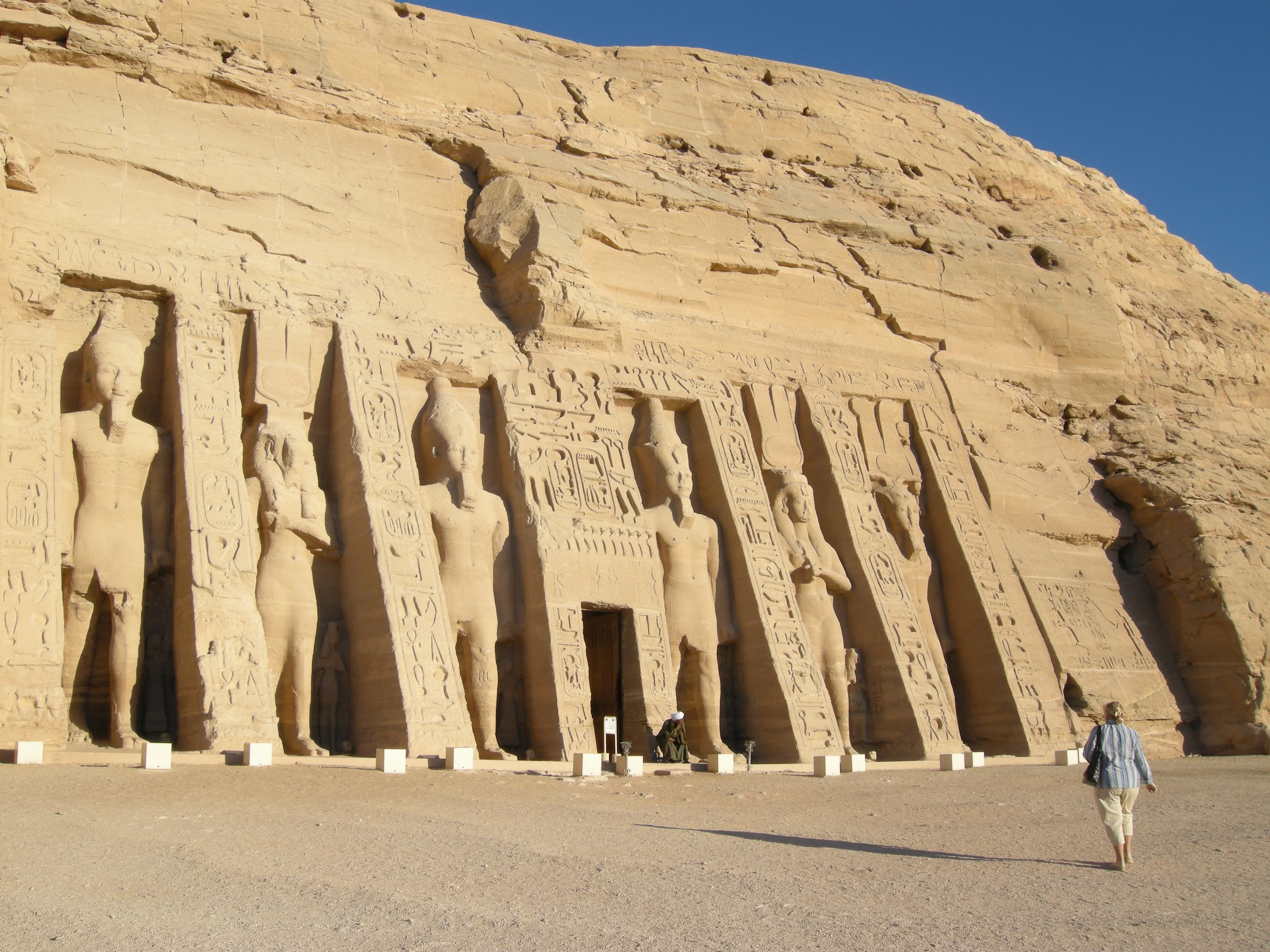
Just a few steps away stands the temple dedicated to Nefertari, Ramses II's first and favorite wife, deified in the likeness of Hathor. It is a more intimate space featuring six 10m-tall statues on the facade, including four depicting the Pharaoh, alongside gorgeous bas-reliefs and sculptures of their children at their feet. The queen poses with her horned crown and tall plumes, exuding imperial beauty, while inside, texts and reliefs highlight the royal couple with surprising tenderness alongside various deities. In the evening, a sound and light show illuminates the site. Ramses II is gone, but he keeps on reigning and fascinating.
When to go
The hot season runs from May to October, bringing dry, arid, and sometimes blistering weather. January is the coolest month, and if you prefer to avoid intense heat, the period between February and April is ideal. To dodge the crowds, visiting the temples early in the morning is highly recommended.
How to get there
Most travelers fly via Cairo to Aswan to reach Abu Simbel, with Aswan located 280 km away. The road cuts straight through the desert, and buses handle the route, though some visitors prefer hiring a private driver. You can also book a cruise that stops at Abu Simbel. The town has its own airport, and the flight from Aswan takes 45 minutes.
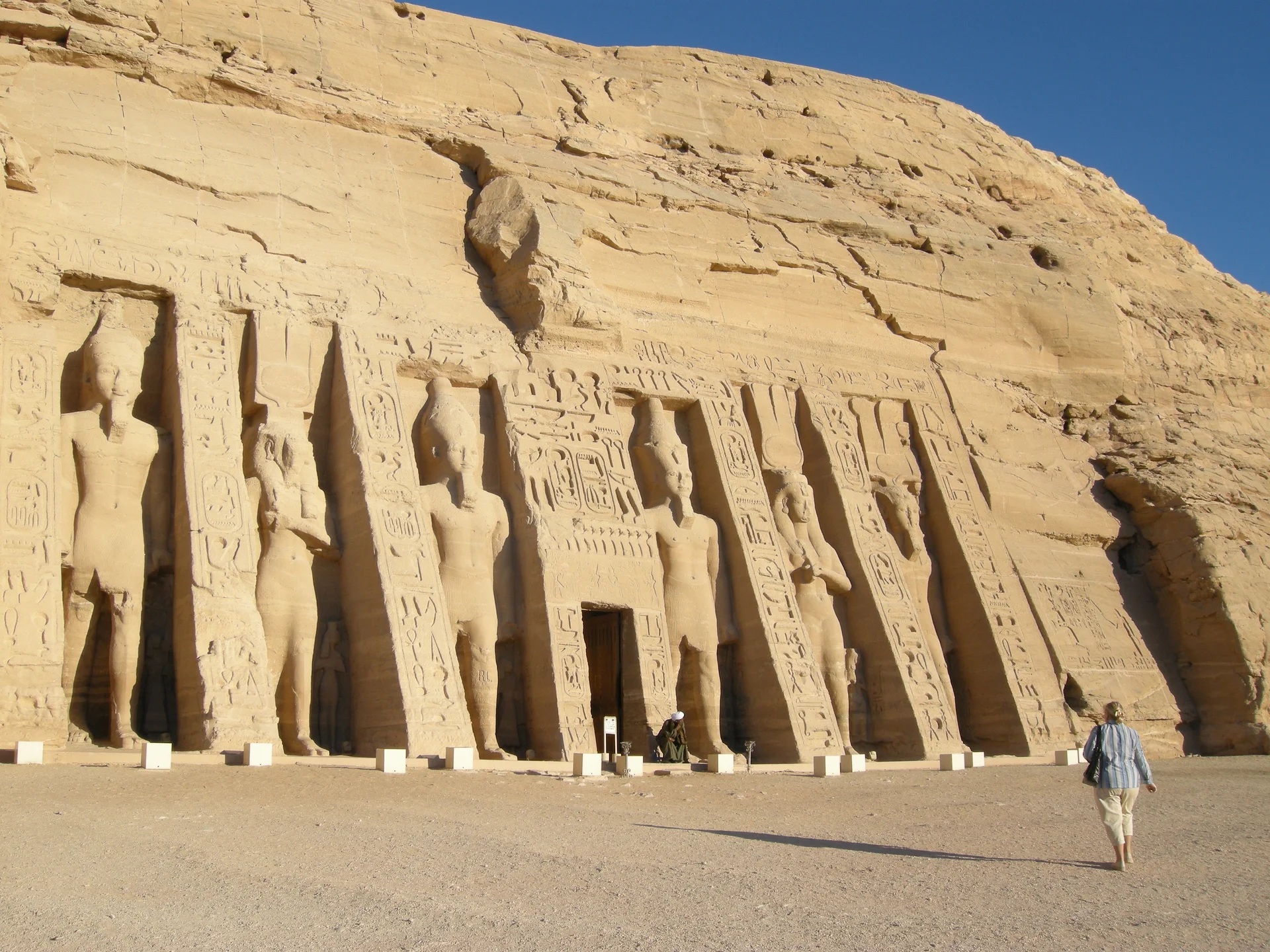
During my Nile cruise in Egypt with my family, we took the extra excursion to Abu Simbel and I did not regret it. A jeep picked us up in Aswan very early in the morning. The trip was long for the day, but seeing the giants of Abu Simbel is surreal and you absolutely have to do it. It is surely the most interesting site along with the Pyramids. We were escorted by the army with other tourist vehicles because of the terrorist threat!