
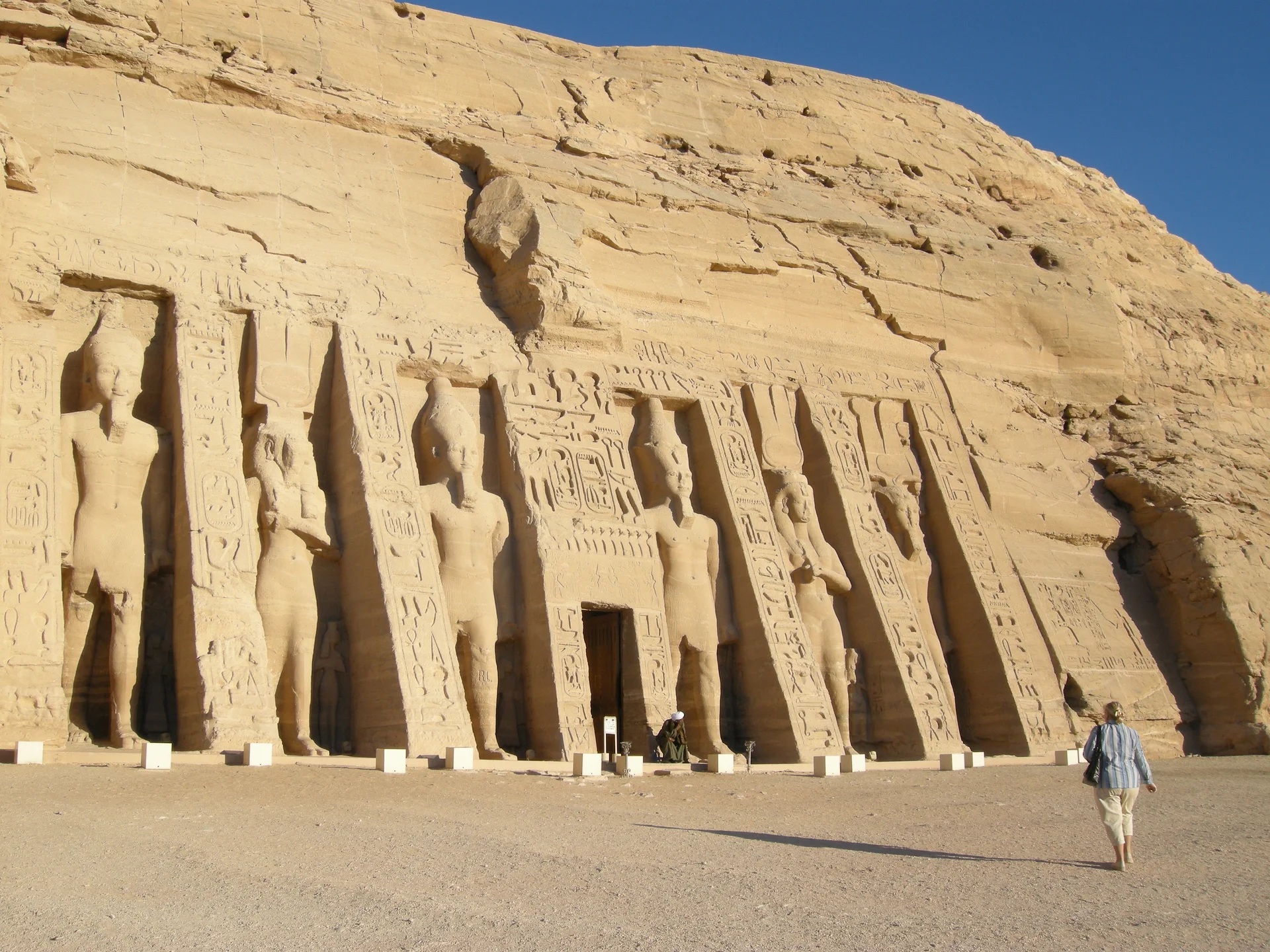
Visiting the Sun Temple of Ramesses II
The Temple of Ramesses II was designed to be as bold as the Pharaoh himself. Standing before the 65-foot colossi that guard the facade, you realize that time has changed little. It remains one of the most commanding structures in the world. Cleared of sand in 1817, this jewel in Abu Simbel is a highlight of southern Egypt. Built around 1260 BCE, it forms a complex with the temple dedicated to Nefertari, serving as a site for royal worship, honoring the gods, and commemorating military victories. Designated as a UNESCO World Heritage site, the temples faced total destruction from the rising waters of Lake Nasser. They were relocated in the 1960s in an operation so complex it captivated the world. Even today, the stone effigy of Ramesses II commands attention.
A Pharaonic facade
Carved directly into the sandstone of the sacred Nubian hill known as Meha, the temple features massive figures of the Pharaoh at the peak of his power. He is depicted in regal attire, wearing the double crown with a cobra, the false beard, and an aura of absolute authority. The 65-foot statues are hewn directly from the sandstone, creating a facade that mirrors the monarch's own ego. One statue stands damaged at the waist. Above the entrance, Ra-Horakhty and the solar disk watch over the site, accompanied by friezes and cartouches that cover the structure.
An architectural marvel
Inside, the vestibule is supported by eight 33-foot pillars, while the walls serve as a chronicle of the Battle of Kadesh. The precision of the carvings illustrates the sheer might of the Egyptian empire. You can also spot ceremonial scenes where Ramesses presents offerings to the sun god. There are eight side chambers, and at the rear of the central sanctuary, four statues represent Amun, Ra, Ptah, and the Pharaoh himself. By placing himself among the deities, the king effectively declared his own divinity. The technical brilliance of these ancient architects is still visible today. Every year in February and October, a beam of sunlight penetrates the interior of the site to illuminate three of the statues. It is meant to represent the divine breath of life being shared with the king. Only Ptah remains in the shadows.
Threatened by the waters of Lake Nasser, the Great Temple was moved 525 feet inland and lifted 260 feet higher, just like the temple of Nefertari. This was a massive, unprecedented undertaking that involved 3,000 workers from 50 countries and required extraordinary engineering. The temples were cut into blocks, disassembled, and painstakingly rebuilt in their current, safe location. If your schedule allows, stay the night in Abu Simbel to see the temples illuminated during the evening sound and light show.
Opening hours
| Monday | 05:30-17:30 |
|---|---|
| Tuesday | 05:30-17:30 |
| Wednesday | 05:30-17:30 |
| Thursday | 05:30-17:30 |
| Friday | 05:30-17:30 |
| Saturday | 05:30-17:30 |
| Sunday | 05:30-17:30 |
An evening sound and light show is also available.
*Information subject to change

My visit was a long time ago, but I was really struck by the facade: huge statues carved directly into the rock, over 3,000 years old, just staring at you... moving.