
Visiting Karnak
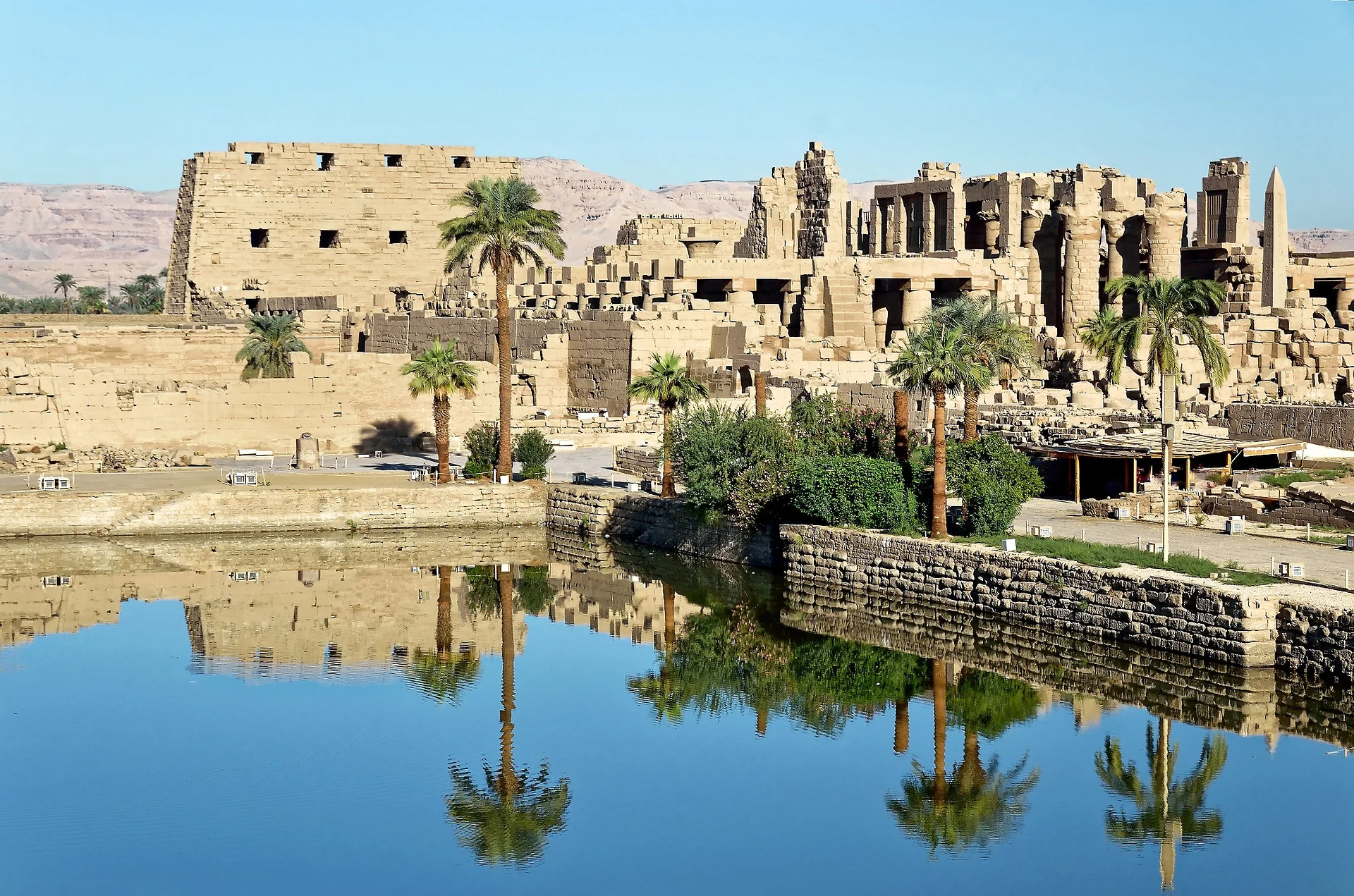
Amun, his wife Mut, and their child Khonsu were the three primary deities of Thebes, the capital of Egypt during the New Kingdom. The three sacred sections of the Karnak temple complex, located north of Luxor, are dedicated to them. This religious site was the most significant of the 18th Dynasty, described in hieroglyphs as the most select of places. Connected to the temple of Luxor by a 3km avenue, it spans two hectares. Listed as a UNESCO World Heritage site, the area remains an active archaeological zone, and only the enclosure of Amun-Ra is open to visitors.
One of the largest religious sites on the planet
Started by Senusret I in 2200 BCE, this complex was under construction and underwent transformations for nearly 2000 years. These ongoing changes make it an incredibly rich historical record and the largest such site in Egypt. It consists of three enclosures, with the enclosure of Amun, arranged along two axes, being the most expansive. A landing basin marks the entrance, which is made grand by the famous dromos lined with ram-headed sphinxes. At its peak, 700 of these statues flanked the path leading to the first pylon. Six pylons precede the temple itself, as each monarch commissioned their own monumental gateway. Between two of them lies the famous hypostyle hall, a forest of 134 columns with some reaching 10 meters in height. With their open lotus capitals, these once supported a roof that has since vanished. Seti I and later Ramesses II left their mark here, most notably in the masterful battle and peace scenes carved into the walls. In front of the temple of Amun, the sacred lake is surrounded by chambers once used by priests, and the column of Taharqa dominates the great court with its 21-meter height. The area of the obelisks has suffered significant damage, leaving only two standing, while in the center, Khepri carved as a scarab draws the eye. Four additional pylons complete this massive religious site, along with the enclosure wall initiated by Nectanebo I. On the periphery, the temples of Ptah, Opet, and Khonsu stand, with the temple of Osiris and its seven gates remaining the most mysterious. This is a site that has yet to reveal all of its secrets.
Opening hours
| Monday | 08:00-17:00 |
|---|---|
| Tuesday | 08:00-17:00 |
| Wednesday | 08:00-17:00 |
| Thursday | 08:00-17:00 |
| Friday | 08:00-17:00 |
| Saturday | 08:00-17:00 |
| Sunday | 08:00-17:00 |
*Information subject to change

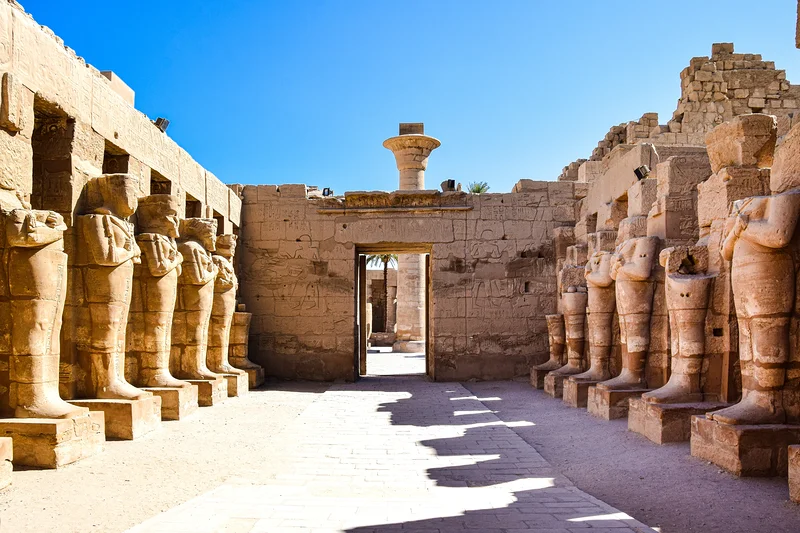
Along with Abu Simbel and Luxor, Karnak is generally on the list of must-see temples in Egypt. Contrary to what you might think, they all have their own unique features. At Karnak, I was particularly amazed by the giant statues, especially the animals, and the countless columns. To my knowledge, it is the largest religious complex of all antiquity. You shouldn't confuse it with the Luxor Temple, which is smaller and located in the city center.