
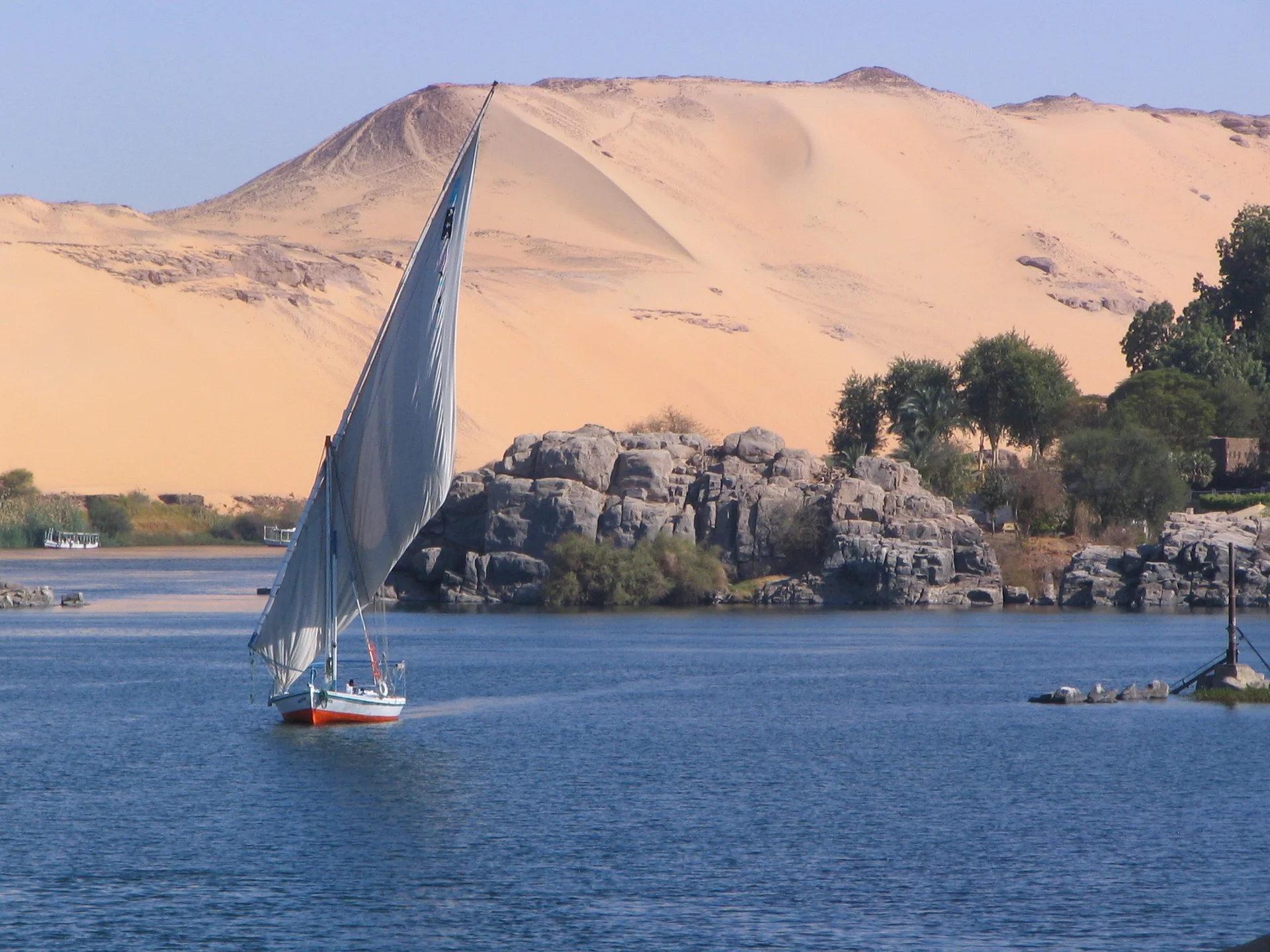
Visiting Elephantine Island, a historic site in the middle of the Nile
A strategic spot on the Nile
Located right across from the city of Aswan, Elephantine Island takes its name from its shape, which resembles an elephant tusk, and its historical role in the ivory trade. Reachable by felucca or motorboat, the island offers a quiet atmosphere away from the downtown noise, with clear views of the river and the surrounding area.
Pharaonic ruins to explore
The island is home to several ancient ruins, including the Temple of Khnum, dedicated to the creator god associated with the waters of the Nile. Nearby, the remains of the Temple of Satet and the nilometers, once used to measure the river level, show the importance of the island in water management and religious rituals. While these structures are now fragmented, they provide a look at life under the pharaohs.
A museum and Nubian villages
The Aswan Museum features an archaeological collection highlighting local history, with artifacts uncovered directly on the site. Visitors can also explore the Nubian villages that still occupy part of the island. These colorful communities, with their distinctive homes and welcoming residents, offer a chance to experience a living, authentic culture.
Elephantine Island is a worthwhile trip for history buffs and those looking for a serene setting. Its cultural depth and landscape make it a popular stop during any stay in Aswan.

Elephantine Island is my favorite memory from Egypt. After the Nile cruise, in Aswan, we booked a night on the charming Elephantine Island on the other bank, in a Nubian house with meals included. It is easy to go back and forth to Aswan.
Fishing felucca tour, discovering beautiful colorful Nubian houses, camel ride, local encounters...: you can spend a very pleasant day on Elephantine before returning to the chaos of the city. I highly recommend it.