Visiting Apulia
Bari is a port and a pilgrimage town, with an old quarter that fits inside an oval and a basilica that has held the relics of Saint Nicholas since 1087. It is the gateway to the region.
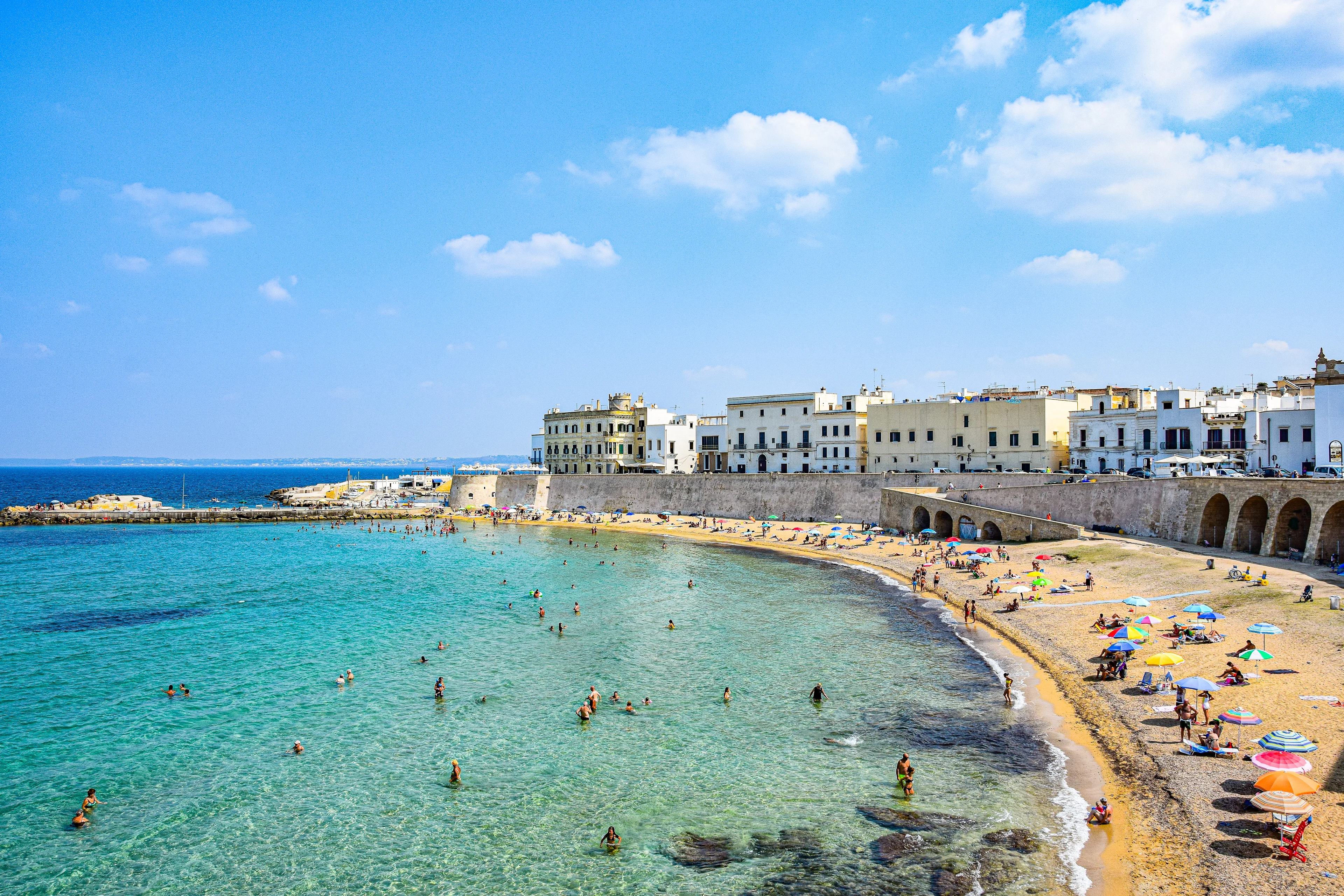
To the south the Salento begins, flat, dry, planted with thousand-year-old olive trees, and Gallipoli sits on an islet joined by a bridge. To the north, the Gargano is a piece of wooded mountain pushing into the Adriatic, and has nothing to do with the rest.
You will love it if
- You want clear water without Amalfi coast prices
- White towns and rural building draw you
- You come in June or September, when the sea is warm and the roads clear
Look elsewhere if
- You hate driving: the region is long and the train through it is slow
- You are after museums: the substance is in the villages and the landscapes
- You come in August: the whole of Italy is here and prices double
The must-sees
The highlights
-
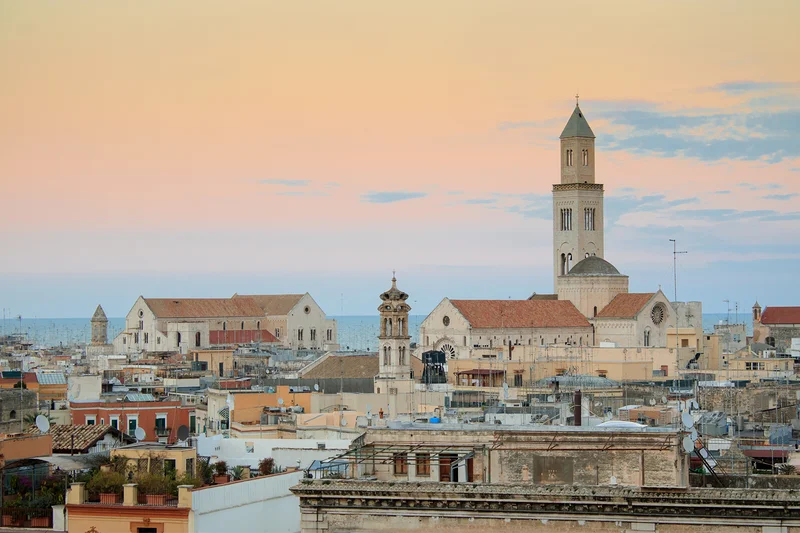
1 The Basilica di San Nicola +1 rec
Begun in 1087 to house the relics of Saint Nicholas, taken from Myra by sailors from Bari. It is one of the few places where Catholics and Orthodox celebrate under the same roof, in the crypt.
-
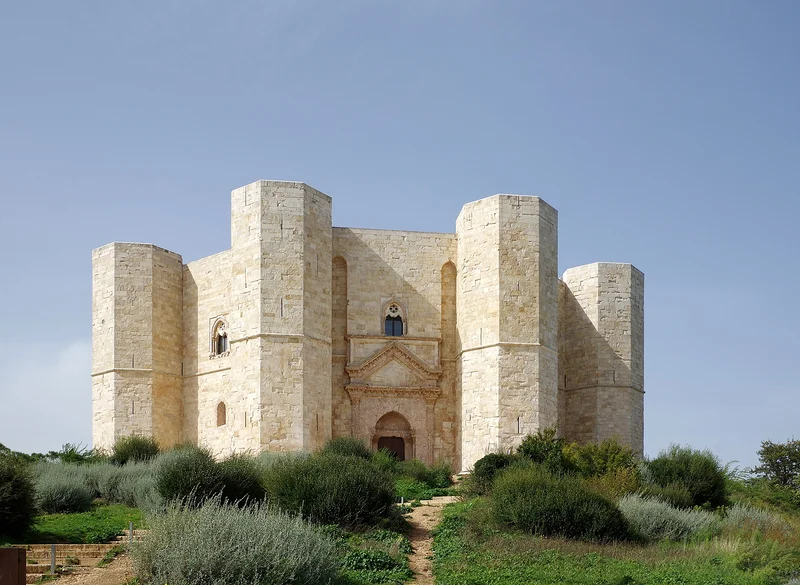
2 Castel del Monte +8 recs
A perfect octagon on a hilltop, eight octagonal towers, eight rooms to a floor, built around 1240 for Frederick II. No moat, no stables, no kitchens: nobody knows what it was for, and that is what brings people back.
-
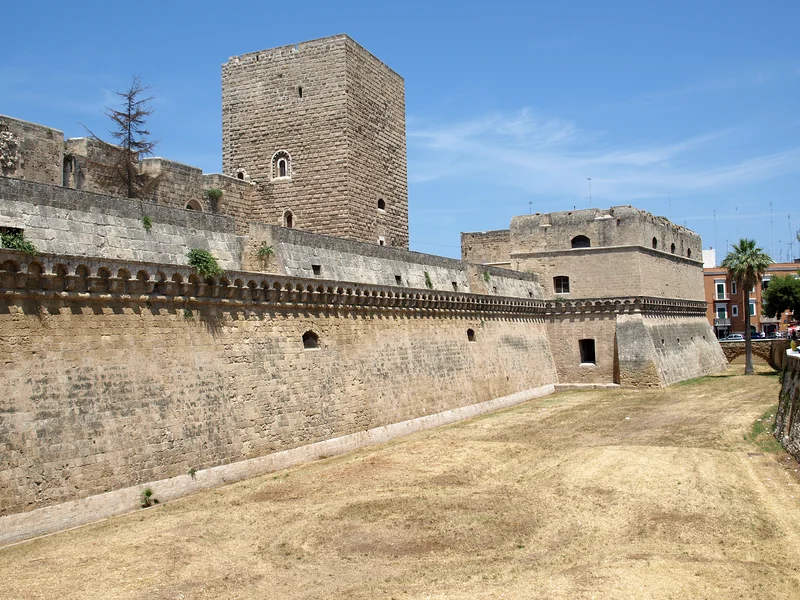
3 The Norman-Swabian Castle in Bari
A Norman fortress taken over by Frederick II, thick walled with dry ditches, on the edge of the old town. Its collection of casts of Apulian Romanesque doorways shows close up what cannot be seen close up anywhere else.
-
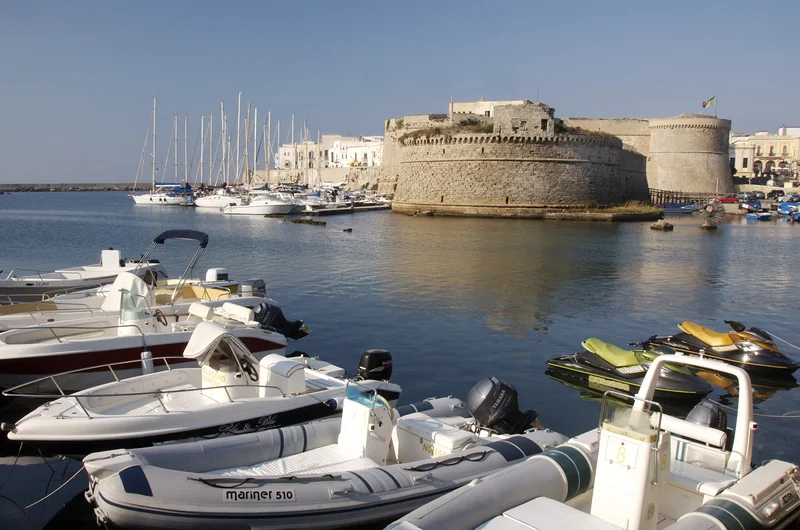
4 Gallipoli Port +10 recs
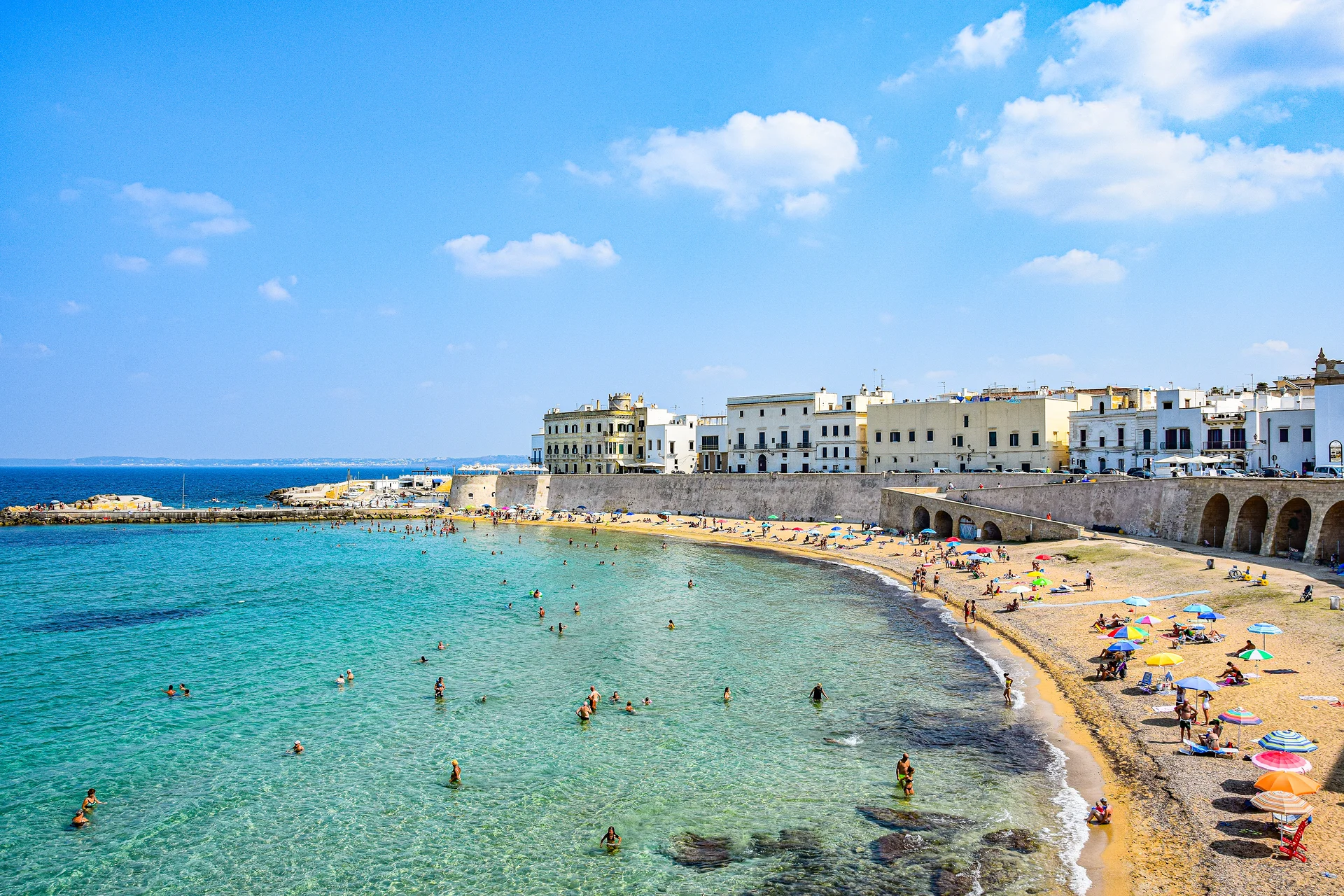
The fishing harbour at the foot of the old town, where the boats come in late morning and sell on the quay. The town sits on a limestone islet, ringed by walls, and is crossed on foot in twenty minutes.
-
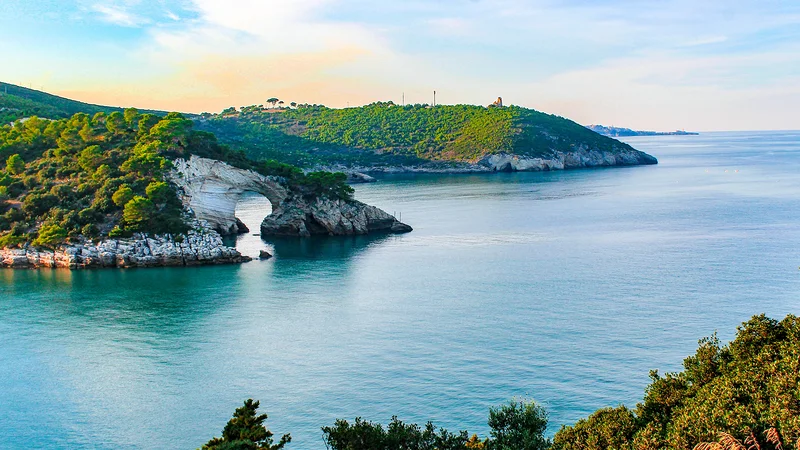
5 Gargano National Park +8 recs
A limestone headland covered by a beech forest, the Foresta Umbra, rising over eight hundred metres above the sea. Coves the road cannot reach are visited by boat from Vieste.
Our itineraries in Apulia
| Length | Itinerary | What you see |
|---|---|---|
| Long weekend (3 days) | Bari › Alberobello | Old town, basilica, trulli |
| 1 week | Bari › Ostuni › Gallipoli | White towns, Itria valley, Salento |
| 10 days | Vieste › Bari › Cisternino › Gallipoli | From the Gargano to the Salento, the whole region |
A car is necessary: the train links Bari to the main towns but serves the villages badly, and the Gargano has no line at all. The roads are good and flat, except in the north.
Allow an hour and a half from Bari to the Itria valley, two and a half to the Salento, and three to the Gargano. These are lowland distances, but they are distances.
When to visit Apulia
| Rating | Season | Weather | Crowds and prices |
|---|---|---|---|
| June and September | 25 to 30 °C, sea at 24 | Busy, mid-range prices | |
| May and October | 19 to 25 °C, sea cool in May | Quiet, everything open | |
| July and August | 30 to 38 °C, dry | Peak, prices doubled | |
| November to April | 10 to 18 °C, windy | Quiet, the coast shuts |
Our advice
The second half of September is the best stretch of the year: the sea keeps August's warmth, the Italians have gone home, and rates drop a notch from the first. The olives are picked in October and November, which opens the mills.
Getting to Apulia
-
1 By plane Fastest
Bari and Brindisi take direct flights from across Britain, Ryanair on most routes, in about three hours. Brindisi is closer to the Salento, Bari to everything else.
-
2 By train Slowest
Eurostar to Paris, then Paris to Milan and Milan to Bari, around twenty hours in all. It is a long way, and you still need a car once there: the plane keeps the advantage.
-
3 By car On the ground
essential on the ground, hired at the airport. The historic centres of Bari, Ostuni and Gallipoli are inside filmed limited traffic zones: the hotel must register your plate.
The cheapest combination: fly to Bari, hire a car there, and fly home from Brindisi if you finish in the Salento. The rental companies allow one-way between the two airports.
Getting around Apulia
Bari is walkable, from the old town to the seafront. Elsewhere the villages are ten or twenty kilometres apart and buses are rare, especially on Sundays.
Worth knowing
The limited traffic zones in the historic centres run on cameras, including when you are only reaching a hotel. Have your plate registered the same day: a fine arriving months later cannot be contested, and it always arrives.
What to eat in Apulia
- Orecchiette with cime di rapa: ear-shaped pasta rolled with the thumb, with turnip tops, garlic and chilli. You can still watch them being rolled in the street on Arco Basso, in Bari.
- Burrata: a pouch of stretched curd filled with cream and shreds of mozzarella. It is eaten the day it is made, and the difference with what you find elsewhere is plain.
- Focaccia barese: a potato dough topped with cherry tomatoes and olives, thick and oily. Sold by the slice in bakeries, all day long.
- Bombette: thin slices of pork rolled around cheese and grilled over embers by the butcher, who cooks them and serves them on the spot. An institution in Cisternino.
- Olive oil: the region produces close to half of Italy's oil, from trees some of which are two thousand years old. The mills sell directly after the harvest.
- Primitivo and Negroamaro: two Salento reds, warm and thick, long sold in bulk to strengthen other wines. Today they are bottled under their own names.
- Pasticciotto: a small shortcrust pie filled with pastry cream, eaten warm at breakfast. Salentine, and non-negotiable before ten in the morning.
Where to stay in Apulia
| Area | What it is for | Worth knowing |
|---|---|---|
| Bari | Old town, basilica, airport | The best connected base, open all year |
| Ostuni or Cisternino | White towns, Itria valley, trulli | In the middle of everything, an hour from the sea |
| Gallipoli | Beaches, Purità, nightlife | Very lively in summer, calm out of season |
| Vieste or Peschici | Gargano, coves, forest | Seasonal, shut from November to March |
| Alberobello | Trulli, World Heritage | Heavily visited by day, quiet at night |
Two bases are enough for a week: the Itria valley in the middle, then the Salento or the Gargano depending on which half you choose.
Sleeping in a restored trullo is its own experience: a dry stone vault, a constant coolness and tiny windows, because that is how they were built, for farmers and not for the view.
How much does a trip in Apulia cost?
| Style | Length | Budget per person |
|---|---|---|
| Budget (hostel, markets, free beaches) | 7 days | 350 to 500 € |
| Comfortable (hotel, restaurants, hire car) | 7 days | 800 to 1,200 € |
| High end (masseria, well-known tables) | 7 days | 2,200 to 3,500 € |
- The season: a room costs twice as much in August as in June, and the masserie are full by spring for the summer.
- Free beaches: they alternate with paid ones along the whole coast and are signposted. The Salento has more of them than the Adriatic side.
- Bakery lunch: focaccia and panzerotti cost a quarter of a sit-down dish, and that is what local people eat at midday.
- The car: book weeks ahead for the summer, when local rates soar for want of available fleet.
- Mills and wineries: the tasting is often free after the visit, and buying on the spot costs half what a shop charges.
Traditions and way of life in Apulia
The trulli of the Itria valley are dry stone houses with conical roofs, built without mortar. The story goes that they were made dismountable to escape a tax on dwellings: the archives do not confirm it, but the technique did indeed allow them to be taken apart.
Monte Sant'Angelo holds a sanctuary cut into the rock, a place of pilgrimage since the fifth century and one of the oldest in the West. It gave its model to Mont-Saint-Michel in Normandy, which carries its name.
Two useful habits. Dinner starts late, and booking for seven would find you an empty room and a kitchen just warming up. And in the villages, the evening passeggiata takes over the main street: people walk slowly, they stop, and a car has no place in it.