
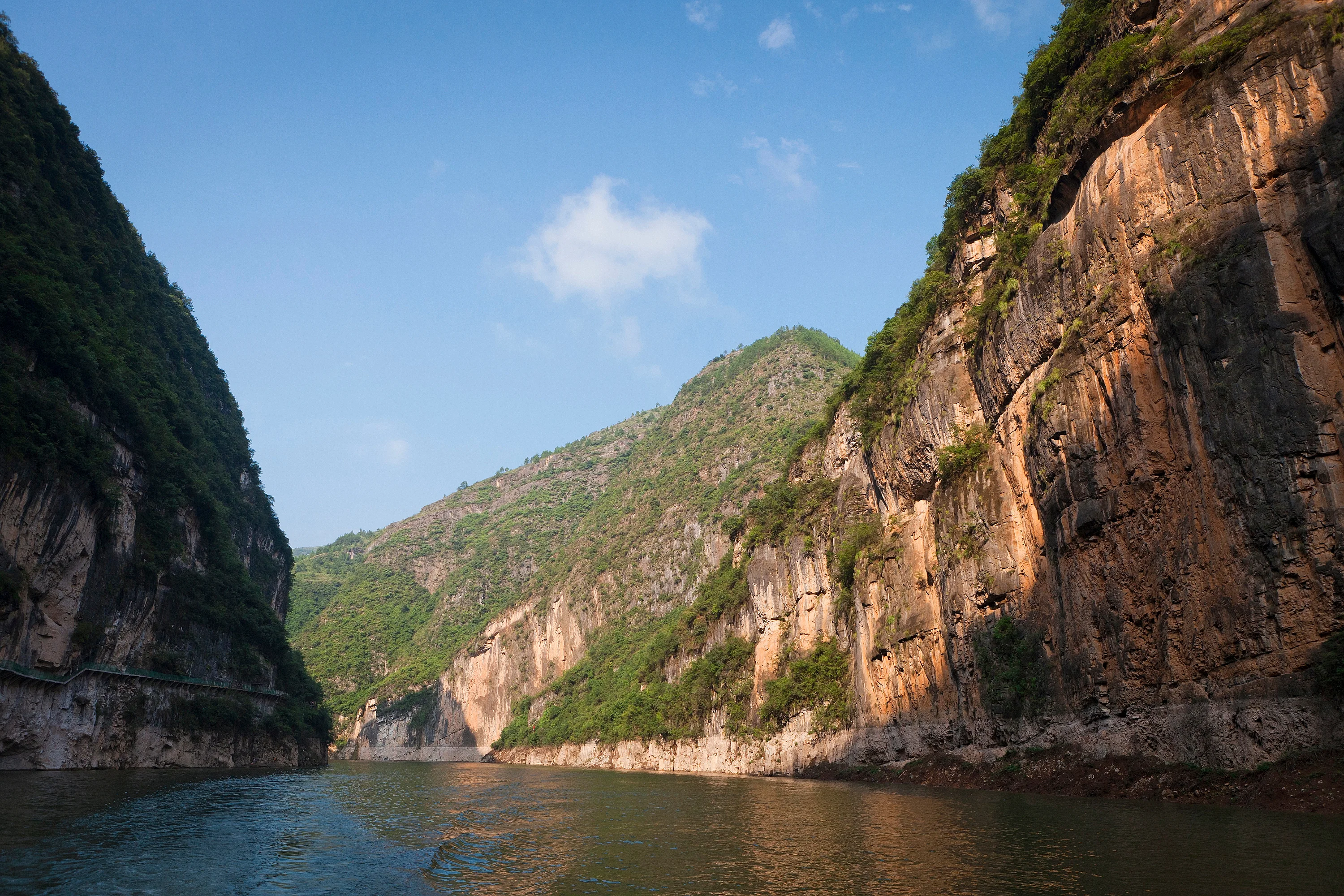
Hello everyone. There are trips you choose, and then there are trips handed to you. Mine was decided in an office one morning back in 2009: heading to Sandouping, near Yichang in Hubei Province, for the final stretch of the Three Gorges Dam. My company manufactured parts for specialized machine tools needed for the project's final phase. I stayed there for a month in work clothes and didn't see a single cruise ship cabin.
Seventeen years later, here I am retired, and that cruise I never took has been on my mind. So I spent a few weeks comparing packages, reading reviews in three languages, and talking to two agencies. I might as well share what I've learned: here is what I figured out, what I kept, and what I ruled out.
I'll give you my conclusion right away, you can read the details further down: Chongqing to Yichang, four days, in the spring or fall, on a mid-range ship. I'll explain why I left the rest behind.
What I saw of the dam back when it wasn't an attraction yet
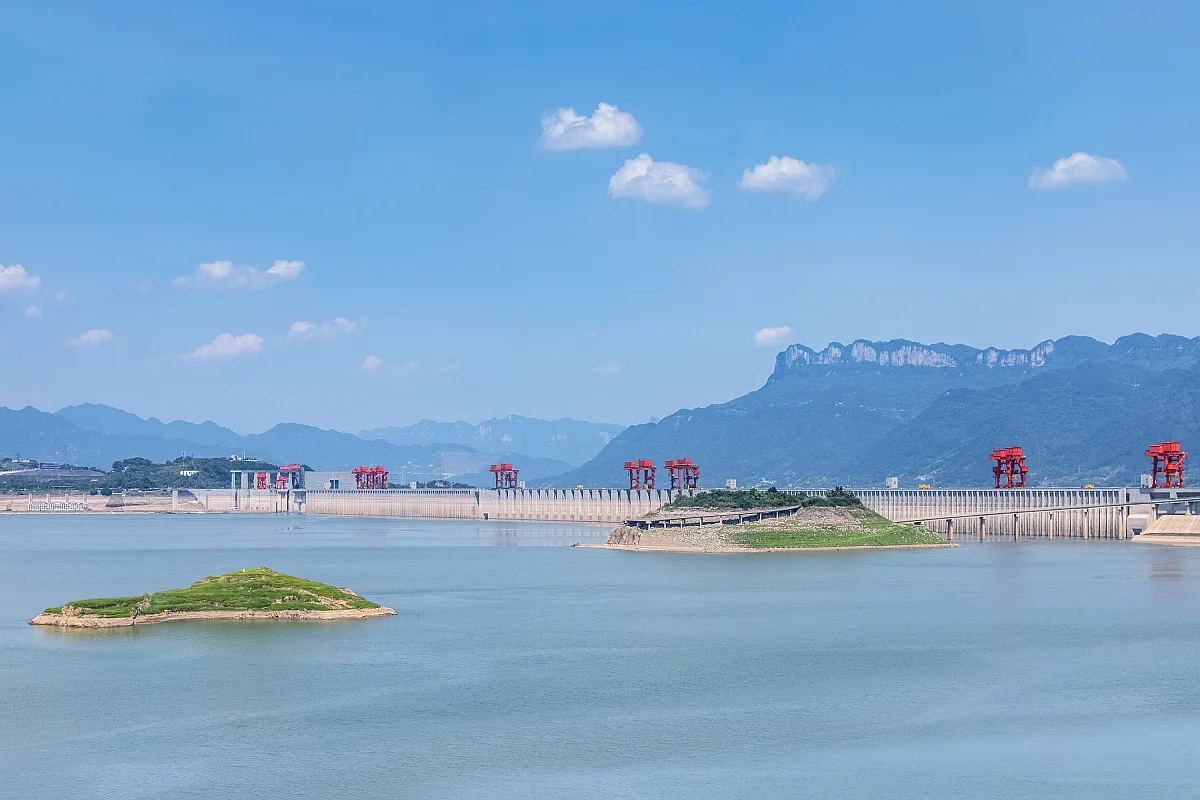 Three Gorges Dam, which has become a tourist attraction
A project that started on paper in 1919
We first heard about this dam back in 1919. It wasn't until the early 2000s that it finally broke ground, as the country's history had a few things to say in between. When I arrived, they were right at the very end of construction.
The stats are dizzying, and I checked them on-site with plans in hand: 2,309 meters long, 185 meters high, with a 1,084 km² reservoir. It required relocating more than 1.2 million people and moving entire archaeological sites piece by piece. Unprecedented in scale, the project is somewhat controversial today due to an environmental impact that wasn't quite as neutral as originally claimed.
What I can share with you that you won't read anywhere else is what the river was like while the waters were rising. I saw the markers painted on the banks, those lines showing just how high the water level was going to climb. I saw the hillsides before they were eaten away. Several travelers who took the cruise back when it was still under construction feel that a good portion of the original scenery has vanished beneath the reservoir. They aren't wrong in principle. That said, what's left is still plenty impressive, and I don't know many places where you get to cruise between cliffs quite like these.
What we can see of it today
The construction site has turned into a tourist area that you can explore via shuttle buses, usually on a half-day tour. Here's what you'll find:
- Platform 185, known as Tanziling, at an elevation of 185 meters: the main viewpoint overlooking the dam body, the upstream reservoir, and the downstream ship locks.
- The five-tier ship lock staircase, which your boat will navigate if your itinerary takes you that way.
- The ship lift, which saves cruise ships several hours of travel time.
- The exhibition center dedicated to the history and impact of the project.
- The exhibition center dedicated to the history and impact of the project.
The onsite shuttle bus costs about ten yuan. It's pocket change, but make sure to bring some cash.
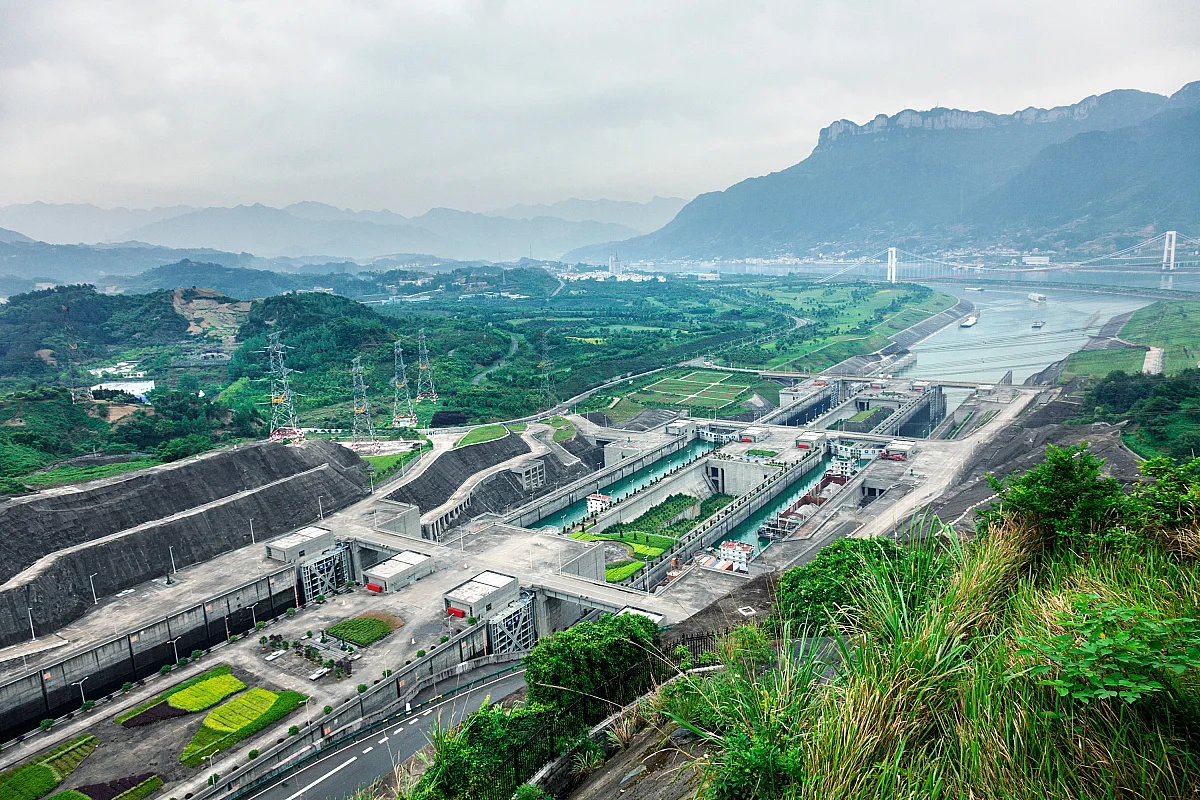 The ship locks of the Three Gorges Dam
What you need to sort out before you go
Paperwork: the big change since my first trip
Back in 2009, I wrote this to my readers: "start the visa process early, because even for work trips, Chinese authorities are in no rush." That was putting it mildly. The paperwork took weeks.
Today, the situation is completely different. Until December 31, 2026, ordinary passport holders from France are exempt from visas for stays of up to 30 days for tourism, business, family visits, or transit. A four- or five-day cruise easily falls well within this limit, even if you add Beijing or Shanghai before or after.
Warning
This visa exemption measure has an expiration date. If you're planning a trip for 2027, double-check that it's been renewed before booking anything. And for stays longer than thirty days, a traditional visa is still required.
To check before booking
- Valid ordinary passport, with the usual buffer beyond your return date.
- The electronic arrival card is now mandatory: it's filled out online, so you can easily take care of it from home.
- Regions with special regulations, such as Tibet, which are not covered by the exemption.
- Your insurance: river cruise lines ask for your passport number upon booking, so it's best to have all your paperwork handy.
Paying on site: your bank card won't be enough
Here’s the thing that surprised me the most while planning this trip, by far. In China, in 2026, pretty much everything is handled via QR code on a smartphone. Alipay and WeChat Pay cover nearly all payments: taxis, subways, museums, restaurants, and street food vendors. Physical credit cards hardly ever get used outside of major department stores, and cash is mostly a novelty, even if it's still legally accepted.
The good news is that you can now link a foreign bank card to these apps without too much trouble. That said, you need to do this before you leave, from home, with your passport handy, a good internet connection, and the ability to receive verification codes from your bank. Also, be sure to notify your bank about your trip: a first transaction in China often triggers a security block, which is the number one reason travelers get their cards declined.
A couple of things that might surprise you, and that you won't find in the guidebook
Since we're on the subject of preparations, allow me a quick detour. Instead of asking how you are like we do back home, people here greet you by asking if you've eaten. Priorities are a bit different, and honestly, I think theirs makes a lot of sense. The food, by the way, was fantastic, and I'm not just saying that to be polite.
You also shouldn't be too shocked to hear your table neighbors spitting: despite major government campaigns, many locals keep doing things the way they always have. And don't expect people to open up to you right away. Beneath a polite and friendly exterior, the Chinese folks I spent time with kept to themselves quite a bit, especially when dealing with outsiders.
We had to deal with quite a few headaches working alongside our crew before finally building what I'd call mutual respect rather than outright friendship. Still, it was enough for us to get invited to one of their family homes for Qingming, the Tomb Sweeping Festival, where we lit firecrackers and shared a great meal. That's easily the memory I hold onto most fondly from that month.
Staying connected, the one thing I totally overlooked
Here’s my real confession of weakness about this trip. I left thinking my phone and computer would work just like they do back home. They didn't work like they do back home. Getting in touch with France felt like a major expedition, and a good chunk of the services I needed to communicate or stay informed were glitchy or didn't work at all.
My issue wasn't just checking messages either: every connection from an unknown address triggered endless verification loops. Today, for anyone heading off to work abroad for a few weeks, it's best to use what's called a VPN. To the sites and apps you use, you still appear to be in the exact same place, back in Europe or North America, for instance. By keeping your location, meaning your IP address (which is precisely the promise behind CyberGhost's dedicated IP offer), you save yourself a ton of technical roadblocks.
I didn't have one back in 2009, and believe me, I would have signed up in a heartbeat.
Just to be completely transparent, I'm no tech whiz and I'm not going to pretend to be. Here's a detail I never would have guessed on my own that keeps popping up in recent reviews: Chinese payment apps detect when you're using a VPN and will decline the transaction. So you have to turn it off before paying the bill, and turn it right back on afterward. That way, you won't end up stranded in front of a noodle vendor with a flashing phone screen.
As for the rest of the precautions, which apply anywhere, not just in China, think about public Wi-Fi at hotels, airport terminals, or cafes, where we all log into our accounts without a second thought. Tools like CyberGhost help keep your connection secure.
Anyway, back to the matter at hand: which cruise should you book?
The three ways to see the Three Gorges
The Qutang, Wu, and Xiling gorges stretch for nearly 200 kilometers between Chongqing and Yichang. The only real question is the direction of travel and the duration. Everything else simply follows from that.
1. Chongqing to Yichang, downstream
 The Yangtze in Chongqing
This is the classic 4-day, 3-night itinerary. You're heading downstream with the current, so you make great time, finishing at the dam before disembarking at Maoping port near Yichang.
Idéal si
- You have one week to fit into a broader itinerary.
- You want the best balance between time spent and what you see.
- You'd rather finish on a high note with the book, rather than start with it.
- This is the most popular direction, which means the fiercest competition when it comes to rates.
À éviter si
- Looking for long days of contemplation: the current carries you along, and the scenery rolls by faster.
- You want to head over west next, since you're arriving on the opposite side.
2. Yichang to Chongqing, Upstream
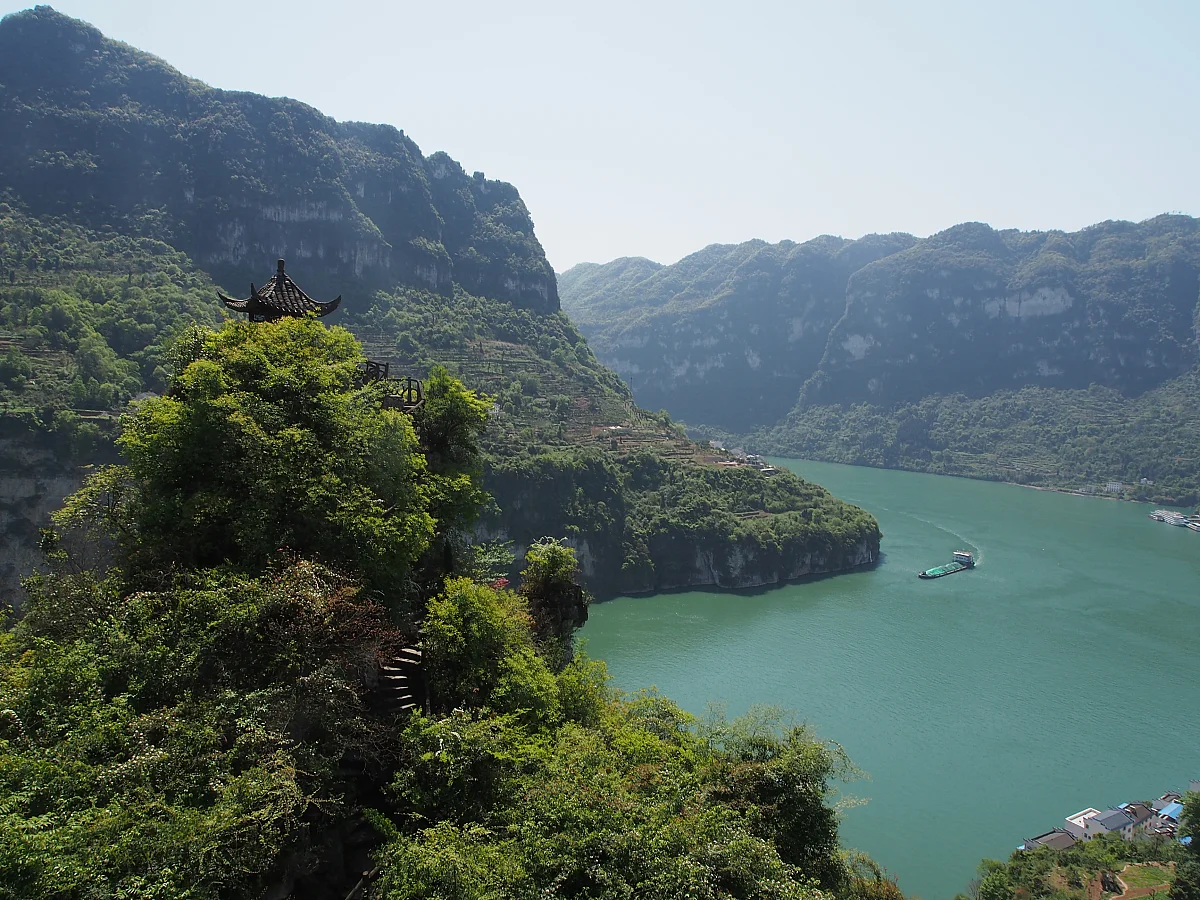 The Three Gorges and their cliffs along the Yangtze River
The same route heading back up, usually taking 5 days. The boat moves slower, you spend more time taking in the cliffs, and you start at the dam.
Idéal si
- You prefer a slower pace and long hours on deck.
- You then continue on to Sichuan or Chongqing.
À éviter si
- Your budget is tight: for the same service, extending your stay by one night drives up the cost.
- You hate days without a single stop.
3. Long cruises all the way to Wuhan or Shanghai
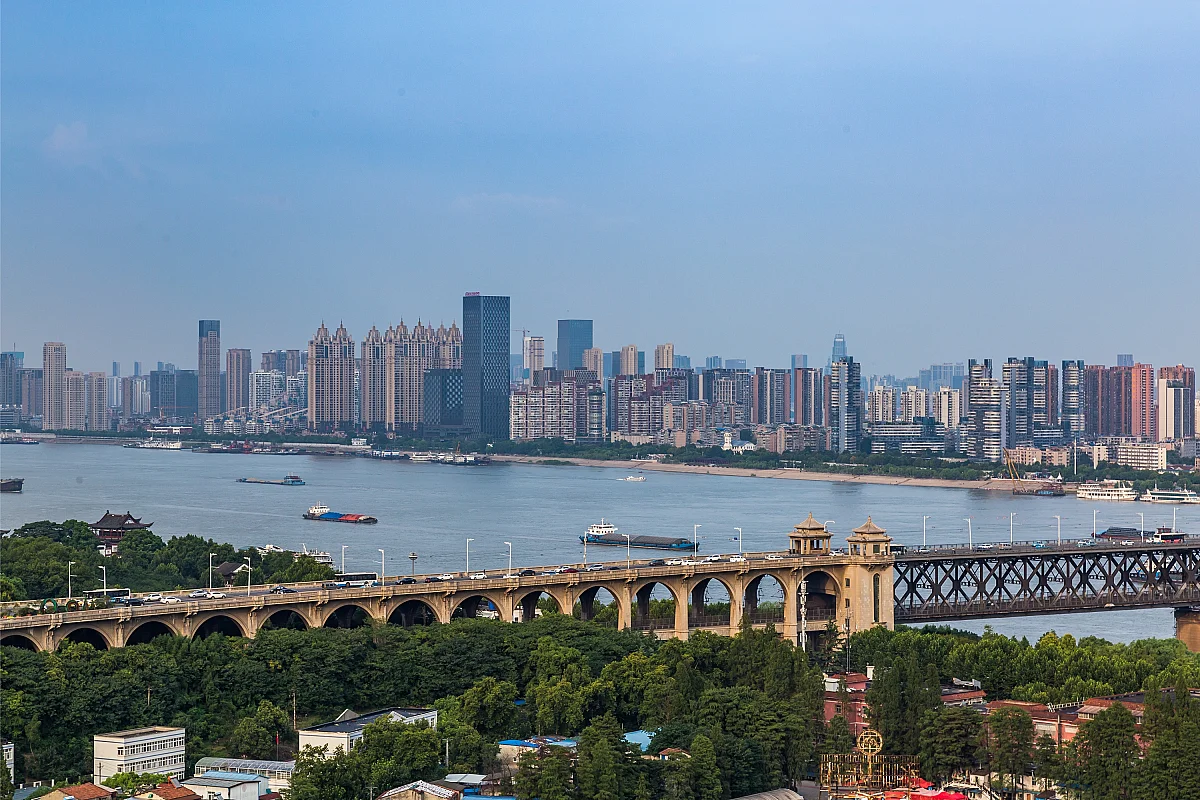 The Yangtze in Wuhan
There are much longer packages available, ranging from 5 days all the way to Wuhan and up to 8 days to reach Shanghai. These are the ones most frequently offered by French travel agencies, featuring a French-speaking cruise staff, full board, and drinks included. Complete tours start at a minimum of €900 per person, excluding flights, and combine the cruise with a few days on land.
Idéal si
- You don't speak Chinese or English and want to understand everything.
- You prefer to let an agency handle your transfers, hotels, and tickets.
- You want to add Nanjing, Wuhan, or Lake Poyang to your trip.
À éviter si
- You came for the gorges: they only make up a fraction of the route, the rest being plain navigation.
- You love deciding your schedule day by day.
| Formule | Durée | Rythme | Pour qui |
|---|---|---|---|
| Chongqing vers Yichang | 4 jours / 3 nuits | Soutenu, sens du courant | La majorité des voyageurs |
| Yichang vers Chongqing | 5 jours / 4 nuits | Lent, à contre-courant | Les contemplatifs, ceux qui continuent vers l'ouest |
| Jusqu'à Wuhan ou Shanghai | 5 à 8 jours | Très lent, beaucoup de plaine | Ceux qui veulent du tout compris francophone |
Boat models and budget
More than twenty ships sail this stretch of the river. Here are the ballpark figures I found while planning my trip, for a cabin, in yuan, excluding optional excursions. Euro conversions are approximate and exchange rates fluctuate, so take them for what they are.
| Gamme | Exemples de navires | À partir de | Soit environ |
|---|---|---|---|
| Économique | President Cruises, Star Cruises | 2 700 yuans | 345 euros |
| Intermédiaire | Victoria Cruises | 3 500 yuans | 450 euros |
| Confort | Yangtze n° 1 | 4 000 yuans | 510 euros |
| Supérieure | Yangtze n° 3 | 5 000 yuans | 640 euros |
| Luxe | Yangtze Explorer | 5 500 yuans | 700 euros |
Great deal
Depending on the tier, three to five excursions are included in the price, with the rest billed on board. Be sure to clarify which ones are included before booking, as that's where the price differences really add up.
What those who've done it say
I didn't take this cruise, I told you that right off the bat, and I'm not going to start talking about cabins I never stayed in. On the other hand, I've read a ton of reviews, and certain things come up with a regularity that's worth pointing out.
The stops everyone agrees on
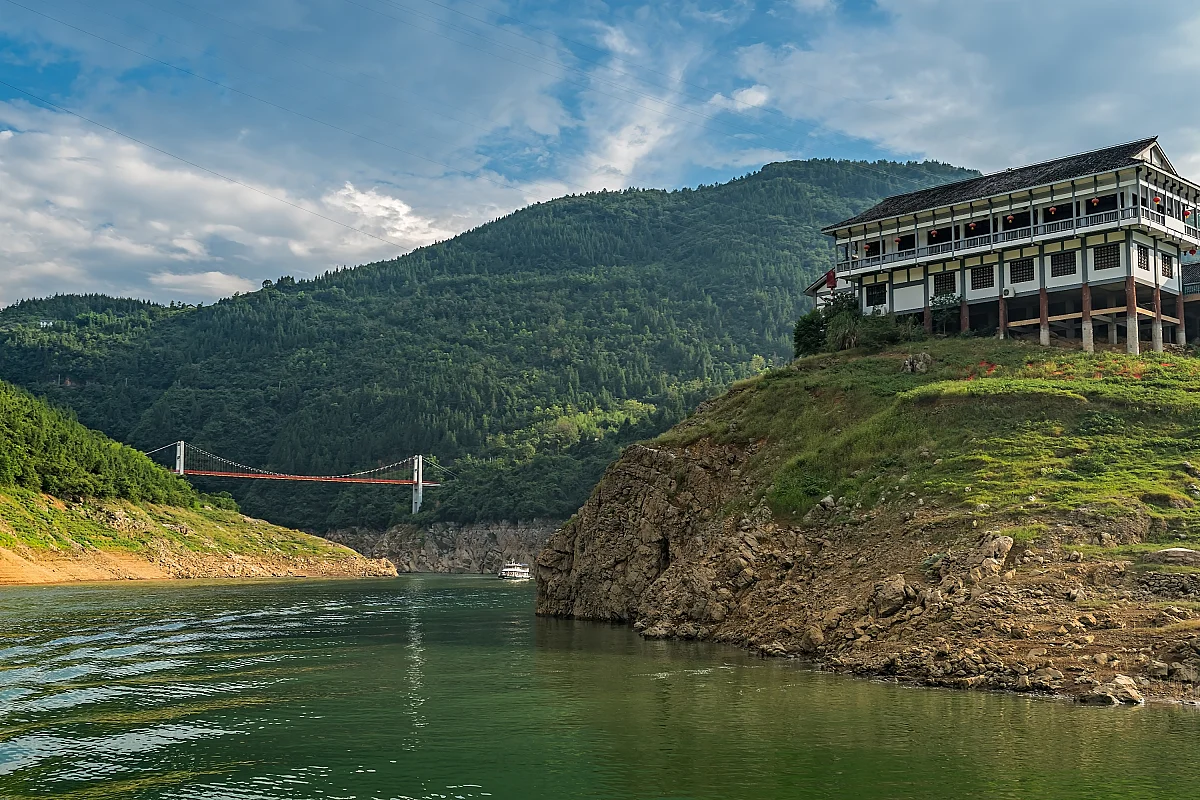 Shennong Stream
- The Shennong River. This is the highest-rated stop, without exception as far as I know. You leave the large ship for smaller boats, the water is crystal clear, and you can spot the hanging coffins tucked into the cliffs. Many fellow travelers call this the absolute highlight of their trip.
- Visiting the dam. Even those who find the cruise a bit too slow will admit the structure is seriously impressive.
- The boat lift. Cited as a highlight by several families. An entire vessel lifted in one go is not something you see every day.
The ones that divide opinions
Fengdu Ghost City. Often offered as an optional excursion for around $49, featuring 370 steps and sometimes more. A cable car is available for about twenty yuan one way. Some visitors thoroughly enjoyed it, while others mention vendors who won't take no for an answer and a somewhat theatrical, staged feel. In the summer heat, quite a few regret making the trip.
Shibaozhai Pagoda. Universally praised as stunning, but once again, be prepared for a lot of stairs. One traveller shared that they cancelled the excursion and got a refund, noting that the pagoda is easily visible from the ship moored at the dock anyway.
The unpleasant surprises you'll want to know about beforehand
The mist. It can completely shroud the gorges in gray for days on time. There’s nothing anyone can do about it, but it’s best to know beforehand.
The language. On ships catering mostly to Chinese travelers, commentary is delivered in Mandarin, with an English version that's often abbreviated. If detailed explanations matter to you, double-check this specific point before booking.
The announcements. They are frequent, repeated in several languages, and some boats feature a ship-wide wake-up call broadcast throughout the vessel. You can turn down the cabin speaker, but don't shut it off completely.
The balcony. In port, ships moor side by side. Your view might just be right into your neighbor's cabin across the way. It gave me a good laugh, and then some food for thought.
The pace. Roughly one two-hour stop per day, and a lot of time spent sitting and watching the river. Travelers looking to unwind will love it, while those wanting non-stop action will get bored. Know which one you are.
The one I chose, and why
So it'll be Chongqing to Yichang, four days, on a mid-range ship, in September or October. You know my mantra: if you can, shift your vacation! Cruises slow down from November to March, July and August bring the heat and crowds, leaving spring and autumn, which offer bearable temperatures and a much more striking light on the rock formations.
Mid-range, because I don't need a maître d' to look at cliffs, but I do care about explanations I can actually understand and a cabin where I can sleep. Four days, because it's the duration that leaves the least amount of downtime.
And going with the current, above all, for a reason that won't show up in any comparison guide. Back in 2009, I arrived at the dam by road, on the construction side, wearing a hard hat and carrying work orders. This time, I want to arrive by river, passing through the ship locks from below, and gaze up from the very bottom at this wall I once knew covered in cranes. Ending up there rather than starting there might seem like nothing, but to me, it changes everything.
The final word
I was lucky enough back then to take a trip to Guangzhou, and I only saw a single warehouse of it. I had one day in Shanghai, just one, letting myself be carried along by the human tide of Nanjing Road while the city was filling up with cranes for the 2010 World Expo, and I didn't lay eyes on the Pearl of the Orient again until the day before my departure. That's the kind of regret you carry around for a long time.
So if I could leave you with one piece of advice, it would be this: don't head off on a Yangtze cruise thinking it's just a quick break between two cities. Give yourself three days in Chongqing or Yichang before boarding, set up your payment apps and digital access before you leave home, and pick the travel package that actually fits your style rather than the cheapest one. China has so much to offer, and its civilization deserves way more than a drive-by visit.
So I'm definitely going to have to go back! Better prepared this time. And I really hope to share the rest of the story with you from the deck of a boat.
Cheers!





Comments (0)
No comments yet. Be the first!