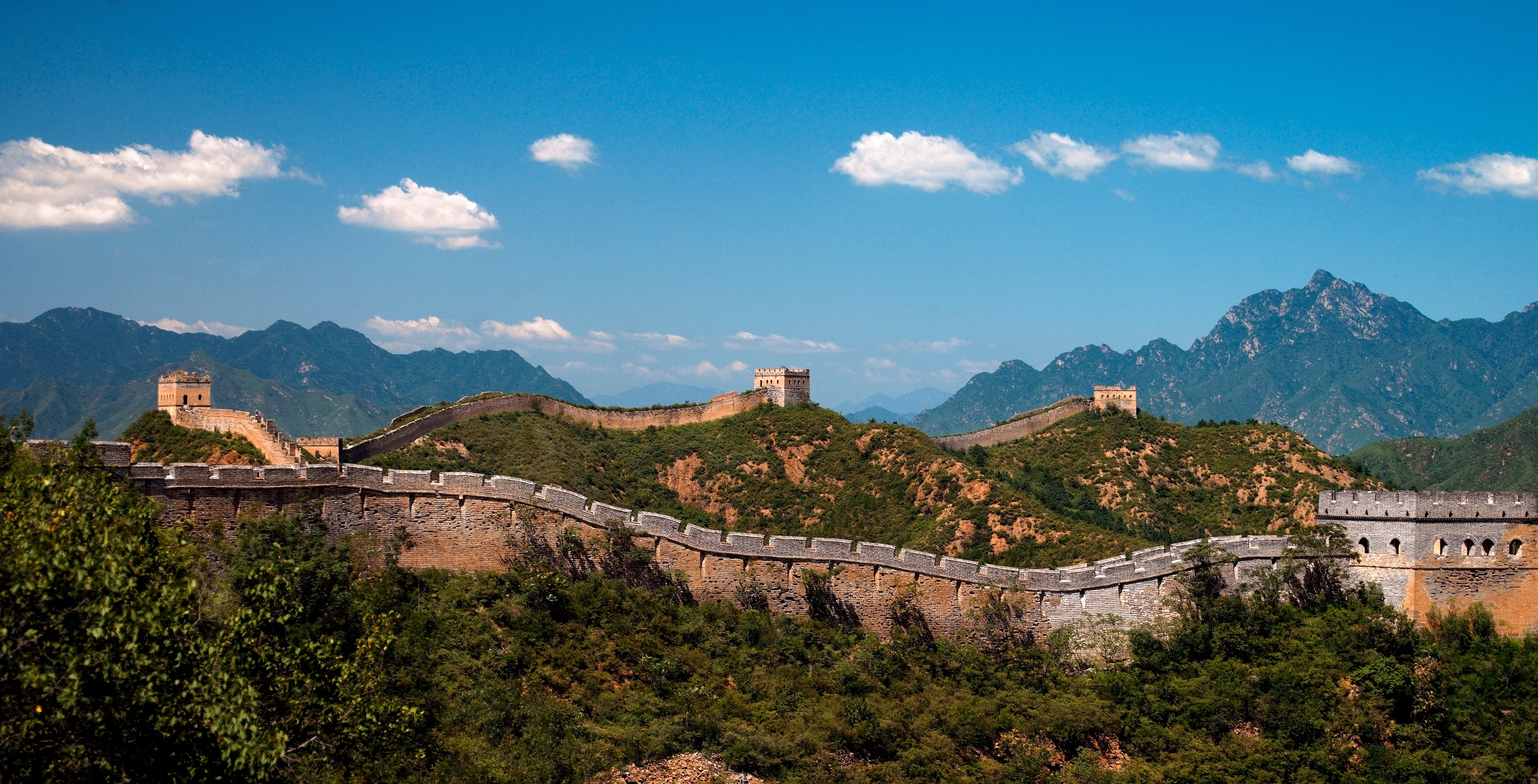
Grande Muraille de Chine (photo de Steven Allen)

Things to do in China: 11 must-see attractions

Discover our members' favorite destinations in China, plus reviews, practical info, and traveler photos...

The 5 most beautiful cities to visit in China

#1 Shanghai +12 recs

A former fishing port that transformed over three decades into the financial powerhouse of China, Shanghai translates literally to "on the sea" and stuns with its sheer scale. Cut through by the Huangpu River, the city gives off a Manhattan vibe in Pudong, leans into traditional authenticity in Puxi, and bears witness to former foreign concessions along the Bund and in the charming former French concession. A true playground for ambitious youth, Shanghai is cosmopolitan, laid-back, open to the world, and endlessly energetic. Packed with museums and shopping destinations, you will never run out of things to do here.

The climate is subtropical, bringing mild winters alongside very hot and humid summers.

The Bund, Laid-Back and Historic

The Bund, a word Anglo-Indian English borrowed from Persian for an embankment, is one of the most famous waterfront promenades in China. Its Art Deco and neoclassical facades evoke 1930s Chicago or Liverpool. Early in the morning, locals gather here to practice tai chi.

Step inside the magnificent Pudong Development Bank, built by the British. You will notice the solid bronze lions and doors, Carrara marble, and stunning mosaics. Right nearby, the Customs House holds a replica of the Big Ben clock tower. Just 750 metres away, the Waibaidu Bridge draws newlyweds who come to pose for wedding photos.

Hop on a river cruise down the Huangpu River, preferably at night, on a waterway three times wider than the Seine. Until 23h, the skyline sparkles with thousands of lights. Head to the Shiliu Pu pier located at level B1, ticket window 1. The cruise lasts 30 to 50 minutes. Alternatively, grab a drink from the 32nd floor of the Hyatt Hotel or the 66th floor of the Royal Meridien near the Bund. The outdoor terrace at Bar Rouge is another great spot.

Just steps away, the old town features low-rise houses spread across less than 2 km. Visit the Temple of Confucius, a pocket of peace in the middle of the urban jungle, and the gorgeous Yu Garden, whose name means peace and comfort. If you are curious, wander over to the Wan Shang Market, a cricket market where insect fights involve local betting.

Pudong, Showcase of China's Meteoric Rise

Head up one of the massive glass skyscrapers for dizzying city views. Your options include the Shanghai Tower, the third tallest building in the world, the Jin Mao Tower reminiscent of the Empire State Building, the Financial Center Building shaped like a bottle opener, and the popular Oriental Pearl TV Tower with its three pink spheres. The latter also houses a city history museum; the aquarium sits in its own building next door.

Renmin Guangchang, People's Square, Beloved by Locals

As Shanghai's busiest pedestrian shopping drag, Nanjing Donglu stays lively late into the evening with shops open until 22h. Well-known stops include the Shanghai No.1 Department Store, its neighbor Xin Shi Jie, and the Fashion Store. For a bite to eat, head to the Shanghai First Foodhall. Further up the street lies People's Square, or Renmin Guangchang, a vast esplanade overlooking a green park. On Saturday mornings, parents gather here without their children to handle the informal marriage market.

Visit the massive, free Shanghai Museum. If time allows, step inside the futuristic Grand Theatre designed by a French architect, or check out the Urban Planning Exhibition Center, where a giant model of the city sits on the 2nd floor. A small tourist tram at the intersection of Henan Zhonglu lets you tour the area without wearing out your feet.

The Former French Concession

Stroll down plane tree-lined Huaihai Avenue toward Taikang Lu. Late afternoon, right after offices close, is the best time to explore these picturesque alleys lined with small shops. The atmosphere here is relaxed. If you have time, walk into the Okura Garden Hotel, which occupies the former French athletic club later converted into the People's Cultural Palace. The gardens are magnificent, and on weekends locals gather here to fly kites or play mahjong.

By night, the neighborhoods of Xintiandi and Huaihai Lu turn into the city's nightlife hubs.

Northwest of the center, the Jade Buddha Temple, featuring a 2-metre-tall statue, stands as the city's most famous Buddhist sanctuary. Also worth a look is Lu Xun Park in the former Japanese concession, known for its water lily pond.

Traveling with Kids

Take the kids to Disneyland or the science museum, which feels very similar to the Cité des Sciences in Paris. Finally, the Shanghai Circus is one of the most acclaimed in the world.

When to Go?

The best windows for a visit are spring, from late April to early June, and autumn, during September and October.

How to Get There?

Nonstop flights link Shanghai with New York, Los Angeles, San Francisco, and Toronto. From other North American cities you connect, usually in a Chinese hub or with Emirates, Etihad Airways, KLM, Lufthansa, or Thai Airways through Dubai, Abu Dhabi, Amsterdam, Frankfurt, Munich, Zurich, or Bangkok.

Arriving at Pudong airport, take the Maglev magnetic levitation train followed by metro line 2. The trip into the center takes around 45 to 60 minutes.

Getting Around

The best way to explore the city is on foot and by metro. Purchase a 1-day unlimited pass for roughly 18 yuan or a 3-day pass for 45 yuan.

#2 Juyong Pass +8 recs

Located northwest of Beijing, Juyong Pass is a historic section of the Great Wall of China once vital for defense. It sees fewer crowds than Badaling, offering a more immersive look at the original fortifications and the Cloud Platform. The steep climb is challenging, but the mountain views are worth it, especially in autumn when the foliage turns deep shades of red and gold.

#3 Beijing +8 recs

As the capital of the People's Republic of China, Beijing, also known as Peking, commands attention. A rapidly expanding political and cultural hub, the destination delivers an intense cultural jolt. Hyper-globalized with futuristic skyscrapers and showy malls, it holds onto its traditional roots through ancient architectural treasures and Hutongs. Morning tai chi in the parks, quirky street-side traditional Chinese medicine shops, and bold culinary flavors pull you into an ancient and distant civilization.

The climate is continental with sharp temperature swings: winters are freezing and dry, while summers are hot and humid.

Exceptional Heritage

A major political and historical site, the massive 40-hectare Tian'anmen Square features several Stalinist buildings, including Chairman Mao's Mausoleum, the Great Hall of the People flying the Chinese flag, and the National Museum of China, one of the largest in the world. Nearby, the unusual architecture of the National Centre for the Performing Arts contrasts with the solemnity of the surroundings.

Serving as the Emperor's residence for five centuries, Gugong, the Forbidden City, consists of 9,000 richly appointed rooms using building materials from across the country: Beijing stone, Shanghai marble, Yunnan and Sichuan wood, and Shandong bricks. Built following the layout of a traditional Chinese courtyard home, its symmetry is absolute. Gates, courtyards, statues, palaces, gardens, and countless symbols of longevity, prosperity, and harmony are everywhere. Just beyond the Forbidden City, Jingshan Park offers a great panoramic view and a pleasant stop, especially on weekends when street performers gather.

Climb the steep stairs of the Drum Tower, then lose yourself in the surrounding traditional hutongs for a complete change of pace. In the evening, catch the grand show at the Red Theatre featuring monks and kung fu.

A city symbol, the Temple of Heaven, or Tiantan, and its lovely park dotted with 4,000 cypress trees will impress you. Look closely at the delicate patterns on its triple blue-tiled roof and its circular wooden rotunda that connects the heavens to the earth.

Also worth checking out is the large Niujie Libaisi Mosque, which only reveals its religious identity through Arabic Quranic verses on the walls. As the largest mosque in the city, it sits at the heart of a modern neighborhood with a substantial Muslim community.

Compare the Tibetan Lama Temple, Yonghe gong, to the other places of worship you have visited so far. The highlight of the visit is the towering Maitreya statue, carved from a single white sandalwood trunk.

Enchanting Spots

If you want to feel the soul and magic of the Summer Palace, arrive early (open daily from 6:30 AM to 6:00 PM) and skip the weekends. Sitting at the edge of an artificial lake and surrounded by a forest of 420,000 trees, including over a thousand centenarians, the scale here is immense.

If you have time, check out the Tibetan frescoes, Dragon King Island, and the white dagoba in Beihai Park. Other pleasant walks include the Qianhai and Houhai lakes of Shichahai (the lakes of the 10 monasteries). The vibe here is lively, with locals playing mahjong, folk dancers, and musicians playing the erhu, a traditional two-stringed instrument known for its high-pitched vocal sound.

Chang Cheng, the Great Wall, represents the architectural scale and dizzying beauty of Chinese civilization. With an estimated length between 9,000 and 21,000 km, climbing it makes for an unforgettable memory. The Badaling section features a cable car and is the most comfortable and busiest option. A wilder alternative is the Mutianyu section, where you can ride a toboggan down.

When to Go?

The best times to visit Beijing are in the spring and autumn.

How to Get There?

Air France, Air China, and China Eastern Airlines operate daily flights to Beijing from European hubs such as Paris Charles de Gaulle, specifically arriving at Shoudu Jichang airport, whose striking architecture resembles a dragon. Emirates, Etihad Airways, KLM, Lufthansa, and Thai Airways also provide connecting flights through Dubai, Abu Dhabi, Amsterdam, Frankfurt, Munich, Zurich, or Bangkok.

Getting Around

Using public transit is the best way to see the city without wearing yourself out. Subway diti fares depend on the distance traveled. Buying a pre-paid Yikatong card quickly pays for itself.

#4 Hong Kong +6 recs

Positioned where East meets West, the island of Hong Kong, literally meaning the harbor of fragrances, is a special administrative region of the People's Republic of China. Set at the center of an archipelago of 250 islets, this Asian Manhattan balances a distinct identity rooted in Feng shui, a thriving film industry, and a deep-seated love for horse racing. Merging dense urban landscapes with a buzzing commercial port, Hong Kong draws visitors in with its unique atmosphere, rich heritage, and endless shopping. Its beaches and 21 country parks also provide plenty of space to unwind. And you certainly cannot miss its standout culinary scene, highlighted by dim sum, bite-sized delicacies served in small round bamboo baskets.

The climate is humid subtropical, with average temperatures hovering around 21°C.

An Energetic Megacity

Ride the historic funicular railway dating back to 1888 up to Peak Victoria, sitting at an altitude of 554 metres. The 360-degree views from the top are staggering. The two main urban landmarks to look out for are the Two IFC tower on the Hong Kong side and the ICC tower over in Kowloon.

Next, head over to the walk-in aviary at the Edward Youde Aviary inside Hong Kong Park, home to 3,000 birds representing numerous species, many featuring brilliant plumage. Strolling along the paths while listening to birdsong makes for a remarkably peaceful break from the city.

If time permits, journey south to explore Aberdeen and its floating community of Tanka boat people. You can tour the harbor on a traditional sampan, with rides taking about 20 minutes.

Hop on a Star Ferry across the harbor toward Kowloon. This short water crossing between the islands runs 450 times a day and offers a quintessential local experience. Start with a visit to the expansive Hong Kong Museum of Art. Nearby, film fans will find the Avenue of Stars, a waterfront promenade styled after Hollywood's Walk of Fame.

Wander down Shanghai Street near Jordan MTR station, where street barbers, traditional herbal medicine shops, and older storefronts offer a concentrated taste of traditional Chinese culture.

When evening arrives, make your way to the Temple Street Night Market, a lively hub of neon lights, Cantonese street opera, and fortune tellers. Another option is the nightlife district of Lan Kwai Fong, packed with bustling bars and restaurants. Alternatively, every Wednesday evening from 7pm to 11:30pm, the Happy Valley Racecourse opens its gates to thousands of passionate racing fans. People come here to place bets or simply soak up the electric atmosphere.

If you want to view the skyline from above, the 46th floor of Central Plaza in Wan Chai delivers sweeping vistas of the harbor and Victoria Peak. Another alternative for high-altitude views is the Sky 100 observation deck.

Authentic Spots Rooted in Nature and Spirituality

Twice the size of Hong Kong Island, Lantau showcases wild landscapes featuring white sandy beaches and quiet hiking trails. Accessible in 40 minutes by ferry from the Central piers, the island is home to the massive Tian Tan Buddha and the historic Po Lin Monastery.

Families traveling with children will find Disneyland located in the northeast of the island, complete with attractions themed around the Toy Story franchise. Ocean Park serves as a popular alternative.

Lamma Island, reached via a 30-minute ferry ride from Central, is a hilly retreat where cars are banned, allowing you to wander a peaceful, pedestrian-only environment.

For a dose of relaxation, head to the scenic beaches of Repulse Bay and Deep Water Bay. A bit further south, Stanley provides another quiet seaside escape favored by locals looking to unwind.

When to Go

Early spring between March and April and late autumn between October and November are the ideal windows for a visit.

Getting There

Air China operates flights to Hong Kong with a layover in Beijing departing from European hubs. From North America, Cathay Pacific flies nonstop out of New York, Los Angeles and Vancouver, while most other carriers route through a hub in East Asia or the Middle East.

Getting Around

The MTR subway network, combined with buses and ferries, covers the city seamlessly. For convenience, pick up a stored-value Octopus card to pay for all public transit with a simple tap.

#5 Xi'an +3 recs

Xi'an balances its role as a modern city with a deep commitment to preserving imperial history. While the Terracotta Army is the main draw, the true character of this former capital reveals itself in the narrow alleys of the Muslim Quarter over a bowl of steaming soup. Between the ancient city walls and the local street food scene, Xi'an offers a grounded, authentic experience that feels distinct from the polished coastal megacities.

Ranking of the 6 activities selected by our editors in China

#1 Great Wall of China (Juyong Pass) +5 recs 4.3/5

What is the most massive structure in human history? The Great Wall of China. Spanning 6,700 kilometers and dotted with towers and bastions, it remains the largest project ever built. Construction took over 2,000 years to complete. Originally designed to protect northern borders, it now welcomes 15.5 million visitors annually in Asia.

See the guide See deals

#2 Forbidden City (Beijing) +4 recs 4.3/5

The Forbidden City, in the center of Beijing, is a massive imperial palace built in the 15th century, covering 72 hectares with nearly 980 buildings. This complex, once reserved for Ming and Qing emperors, reveals the lavish court life through ceremonial halls and exhibited treasures. Designated by UNESCO, this site is enriched by the Palace Museum and offers sweeping views from nearby Jingshan Park.

See the guide See deals

#3 Terracotta Army (Xi'an) +3 recs 4/5

Discovered by farmers in 1974, the Terracotta Army was built over 2,000 years ago to protect Emperor Qin Shi Huang in the afterlife. The site in Xi'an features three massive pits housing thousands of unique soldier and horse statues, plus an interactive museum. It provides a direct look at the craftsmanship of the Qin dynasty.

See the guide See deals

#4 Shanghai Ocean Aquarium (Shanghai) +2 recs 5/5

Located in Lujiazui, the Shanghai Ocean Aquarium explores global ecosystems through themed zones like Australia and the Arctic. Its 155-meter underwater tunnel is the longest in Asia, offering immersive views of sharks, rays, and reefs. With interactive spaces and feedings, it is a top destination for families and marine life enthusiasts.

See the guide See deals

#5 Leshan Giant Buddha (Leshan) +1 rec 5/5

The Leshan Giant Buddha stands as a masterpiece of ancient China. Built between 713 and 803 by the monk HǎiTōng to calm dangerous river currents, the 233-foot statue remains a marvel after 12 centuries. Overlooking the Min River, the figure is currently undergoing vital conservation work to combat weather damage and pollution.

See the guide See deals

#6 Three Gorges Dam (Yichang)

This concrete wall stretching 2,335 meters across the Yangtze River powers the largest hydroelectric plant on earth. From the Tanziling observation deck, take in the sheer scale of this colossal engineering feat completed in 2006.

The site stands out most for its impressive five-stage ship lock system, lifting cargo ships across a dizzying vertical drop.

See the guide See deals
See the best activities in China

Visiting China: An empire where ancient dialogues meet the ultramodern

Picture a place where futuristic skyscrapers stand right next to millennial temples, and giant pandas munch on bamboo while bullet trains fly by at 350 km/h. China is not just a destination, it is an entire universe. Spanning 9.6 million square kilometres with 4,000 years of history, the Middle Kingdom confronts you with a fascinating reality: an ancient civilization that embraced modernity without ever turning its back on its roots.

China: Is this trip right for you?

China leaves no one indifferent. It delights curious travelers, those looking for authentic adventure who do not mind having their certainties shaken up. If you dream of a pre-packaged vacation where everything is entirely predictable, look elsewhere. Here, the language barrier can turn buying a train ticket into an odyssey, the crowds at major landmarks defy imagination, and pollution in certain megalopolises can catch you off guard. Yet it is precisely this complexity that forges the most memorable travel stories.

History lovers find plenty to love with treasures like the Terracotta Army or the Great Wall. Food lovers discover a culinary landscape infinitely richer than your local takeout place. And those seeking quiet contemplation get happily lost in the classical gardens of Suzhou or the karst landscapes of Guilin.

Beijing, theater of power and keeper of memory

The Chinese capital grabs you the moment you step out of the airport. Between rigidly laid-out grand avenues and hutongs (traditional alleyways) fighting off modernization, Beijing tells two parallel stories at once. Tiananmen Square stuns with its sheer scale: 440,000 square meters where wide-eyed tourists mingle with impassive guards.

The Forbidden City, also known as Gugong, remains an absolute must-see. Its 980 buildings with golden-tiled roofs hold the secrets of 24 emperors. Get there early: the 80,000 daily visitors create memorable human traffic jams, especially near the dragon throne.

Hidden treasures of the capital

The Temple of Heaven (Tiantan) puts on a unique morning show: starting at 6 AM, Beijing locals gather here for tai chi, traditional dancing, and opera singing. This spontaneous gathering beats any museum in the world.

Friendly tip: to avoid the massive crowds at the Great Wall, head to the Jinshanling section instead of Badaling. The 3-hour trek between watchtowers delivers jaw-dropping views without the wall-to-wall selfie sticks.

Shanghai, laboratory of China's future

This former international concession of 24 million residents throws out the rulebook on urban planning. The Bund, an Art Deco waterfront promenade facing the skyscrapers of Pudong, perfectly captures this fascinating urban schizophrenia. On one side stands colonial heritage frozen in stone, and on the other, twenty-first-century China shooting straight for the clouds.

The French Concession keeps an unexpected charm with its century-old plane trees and neighborhood cafes serving real croissants. It is a tiny slice of Europe tucked inside Asia that makes for a surprisingly relaxing afternoon stroll.

The Shanghai way of life

Night markets reveal the gritty, popular soul of the city. The lanes of Tianzifang, old shikumen houses turned into workshops and boutiques, mix questionable antiques with genuine finds inside an atmosphere reminiscent of an Asian souk. It is a full sensory experience: aromas of spices, bargaining in Mandarin, and unexpected discoveries around every corner.

Xi'an and the wonders of Shaanxi

This former capital of thirteen dynasties holds the best-kept secret of ancient China right underground. The Terracotta Army commissioned by the first emperor Qin stuns visitors with its precision: every soldier's face is unique, sculpted 2,200 years ago by artisans whose names are lost to history.

The old city walls, remarkably preserved across 14 kilometres, are best explored by bicycle. This elevated ride reveals striking contrasts between historic neighborhoods and modern developments eating away at the surrounding countryside.

Friendly tip: the xiaochi (small bites) in Xi'an's Muslim Quarter rival the capital's best food. The night market on Beiyuanmen Street serves up dumplings that bear no resemblance to industrial frozen versions.

Postcard landscapes of the South

The Guilin-Yangshuo region turns travel magazine clichés into reality. Those karst peaks rising out of rice paddies like green cathedrals create a setting straight out of a martial arts film. Cruising down the Li River reveals a life-sized Chinese scroll painting, especially when morning mist wraps around the peaks.

In Yunnan, a province bordering Tibet and Myanmar, you will find a completely different side of China. In Dali and Lijiang, ethnic minorities preserve their distinct architectural traditions. Carved wooden homes and cobblestone canals contrast sharply with the cookie-cutter urban sprawl of major metropolises.

Chengdu, kingdom of the pandas

The Chengdu Research Base of Giant Panda Breeding is a mandatory pilgrimage to understand how deeply the Chinese cherish their national symbol. These playful balls of fur, filmed by millions of visitors, embody the endearing side of China that makes you forget the country's massive industrial footprint for a little while.

China on a plate: A symphony of regional flavors

Forget everything you think you know about Chinese food. Every region crafts its own culinary identity: Beijing cuisine favors dark sauces and peking duck, Sichuan cooking sets your taste buds on fire with chili peppers and Sichuan peppercorns, while Cantonese cooking relies on the freshness of seafood.

The dim sum in Hong Kong, served out of steaming bamboo baskets, turns breakfast into a social ritual. Sichuan hot pots bring family and friends together around a spicy broth where everyone cooks their favorite ingredients at the table.

Street food reveals the everyday soul of the country: jianbing (stuffed savory crepes) in the morning, baozi (steamed buns) at all hours, and countless grilled skewers filling night markets with mouthwatering smoke. Every single bite tells a story of culinary techniques handed down across generations.

When to visit China?

Spring (April to June) and fall (September to October) offer ideal conditions for exploring the country. Temperatures stay mild, rainfall is limited, and the foliage puts on a brilliant display.

Summer brings stifling heat and monsoons to the South, but it remains the prime time for exploring Tibet and high-altitude regions. Winter turns the North into a Siberian wonderland, but it also reveals the crystalline beauty of the Great Wall blanketed in snow.

Avoid the two "Golden Weeks" (the first week of October and Chinese New Year in January or February) at all costs: 1.4 billion people take vacation simultaneously, turning every tourist attraction into a human anthill.

How to get to China?

San Francisco or Los Angeles to Beijing takes 12 to 13 hours nonstop on United or Air China, and about 15 hours from New York. Air France is an option if you are routing through Europe. Shanghai and Guangzhou also boast daily direct connections. Gulf carriers like Emirates and Etihad offer layover flights through Dubai or Abu Dhabi, which are often cheaper though longer.

Hong Kong makes for an interesting alternative gateway to the South, with the perk of not requiring a visa for stays under 90 days. Mainland China is a different story for US passport holders: the visa waiver China granted to several European countries does not cover Americans, so apply for a tourist visa well before you go.

Getting around China

The Chinese railway network stuns with its efficiency. High-speed trains connect major metropolises at speeds hitting 300 km/h in remarkable comfort. The Beijing to Shanghai run takes just 4 hours and 30 minutes, an engineering feat that rivals the best European rail lines.

For shorter distances, the ultramodern subways in big cities often put their Western counterparts to shame. Mobile apps and English signage make getting around much easier, even if you do not speak a word of Mandarin.

Flying remains essential for reaching remote regions like Xinjiang or Tibet. The dense domestic airline network offers competitive pricing, especially when booked ahead of time.
Find the best travel deals in China

Hotels and stays Flights Car rentals Custom trips

Trip ideas and themed activities

Top 3 best travel agencies in China

China is as overwhelming as it is fascinating, from the visa requirements and language barrier to the massive distances between Beijing, Xi'an, and Yunnan. An agency that actually knows the ground makes all the difference. The rankings below draw on reviews and recommendations from Avygeo travelers, our active social network for travelers since 2014, helping you find the right people to work with before booking your trip.

Top photos posted by members

Grande Muraille de Chine (photo de Steven Allen)
IMG_2707_compress copie.mp4
MOV_1943.mp4

Articles about China

Latest reviews

Get a bird's-eye view of the Forbidden City

Après la Cité Interdite, je suis allée dans le parc Jingshan juste en face, et franchement très bonne surprise. En basse saison l'entrée coûte 2 yuans, soit l'équivalent de 25 centimes d'euros. Il y a…

80

Hong Kong, the travel letdown

I am going to be honest, I did not connect with Hong Kong at all. The city is noisy, expensive, and the famous Symphony of Lights... clearly not living up to its reputation, a huge disappointment. The…

208

The twin pagodas of Guilin, sun and moon

I discovered the famous Sun and Moon Pagodas after dark, and it was gorgeous. The golden pagoda (the Sun) and the silver pagoda (the Moon) reflect perfectly in the lake water, and the walk around it i…

152

Magical!

An absolute favorite. I happened to be there for the 30th anniversary of the Lantern Festival, and there were colorful statues on the water absolutely everywhere, it was magical. The garden itself is…

43

A true labyrinth of red and gold

The site is huge (180 hectares), and I spent half a day getting lost between the courtyards and pavilions. Careful though, it gets very crowded, especially with Chinese tour groups in organized packs,…

109