
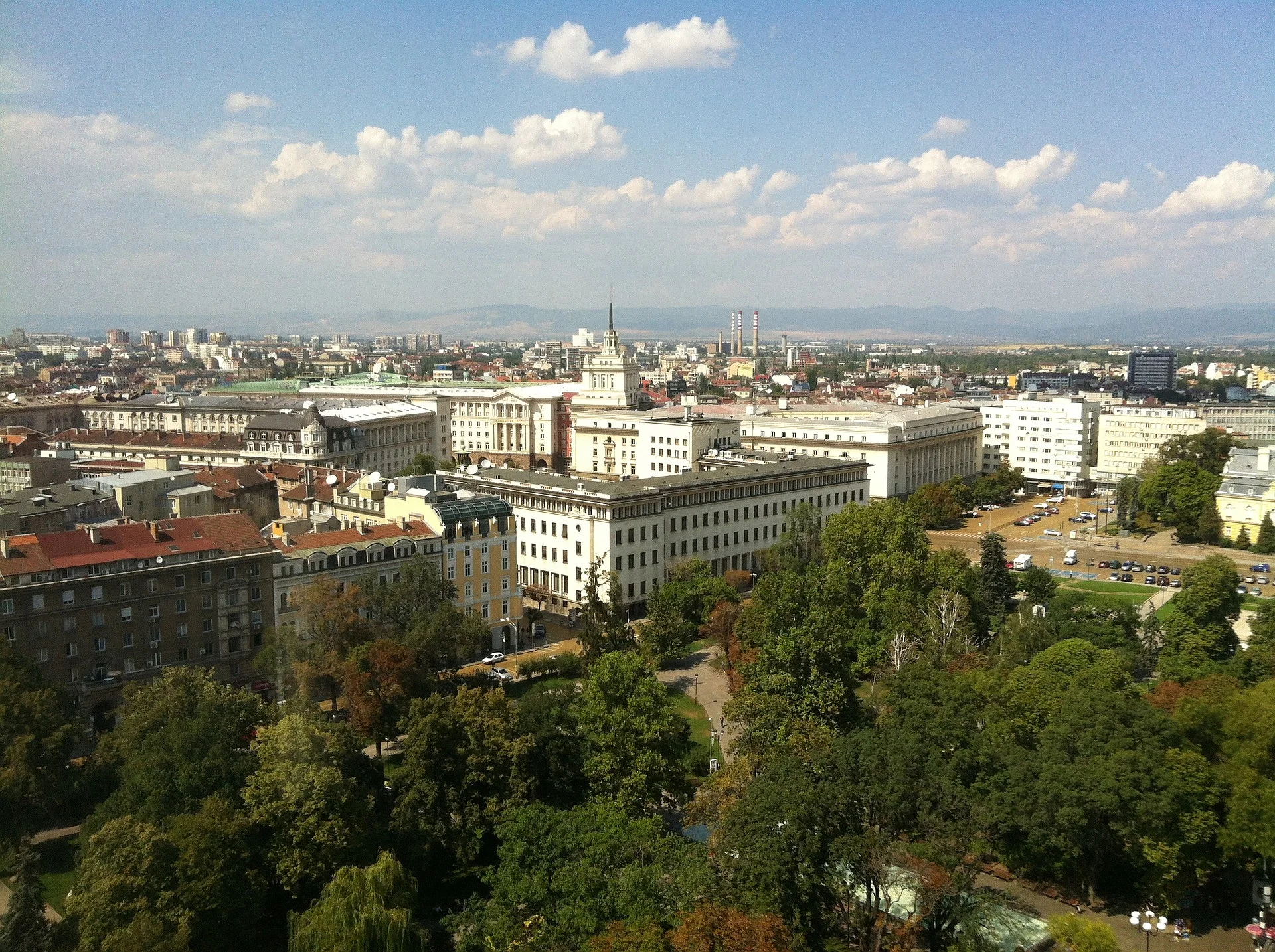
Late last February, my wife and I, along with a couple of friends, decided to head to Bulgaria to visit its capital, Sofia, and the surrounding mountains.

First impressions of Bulgarian hospitality
Every traveler knows that your first impression of a country happens at the airport. The corridors were bright, well-marked, and pleasant, leading to a smooth entry into the country.
We noticed quite a few locals in line, some of whom were watching us intently. A moment of awkwardness? Not if you’re ready to leave your French social cues behind! A man in the queue, after watching me for a good minute, walked over. I’ll admit I was a bit thrown off. But in admittedly broken English, he said: "Take the line on the right if you have a passport; you'll get through faster."
A lovely surprise that would repeat itself throughout our stay! Bulgarians are generally discreet and reserved. But in return, and sometimes despite appearances, they are a courteous and welcoming people!
A few minutes later, we hopped into a taxi. After a low-key greeting, the driver treated us to a wonderful guided tour of Sofia in very good English, cracking jokes the whole way! He drove us right to our destination, "Todor Alexandrov" Boulevard. It was a truly pleasant and informative experience.
A similar story happened when we arrived at our hotel. There was a computer glitch with our check-in. To make up for the slight inconvenience, we were immediately upgraded to suites, for both of our couples!
Sofia, a mix of styles
Sofia is a simply surprising city, where working-class neighborhoods literally rub shoulders with more touristy areas.
Walking along "Todor Alexandrov" Boulevard toward the heart of the city, we reached the Statue of Saint Sophia, the city's namesake, a graceful monument and a point of pride for the locals. It stands at the intersection of three neighborhoods, where three different atmospheres blend together.
First, we discovered a religious center, where various faiths are represented. Catholic churches, Protestant temples, synagogues, and mosques stand almost side-by-side. The Orthodox faith is the most prominent, offering magnificent buildings like the "Saint Nicholas" Russian Church on "Rakovska" Street (the interior of this relatively recent construction is an absolute must-see), or just a stone's throw away, the Alexander Nevsky Cathedral in the square of the same name.

Next, we continued our tour and soaked up the local life in the working-class neighborhoods southeast of the city center: shops, deals to be found, and plenty of energy. The aging facades of the buildings hint at the country's developing economy. Everything is waiting to be built or rebuilt, but that doesn't take anything away from the quality of the culture and heritage we were exploring.
On the corner of a pedestrian street, I stopped to join a group of people playing chess near a makeshift market. That’s Bulgaria for you: people enjoying the present moment, not offended by my presence, and welcoming me into the circle of onlookers watching two players whose age was matched only by their wisdom.
Heading west up "Neofit Rilski" Street, we arrived, much to our surprise, in another reality of Sofia: "Vitosha" Boulevard. In just two steps, we had crossed an invisible border and entered the tourist district, where the restaurants are absolutely excellent... and affordable!
Sofia is a city with many faces, serene, welcoming, and surprising, surrounded by mountains, with ski resorts right at its doorstep. It’s a lively European capital that offers winter sports right in the city!
Around Sofia
Bulgaria is a diverse country that deserves time to explore. I'm thinking of the Black Sea beaches, which I’ll likely visit on a future trip. The northern mountains are also worth seeing.
However, for lack of time, we stuck to the surroundings of the capital, which hide a few gems.
South of Sofia, we discovered charming villages on the slopes of Mount "Vitosha", which peaks at 2,290m. It’s the fourth-highest Bulgarian summit after Rila (2,925m) and its famous monastery of the same name, Pirin (2,914m), and the Balkan Mountains (2,376m). A more family-oriented and therefore even warmer atmosphere really won us over, sometimes offering beautiful panoramic views of the mountains.
I particularly loved the Boyana Church, a UNESCO World Heritage site. The buildings are considered masterpieces of the era and the region, as are the wall paintings inside. Located in an area called Bojana, at the foot of Mount Vitosha and on the edge of the forest, it takes about thirty minutes to drive there from the center of Sofia.
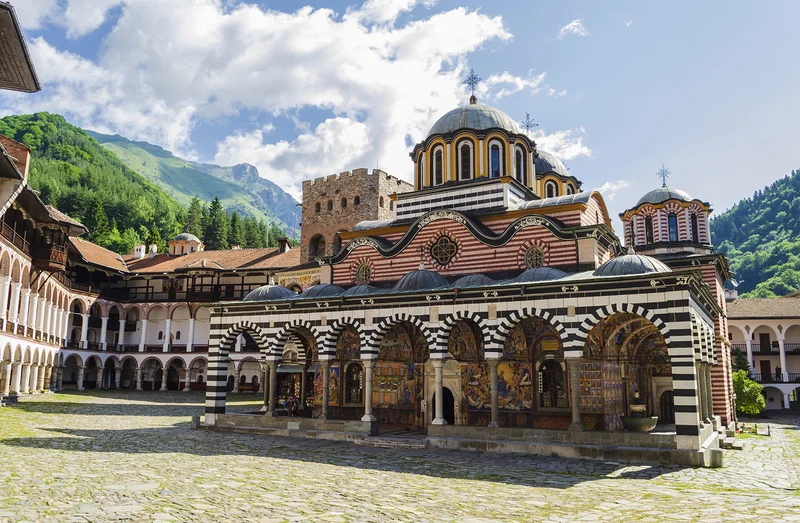
Further south, about a 2-hour drive away, don't miss the Rila Monastery. Also a UNESCO site, it features iconic buildings of Bulgarian Renaissance art and architecture. The frescoes on the walls and vaults are incredibly colorful. On top of that, the setting is impressive: you are surrounded by mountains in a gorge carved by the Rilski River.

Comments (0)
No comments yet. Be the first!