
Hello everyone,
After reading (almost!) all the posts from our members, I’m finally diving into the adventure myself to share the story of my visit to "the Pearl of the Danube": the stunning and famous Budapest.
Budapest, the Pearl of the Danube

I went for a long weekend of 3 days and, as I quickly realized once I arrived, that really isn't enough time to see all the city's splendors: you can only get a brief taste, which I'm sure will leave you wanting to come back! That’s also why I’ll only describe what I managed to see, but I’ll still list other buildings and sites for your next trip (I’ve been doing my homework since: I’m already planning my second visit!).
Here is the account of my stay, broken down chronologically.
DAY 1: Buda Castle, an absolute must
Understanding the urban layout of Budapest
To understand what follows, I first need to tell you that modern-day Budapest was formed by the merger of three "ancient" cities: Obuda, Buda, and Pest, and that sightseeing can be organized around this division (which is how it's often presented in guidebooks and on various maps). Budapest is a city where many buildings and sites are UNESCO World Heritage listed: the Buda Castle (the historic castle of the Hungarian kings), the banks of the Danube, the Castle District, and Andrássy Avenue.
Buda Hill

In fact, the term "Buda Castle" actually refers to an entire historic district that includes several buildings, gardens, and courtyards, all surrounded by ramparts at the top of Buda Hill, which is free to access. I had made this one of my priorities, so I started here. To get up the hill, I recommend the funicular rather than the metro, as you'll be able to admire the scenery all the way to the top. It departs from the west bank of the Danube and only travels a few dozen meters. You can, of course, make the climb on foot, it's perfectly doable, but the funicular has a nice vintage charm :)
The former Royal Palace and the Hungarian National Gallery

In the center of the castle (district) lies the former Royal Palace, where the country's kings resided. Today, this massive building houses two main museums: the Hungarian National Gallery and the Budapest History Museum. I would have loved to visit both, but for lack of time, I stuck to the former. The museum's collection of paintings and sculptures covers all the recent centuries of Hungarian creation. I admit I wasn't familiar with Hungarian art, but I discovered some interesting artists there like Mihály Munkácsy and Károly Lotz.
When you're walking around this district, climb the ramparts whenever you can; the view over the Danube and the city is top-notch. Stroll through the little streets around the Palace and discover some of the public gardens that offer peaceful, serene spots to rest.
Fisherman's Bastion

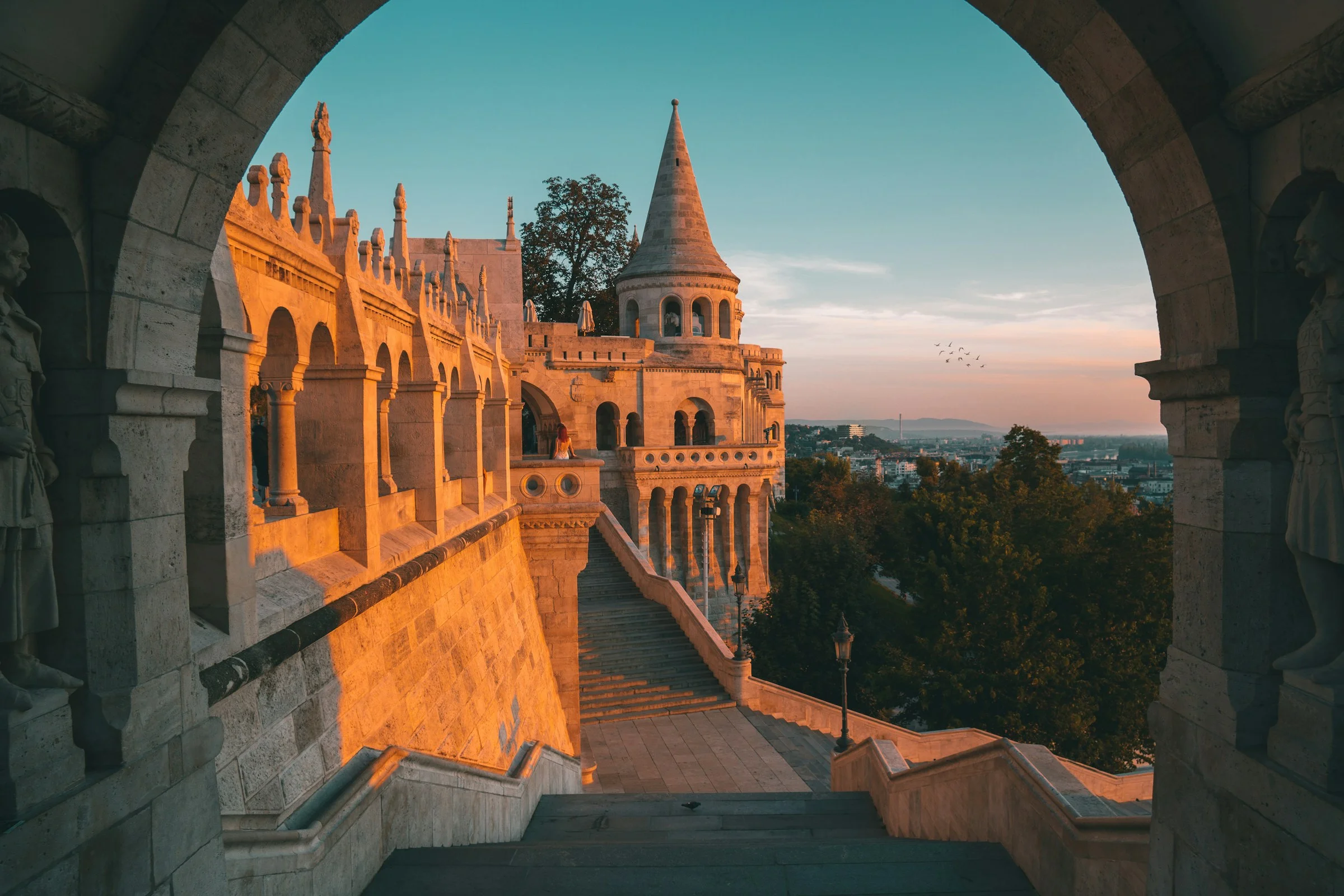
A must-see spot, you'll surely find yourself on a panoramic terrace called "Halászbástya" or "Fisherman's Bastion," located on a section of the castle ramparts. The design is worth it and the view is superb. You overlook part of Pest and the Danube. You'll also spot Margaret Island. This "bastion" and its seven towers represent the seven Magyar tribes that settled in the Carpathian Basin. The name "Fisherman's Bastion" comes from the guild of fishermen who were tasked with defending this section of the wall during the Middle Ages.
Matthias Church

Continuing your path from the bastion toward Matthias Church, you'll see the equestrian statue of King Stephen I of Hungary. Matthias Church is definitely worth the detour. Its roof, covered in ceramic tiles with varied colors and patterns, offers a decor typical of Eastern European churches, much like St. Stephen's Cathedral in Vienna. Just for info, the Museum of Applied Arts in Budapest features the same beautiful roofing but with green tones, and it’s a fine example of Art Nouveau.
Very slender, its spire is highly detailed. Built starting in the 12th century, it endured bombings and fires before being definitively rebuilt in 1896. During the Ottoman occupation, it was transformed into a mosque. The interior of the church is stunning; the paintings are magnificent and the pulpit is richly decorated.
Notable fact: for their coronation as King and Queen of Hungary on June 8, 1867, Franz Joseph I and his wife Elisabeth of Wittelsbach, better known by her affectionate nickname "Sissi," chose this church. It was also in this venue, during that mass, that the "Coronation Mass" by Hungarian composer Franz Liszt was performed for the first time, with the composer himself conducting.
DAY 2: Pest and the East Bank
Flatter than the other side, the East Bank of the Danube corresponds to the old city of Pest. This is where you can go shopping, go out at night, and see the beating heart of the city!
The Chain Bridge or Széchenyi Lánchíd

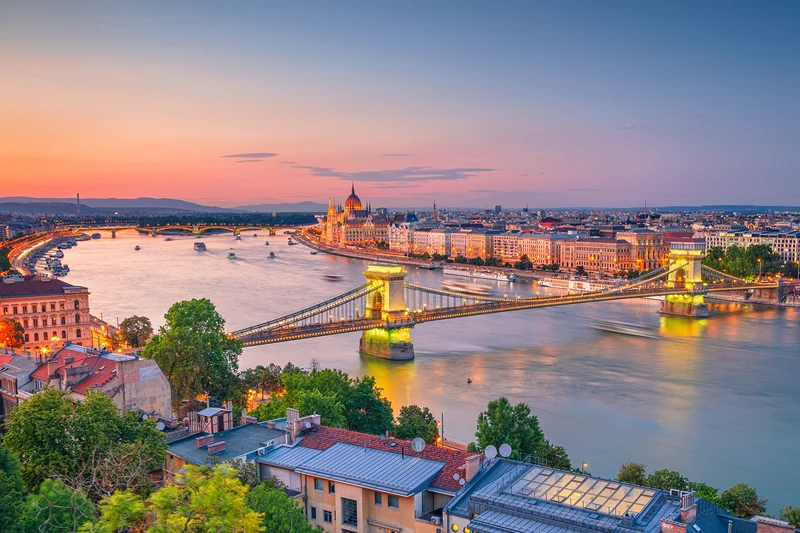
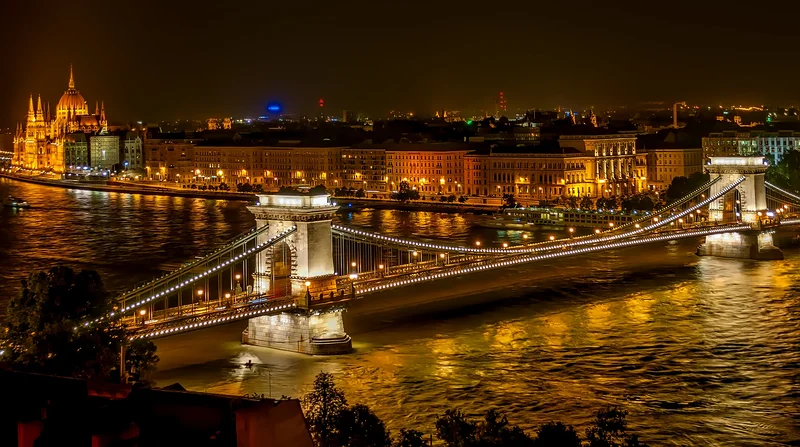
I’d like to tell you about the most famous of Budapest's bridges, which is actually the emblem of the city: the Chain Bridge or Széchenyi Lánchíd. Dating back to 1849, it was the first permanent bridge built on the Hungarian section of the Danube, connecting Pest and Buda. Its structure is suspended from three arches by massive metal chains, hence its name. Dynamited by the Germans (like all Budapest bridges, for that matter) during World War II, it was completely rebuilt. On that note, just a quick word on the fact that over 70% of the city was destroyed and rebuilt.
The views on and from this bridge are among the classic souvenir photos you can bring back from Budapest. I started my second day with this bridge before heading over to the East Bank, into the heart of Pest.
Breakfast at Gerbeaud ház and the Tea Rooms

Although the morning was already underway, I intentionally didn't eat anything when I woke up because I wanted to have breakfast at the famous Gerbeaud tea room ("Gerbeaud ház" in Hungarian) on Vörösmarty Square. Its name comes from the Swiss pastry chef who created the establishment. For those who know, it resembles Viennese tea rooms, and you can enjoy the tradition of these salons where intellectuals and the bourgeoisie used to come to eat pastries and drink tea or coffee. In all honesty, it was good, but expensive for what it was.
The second most famous tea room is the New York Café, which will transport you back to the atmosphere of the 19th century.
Around Andrássy Avenue

Leaving Café Gerbeaud and heading northeast, you'll reach Andrássy Avenue, one of the city's main arteries. If you have the motivation, you can walk the 2,310 meters of this avenue, where you'll see the National Opera, the Franz Liszt Museum... a beautiful walk to take to see the city's most beautiful buildings.
And yet, not everything is rosy. I’d like to share a word about the House of Terror. This museum traces the history of successive dictatorships. It is located in a highly symbolic place: the former headquarters of the Arrow Cross Party until 1944, which was later transformed into the headquarters of the communist political police.
To be thorough, the Arrow Cross Party helped the Nazis get rid of Jews by throwing them into the Danube. Today, on the banks of the Danube, a sculpture commemorates these dark moments in the city's history through pairs of shoes, symbolizing that people had to undress and take off their shoes before being shot and thrown into the river.
By following Andrássy Avenue to the end, you'll eventually come to Heroes' Square, another essential place to visit if you go to Budapest. It is part of the sites (along with metro line 1) classified by UNESCO. There, you'll see the Millennium Monument, which commemorates the leaders of the seven Magyar tribes and important historical figures of the country. If you have time, from there you can visit the Museum of Fine Arts, Városliget Park, or even the Széchenyi Baths. For my part, the day was already coming to an end, but I had planned a third day in the green for myself ;)
DAY 3: Relaxation and thermal baths
Margaret Island

The city of Budapest offers beautiful natural settings, whether parks or islands, the most famous of which is Margit-sziget (or Margaret Island). This island, considered the green lung of Budapest, is covered in green spaces where it's lovely to walk. I spent my early morning walking along the Danube to get there, visiting it, and then eating a snack in front of the Musical Fountain, a pool where water jets are synchronized to a piece of classical music. Very relaxing :)
Gellért Baths or Széchenyi Baths?

Budapest is world-famous for its Baths, whose benefits date back several centuries, notably to the Roman period. So, I couldn't leave without trying them! And after walking for miles, I figured it would do me a world of good to end on this more relaxed note.
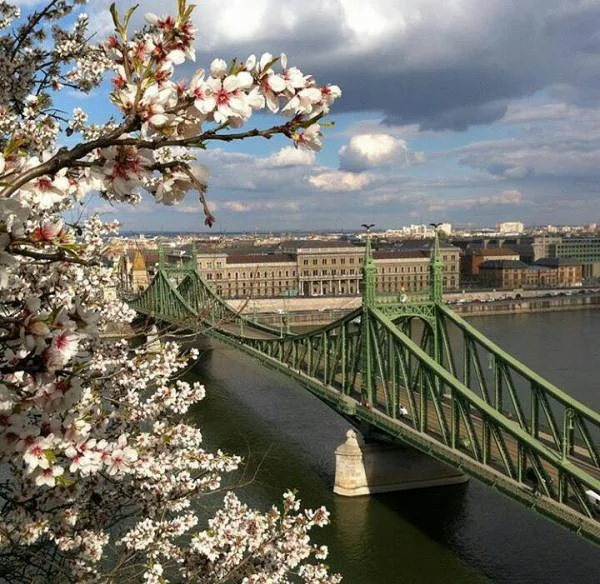
The big dilemma that will likely arise for you is choosing between the two most renowned: Gellért Baths (the baths are located in the southern part of the city center, on the Buda side, near the Danube, at the foot of Liberty Bridge. 1118 Budapest, Kelenhegyi ut. 4. Phone: (36-1)466-6166) or Széchenyi Baths (XIV., Állatkerti út 11. They are located near the Vidam Park amusement park, the circus, and the zoo).
The former are a bit more "indoor," while the latter are open-air. The former are typical of the Hungarian Art Nouveau movement. For the latter, you've likely seen photos of people enjoying the baths while playing chess, with water up to their shoulders.

If you can, treat yourself to both. I did the former. The cost isn't too high and the hot water is a real joy. You will have to pay for entry and a locker. Expect to pay about twenty euros at most. It is also possible to rent a towel, bathrobe, and maybe even a swimsuit on-site (I have a doubt about the swimsuit), but I had planned ahead and brought my own swimsuit and towel.
In any case, it’s truly a moment of relaxation and I understand their reputation. Plus, the setting is really magnificent. For info, in addition to the Gellért Baths, you can enjoy the hotel located on the hill if you book in advance and if the high prices don't put you off. In the area, you can also take a look at the Citadel, which is also located on the hill.
To go further, here are some tips and info that might be useful to you :)
Preparing for your trip
Visa and formalities
Before starting, a few words about the "logistics" side: no particular difficulty in traveling to this country, which has been a member of the European Union since 2004. A national identity card or a valid passport is sufficient to enter Hungarian territory. Indeed, it is no longer necessary to obtain a visa, at least for a leisure trip of less than three months.
How to get there, where to stay?
By planning ahead, you should be able to manage a trip that isn't too expensive. A flight from Paris to Budapest takes 2h15 and you can find round-trip tickets for less than €150, or even less than €100! Here is a link to compare flight prices to Budapest on Kayak. From the airport, the city center of the Hungarian capital is accessible by bus. Line 100E makes the connection in about thirty minutes for around €3. If you opt for a taxi, which is faster, expect to pay €25 to €30.
As for accommodation, I recommend looking for a home base in the Pest district, near St. Stephen's Basilica and the Parliament. This area is central, with many cafes, restaurants, and tourist sites accessible on foot, such as the Chain Bridge and Váci Street. In this area, depending on the level of comfort you choose, a hotel night should cost you between €60 and €120. Here is another link to compare hotel prices in Budapest.
Getting around, safety in Budapest
A warning is necessary, which you will read in many guidebooks and on the websites of the Ministry of Foreign Affairs or the French Embassy in Hungary: watch out for pickpockets and remain vigilant regarding your money (credit card and cash) and your identity documents. For taxis, ask for receipts and prefer those at taxi stands rather than those you hail on the street. If you want peace of mind, prefer public transport: the city has plenty of it and all the interesting sites seem to be served. For your information, just know that you must use a new ticket for each transfer.
For those who will be driving, there are specific rules (zero alcohol, headlights on, etc.). Finally, be careful in nightclubs where, especially gentlemen, you might be "invited" and end up paying very dearly for a few small drinks. In short, all these warnings can be found on http://www.diplomatie.gouv.fr
But don't let any of this scare you: with a minimum of precautions, the kind you take as soon as you leave your own home, the stay poses no problems and you will be able to fully enjoy the city.
Currency and exchange
For the rest, the currency is the Forint (at the time of writing, €1 = 392 forint; you can get the updated exchange rate here). Exchanging money is cheaper on-site. Credit cards are accepted and you can withdraw and pay without any issues.
The national language is, of course, Hungarian, but many shopkeepers speak English or German (Vienna is less than 250 km away).
Let's move on to the "meat of the matter," which is visiting the city.
The History of Budapest

First of all, to understand its richness, we must briefly dive back into the history of the city and, through it, the history of the country.
The 7 founding tribes, the Magyars
In the time of the Romans, the city of Pannonia was located on the west bank of the Danube. Germanic tribes then came to colonize the territory. We should especially note the influence of the Magyars who, after the conversion of their leaders, Christianized the country.
Successive dominations
Then came the invasion of the Mongols and then the Turks in the sixteenth century. At that time, Hungary was divided between the Turks, Transylvania, and the Habsburgs (Austrian dynasty). The Holy League eventually drove out the Turks in 1686. The Hungarians had their destiny in their own hands for a while before the Austrians took the reins of the country.
Independence
In 1918, Austria was defeated during the First World War and Hungary became a sovereign country. After a first and very short communist interlude, the Treaty of Trianon defined the territory as we know it today, causing the loss of two-thirds of the country at the time. When, after fighting alongside the Germans during the Second World War, the Hungarians wanted to stop the war in '44, the Germans invaded it, massacring many Jews at that time. A year later, with the help of the communists, the Germans were driven out.
Until 1989 (except for the period of the 1956 uprising, which was quickly crushed by the Soviets), the country was under the communist yoke before gaining its independence. All these conquests and its eventful history make Hungary, and especially its capital, Budapest, a territory rich in architecture and monuments. I hope I have made you want to go there because, really, the city is rich and deserves a detour, perhaps longer than just a 3-day trip!
See you soon.

Comments (2)