
Visiting the Széchenyi Chain Bridge
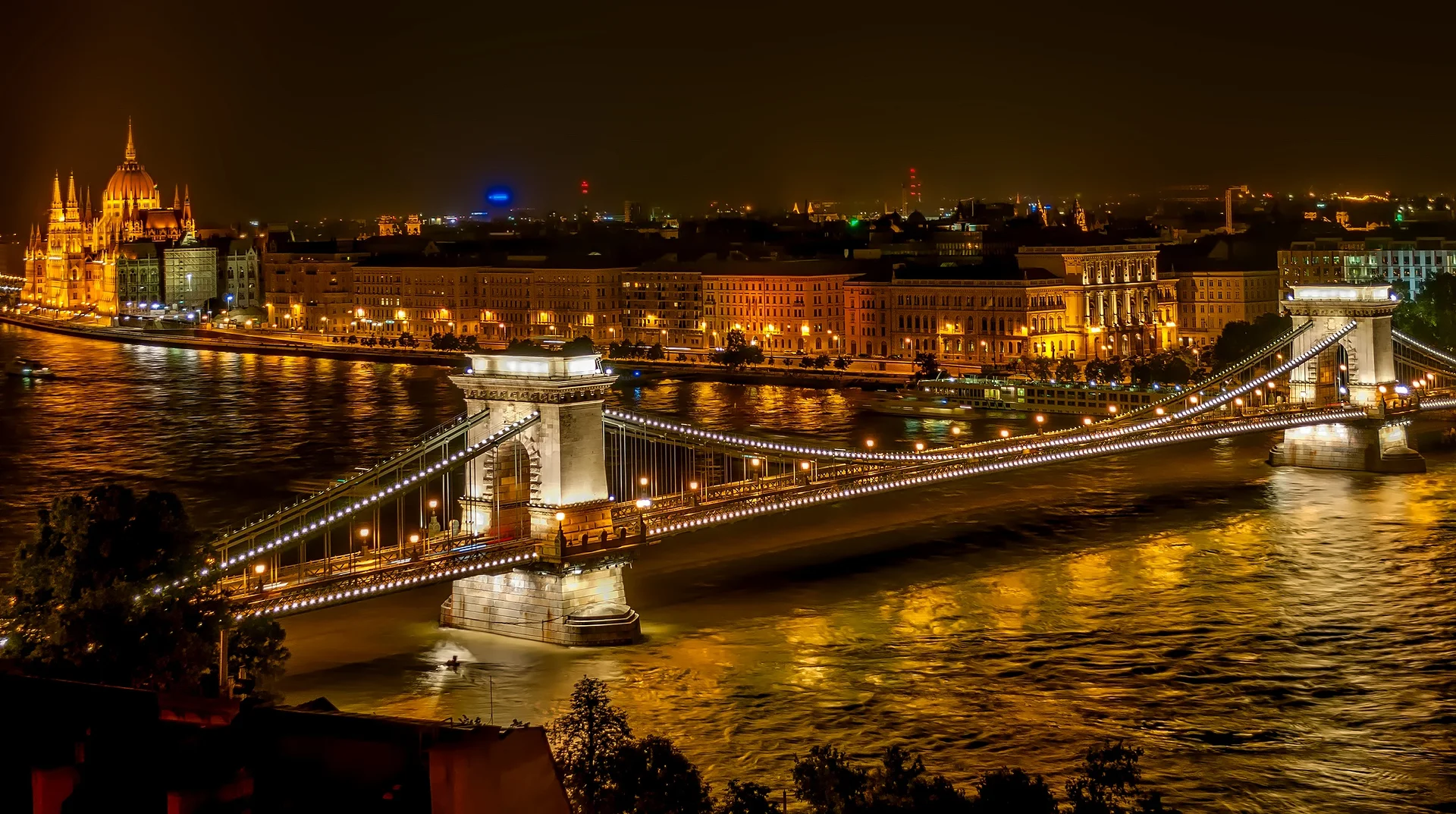
When traveling to Budapest, in Hungary, the Széchenyi Chain Bridge is impossible to miss. Known as Széchenyi lánchíd in Hungarian, it stands as a point of local pride.
A project of massive scale for its time
Navigating the Danube was once a difficult prospect for river traffic, particularly during winter. Connecting the two sides of the city, Buda and Pest, proved to be an engineering challenge. Count István Széchenyi proposed the construction of a grand bridge in 1839. Scottish engineer Adam Clark managed the project over ten years, following designs by the English engineer William Tierney Clark. This monumental structure, highly regarded at the time, features a 360-meter deck supported by two stone towers linked by heavy iron chains. The suspension design was chosen specifically to withstand floods and ice floes. The Széchenyi Chain Bridge became an immediate success and serves as a symbol of Budapest. German forces destroyed the structure in 1945, but it was rebuilt and reopened to traffic in 1949. Since 2009, the bridge has been featured on the Hungarian 200 HUF coin.
A favorite for travelers in Budapest
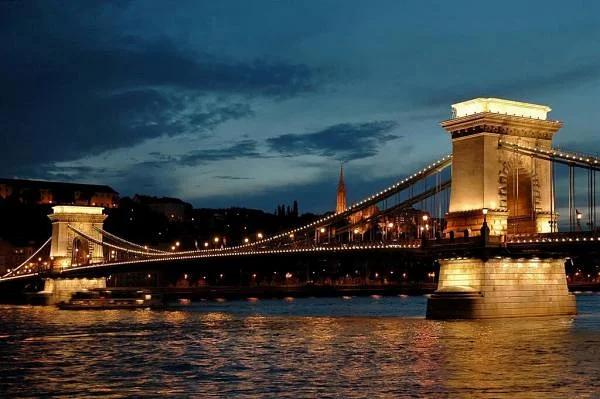
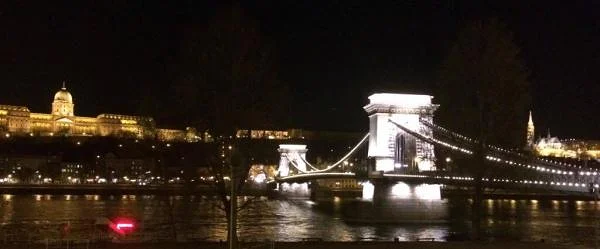
The Széchenyi Chain Bridge sits in the heart of the city near major historic landmarks and provides a vital link across the Danube. You can cross by car or on foot, and the view is unmatched, especially at night when the city lights reflect off the water. You can also view the structure from a boat cruise on the river. Look closely at the reliefs to spot carvings of the coat of arms of Hungary and the crest of the Széchenyi family. At either end of the bridge, two massive stone lions stand guard. According to local legend, the sculptor János Marschalkó threw himself into the river, distraught after realizing he had forgotten to carve tongues for the lions.

A pretty bridge that lets you take in both banks of the Danube at a glance, and check out its width too! Obviously useful for getting from the Buda side to the Pest side (and vice versa). Don't miss the lion statues on each side, whose tongues (absent or too small according to some) supposedly caused a controversy and, according to legend, led to the architect's death...