
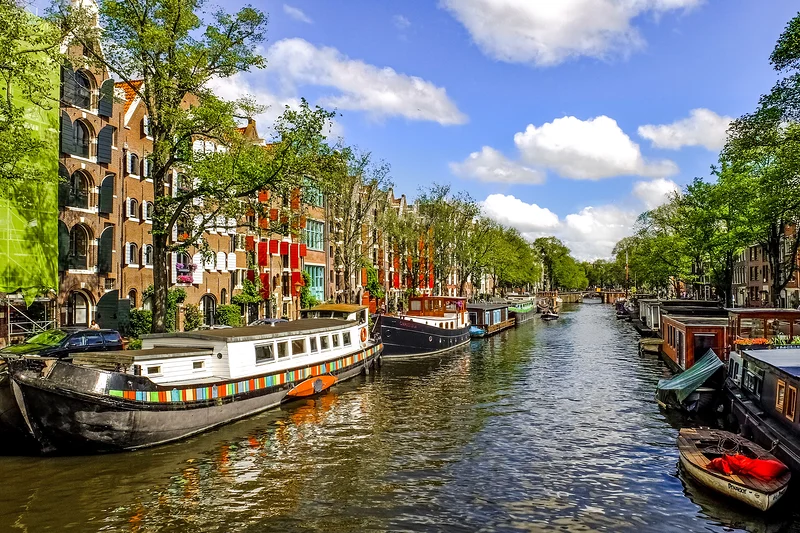
Usually, people head to the Netherlands to visit its capital, Amsterdam, with its canals, gabled houses, Red Light District, and coffee shops. But there is so much more to see in this beautiful country, especially along the coast, spots that are relatively unknown to us in France but are well worth the detour! That’s why, back in July 2022, looking to escape the sweltering heatwave that was forecast, I decided to pack my backpack, tent, and car and head to various Dutch campsites to enjoy the seaside pleasures of the North Sea. And it was the best decision I could have made!
Not only did I handle the summer 2022 heatwaves much better, but the North Sea coastline in the Netherlands has so much charm and an interesting history, which really makes you think about how Europe is managing rising sea levels in the face of climate change. In short, it’s a beautiful blend of nature and culture!

The history of the Netherlands is deeply tied to the sea. You should know that about a quarter of the country lies below sea level, making areas like the islands of Zeeland extremely vulnerable to climate risks. This wary relationship with the water and the danger it can pose has shaped the traditional Dutch landscapes we know today. The many canals and ponds scattered throughout the cities and countryside are highly strategic, as they help lower riverbeds. They also serve as retention basins during heavy storms. Furthermore, Dutch windmills were originally built to power pumps designed to drain areas prone to moisture and seepage: the polders. It’s a true feat of engineering that contributes to the country’s reputation!

All this water management and land development work hasn't just protected the local population; it has fundamentally altered the way of life, leading to the saying: "God created the world, but the Dutch created the Netherlands."
The beaches of Zeeland, from one dike to the next
Since the construction of the Westerschelde Tunnel in 2003, it takes only 4 hours by car to reach Zeeland from Paris and 2 hours from Lille. The region is quite accessible for those looking to get a change of scenery beyond our borders without having to travel too far!
First steps in Zeeland
The capital of Zeeland is the city of Middelburg, a town dating back to the Middle Ages that has managed to preserve its picturesque charm. It’s lovely to wander through its cobblestone streets and past its Gothic monuments. Middelburg is also home to the Zeeland Museum, which showcases many of the region's artisanal crafts, such as tapestries, jewelry, and porcelain. After this pleasant detour in Zeeland, I headed a bit further north, toward what I came here for: the sea! That North Sea, which sometimes has a bad reputation due to its cold waters and the historical overexploitation of the seabed by coastal populations.

I began my discovery in Domburg, a hotspot for German tourists and the oldest seaside resort in Zeeland. Here, tucked between the dunes, the beaches are massive, miles of white sand that rival those of the Atlantic! Lined with small, colorful beach huts, the beach at Domburg is particularly photogenic. Furthermore, it has been awarded the Blue Flag label for several years for its cleanliness and water quality. A guarantee of a good time! Sure, the water is a bit chilly, around 19°C (66°F), but that doesn't stop anyone from taking a dip; it's quite pleasant and even invigorating...
The gargantuan structures of the North Sea
The next day, I pushed my journey a little further toward Renesse, a town famous for water sports like windsurfing and surfing, thanks to its prime wind exposure. On the way, I realized how omnipresent the dikes and dams are along the Dutch coast, large mounds of earth standing between the road and the shoreline. Impressive, to say the least!
Despite all the precautions taken by the Netherlands government over time, Zeeland was hit by a devastating tidal wave in 1953 that left a deep mark on the country's memory. With heights reaching several meters above the average sea level, this natural disaster caused the deaths of 1,800 people and ravaged about 200,000 hectares of land. In response, the government adopted the Delta Works plan that same year, coordinated by engineer Johan Van Veen. All dikes were raised by several meters to reach their current levels. Furthermore, the plan included the construction of dams with the goal of closing off all of Zeeland's sea inlets. It was a massive undertaking, considered one of the seven wonders of the modern world by the American Society of Civil Engineers!

I couldn't wait to see these infrastructures up close, they truly embody humanity's battle against the forces of nature. And it worked out perfectly, as the road to Renesse took me across the Oosterscheldekering, or Eastern Scheldt storm surge barrier, a 9-kilometer-long concrete wall standing between the sea and the land. In the event of a storm, 62 massive steel gates are ready to close to protect the population. It’s the perfect way to enjoy Renesse with peace of mind, whether you're swimming, windsurfing, or trying your hand at kitesurfing or paddleboarding with varying degrees of success!
The lively seaside resorts of The Hague and Amsterdam
I continued my journey along the Dutch coast, arriving in much more urbanized territory: the famous metropolitan region of Rotterdam and The Hague, home to over two million people!
Strolling along the The Hague seafront
A coastal city steeped in Flemish culture and the seat of several international institutions, The Hague, or Den Haag in Dutch, is packed with activities. Among the most popular is the Scheveningen seafront! Lined with shops, cafes, bars, and restaurants, the beaches of The Hague combine coastal fun with high-end service. Furthermore, beautiful buildings adorn the waterfront, such as the dome of the majestic Kurhaus hotel, designed in 1918, one of the first seaside pavilions that once served as a concert hall. If you're looking for a quieter spot to enjoy a swim, don't hesitate to head a little further toward Kijkduin. A bit more off the beaten path, the beach is surrounded by lovely dunes that are great for walking and offer a nice contrast to the much more urbanized surroundings.

Don't miss the Pier at Scheveningen. Taking a ride on the 60-meter-high Ferris wheel offers a lovely view of the bay and the city of The Hague with its monuments. Nearby, to discover what Scheveningen was like at the end of the 19th century, head to the Panorama Mesdag! Hendrik Willem Mesdag is one of the essential painters of The Hague and, more broadly, the Netherlands. The panorama is his most famous work: a massive canvas 120 meters long and 4 meters high that stretches in a rotunda along the walls, giving you the feeling of being in Scheveningen in 1881. A guaranteed change of scenery!
Seaside pleasures 20 minutes from Amsterdam
The next stop on my route: the beautiful Haarlem, which gave its name to the New York neighborhood and is known as a shopping and cultural destination, located just a stone's throw from the vast beaches of Zandvoort and Bloemendaal aan Zee. For this leg of the trip, I booked a hostel, Hello I’m Local, where the interior design was created by students from the Haarlem School of Design. It’s an elegant, understated place with a few splashes of yellow that brighten the atmosphere, located just steps away from many cafes and small artisan shops.
Zandvoort beach is directly connected to Amsterdam by train in about half an hour. This makes it a must-visit seaside destination for residents of the capital, who love its miles of white sand stretching as far as the eye can see. For my part, I preferred heading to Bloemendaal, which is just as majestic and a bit more "nature." The beach is still lined with high-end culinary establishments, bars, and nightclubs, hence its nickname: the "Dutch Ibiza." By the end of the day, the beach comes alive, and you can hear the music right down to the water's edge. If you get a little hungry, you can always find a small shack in Bloemendaal to buy treats. But be warned: here, there are no fancy snacks, just sausages, portions of fries, and even beer!

Nature excursion along the Wadden Sea
After several days spent recharging and enjoying the hospitality of the major Dutch cities, I decided to head back toward wilder lands along the Wadden Sea, in the northeast of the Netherlands.
An unusual destination in the Netherlands
Here, the landscapes change: the tides shape the coastline, leaving behind vast wetlands that are a paradise for birds. And for tourists! Indeed, mudwalking has become a real attraction in this part of the country. Much like during low tide at Mont Saint-Michel, it involves walking on wet sand and mud once the sea has receded, a refreshing walk that's perfect for discovering shells and crustaceans. It’s even said to be possible to cross a whole section of the Wadden Sea on foot to reach one of the five Dutch islands in the region: Texel, Vlieland, Terschelling, Ameland, or Schiermonnikoog. For my part, I was content to walk alone and barefoot in the middle of these marshy expanses, breathing in the deep scent of salt and enjoying the silence of the surroundings, broken only by the cries of birds, which became my main audience.

On the coast, besides the traditional seagulls, you can spot many eider ducks, recognizable by their black and white tones, as well as long barnacle geese strutting through the sand. Flocks of birds sometimes seem to dance on the horizon, welcoming the sunrise or bidding farewell to the setting sun. During migration periods in the fall and spring, the bird population climbs to reach 12 million individuals! Many birds turn the wet sand of the Wadden coast into a gigantic nursery: they take advantage of the nooks and crannies to let their eggs hatch and their chicks learn to fly. Here, the marshes are teeming with insects and mollusks of all kinds: food is right at beak's reach! The very specific ecosystem of these wetlands has made the Wadden Sea a UNESCO Biosphere Reserve since 1990. In some parts, you can even spot seals!
The North Sea islands
Beyond the peculiarities of its flora and fauna, the coast is punctuated by small, picturesque medieval villages like Holwerd, which is also the ferry departure point for the small island of Ameland. It’s lovely to wander through the typical cobblestone alleys lined with small brick houses, each hiding little decorative treasures behind their windows.
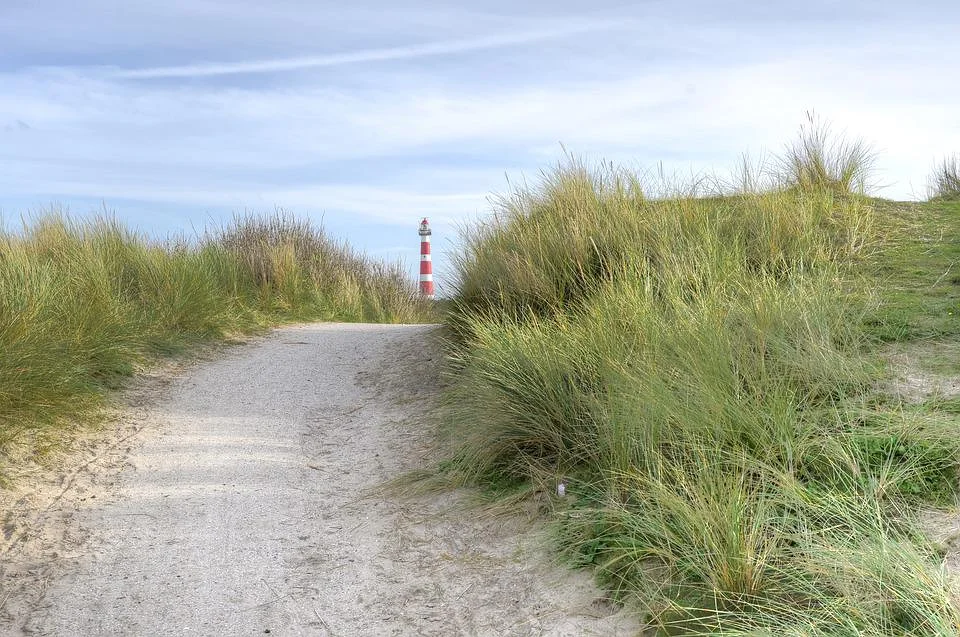
After a restful night, I left the village and took the ferry to Ameland. After a 45-minute boat ride, I arrived safely in one of the best-preserved landscapes of the Wadden Sea. Between the high dunes and the lovely grassy meadows, you’ll find villages more charming than the last. A tip if you visit the island: take a bike or rent one on-site so you can explore every corner, all the way to the island's main lighthouse, located on the west side in Hollum and dating back to 1880, a true journey through time!

The beautiful weather persisted in this month of July 2022, giving me the urge for one last saltwater swim before heading back to the Paris region. Unfortunately, between the dikes, marshes, and protected areas, and outside of the islands, there are few places to swim on the Wadden Sea coast! So, I ended up going to the pretty, colorful village of Zoutkamp to enjoy its authentic atmosphere.
After all, what could be better than a plate of grilled eel, a local specialty, to end the trip?
Comments (0)
No comments yet. Be the first!