
Visiting Pula, an ancient treasure in the Adriatic
Gladiators have not entirely vanished from Pula. On a July evening, the Roman amphitheater still echoes with the sounds of reenacted combat, the famous "Spectacvla Antiqva." This city in the south of Croatian Istria has a hypnotic quality, blending three millennia of history with a Mediterranean lifestyle, minus the crushing crowds of Dubrovnik or Split.
Pula is an overlooked jewel, overshadowed by its more famous cousins, and that is precisely what makes it charming.
Who will fall under its spell?
Pula is ideal for anyone looking for a mild climate, calm waters, and a long winemaking tradition. Fans of ancient history and Roman architecture will be in their element, as will families who appreciate shallow beaches with crystal-clear waters holding Blue Flag certification for quality. Couples seeking a romantic destination that is less touristy than Venice will love getting lost in the narrow streets around the forum at sunset.
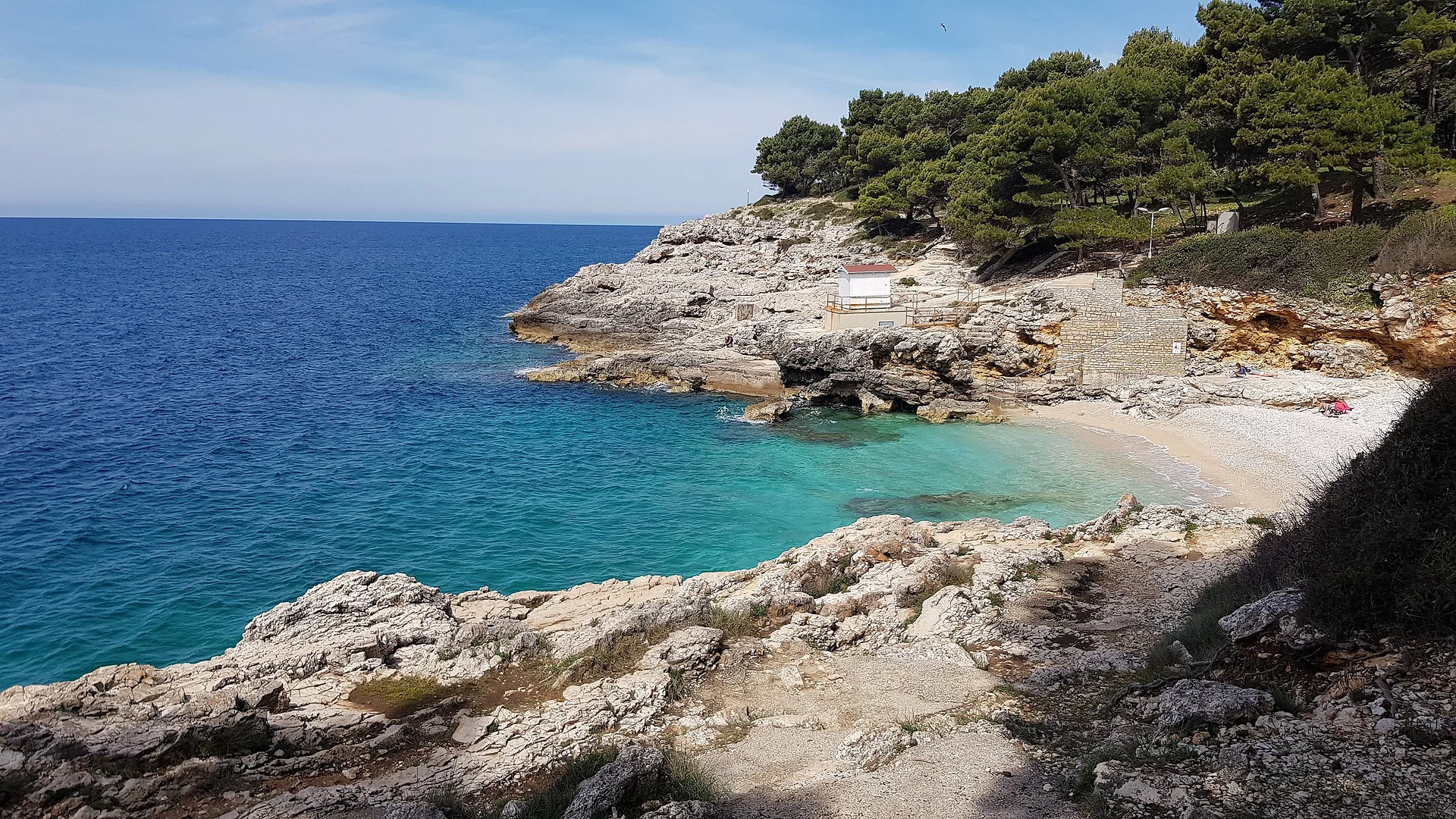
On the other hand, if you dream of fine sand beaches or an intense nightlife scene like Ibiza, you might enjoy it less. Pula's beaches are made of pebbles and rocks, which keeps the water incredibly clear but makes water shoes a necessity.
Budget-wise, plan for between $68 and $113* per day for a couple covering lodging, meals, and sightseeing, which is quite reasonable for Croatia. A rental car is strongly recommended for exploring isolated coves and the Istrian peninsula, even though local buses work well for reaching the main beaches on the Verudela peninsula.
The Roman heritage: much more than just an arena
The amphitheater, Pula's absolute crown jewel
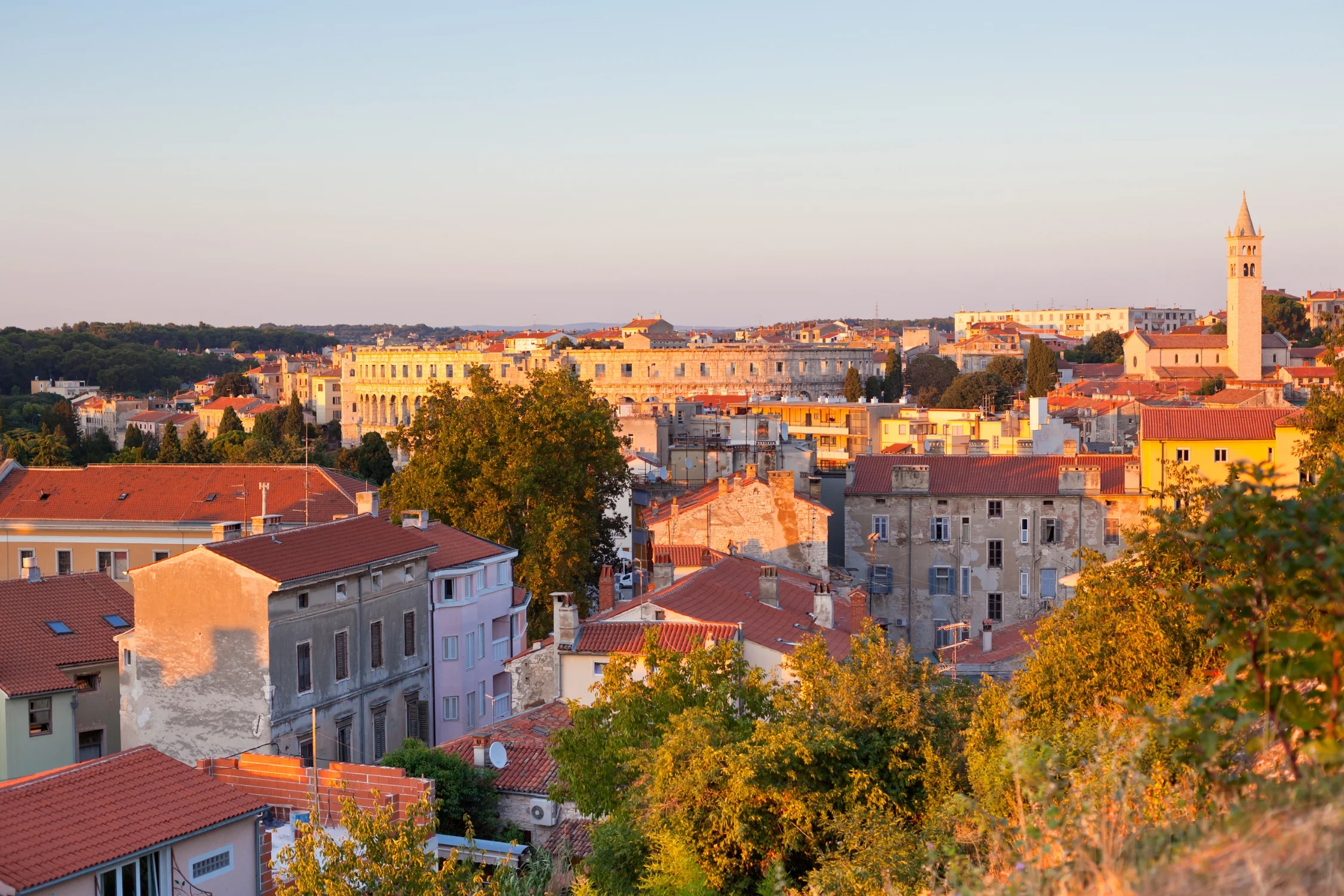
Built in the 1st century AD, the Pula amphitheater, nicknamed the Arena, is the sixth-largest Roman amphitheater in the world and the best-preserved ancient monument in Croatia. With an original capacity of 23,000 spectators, its colossal dimensions never fail to impress.
Today, it still hosts festivals and concerts, including the famous Pula Film Festival held every July since 1954. Do not miss the underground galleries featuring permanent exhibits on antiquity, complete with reconstructions of olive oil presses and Roman amphoras.
Friendly tip: Visit the Arena early in the morning or late in the afternoon to catch soft light that is perfect for photos. Skip midday in summer, when the heat radiating off the stone is suffocating. If you visit in July, book tickets for a concert or a festival screening, as the experience under the stars is magical.
The Forum and its treasures
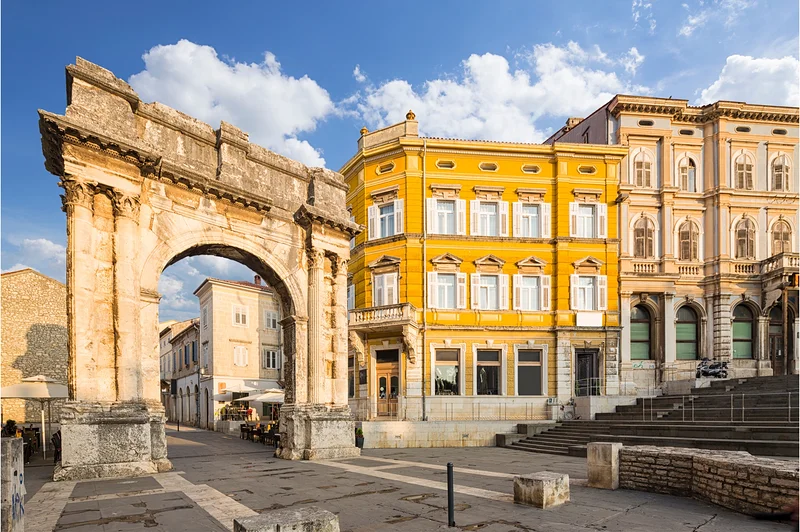
At the heart of the old town beats Forum Square, Pula's nerve center for 2,000 years. The Temple of Augustus, dedicated to the Roman emperor, has miraculously survived the centuries and sits majestically on the square. Not far away, the Arch of the Sergii, erected in 27 BC, was once covered in gold decorations. This gate adorned with fluted columns marks the entrance to the old town and makes a mandatory photo stop.
Climb up to the Kastel Venetian Fortress perched on the heights. This Renaissance defensive fort offers sweeping panoramas over the city and the sea, and now houses the Historical and Maritime Museum. When the heat gets intense, take refuge in nearby Tito Park or the Giardini Gardens, where tall centuries-old trees offer a welcome break from the sun.
The Istrian coast: turquoise coves and wild landscapes
The dream beaches of the Verudela Peninsula
Hawaii Beach is considered by many to be the most beautiful beach in Pula. Tucked into the Pročipina cove, this white-pebble bay sloping gently into a crystal-clear turquoise sea evokes the Caribbean. The dramatic rock formations surrounding it create a postcard setting perfect for snorkeling. Nearby, Ambrela Beach is the quintessential family beach, offering shallow waters, lounge chair rentals, showers, and a cafe. Its Blue Flag certification guarantees spotless water quality.
Histria Beach, facing the Park Plaza Histria hotel, appeals with its unique vibe. An inflatable water park and kayak rentals make it a playground for families. Thrill-seekers head to Stoja Beach and Galebove Stijene, dramatic cliffs where people practice cliff jumping into electric turquoise water.
The Brijuni Archipelago, a green and blue escape
A short distance from Pula lies Brijuni National Park, an archipelago of 14 islands covered in lush vegetation. This former summer residence of Marshal Tito offers a captivating mix of history, nature, and unexpected encounters. The park runs a safari featuring exotic animals, including zebras and antelopes given to Tito by foreign leaders. Be sure to book your ferry ticket in advance, as seats sell out quickly during high season.
The EuroVelo 9 bike path ends in Pula after crossing Poland, the Czech Republic, Austria, and Slovenia, quite a symbolic finish line. Cyclists will find a memorable endpoint here. For hikers, the protected forest of Šijana and the Lungomare promenade, which meanders from beach to beach beneath Aleppo pines, are absolute musts.
Friendly tip: Catch bus 2a from the Pula bus station to Verudela for about $1.70* one way. This saves you the hassle of parking in the summer. Once you get there, walk along the coast to discover several beaches in a single afternoon, as it stands out as one of the finest coastal paths in Croatia.
Vibrant Pula: performances and nightlife
The city is not frozen in the past. The Lighting Giants, a massive lighting installation on the Uljanik shipyard cranes created by artist Dean Skira, light up the harbor every evening between 9 PM and 10 PM with 16,000 different color combinations. It has become Pula's ultimate Instagram spot. In July, do not miss the Pula Film Festival inside the arena, a unique cinematic experience under the stars.
As for atmosphere, Caffe Bar La Resistance features a terrace with an unobstructed view of the amphitheater, ideal for sipping a local beer at the end of the day. The bars around the Forum come alive at night with a mix of locals and travelers, and Café Galerija Cvajner even serves mulled wine in the winter during Advent concerts.
Where to eat and drink in Pula?
Istria is the breadbasket of Croatia. The two regional grape varieties you must try are Istarska Malvazija, a crisp white, and Teran, a full-bodied red. Most of the wine production stays in Croatia, making the experience all the more exclusive. On your plate, do not miss pršut (Croatian prosciutto), Istrian black truffles shaved over homemade pasta, and blitva, a dish of garlic-seasoned Swiss chard and potatoes that serves as the near-universal side for seafood.
Trattoria Vodnjanka, near the market, serves authentic homestyle cooking favored even by local chefs, featuring gnocchi, grilled sardines, and meatballs in a tomato sauce that triggers childhood memories. Batelina, a few kilometers outside Pula, is considered by many to be the best seafood restaurant in Croatia, serving shark liver pate, bonito tartare, and squid stew in a creative tapas format.
Restaurant Milan offers a buzara (stew) of crabs with grilled polenta, a comforting Istrian classic. For a romantic setting, Ribarska Koliba, with over 100 years of tradition, offers a gorgeous view over the Verudela marina.
On a tighter budget? Pečenjara Brod, near the market, serves excellent ćevapi (grilled minced-meat rolls) with flatbread and Croatian relish for a fraction of the cost. The Mlinar bakery chain serves up great burek (flaky filled pastries) and baked goods for a quick lunch.
Where to stay in Pula and the surrounding area?
To experience Pula from the inside, stay in the old town, close to the Forum and the amphitheater. You will be right in the middle of the action with restaurants and bars just steps away. Apartments here are plentiful and usually well-equipped. If you prefer a beach vacation, the Verudela peninsula concentrates the beachfront hotels 4 km from the center. Ribarska Koliba Resort is ideally situated near Ambrela Beach and the bus stop. Park Plaza Arena Pula enjoys a prime location right above Hawaii Beach.
Campgrounds dot the coastline, particularly around Stoja and its surroundings. For a unique experience, you can even rent a luxury 3-bedroom lighthouse near Svjetionik Beach, perfect for a trip off the beaten path. Neighboring villages like Fažana (the gateway to Brijuni) or Medulin (to the south) offer quieter alternatives with excellent value for money.
How to get to and around Pula?
Pula International Airport (PUY) sits 6 km from downtown and offers connections across Europe, notably via Ryanair and Croatia Airlines. Shuttle buses run between the airport and the Pula bus station. You can also fly into Zagreb and take a domestic flight, bus, or train to Pula. There are no direct flights from North America, so plan on connecting through a European hub such as Frankfurt, Munich, or Vienna.
Pula's historic center is entirely walkable since all the main attractions are close together. To reach the beaches in Verudela or Stoja, the local bus network is reliable and inexpensive, costing around $1.70* per ticket. Renting a car makes sense if you want to explore Cape Kamenjak, a wild nature park 13 km to the south, or head out to discover the hilltop towns of Istria (Motovun, Grožnjan). Keep in mind that downtown parking can get complicated during high season, so look for parking lots on the outskirts.
When to go?
Pula enjoys a pleasant Mediterranean climate with plenty of sunshine from March through November. The months of May, June, and September are ideal with mild temperatures (22-26°C), warm water, and manageable crowds. Budget-conscious travelers will prefer September to November, when accommodation prices drop. July and August bring the peak of cultural events with the Pula Film Festival, but watch out for heatwaves and crowded beaches. Travelers seeking absolute quiet should opt for April or October, when swimming is still possible and you will have the city almost to yourself.
Pula is a city with a rich, ancient history that you can discover through its ruins and museum. Even though the city is touristy, I found that it wasn't too crowded, which is really nice for sightseeing. The beaches are also great for relaxing.