
Visiting the Pula Arena
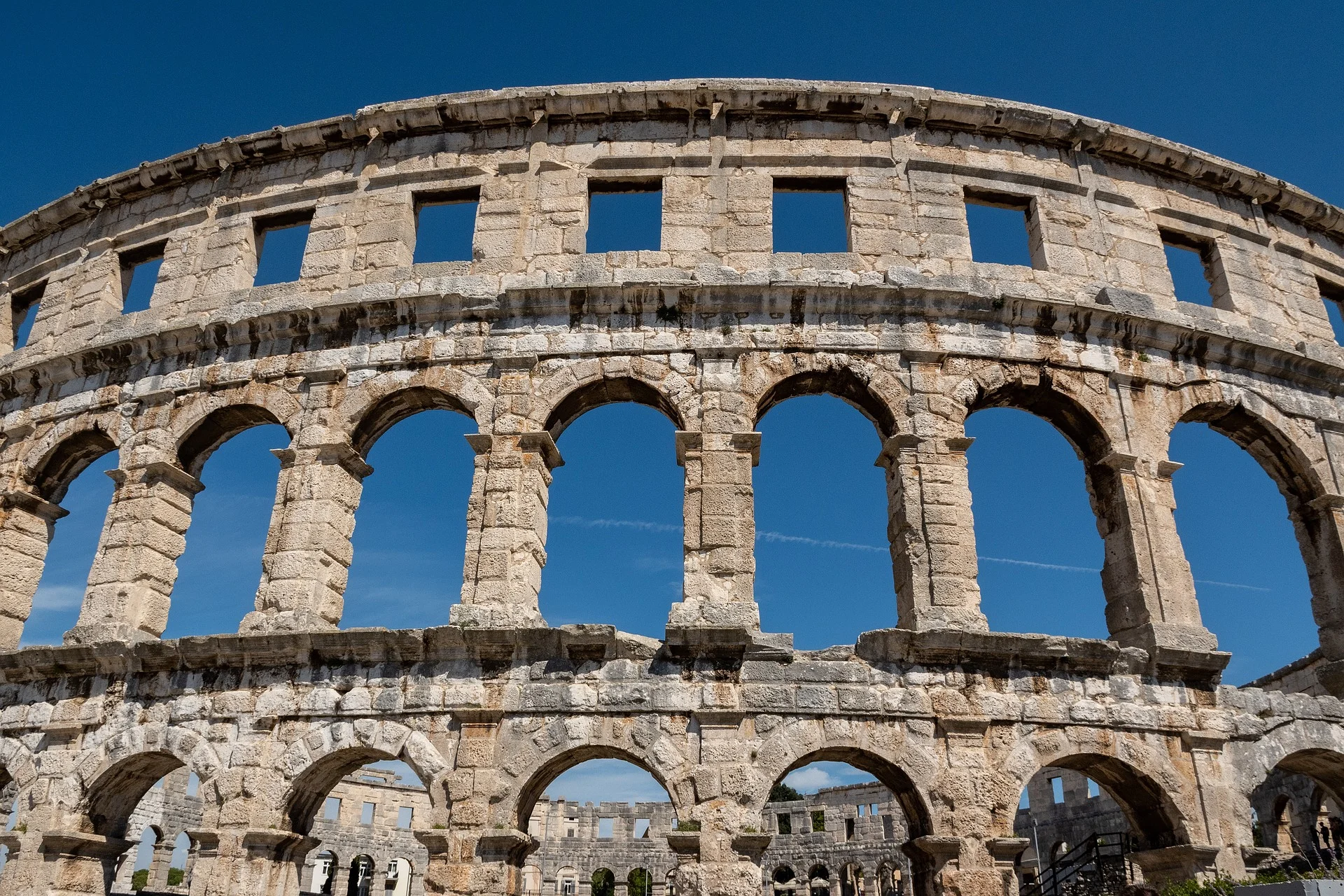
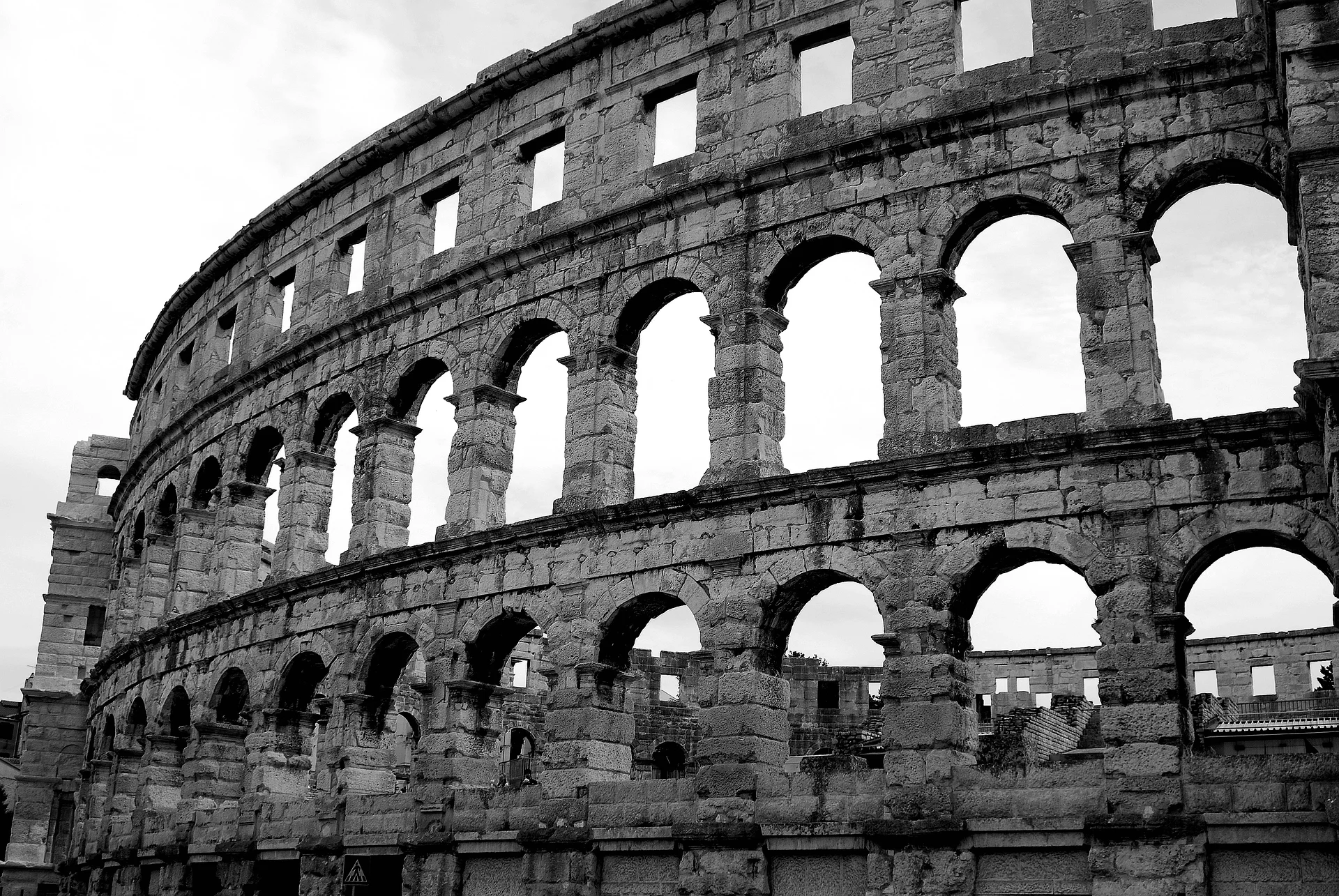
In the heart of Pula and just a few blocks from the Adriatic Sea stands one of the best-preserved Roman monuments in Croatia, the Pula Arena. Built in the first century AD under the reigns of emperors Augustus and Vespasian, the arena could hold up to 24,000 spectators at its peak. While the original wooden seating is long gone, the primary stone structure remains standing, offering a clear look at ancient engineering.
A cousin to the Colosseum
Constructed during the same era as the world-famous Colosseum, the Pula Arena is equally impressive. The massive limestone ellipse measures 133 meters along its longest axis. This site witnessed the shifting fortunes of the Roman Empire, and for centuries, its central floor hosted gladiator combat.
The scale of the site remains striking, with outer walls reaching up to 35 meters in height. After dark, the structure is illuminated, highlighting the masonry. The underground galleries that once held athletes and animals before shows are also intact. Today, these spaces house a museum with exhibits detailing the history of the region.
A cultural hub
The Pula Arena hosts events throughout the year, especially during the peak summer months. You can catch reenactments of gladiator battles, known as Spectacvla Antiqva, held annually from June through September. Additionally, the Pula Film Festival has taken place within the arena walls every year since 1954.

This Roman amphitheater has a reputation for being one of the best preserved.
Indeed, the outer wall made of arches is almost intact. Rising 3 levels high, this ring is impressive in its height and dimensions.
However, unlike the Colosseum in Rome which still contains its seating inside, the one in Pula is empty. That disappointed me a little.