
Where to stay in Tashkent: the 4 neighborhoods to know in 2026
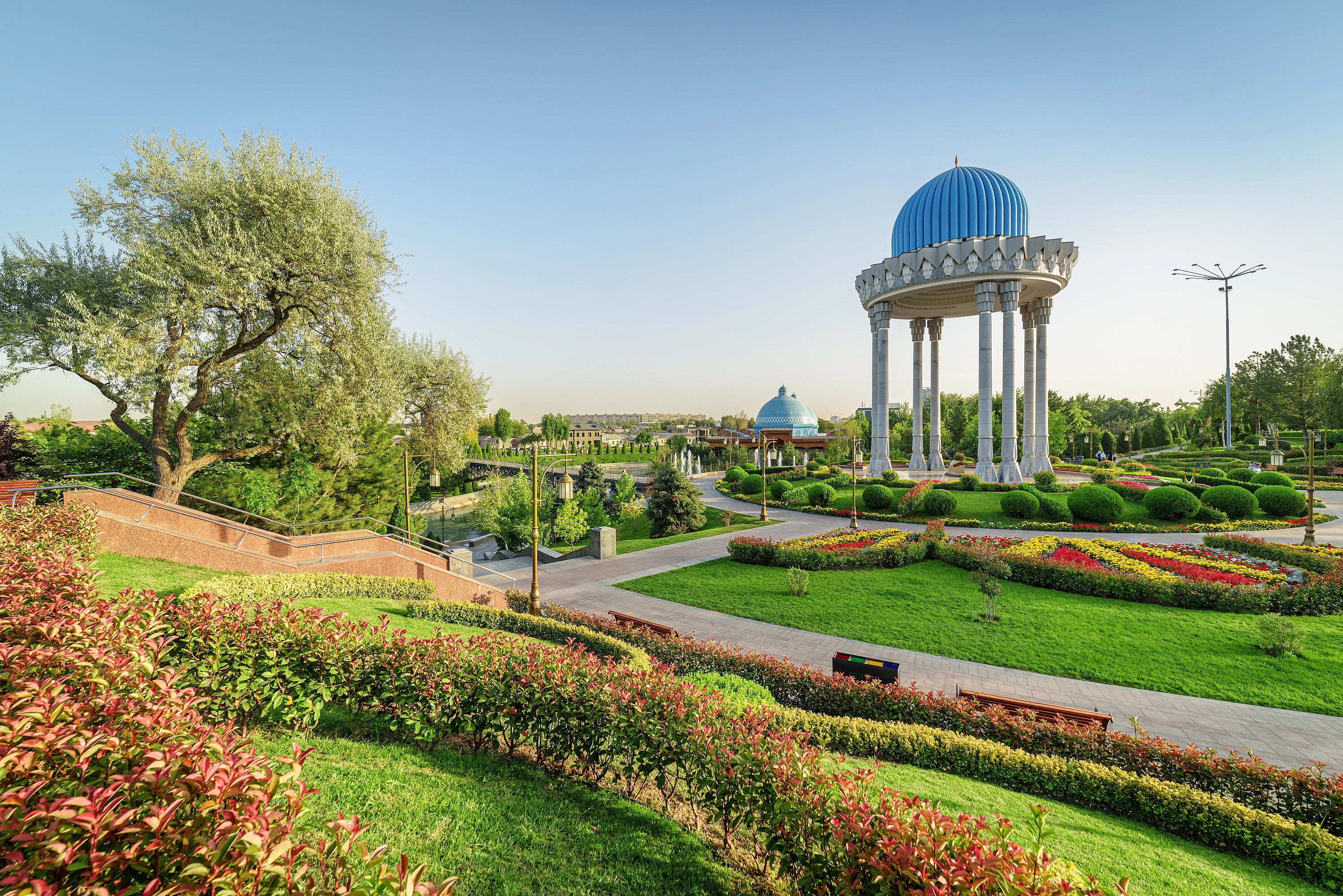
In Tashkent, the choice of neighborhood sets the Soviet city against the city that came before. The earthquake of April 1966 threw the Uzbek capital to the ground, and the Soviet Union rebuilt it in ten years, to its own scale: avenues a hundred meters wide under plane trees, parks with fountains, facades of openwork concrete, and a metro whose every station is a ballroom, chandeliers, mosaics and marble, which you are finally allowed to photograph. That is the center, from Amir Timur square to Independence square, with the opera, the museums and the big hotels. To the west, the old town survived: the Chorsu bazaar under its blue dome, the Kukeldash madrasa, the Khast Imam complex where the oldest Quran in the world sleeps, lanes of low courtyard houses. To the north, Yunusabad, the television tower, the white mosque and the plov tables; to the south, Mirabad, the stations, the embassies and the Russians' bazaar. The city is flat, safe, and the metro links all four for the price of a cup of tea.
Tashkent is one of the capitals where you sleep best for your money, and the survey shows it: nine of the twelve addresses in this guide are rated 8.9 or higher. A bed in a dorm runs to $7.90*, rarely more than $13*; a courtyard guesthouse in the old town or a cheap hotel up north is worth $34* at the lowest and $62* at the highest; a four-star hotel with its own pool, whether restored Soviet or brand new, $74 to $136*; and the palaces of Tashkent City and Yakkasaray, $158 to $260* a night, the price of a three-star in Paris. Four neighborhoods, three addresses each.
Compare hotel prices in Tashkent
In a hurry? Find the best accommodation deals in 3 clicks.
Compare live deals from Booking, Expedia, Agoda and other partners.
At a glance: our picks by traveller type
Pick the profile that suits you to head straight to the recommended neighborhood.
The neighborhood map in Tashkent
Get your bearings on the neighborhoods and must-see sights before choosing where to drop your bags. Click a name to jump to its description.
The Soviet center: Amir Timur square, the Navoi opera and Tashkent City Amir Timur square and its museum, the Broadway (Sayilgoh), the Navoi opera, Independence square and the History museum, the Fine Arts museum, the modern art gallery, the Pakhtakor stadium, the Hotel Uzbekistan; to the west, Tashkent City, its park and its towers
for a first visit, the museums and the opera, the big hotels, the metro on the doorstep
The center is the city the USSR drew after 1966, and you walk it like a plan: Amir Timur square, round, planted with oaks, with the conqueror on horseback who replaced Marx in 1994, the Hotel Uzbekistan of 1974 and its openwork concrete facade behind, the Timurid museum under its blue dome; the Broadway, the pedestrian alley of painters and ice-cream sellers leading to the theater; the Navoi opera, built in 1947 by Japanese prisoners of war, whom a plaque thanks; Independence square, three hundred meters of lawns, fountains and golden storks, and the History museum, where you see the Buddha of Fayaz-Tepa. Around them, the Kosmonavtlar and Alisher Navoi metro stations, the two finest in the city, and the avenues where Tashkenters stroll in the evening under the plane trees. Two kilometers west, Tashkent City, the new district of 2019: a park with a musical fountain, glass towers, a shopping mall and the chain palaces. You stay here to have everything on foot or one station away, for the opera and the museums, for the big hotels. The downside: Soviet-capital distances, where crossing an avenue takes five minutes, and a district without a soul in the evening outside the Broadway.
Where to stay in this neighborhood
Hilton Tashkent City Luxury
On the Tashkent City park, facing the musical fountain: the 2019 tower, rooms rated 9.4 for comfort, a pool, a breakfast that reviews mention, and a 9.0 across fifteen hundred reviews, 9.6 for location. Value for money drops to 8.3: the city's palace, at a palace price.
LOTTE City Hotels Tashkent Palace Mid-range
Facing the Navoi opera: the Stalinist palace of 1958, columns and stucco restored, rooms rated 9.3, staff rated 9.5, and a 9.1 across twelve hundred reviews, 9.6 for location. The best-rated hotel in the center, at the price of a four-star.
Art Hostel Budget
On Zanzhirbog street, five minutes from the Kosmonavtlar metro, in the quiet quarter of diplomatic residences: a hostel in a house with a courtyard, dorms and rooms, a kitchen, hosts who arrange the trains, and an 8.9 across fourteen hundred and fifty reviews, 9.1 for value for money. The city's reference hostel.
Pros
- The opera, the museums, Independence square and the two finest metro stations
- The big hotels of Tashkent City and the center, everything on foot or one station away
Cons
- Soviet-capital distances: crossing an avenue takes five minutes
- A center without a soul in the evening, outside the Broadway
The old town: Chorsu, Kukeldash and Khast Imam The Chorsu bazaar and its dome, the Kukeldash madrasa, the Khoja Ahrar mosque, the Khast Imam complex and the library of the Uthman Quran, the Center of Islamic Civilization, the Applied Arts museum, the Zaynudin Bobo mausoleum, the Palace of Friendship of Peoples, the Parliament; the mahallas of courtyard houses
for the bazaar when you wake up, the madrasas, the courtyard guesthouses, plov and hot bread
West of the center, past the Anhor canal, the old town is what remains of the Tashkent of before 1966: mahallas of low mud-brick houses turned toward a courtyard, where people still live with the door open, and, in the middle, the Chorsu bazaar, under a turquoise dome of 1980 as wide as a square: inside, the stalls of meat and dried cheese, outside, the mountains of melons, the tandir bread ovens and the plov sellers who ladle it out from eleven in the morning. Next door, the Kukeldash madrasa, the largest in the city, from the sixteenth century, and its courtyard of students. A kilometer north, the Khast Imam complex, mausoleums, madrasas and a mosque with blue minarets, with the library where the Uthman Quran rests, the seventh-century manuscript stained, tradition says, with the caliph's blood, and, more recently, the Center of Islamic Civilization and its dome. The hotels are courtyard guesthouses and small family hotels, the best rated in the city. You stay here for the bazaar at dawn, for the madrasas, for hot bread and tea, for the Uzbekistan you came to see. The downside: no luxury hotel, and a neighborhood that falls asleep with the bazaar, around seven in the evening.
Where to stay in this neighborhood
Hotel Inspira-S Tashkent Mid-range
On Abdulla Kadiri street, between Khast Imam and Chorsu: a new hotel with a courtyard and a pool, rooms rated 9.2, staff rated 9.4, and a 9.0 across twelve hundred reviews, 9.5 for location. The old town on foot in every direction.
Royal Sebzor Hotel Mid-range
On Takhtapul street, north of Chorsu: a family-run four-star, rooms rated 9.6 for comfort and cleanliness, staff rated 9.7, and a 9.5 across three hundred and fifty reviews. The best-rated address in this guide, at the price of a three-star.
Gulnara Guesthouse Budget
Two streets from Chorsu and the metro: the historic guesthouse of Silk Road travelers, a courtyard under the vines, rooms and dorms, the family's breakfast, staff rated 9.9, and a 9.4 across eight hundred and twenty reviews, 9.6 for value for money. The wifi drops to 8.2: you come for the courtyard.
Pros
- The Chorsu bazaar at dawn, the Kukeldash madrasa, Khast Imam and the Uthman Quran
- The courtyard guesthouses, the best rated in the city, hot bread and plov
Cons
- No luxury hotel
- A neighborhood that falls asleep with the bazaar, around seven in the evening
The north: Yunusabad, the television tower and the Minor mosque The television tower and its revolving restaurant, the Besh Qozon plov center, the white marble Minor mosque, the Anhor canal and its banks, the water park and Tashkentland, the exhibition center, the business hotels of Amir Timur avenue
for the business hotels and the best scores at the best price, midday plov, families
North of the center, along Amir Timur avenue running toward the mountains, Yunusabad is the district of repainted 1970s apartment blocks, new business hotels and two landmarks you see from everywhere: the television tower of 1985, three hundred and seventy-five meters of steel lattice, with its revolving restaurant at the hundredth meter, and the Minor mosque of 2014, all white marble on the edge of the Anhor canal, the most photographed in the city at sunset. Between the two, the Besh Qozon, the plov center, where ten cauldrons a meter and a half wide cook the national dish for a thousand people every morning, served at noon and gone by two: you come to watch as much as to eat. Further north, the water park, Tashkentland and its rides, the exhibition center, and the canal banks where the city runs in the morning. You stay here for the new business hotels, the best rated in the city at the best price, for the plov, for families. The downside: a residential district without old stone, and the metro ten minutes' walk away depending on the address.
Where to stay in this neighborhood
Radisson Blu Hotel, Tashkent Luxury
On Amir Timur avenue, ten minutes' walk from the Minor mosque: the glass tower, rooms rated 9.1 for comfort, a pool, staff rated 9.0, and an 8.7 across eight hundred and forty reviews. The palace of the north, at the price of a four-star in the center.
Wyndham Tashkent Mid-range
On Amir Timur avenue, near the Bodomzor station: the former Soviet hotel taken over by the chain, a pool, rooms rated 8.7, and an 8.4 across two thousand two hundred reviews, 9.2 for location. Value for money drops to 7.8: reviews call it expensive for what it delivers.
Garnet Hotel Tashkent Budget
On Anorzor street, in the quiet streets of the north: a family hotel with a garden, an outdoor pool and a hammam, staff rated 9.5, and a 9.4 across two thousand two hundred reviews, 9.3 for value for money. The price of a budget room, for the second best-rated address in this guide.
Pros
- The new business hotels, the best rated in the city at the best price
- The tower, the Minor mosque at sunset, the Besh Qozon plov at noon
Cons
- A residential district without old stone
- The metro ten minutes' walk away, depending on the address
Mirabad and Yakkasaray: the stations, the embassies and the Russians' bazaar The central station and the South station, the Mirabad bazaar, the embassy streets, the Orthodox cathedral, the Ichan Qal'a quarter, the Oybek and Toshkent metro stations; to the south, the airport seven kilometers away
for the trains to Samarkand and Bukhara, the airport, the embassies, an Uzbek palace
Southeast of the center, Mirabad and Yakkasaray are the districts you arrive through and leave from: the central station, where the Afrosiyob trains leave that put Samarkand two hours away and Bukhara four, the South station for the night trains, and the airport seven kilometers away, twenty minutes by taxi. Between the two, the embassy quarter, shaded streets and villas behind railings, the Orthodox cathedral with its blue domes, the cafés where expatriates have lunch, and the Mirabad bazaar, the one that used to be called the Russians' market: smaller than Chorsu, cleaner, with its dried fruit, its honey and its grandmothers selling the city's Korean kimchi. The hotels range from the travelers' hostel near the bazaar to the Uzbek palace with courtyards and a pool, the most beautiful in the city. You stay here for an early train or a late flight, for the calm of the embassies, for the palace. The downside: nothing to visit on the spot, and twenty minutes by metro to the old town.
Where to stay in this neighborhood
Ichan Qal'a Premium Class Hotel Luxury
On Tafakkur street, in Yakkasaray: a palace built like a Khiva fortress, courtyards, carved wood and ceramics, two pools and a hammam, rooms rated 9.4 for comfort, and a 9.1 across thirteen hundred and seventy-five reviews. Location drops to 8.8: you stay here for the house, and take a taxi for the rest.
Hampton by Hilton Tashkent Mid-range
On Istiqbol street, between the center and the station: a new chain hotel with rooms rated 9.3 for comfort and cleanliness, breakfast included, staff rated 9.3, and a 9.0 across eleven hundred and fifty reviews, 9.4 for location. The station ten minutes away, the airport seven kilometers.
Topchan Hostel Budget
On 8 March street, next to the Mirabad bazaar: the hostel of Silk Road travelers, a courtyard with its topchans, the platform beds where you take tea, dorms and rooms, a breakfast that reviews mention, and an 8.0 across thirteen hundred and sixty reviews. The lowest rated in this guide, for the atmosphere and the station fifteen minutes away.
Pros
- The stations and the airport twenty minutes away, the Mirabad bazaar, the quiet embassy streets
- The most beautiful palace in the city, and the hostel of Silk Road travelers
Cons
- Nothing to visit on the spot
- Twenty minutes by metro to the old town
Our tips for booking the right place
- The chandelier metro: three lines, one price, and photos are allowed: The metro of 1977 is the most beautiful thing in the city and the most useful: three lines and a fourth elevated one, stations each decorated on a theme, the cosmonauts in blue medallions at Kosmonavtlar, the ceramic domes at Alisher Navoi, the crystal chandeliers at Mustaqillik, and a single ticket for $0.14*, whatever the distance, payable by card at the gate. Photographing has been allowed since 2018, having been forbidden before. Taxis are ordered by app, for $1.20 to $3.40* a ride in town, and nobody haggles. The center can be walked, but the avenues are long: one metro station is worth twenty minutes on foot.
- April, May, September and October: summer burns, winter freezes: Tashkent has a dry continental climate: from June to August, thirty-five to forty degrees in the afternoon, a cloudless sun and empty streets between noon and five, with visits done in the morning and evening; from December to February, frost and sometimes snow. The two seasons people choose are April-May, when the trees blossom and the melons arrive, and September-October, the season of grapes and pomegranates. Hotels are full and expensive in those two seasons, especially when the Silk Road groups come through, and empty and cheap in summer and winter.
- The airport is in town, and Samarkand two hours away by train: The international airport is seven kilometers south of the center: an app taxi takes twenty minutes and costs $3.40 to $5.70*, while the drivers waiting at the exit ask ten times more. The high-speed Afrosiyob trains leave the central station for Samarkand in two hours and Bukhara in four, several times a day, and are booked online days ahead in season, as seats go fast. The South station serves the night trains to Khiva and the Fergana valley. Tashkenters make the city a base: two nights before, one night after.
- Plov at noon, bread at every hour, tea everywhere: Plov, rice with mutton, carrots and cumin, is eaten at noon, never in the evening, and the Besh Qozon in the north ladles it out from eleven to two, cooked in cauldrons a meter and a half wide in front of the dining room: you go to watch. Round bread comes out of the bazaar's tandir ovens all day, green tea is served before you ask for it, and the September melons are worth the trip. You pay in sums, by card almost everywhere in the hotels and restaurants of the center, in cash at the bazaar and at small places; the cash machines in the center accept foreign cards. Prices are among the lowest in Central Asia.
- The Hotel Uzbekistan, the concrete liner of 1974 on Amir Timur square, booked for its facade: reviews rate the location 9.3 and the whole 7.2 across nearly three thousand reviews, for rooms that have not changed since the USSR. You photograph it from the square, you sleep opposite.
- A hotel near the airport, seven kilometers from the center, for a stay: the city is so close that the taxi justifies nothing, and the district has only warehouses.
- An address in the old town for anyone who wants to go out in the evening: the neighborhood falls asleep with the bazaar around seven, and the restaurants that stay open are in the center and in the north.
FAQ: where to stay in Tashkent
Which neighborhood should you stay in for a first time in Tashkent?
Where can you stay cheaply in Tashkent?
How many nights should you plan in Tashkent?
Is Tashkent safe for a traveler?
How do you get to the center from the airport?
How much does a night in Tashkent cost?
 Keep exploring
Things to do in Tashkent
Keep exploring
Things to do in Tashkent
Comments (0)
No comments yet. Be the first!